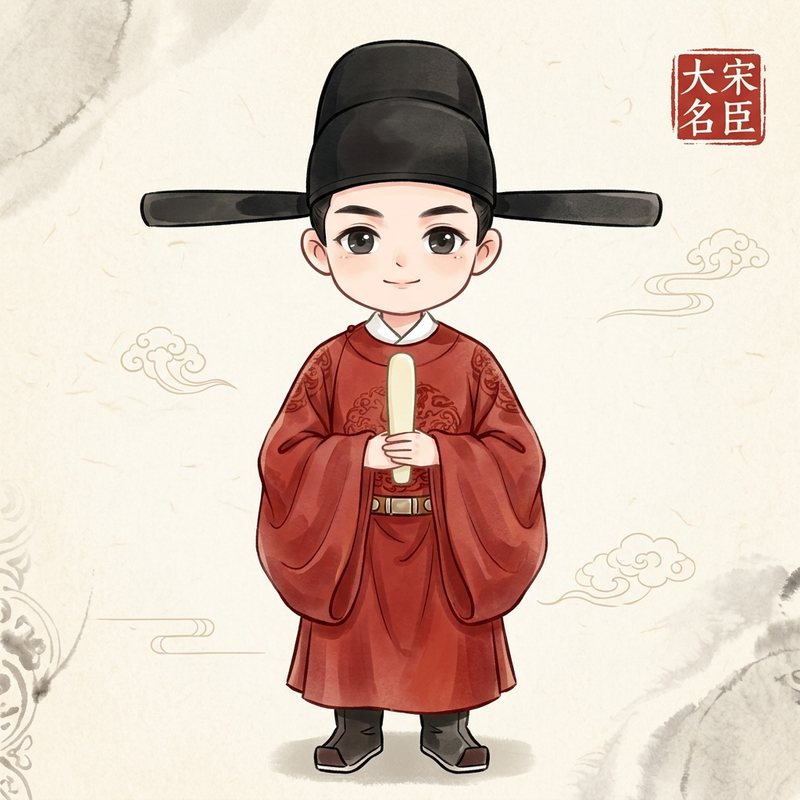
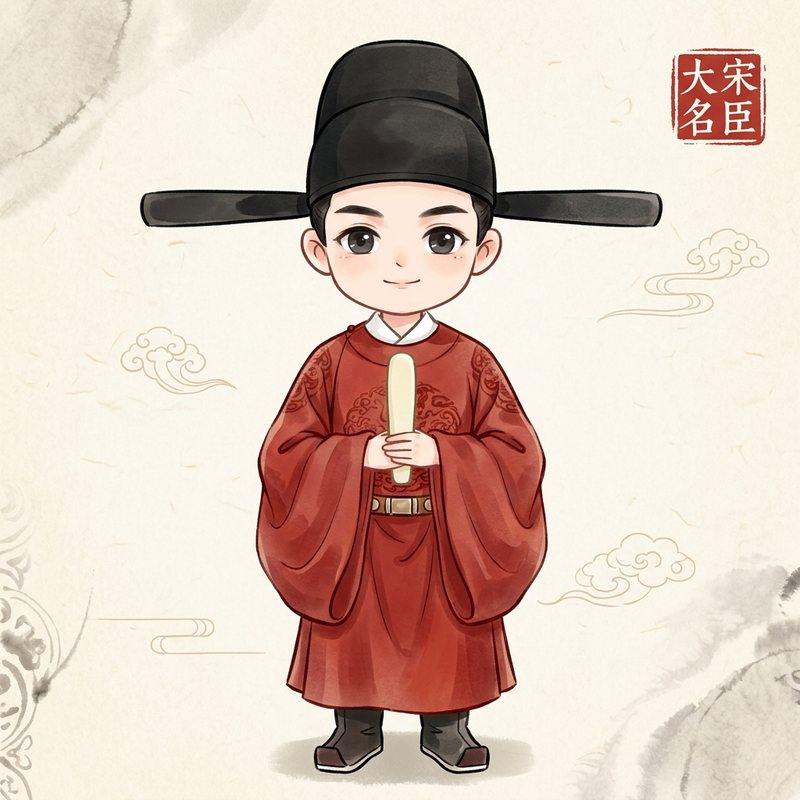
The Moral Compass & Upright Prime Minister · 989 – 1052
The Moral Compass of the Empire: 'First to worry about the world's sorrows, last to rejoice in its joys'—the supreme scholar-general of Chinese history.
Stops7
Traversed~3,710km
Audio Tour~12min
“断齑画粥,昼夜不息。”
Dividing the frozen gruel, chopping the pickles; laboring day and night without pause.
The Moral Compass & Upright Prime MinisterNorthern Song Dynasty(989—1052)字希文 · 谥号文正Audio Journey · 7 Stops
Worry before the world worries, rejoice after the world rejoices: the supreme scholar-general.
The Moral Compass of the Empire· A civic virtue idealThe Self-Made Scholar· A self-made striverThe Scholar-General· A statesman-warrior
Unfolding the Historical Landscape…
印
Daily Wisdom & Resilience Oracle
The Resilient Optimist
“竹杖芒鞋轻胜马,谁怕?一蓑烟雨任平生。”
Holding a bamboo cane and wearing straw sandals, I stride faster than a horse. Who is afraid? A straw cloak in the mist and rain — I live my life with equanimity.
💡 In the 3rd year of exile in Huangzhou, caught in a sudden downpour, Su Shi embraced the storm with supreme resilience.
— Su Shi (Dongpo)(The Renaissance Foodie & Optimist)
Historical Footprints & Narration Archive
7 Stations
1
Yingtian Academy
1011 CE · Age 22
Modern Shangqiu, Henan
Studying five straight years without removing his clothes, living on frozen porridge.
“断齑画粥,昼夜不息。”
Duàn jī huà zhōu, zhòu yè bù xī.
Dividing the frozen gruel, chopping the pickles; laboring day and night without pause.
Station Narration Script
Freezing winds howled through the broken paper windows of Yingtian Academy. 20-year-old Fan Zhongyan blew on his purple fingers beneath a solitary lamp. Boiling a bowl of rice porridge each evening, he let it freeze solid, slicing it into four blocks—eating two chunks a day with wild chopped greens. For five grueling years he never removed his robes to sleep, washing his face in snow whenever exhaustion hit. He wasn't studying for gold or vanity; he had carved into his rough desk: 'If I cannot be a great Chancellor, I shall be a great physician.' Through pure suffering, an iron soul was forged.
Departure Transition Script
Passing the examinations in 1015, he donned official robes and rode to the storm-battered coast of Taizhou, embarking on his first mission.
2
Taizhou Seawall
1021 CE · Age 32
Modern Taizhou, Jiangsu
Building a hundreds-of-miles coastal seawall to defend against oceanic tsunamis.
“春水涵冰清,秋风引波绿。”
Chūn shuǐ hán bīng qīng, qiū fēng yǐn bō lǜ.
Spring waters harbor crystal clarity; autumn breezes guide waves of jade green.
Station Narration Script
Towering yellow tides smashed against fishing villages, salting the earth and drowning peasants. 32-year-old salt magistrate Fan Zhongyan stood in the freezing mud, his heart bleeding. He petitioned the capital, pledging his life to construct a massive stone seawall stretching across the horizon. When killer storm surges wiped out early foundations, panicked workers fled. Fan Zhongyan plunged into the roaring surf first, hauling boulders by hand. Completed after years of blood and sweat, the barrier stood unbreachable. Generations renamed it 'Fan's Seawall'.
Departure Transition Script
His engineering triumph launched him into the imperial capital. Entering Kaifeng in 1028, he began his legendary cycle of three expulsions and three triumphs.
3
Kaifeng Court Defiance
1033 CE · Age 44
Imperial Capital Kaifeng
Three times impeached, three times exiled; yet his prestige only doubled with each banishment.
“宁鸣而死,不默而生。”
Nìng míng ér sǐ, bù mò ér shēng.
Better to cry out and die than to remain silent and live.
Station Narration Script
Silence hung heavy inside Kaifeng's throne room. 44-year-old Censor Fan Zhongyan stood alone confronting the all-powerful Prime Minister Lv Yijian. Unrolling his 'Chart of Hundred Officials', he exposed systemic bribery and nepotism in the face of the Emperor. Imperial decrees banished him repeatedly. Yet each time he was kicked out, his moral legend soared across China! Elite scholars lined the city gates with wine, cheering: 'Your first exile was glorious, your second was more glorious, and this third is the most magnificent of all!' Through exile, he forged the moral spine of Chinese intellectuals.
Departure Transition Script
In 1038, Western Xia hordes invaded, annihilating Song frontier forces. Facing national catastrophe, the panicked court recalled Fan Zhongyan, dispatching him directly to the northwest frontlines.
4
Yan'an Frontier
1040 CE · Age 51
Modern Yan'an, Shaanxi
The terrifying scholar-general whom Western Xia invaders believed had 'tens of thousands of troops in his chest'.
Autumn paints the frontier with a strange, bleak hue; the geese head south without lingering. From all sides border horns rise in unison; amidst a thousand peaks, lone fortress gates close against the setting sun.
Station Narration Script
Frost turned the grasses yellow across the plateaus of Yan'an. 51-year-old Fan Zhongyan stood armored atop the beacon towers of Dashun Fortress. Rejecting reckless charges, he established deep fortress chains and cultivated abandoned soils. He forged disciplined strike corps and treated wounded soldiers like brothers. Savage Western Xia cavalry crashed repeatedly against his stone defenses, breaking their spears. In despair, enemy commanders warned: 'Do not attack Yan'an; Little Old Fan carries a hundred thousand legions inside his chest!' Beneath the smoke of the setting sun, he penned: 'A cup of turbid wine, ten thousand leagues from home—yet the northern stone is not yet carved; I have no plan to return.'
Departure Transition Script
With the frontier pacified, Emperor Renzong recalled him in 1043, appointing him Vice Chancellor to lead the Qingli Reforms.
5
Dengzhou Huazhou Academy
1046 CE · Age 57
Modern Dengzhou, Henan
Never visiting Yueyang Tower, yet penning the single greatest moral essay in Chinese history.
“先天下之忧而忧,后天下之乐而乐。”
Xiān tiān xià zhī yōu ér yōu, hòu tiān xià zhī lè ér lè.
Be the first to worry about the world's sorrows, and the last to rejoice in the world's joys.
Station Narration Script
Autumn night fell softly on Huazhou Academy in Dengzhou. 57-year-old Fan Zhongyan unrolled a painted scroll of Lake Dongting sent by his exiled friend Teng Zijing. The Qingli Reforms had been thwarted, yet the flame inside him burned incandescent. He had never set foot on Yueyang Tower, but the suffering of China's peasants and the destiny of the empire were etched into his bone marrow. Looking into the starry night, he dipped his brush and wrote the definitive ethical monument of Chinese civilization: 'Neither elated by worldly gain nor disheartened by personal misfortune... Be the first to worry about the world's sorrows, and the last to rejoice in the world's joys!' His brush strokes became an eternal beacon of righteousness.
Departure Transition Script
In 1049, 60-year-old Fan Zhongyan was reassigned as Governor of Hangzhou, where he staged a stunning macroeconomic masterclass during a historic famine.
6
Hangzhou Relief
1050 CE · Age 61
Hangzhou, Zhejiang
Fighting famine by staging lavish dragon boat races: Keynesian economics in the 11th century.
Release surplus capital to nourish the poor, so that merchants, cooks, laborers, and physicians can all sustain their livelihoods.
Station Narration Script
In 1050, a horrific famine scorched Jiangnan. Conventional magistrates would have opened emergency porridge lines and capped prices. 61-year-old Fan Zhongyan did the exact opposite. He allowed grain prices to rise, enticing merchants from across China to rush ships to Hangzhou, crashing the price naturally. He then staged massive dragon boat races on West Lake and commissioned grand temple repairs. Outraged censors accused him of frivolous luxury. Fan smiled: he was stimulating wealthy spending to hire tens of thousands of starving refugees daily. Neighboring provinces were filled with corpses, but Hangzhou did not lose a single soul. A masterclass in economic genius.
Departure Transition Script
Hangzhou was saved, but the old warrior was burning out. In 1052, transferred to Yingzhou, he embarked on his final journey along the dusty post roads.
7
Xuzhou Final Rest
1052 CE · Age 64
Modern Xuzhou, Jiangsu
Dying penniless on the road, mourned by an entire empire as the ultimate upright servant.
“不以物喜,不以己悲。”
Bù yǐ wù xǐ, bù yǐ jǐ bēi.
Neither elated by worldly fortune, nor despondent over personal plight.
Station Narration Script
In a roadside posthouse outside Xuzhou, white cloth fluttered in the breeze. On May 20, 1052, 64-year-old Fan Zhongyan closed his eyes forever. Despite decades as a top prime minister and commander, examiners found his pockets empty—not even enough coin for a casket. Every copper of his salary had gone into the 'Fan Charitable Trust' to house and educate impoverished families. When news of his death spread, Qiang tribal chieftains in the northwest wept aloud in grief, and thousands across Jiangnan wore mourning white. Emperor Renzong inscribed his tombstone: 'Honoring the Worthy', awarding him the ultimate posthumous title: Wenzheng. He was the complete man—whose life defined the highest moral ideal of Chinese civilization.
Key Historical Inquiries & Context
· 核心史实公案与速览
Fan Zhongyan was Northern Song's definitive scholar-statesman, general, and moral titan. Orphaned and penniless, he studied with monastic asceticism before entering imperial service. Three times exiled for fearless dissent, his moral prestige only grew. On the contested Northwest frontier, he fortified the borders with such tactical genius that Western Xia invaders feared him as having 'tens of thousands of armored troops within his chest'. Championing the Qingli Reforms, and later authoring 'Memorial to Yueyang Tower', his declaration to 'worry before the world worries, and rejoice after the world rejoices' became China's eternal ethical north star.
Fan Zhongyan was Northern Song's definitive scholar-statesman, general, and moral titan. Orphaned and penniless, he studied with monastic asceticism before entering imperial service. Three times exiled for fearless dissent, his moral prestige only grew. On the contested Northwest frontier, he fortified the borders with such tactical genius that Western Xia invaders feared him as having 'tens of thousands of armored troops within his chest'. Championing the Qingli Reforms, and later authoring 'Memorial to Yueyang Tower', his declaration to 'worry before the world worries, and rejoice after the world rejoices' became China's eternal ethical north star.
QWhat was Fan Zhongyan's primary cultural and historical legacy?
Fan Zhongyan is celebrated across world history as a pioneer of The Moral Compass of the Empire, The Self-Made Scholar, The Scholar-General, leaving enduring philosophical insights, literature, and art.
QWhere does Fan Zhongyan's historical life journey map lead?
This interactive GIS map retraces 7 chronological stops across Northern Song Dynasty China, originating from Yingtian Academy and spanning through Xuzhou Final Rest.
The Complete Life Journey & Biography of Fan Zhongyan (Statesman) (范仲淹)
Chronological travel & exile routes mapped to modern Chinese cities across Northern Song Dynasty China — featuring bilingual scholar audio, classical poetry recitations, and historical cross-paths.
Yingtian Academy (商丘断齑)
Age 22
Modern-day analog: Modern Shangqiu, Henan
Studying five straight years without removing his clothes, living on frozen porridge.
Freezing winds howled through the broken paper windows of Yingtian Academy. 20-year-old Fan Zhongyan blew on his purple fingers beneath a solitary lamp. Boiling a bowl of rice porridge each evening, he let it freeze solid, slicing it into four blocks—eating two chunks a day with wild chopped greens. For five grueling years he never removed his robes to sleep, washing his face in snow whenever exhaustion hit. He wasn't studying for gold or vanity; he had carved into his rough desk: 'If I cannot be a great Chancellor, I shall be a great physician.' Through pure suffering, an iron soul was forged.
Passing the examinations in 1015, he donned official robes and rode to the storm-battered coast of Taizhou, embarking on his first mission.
“Dividing the frozen gruel, chopping the pickles; laboring day and night without pause.”
断齑画粥,昼夜不息。 (Duàn jī huà zhōu, zhòu yè bù xī.)
Taizhou Seawall (泰州范公堤)
Age 32
Modern-day analog: Modern Taizhou, Jiangsu
Building a hundreds-of-miles coastal seawall to defend against oceanic tsunamis.
Towering yellow tides smashed against fishing villages, salting the earth and drowning peasants. 32-year-old salt magistrate Fan Zhongyan stood in the freezing mud, his heart bleeding. He petitioned the capital, pledging his life to construct a massive stone seawall stretching across the horizon. When killer storm surges wiped out early foundations, panicked workers fled. Fan Zhongyan plunged into the roaring surf first, hauling boulders by hand. Completed after years of blood and sweat, the barrier stood unbreachable. Generations renamed it 'Fan's Seawall'.
His engineering triumph launched him into the imperial capital. Entering Kaifeng in 1028, he began his legendary cycle of three expulsions and three triumphs.
Three times impeached, three times exiled; yet his prestige only doubled with each banishment.
Silence hung heavy inside Kaifeng's throne room. 44-year-old Censor Fan Zhongyan stood alone confronting the all-powerful Prime Minister Lv Yijian. Unrolling his 'Chart of Hundred Officials', he exposed systemic bribery and nepotism in the face of the Emperor. Imperial decrees banished him repeatedly. Yet each time he was kicked out, his moral legend soared across China! Elite scholars lined the city gates with wine, cheering: 'Your first exile was glorious, your second was more glorious, and this third is the most magnificent of all!' Through exile, he forged the moral spine of Chinese intellectuals.
In 1038, Western Xia hordes invaded, annihilating Song frontier forces. Facing national catastrophe, the panicked court recalled Fan Zhongyan, dispatching him directly to the northwest frontlines.
“Better to cry out and die than to remain silent and live.”
宁鸣而死,不默而生。 (Nìng míng ér sǐ, bù mò ér shēng.)
Yan'an Frontier (延州经略)
Age 51
Modern-day analog: Modern Yan'an, Shaanxi
The terrifying scholar-general whom Western Xia invaders believed had 'tens of thousands of troops in his chest'.
Frost turned the grasses yellow across the plateaus of Yan'an. 51-year-old Fan Zhongyan stood armored atop the beacon towers of Dashun Fortress. Rejecting reckless charges, he established deep fortress chains and cultivated abandoned soils. He forged disciplined strike corps and treated wounded soldiers like brothers. Savage Western Xia cavalry crashed repeatedly against his stone defenses, breaking their spears. In despair, enemy commanders warned: 'Do not attack Yan'an; Little Old Fan carries a hundred thousand legions inside his chest!' Beneath the smoke of the setting sun, he penned: 'A cup of turbid wine, ten thousand leagues from home—yet the northern stone is not yet carved; I have no plan to return.'
With the frontier pacified, Emperor Renzong recalled him in 1043, appointing him Vice Chancellor to lead the Qingli Reforms.
“Autumn paints the frontier with a strange, bleak hue; the geese head south without lingering. From all sides border horns rise in unison; amidst a thousand peaks, lone fortress gates close against the setting sun.”
Never visiting Yueyang Tower, yet penning the single greatest moral essay in Chinese history.
Autumn night fell softly on Huazhou Academy in Dengzhou. 57-year-old Fan Zhongyan unrolled a painted scroll of Lake Dongting sent by his exiled friend Teng Zijing. The Qingli Reforms had been thwarted, yet the flame inside him burned incandescent. He had never set foot on Yueyang Tower, but the suffering of China's peasants and the destiny of the empire were etched into his bone marrow. Looking into the starry night, he dipped his brush and wrote the definitive ethical monument of Chinese civilization: 'Neither elated by worldly gain nor disheartened by personal misfortune... Be the first to worry about the world's sorrows, and the last to rejoice in the world's joys!' His brush strokes became an eternal beacon of righteousness.
In 1049, 60-year-old Fan Zhongyan was reassigned as Governor of Hangzhou, where he staged a stunning macroeconomic masterclass during a historic famine.
“Be the first to worry about the world's sorrows, and the last to rejoice in the world's joys.”
先天下之忧而忧,后天下之乐而乐。 (Xiān tiān xià zhī yōu ér yōu, hòu tiān xià zhī lè ér lè.)
Fighting famine by staging lavish dragon boat races: Keynesian economics in the 11th century.
In 1050, a horrific famine scorched Jiangnan. Conventional magistrates would have opened emergency porridge lines and capped prices. 61-year-old Fan Zhongyan did the exact opposite. He allowed grain prices to rise, enticing merchants from across China to rush ships to Hangzhou, crashing the price naturally. He then staged massive dragon boat races on West Lake and commissioned grand temple repairs. Outraged censors accused him of frivolous luxury. Fan smiled: he was stimulating wealthy spending to hire tens of thousands of starving refugees daily. Neighboring provinces were filled with corpses, but Hangzhou did not lose a single soul. A masterclass in economic genius.
Hangzhou was saved, but the old warrior was burning out. In 1052, transferred to Yingzhou, he embarked on his final journey along the dusty post roads.
“Release surplus capital to nourish the poor, so that merchants, cooks, laborers, and physicians can all sustain their livelihoods.”
Dying penniless on the road, mourned by an entire empire as the ultimate upright servant.
In a roadside posthouse outside Xuzhou, white cloth fluttered in the breeze. On May 20, 1052, 64-year-old Fan Zhongyan closed his eyes forever. Despite decades as a top prime minister and commander, examiners found his pockets empty—not even enough coin for a casket. Every copper of his salary had gone into the 'Fan Charitable Trust' to house and educate impoverished families. When news of his death spread, Qiang tribal chieftains in the northwest wept aloud in grief, and thousands across Jiangnan wore mourning white. Emperor Renzong inscribed his tombstone: 'Honoring the Worthy', awarding him the ultimate posthumous title: Wenzheng. He was the complete man—whose life defined the highest moral ideal of Chinese civilization.
“Neither elated by worldly fortune, nor despondent over personal plight.”