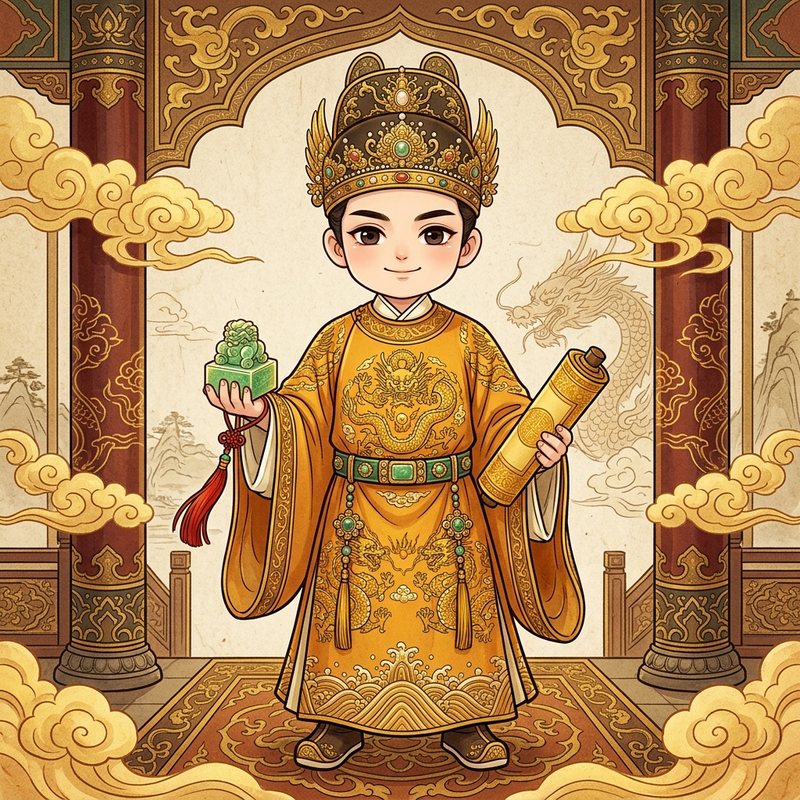
Rode the rivers with a jug of wine and a sword, singing the freest verses under the moon.
Romantic Titan & Celestial Wanderer· Lord Byron & Walt WhitmanThe Free Spirit of High Tang· Percy Bysshe Shelley
Unfolding the Historical Landscape…
印
Daily Wisdom & Resilience Oracle
The Romantic Rebel
“长风破浪会有时,直挂云帆济沧海。”
A time will come to ride the wind and cleave the waves; I'll hoist my cloud-white sail and cross the boundless sea.
💡 Leaving Chang'an after political disillusionment, Li Bai proclaims indomitable optimism and transcendent ambition.
— Li Bai(The Celestial Poet & Wandering Swordsman)
Historical Footprints & Narration Archive
12 Stations
1
Suyab, Central Asia (Silk Road)
701 CE · Age 4
Silk Road oasis town near modern Tokmok, Kyrgyzstan
Born on the Ancient Silk Road Oasis in Central Asia
“五岁诵六甲,十岁观百家。”
Wǔ suì sòng liùjiǎ, shí suì guān bǎijiā.
At five I recited the calendar arts; at ten I surveyed the hundred schools.
Station Narration Script
In 701, Li Bai was born in Suyab on the ancient Silk Road. The majestic Central Asian landscapes and diverse nomadic cultures imbued the future 'Immortal Poet' with unbridled romanticism and an infinite worldview.
Departure Transition Script
At age five, Li Bai moved with his family to Jiangyou in Sichuan, growing up amidst misty bamboo groves and martial traditions.
2
Jiangyou, Sichuan (Kuangshan Study)
724 CE · Age 23
Scenic foothill county of Mount Kuang, Sichuan (Li Bai youth retreat)
Mastering Swordsmanship and Daoist Mysticism by Age 15
At fifteen I mastered the sword, seeking patrons far and wide; at thirty my prose was complete, mingling freely with ministers.
Station Narration Script
At Kuang Mountain in Jiangyou, young Li Bai mastered classical philosophy and swordsmanship. In deep hermitages, he cultivated a unique fusion of Daoist freedom and chivalric heroism.
Departure Transition Script
At twenty-four, carrying his long sword, Li Bai departed his Sichuan homeland down the roaring Yangtze Gorges to wander the wider empire.
3
Mount Emei & Chongqing (Gorges Departure)
724 CE · Age 24
Yangtze River gorges departure nestled in misty mountain valleys, modern Chongqing
Leaving Homeland Forever with a Sword at His Waist
Half a circle of autumn moon over Mount Emei; its reflection glides in the Pingqiang River stream.
Station Narration Script
Departing Sichuan, Li Bai gazed at the autumn crescent over Mount Emei, composing: 'The crescent moon of Mount Emei shines in autumn; its reflection ripples down the Pingqiang River.'
Departure Transition Script
Sailing downstream into Hubei, Li Bai arrived in Jiangxia, ascending the legendary Yellow Crane Tower overlooking the vast Yangtze.
4
Wuhan (Yellow Crane Tower), Hubei
725 CE · Age 26
Historic twin-city crossing the middle Yangtze, modern Wuhan, Hubei
A Legendary Farewell at the Yellow Crane Tower
“孤帆远影碧空尽,唯见长江天际流。”
Gūfān yuǎnyǐng bìkōng jìn, wéi jiàn Chángjiāng tiānjì liú.
A lone sail's distant shadow dissolves into the emerald sky; now only the Yangtze River flows into the horizon.
Station Narration Script
At Yellow Crane Tower, Li Bai bid farewell to poet Meng Haoran with the celebrated line: 'My old friend bids farewell at Yellow Crane Tower, sailing east to Yangzhou in misty March blossom.'
Departure Transition Script
Moving to Anlu, Li Bai married the granddaughter of a former chancellor and settled for a decade, waiting for the imperial call to serve the state.
5
Anlu (Baizhao Mountain), Hubei
733 CE · Age 32
Baiyun Mountain haven and residence of Prime Minister Xu family, Hubei
Marrying into a Prime Minister's Family & Living in Green Mountains
“问余何意栖碧山,笑而不答心自闲。”
Wèn yú hé yì qī bìshān, xiào ér bù dá xīn zì xián.
You ask why I dwell amidst the emerald mountains; I smile without answering, my heart naturally at peace.
Station Narration Script
In the green hills of Anlu, when asked why he lived secluded, Li Bai smiled: 'You ask why I dwell in green mountains; I smile in silence, my heart at ease. Peach blossoms float on running water—this is a world beyond mortals.'
Departure Transition Script
In 742, Emperor Xuanzong summoned Li Bai to the court. Jubilant, Li Bai laughed: 'Looking up to the heavens with roaring laughter, I walk out the door—how could someone like me remain a nobody!'
6
Chang'an (Imperial Court), Shaanxi
742 CE · Age 42
Imperial capital of the Tang Empire, modern Xi'an, Shaanxi
Summoned by the Emperor: The Reign of the Wine Immortal
Heaven bestowed my talents, they must serve a grand design; a thousand gold coins scattered will all return in time.
Station Narration Script
At Chang'an, senior statesman He Zhizhang hailed Li Bai as an 'Immortal Exiled from Heaven'. Serving Emperor Xuanzong in the Hanlin Academy, Li Bai produced transcendent verses while defying corrupt courtiers with fearless wit.
Departure Transition Script
Refusing court flatteries, Li Bai was dismissed with imperial gold. Leaving Chang'an, he journeyed east to Luoyang, meeting young Du Fu and Gao Shi in history's greatest literary encounter.
7
Luoyang & Central Plains (Du Fu Encounter)
744 CE · Age 44
Eastern imperial metropolis where Li Bai and Du Fu first encountered each other, Henan
The Most Legendary Meeting in World Literature: Li Bai Meets Du Fu
How can I bend my brow and bow my back to serve the powerful and rich, robbing my heart of joy and radiant smile!
Station Narration Script
Between Luoyang and the Liang-Song plains, Li Bai and Du Fu rode as sworn brothers—sharing autumn quilts in drunken sleep, walking side by side by day. Their brief, luminous meeting remains one of Chinese literature's great friendships.
Departure Transition Script
Wandering through Xuancheng, Li Bai celebrated the poetic rivers of southern China. When the An Lushan Rebellion erupted, he joined Prince Yong's camp to repel rebels.
8
Xuancheng & Peach Blossom Pool, Anhui
753 CE · Age 53
Poetic haven of Mount Jingting and Peach Blossom Pool, Anhui
Though the water of Peach Blossom Pool runs a thousand feet deep, it cannot compare to the depth of Wang Lun's love as he sees me off.
Station Narration Script
At Xuancheng, Li Bai wrote: 'We gaze at each other untired—only Mount Jingting and I.' At Peach Blossom Pool, his friend Wang Lun sang him off, inspiring China's most famous ode to friendship.
Departure Transition Script
With Prince Yong defeated in dynastic conflict, Li Bai was imprisoned for treason and sentenced to exile in distant southwestern Yelang.
9
Mount Lu & Jiujiang Prison, Jiangxi
756 CE · Age 56
Misty sacred peaks and Yangtze naval prison, modern Jiujiang, Jiangxi
Trapped in the Storm of War: Imprisoned at Age 56
“中夜四五叹,常为大国忧。”
Zhōngyè sìwǔ tàn, cháng wéi dàguó yōu.
In the deep night I sigh four or five times, forever anxious for the great realm.
Station Narration Script
Imprisoned at Xunyang, facing execution, Li Bai retained his towering spirit through loyal support from his wife Lady Zong and steadfast literary friends.
Departure Transition Script
Exiled to remote Yelang, the elderly poet sailed up the Yangtze under military escort into the untamed southwestern wilderness.
10
Yelang Exile Route, Guizhou
758 CE · Age 58
Ancient remote mountainous exile frontier of the southwest, Guizhou
Chained and Banished to the Southwestern Jungle
“夜郎万里道,西上令人老。”
Yèláng wànlǐ dào, xī shàng lìng rén lǎo.
The road to Yelang stretches ten thousand miles; journeying west ages a man.
Station Narration Script
Enduring the grueling journey into exile, Li Bai witnessed a wartorn nation, yet maintained his indomitable spirit and poetic transcendence amidst humiliation.
Departure Transition Script
Upon reaching Baidi City in Chongqing, a general amnesty arrived! Overjoyed, Li Bai turned his boat downstream, embarking on the most exhilarating boat ride in human history.
11
Baidicheng (The Great Pardon), Chongqing
759 CE · Age 59
Majestic entrance to Qutang Gorge overlooking Yangtze Gorges, Fengjie, Chongqing
Pardoned! 'My Light Skiff Has Passed Ten Thousand Mountains!'
Amid the gibbons' ceaseless cries from both mountain shores, my light skiff has skimmed past ten thousand mountains.
Station Narration Script
At Baidi City, Li Bai wrote his triumph of freedom: 'At dawn I left Baidi amidst colored clouds; a thousand miles to Jiangling covered in a single day. While monkeys gibber along both shores, my light boat has sailed past ten thousand mountains!'
Departure Transition Script
In his final years, ailing and poor, Li Bai took refuge with his magistrate cousin Li Yangbing in Dangtu, Anhui, entrusting him with his life's poetry manuscripts.
12
Dangtu, Anhui (Riding the Whale to the Moon)
762 CE · Age 61
Historic Yangtze River cliff haven near modern Ma'anshan / Nanjing, Anhui
The Poet Who Loved the Moon: Leaping to Embrace the River Moon
The giant Roc soared, shaking the eight horizons of heaven; struck down in mid-sky, its mighty strength ran dry—yet its residual wind will inspire ten thousand generations.
Station Narration Script
In 762, Li Bai passed away at age 61, penning his dying swan song of the giant roc soaring across the cosmos. Legend holds he embraced the moon's reflection in the Yangtze and ascended to heaven on a golden whale.
Key Historical Inquiries & Context
· 核心史实公案与速览
Li Bai (701–762), or Li Po, was Tang China's legendary 'Poet Immortal' (Shixian). Renowned for his boundless romantic imagination, uninhibited spirit, and transcendent verse, he traveled extensively across the Tang empire celebrating wine, moonlit solitude, and nature's grandeur.
For his effortless lyrical mastery, Daoist spiritual freedom, and an imaginative scope that felt supernatural to his contemporaries, including friend Du Fu.
QHow extensive was Li Bai's life journey?
From his youth in Sichuan through the Yangtze Gorges, Chang'an court, Yellow River plains, and southern mountains, his travels spanned over 10,000 kilometers across China.
The Complete Life Journey & Biography of Li Bai (Li Po) (李白)
Chronological travel & exile routes mapped to modern Chinese cities across Tang Dynasty (701-762) China — featuring bilingual scholar audio, classical poetry recitations, and historical cross-paths.
Suyab, Central Asia (Silk Road) (西域碎叶城 (丝路绿洲))
Age 4
Modern-day analog: Silk Road oasis town near modern Tokmok, Kyrgyzstan
Born on the Ancient Silk Road Oasis in Central Asia
In 701, Li Bai was born in Suyab on the ancient Silk Road. The majestic Central Asian landscapes and diverse nomadic cultures imbued the future 'Immortal Poet' with unbridled romanticism and an infinite worldview.
At age five, Li Bai moved with his family to Jiangyou in Sichuan, growing up amidst misty bamboo groves and martial traditions.
“At five I recited the calendar arts; at ten I surveyed the hundred schools.”
五岁诵六甲,十岁观百家。 (Wǔ suì sòng liùjiǎ, shí suì guān bǎijiā.)
Modern-day analog: Scenic foothill county of Mount Kuang, Sichuan (Li Bai youth retreat)
Mastering Swordsmanship and Daoist Mysticism by Age 15
At Kuang Mountain in Jiangyou, young Li Bai mastered classical philosophy and swordsmanship. In deep hermitages, he cultivated a unique fusion of Daoist freedom and chivalric heroism.
At twenty-four, carrying his long sword, Li Bai departed his Sichuan homeland down the roaring Yangtze Gorges to wander the wider empire.
“At fifteen I mastered the sword, seeking patrons far and wide; at thirty my prose was complete, mingling freely with ministers.”
Mount Emei & Chongqing (Gorges Departure) (四川峨眉山与渝州 (仗剑去国))
Age 24
Modern-day analog: Yangtze River gorges departure nestled in misty mountain valleys, modern Chongqing
Leaving Homeland Forever with a Sword at His Waist
Departing Sichuan, Li Bai gazed at the autumn crescent over Mount Emei, composing: 'The crescent moon of Mount Emei shines in autumn; its reflection ripples down the Pingqiang River.'
Sailing downstream into Hubei, Li Bai arrived in Jiangxia, ascending the legendary Yellow Crane Tower overlooking the vast Yangtze.
“Half a circle of autumn moon over Mount Emei; its reflection glides in the Pingqiang River stream.”
Modern-day analog: Historic twin-city crossing the middle Yangtze, modern Wuhan, Hubei
A Legendary Farewell at the Yellow Crane Tower
At Yellow Crane Tower, Li Bai bid farewell to poet Meng Haoran with the celebrated line: 'My old friend bids farewell at Yellow Crane Tower, sailing east to Yangzhou in misty March blossom.'
Moving to Anlu, Li Bai married the granddaughter of a former chancellor and settled for a decade, waiting for the imperial call to serve the state.
“A lone sail's distant shadow dissolves into the emerald sky; now only the Yangtze River flows into the horizon.”
孤帆远影碧空尽,唯见长江天际流。 (Gūfān yuǎnyǐng bìkōng jìn, wéi jiàn Chángjiāng tiānjì liú.)
Anlu (Baizhao Mountain), Hubei (湖北安陆 (酒隐安陆十年))
Age 32
Modern-day analog: Baiyun Mountain haven and residence of Prime Minister Xu family, Hubei
Marrying into a Prime Minister's Family & Living in Green Mountains
In the green hills of Anlu, when asked why he lived secluded, Li Bai smiled: 'You ask why I dwell in green mountains; I smile in silence, my heart at ease. Peach blossoms float on running water—this is a world beyond mortals.'
In 742, Emperor Xuanzong summoned Li Bai to the court. Jubilant, Li Bai laughed: 'Looking up to the heavens with roaring laughter, I walk out the door—how could someone like me remain a nobody!'
“You ask why I dwell amidst the emerald mountains; I smile without answering, my heart naturally at peace.”
问余何意栖碧山,笑而不答心自闲。 (Wèn yú hé yì qī bìshān, xiào ér bù dá xīn zì xián.)
Modern-day analog: Imperial capital of the Tang Empire, modern Xi'an, Shaanxi
Summoned by the Emperor: The Reign of the Wine Immortal
At Chang'an, senior statesman He Zhizhang hailed Li Bai as an 'Immortal Exiled from Heaven'. Serving Emperor Xuanzong in the Hanlin Academy, Li Bai produced transcendent verses while defying corrupt courtiers with fearless wit.
Refusing court flatteries, Li Bai was dismissed with imperial gold. Leaving Chang'an, he journeyed east to Luoyang, meeting young Du Fu and Gao Shi in history's greatest literary encounter.
“Heaven bestowed my talents, they must serve a grand design; a thousand gold coins scattered will all return in time.”
Luoyang & Central Plains (Du Fu Encounter) (河南洛阳 (李杜世纪相聚))
Age 44
Modern-day analog: Eastern imperial metropolis where Li Bai and Du Fu first encountered each other, Henan
The Most Legendary Meeting in World Literature: Li Bai Meets Du Fu
Between Luoyang and the Liang-Song plains, Li Bai and Du Fu rode as sworn brothers—sharing autumn quilts in drunken sleep, walking side by side by day. Their brief, luminous meeting remains one of Chinese literature's great friendships.
Wandering through Xuancheng, Li Bai celebrated the poetic rivers of southern China. When the An Lushan Rebellion erupted, he joined Prince Yong's camp to repel rebels.
“How can I bend my brow and bow my back to serve the powerful and rich, robbing my heart of joy and radiant smile!”
Xuancheng & Peach Blossom Pool, Anhui (安徽宣城 (独坐敬亭山与赠汪伦))
Age 53
Modern-day analog: Poetic haven of Mount Jingting and Peach Blossom Pool, Anhui
Soulmate Mountain & Peach Blossom Pool Friendship
At Xuancheng, Li Bai wrote: 'We gaze at each other untired—only Mount Jingting and I.' At Peach Blossom Pool, his friend Wang Lun sang him off, inspiring China's most famous ode to friendship.
With Prince Yong defeated in dynastic conflict, Li Bai was imprisoned for treason and sentenced to exile in distant southwestern Yelang.
“Though the water of Peach Blossom Pool runs a thousand feet deep, it cannot compare to the depth of Wang Lun's love as he sees me off.”
Mount Lu & Jiujiang Prison, Jiangxi (江西庐山与寻阳狱 (安史乱起与下狱))
Age 56
Modern-day analog: Misty sacred peaks and Yangtze naval prison, modern Jiujiang, Jiangxi
Trapped in the Storm of War: Imprisoned at Age 56
Imprisoned at Xunyang, facing execution, Li Bai retained his towering spirit through loyal support from his wife Lady Zong and steadfast literary friends.
Exiled to remote Yelang, the elderly poet sailed up the Yangtze under military escort into the untamed southwestern wilderness.
“In the deep night I sigh four or five times, forever anxious for the great realm.”
中夜四五叹,常为大国忧。 (Zhōngyè sìwǔ tàn, cháng wéi dàguó yōu.)
Yelang Exile Route, Guizhou (贵州夜郎 (长流夜郎西南绝域))
Age 58
Modern-day analog: Ancient remote mountainous exile frontier of the southwest, Guizhou
Chained and Banished to the Southwestern Jungle
Enduring the grueling journey into exile, Li Bai witnessed a wartorn nation, yet maintained his indomitable spirit and poetic transcendence amidst humiliation.
Upon reaching Baidi City in Chongqing, a general amnesty arrived! Overjoyed, Li Bai turned his boat downstream, embarking on the most exhilarating boat ride in human history.
“The road to Yelang stretches ten thousand miles; journeying west ages a man.”
Pardoned! 'My Light Skiff Has Passed Ten Thousand Mountains!'
At Baidi City, Li Bai wrote his triumph of freedom: 'At dawn I left Baidi amidst colored clouds; a thousand miles to Jiangling covered in a single day. While monkeys gibber along both shores, my light boat has sailed past ten thousand mountains!'
In his final years, ailing and poor, Li Bai took refuge with his magistrate cousin Li Yangbing in Dangtu, Anhui, entrusting him with his life's poetry manuscripts.
“Amid the gibbons' ceaseless cries from both mountain shores, my light skiff has skimmed past ten thousand mountains.”
Dangtu, Anhui (Riding the Whale to the Moon) (安徽当涂 (捉月骑鲸 · 诗仙升仙))
Age 61
Modern-day analog: Historic Yangtze River cliff haven near modern Ma'anshan / Nanjing, Anhui
The Poet Who Loved the Moon: Leaping to Embrace the River Moon
In 762, Li Bai passed away at age 61, penning his dying swan song of the giant roc soaring across the cosmos. Legend holds he embraced the moon's reflection in the Yangtze and ascended to heaven on a golden whale.
“The giant Roc soared, shaking the eight horizons of heaven; struck down in mid-sky, its mighty strength ran dry—yet its residual wind will inspire ten thousand generations.”