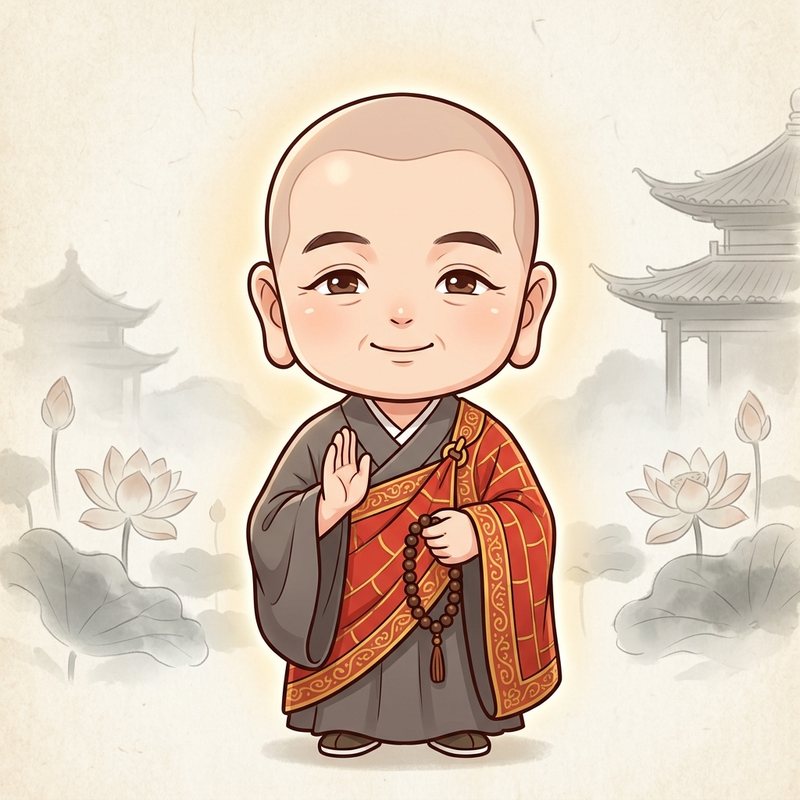
The Sixth Patriarch of Zen Buddhism: who revolutionized Eastern spirituality with 'Bodhi fundamentally has no tree' and taught that enlightenment is already within you.
Stops9
Traversed~3,553km
Audio Tour~12min
“下下人有上上智,上上人有没意智。”
The lowliest people may possess the highest wisdom, while the most exalted people may be devoid of true understanding.
The Sixth Patriarch of Chan (Zen)Tang Dynasty(638—713)俗姓卢 · 谥号大鉴禅师 · 世称六祖Audio Journey · 9 Stops
The Sixth Patriarch of Zen Buddhism: who revolutionized Eastern spirituality with 'Bodhi fundamentally has no tree' and taught that enlightenment is already within you.
The Socratic Patriarch of Zen· SocratesThe Apostle of Inherent Enlightenment· Martin Luther / Ralph Waldo EmersonThe Master of Everyday Transcendence· Meister Eckhart / Spinoza
Unfolding the Historical Landscape…
印
Daily Wisdom & Resilience Oracle
The Resilient Optimist
“竹杖芒鞋轻胜马,谁怕?一蓑烟雨任平生。”
Holding a bamboo cane and wearing straw sandals, I stride faster than a horse. Who is afraid? A straw cloak in the mist and rain — I live my life with equanimity.
💡 In the 3rd year of exile in Huangzhou, caught in a sudden downpour, Su Shi embraced the storm with supreme resilience.
— Su Shi (Dongpo)(The Renaissance Foodie & Optimist)
Historical Footprints & Narration Archive
9 Stations
1
Xinzhou Birthplace
638 CE · Age 0
Cradle of Southern Chan Master Huineng, modern Xinxing, Yunfu, Guangdong
Orphaned young and supporting his widowed mother by chopping firewood, preserving an unclouded mind in poverty.
The lowliest people may possess the highest wisdom, while the most exalted people may be devoid of true understanding.
Station Narration Script
In 638 CE, Huineng was born into deep poverty in southern Xinzhou. His father died early, leaving young Huineng to care for his widowed mother by chopping and carrying firewood to the marketplace every single day. Unlettered and far from the imperial capital, the mountain winds and honest labor nurtured an extraordinary purity within him. Amid bitter hardship, the radiant light of his original nature remained unclouded, waiting for its spark.
Departure Transition Script
As the years passed, the young woodcutter shouldered his bundles toward the bustling markets of Nanhai, where destiny prepared a life-changing encounter with sacred truth.
2
Nanhai Marketplace Awakening
661 CE · Age 23
Ancient maritime commercial hub of Lingnan, modern Guangzhou, Guangdong
Delivering firewood in the bustling marketplace, hearing a single line of the Diamond Sutra unleashed a lightning bolt of sudden awakening.
“应无所住,而生其心。”
Yìng wú suǒ zhù, ér shēng qí xīn.
One should produce thoughts that abide nowhere.
Station Narration Script
Amid the noise of a Nanhai inn, young Huineng set down his firewood and heard a guest recite the Diamond Sutra. 'One should produce thoughts that abide nowhere'—those eight Chinese characters struck him like a flash of lightning, instantly dissolving all mental boundaries. Without academic theories or years of rituals, he recognized that consciousness is inherently unattached and luminous. Deeply moved, a generous patron provided silver for his mother's livelihood, freeing Huineng to embark on his thousand-mile pilgrimage north.
Departure Transition Script
Leaving behind his Lingnan homeland and aging mother, Huineng walked through rain and mountain passes, carrying nothing but unwavering determination toward Mount Dongshan.
3
Huangmei East Mountain Enlightenment Verse
661 CE · Age 24
Cradle of early Chan monastic community and Fifth Patriarch Hongren's sanctuary, modern Huangmei, Hubei
Pounding rice with a waist-stone for eight months, he stunned the monastic order with 'Fundamentally not a single thing exists' to inherit the Dharma seal.
Bodhi fundamentally has no tree, nor is the clear mirror a stand. Originally there is not a single thing; where can dust alight?
Station Narration Script
In the granary of East Mountain Temple, Huineng tied a heavy stone around his waist, pounding rice day and night for eight months. When head monk Shenxiu wrote his cautious verse advocating constant wiping of the mirror, Huineng delivered four lines that shattered all dualities: 'Bodhi fundamentally has no tree; originally not a single thing exists.' Recognized by Hongren, the master struck the pestle three times at dusk. Under cover of midnight, Hongren transmitted Bodhidharma's sacred robe and bowl, crowning the unlettered laborer as the Sixth Patriarch.
Departure Transition Script
Clutching the sacred robe and the destiny of Zen, Huineng boarded a lone boat across the Yangtze into the dark night, racing southward against gathering danger.
4
Dayu Ridge Original Face Dharma
662 CE · Age 25
Rugged historic mountain pass connecting Central Plains and Lingnan, modern Dayu, Jiangxi
Pursued by armed seekers of the sacred robe, his question 'What is your original face?' instantly disarmed a fierce warrior into enlightenment.
Thinking neither of good nor of evil, at this very moment, what is your original face, Venerable Ming?
Station Narration Script
On the steep crags of Dayu Ridge, hundreds of armed monastics pursued the new patriarch. General-turned-monk Chen Huiming charged to the front. Huineng calmly laid the robe and bowl on a rock; Huiming tried to lift them with all his warrior might, but they were unshakeable. Stepping out unarmed, Huineng asked softly: 'Before thinking of good or evil, right at this moment, what is your original face?' The fierce warrior collapsed to his knees in tears, awakened to the primordial mind.
Departure Transition Script
Having transformed his pursuer into a guardian disciple, Huineng crossed the ancient pass, vanishing into the subtropical mountain wilderness of Guangdong.
5
Sihui Fifteen Years Among Hunters
663 CE · Age 25
Densely forested subtropical mountain sanctuary, modern Sihui and Huaiji, Zhaoqing, Guangdong
Obeying his master's prophecy, he hid among mountain hunters for fifteen years, eating greens beside meat and quietly safeguarding the Dharma.
The Buddha-dharma exists in the world; awakening is never apart from everyday worldly life. Seeking Bodhi away from the world is like searching for horns on a rabbit.
Station Narration Script
In the dense, untamed forests of Sihui and Huaiji, fifteen autumns came and went. The Sixth Patriarch sat on no ornate throne; instead, he wore coarse hemp clothes and lived among rough hunting camps. Guarding their nets, he quietly set trapped animals free; when the hunters boiled meat, he simmered wild greens in the edge of their pots, serenely eating 'only the vegetables beside the meat.' In the dirt and warmth of common human survival, he stripped away all religious pretension, maturing his enlightenment into an unshakable way of being.
Departure Transition Script
After fifteen years of patient incubation, the time had arrived. The thirty-eight-year-old master gathered his simple robes and walked out of the mountains toward Guangzhou.
6
Guangzhou Wind and Flag Epiphany
676 CE · Age 38
Historic millennium-old Buddhist temple and cradle of Zen public ministry, modern Guangzhou, Guangdong
Hearing two monks debate whether wind or flag moved, he proclaimed 'It is your minds that move,' stepping forth into history.
It is neither the wind that moves, nor the flag that moves; it is your minds that move.
Station Narration Script
In the courtyard of Faxing Temple in Guangzhou, temple banners fluttered in the evening breeze as two senior monks argued fiercely over whether wind or cloth was moving. Huineng, still clad in humble lay clothes, spoke six timeless words: 'It is neither wind that moves, nor the flag; it is your minds that move.' The courtyard fell into stunned silence. Abbot Yinzong invited the stranger into his quarters and realized this was the long-hidden Sixth Patriarch. Under the ancient bodhi tree, Yinzong shaved Huineng's head and knelt to receive him as his spiritual master.
Departure Transition Script
Having officially entered the monastic order, Huineng accepted the invitation of Shaozhou's regional governor to travel north, where his spoken sermons would be canonized for eternity.
7
Shaozhou Preaching of the Platform Sutra
677 CE · Age 39
Birthplace of the Platform Sutra, the only native Chinese Buddhist text honored as a Sutra, modern Shaoguan, Guangdong
Ascending the high dharma dais at the invitation of Governor Wei Chu, preaching the immortal Platform Sutra before thousands.
The self-nature of Bodhi is inherently pure; simply employ this mind, and one directly attains Buddhahood.
Station Narration Script
In the crowded halls of Dafan Temple in Shaozhou, Governor Wei Chu, scholars, and more than a thousand commoners listened in reverent silence. The thirty-nine-year-old master Huineng ascended the high seat, delivering an electrifying declaration of spiritual freedom: Buddha-nature is already complete within every human heart. Awakening requires neither imperial patronage nor scholastic pedantry, but direct seeing into one's pure mind. Transcribed word for word by disciple Fahai, the Platform Sutra became the only scripture born in China to be honored with the title 'Sutra.'
Departure Transition Script
Following his historic discourse, Huineng traveled up the pristine waters of Caoxi to Baolin Temple, where he would establish the spiritual citadel of Chan for over thirty years.
8
Caoxi Sanctuary & Imperial Summons Declined
705 CE · Age 67
Venerated global patriarchal headquarters of Chan Buddhism, modern Nanhua Temple, Shaoguan, Guangdong
Empress Wu Zetian and Emperor Zhongzong summoned him to the imperial palace, but Huineng serenely declined, remaining at Caoxi.
“若欲修行,在家亦得,不由在寺。”
Ruò yù xiūxíng, zàijiā yì dé, bù yóu zài sì.
If you wish to cultivate practice, you can do so at home; it does not depend on residing in a monastery.
Station Narration Script
Among the whispering bamboo groves of Baolin Temple in Caoxi, Master Huineng taught for more than thirty years. Disciples flocked from every corner of China, including masters Nanyue Huairang and Qingyuan Xingsi, whose lineages would birth the five classical houses of Zen. In 705 CE, Empress Wu Zetian sent court envoy Xue Jian bearing an imperial edict inviting the master to Chang'an as national preceptor. Untempted by courtly luxury, the elderly master serenely declined, choosing to stay barefoot among his mountain students. Imperial reverence only elevated Caoxi into the undisputed spiritual capital of Chan.
Departure Transition Script
Having nurtured a spiritual lineage that would transform Asian civilization, seventy-six-year-old Huineng prepared for his final journey home to his native Xinzhou.
9
Xinzhou Guo'en Temple Parinirvana & Living Mummy
713 CE · Age 75
Site of Huineng's final parinirvana, modern Guo'en Temple, Xinxing, Guangdong
Returning to his native soil to achieve Parinirvana, leaving an uncorrupted lacquer body that has endured for over 1,300 years.
Tranquil and still, cultivating no contrived virtue; carefree and open, committing no vice. Silent, transcending perception; boundless, the mind clings to nothing.
Station Narration Script
In the autumn of 713 CE, seventy-six-year-old Master Huineng sat peacefully in the abbot's chamber of Guo'en Temple in his native Xinzhou. Sharing his final verses, he urged his disciples to abandon all fabricated virtue and dualistic striving. At midnight, he smiled gently and said: 'I am departing.' With those words, he entered Parinirvana. Rare fragrance lingered for days. His disciples preserved his seated body with lacquer and gold leaf, returning it to Caoxi. Miraculously untouched by thirteen centuries of humidity, wars, and dynastic collapse, Huineng's living mummy remains seated today at Nanhua Temple, an immortal monument to human spiritual transcendence.
Departure Transition Script
The earthly journey of the Sixth Patriarch reached its magnificent close, yet his light of sudden awakening shines undiminished across thirteen centuries, illuminating the human spirit.
Key Historical Inquiries & Context
· 核心史实公案与速览
Huineng (638–713 CE) was a legendary Tang Dynasty Buddhist master and the Sixth Patriarch of Chan (Zen) Buddhism, posthumously honored as Master Dajian. Born into crushing poverty in southern Xinzhou and completely illiterate, he supported his widowed mother as a woodcutter before experiencing spontaneous enlightenment upon overhearing the Diamond Sutra in Guangzhou. After pounding rice for eight months at Huangmei, his revolutionary verse 'Bodhi fundamentally has no tree' earned him the patriarchal robe from Fifth Patriarch Hongren. Following fifteen years in hiding among mountain hunters, he emerged at Guangzhou's Faxing Temple with the insight 'It is your minds that move.' Presiding at Caoxi for over thirty years, his spoken teachings were recorded into the Platform Sutra—the sole Chinese Buddhist text honored with the title 'Sutra.' Championing sudden awakening and innate Buddha-nature, he transformed Buddhism into an egalitarian philosophy, venerated as the 'Socratic Patriarch of Zen,' with his miraculously preserved body enduring to this day.
Huineng (638–713 CE) was a legendary Tang Dynasty Buddhist master and the Sixth Patriarch of Chan (Zen) Buddhism, posthumously honored as Master Dajian. Born into crushing poverty in southern Xinzhou and completely illiterate, he supported his widowed mother as a woodcutter before experiencing spontaneous enlightenment upon overhearing the Diamond Sutra in Guangzhou. After pounding rice for eight months at Huangmei, his revolutionary verse 'Bodhi fundamentally has no tree' earned him the patriarchal robe from Fifth Patriarch Hongren. Following fifteen years in hiding among mountain hunters, he emerged at Guangzhou's Faxing Temple with the insight 'It is your minds that move.' Presiding at Caoxi for over thirty years, his spoken teachings were recorded into the Platform Sutra—the sole Chinese Buddhist text honored with the title 'Sutra.' Championing sudden awakening and innate Buddha-nature, he transformed Buddhism into an egalitarian philosophy, venerated as the 'Socratic Patriarch of Zen,' with his miraculously preserved body enduring to this day.
QWhat was Huineng's primary cultural and historical legacy?
Huineng is celebrated across world history as a pioneer of The Socratic Patriarch of Zen, The Apostle of Inherent Enlightenment, The Master of Everyday Transcendence, leaving enduring philosophical insights, literature, and art.
QWhere does Huineng's historical life journey map lead?
This interactive GIS map retraces 9 chronological stops across Tang Dynasty China, originating from Xinzhou Birthplace and spanning through Xinzhou Guo'en Temple Parinirvana & Living Mummy.
The Complete Life Journey & Biography of Huineng (Sixth Patriarch) (慧能)
Chronological travel & exile routes mapped to modern Chinese cities across Tang Dynasty China — featuring bilingual scholar audio, classical poetry recitations, and historical cross-paths.
Xinzhou Birthplace (新州出生)
Age 0
Modern-day analog: Cradle of Southern Chan Master Huineng, modern Xinxing, Yunfu, Guangdong
Orphaned young and supporting his widowed mother by chopping firewood, preserving an unclouded mind in poverty.
In 638 CE, Huineng was born into deep poverty in southern Xinzhou. His father died early, leaving young Huineng to care for his widowed mother by chopping and carrying firewood to the marketplace every single day. Unlettered and far from the imperial capital, the mountain winds and honest labor nurtured an extraordinary purity within him. Amid bitter hardship, the radiant light of his original nature remained unclouded, waiting for its spark.
As the years passed, the young woodcutter shouldered his bundles toward the bustling markets of Nanhai, where destiny prepared a life-changing encounter with sacred truth.
“The lowliest people may possess the highest wisdom, while the most exalted people may be devoid of true understanding.”
Modern-day analog: Ancient maritime commercial hub of Lingnan, modern Guangzhou, Guangdong
Delivering firewood in the bustling marketplace, hearing a single line of the Diamond Sutra unleashed a lightning bolt of sudden awakening.
Amid the noise of a Nanhai inn, young Huineng set down his firewood and heard a guest recite the Diamond Sutra. 'One should produce thoughts that abide nowhere'—those eight Chinese characters struck him like a flash of lightning, instantly dissolving all mental boundaries. Without academic theories or years of rituals, he recognized that consciousness is inherently unattached and luminous. Deeply moved, a generous patron provided silver for his mother's livelihood, freeing Huineng to embark on his thousand-mile pilgrimage north.
Leaving behind his Lingnan homeland and aging mother, Huineng walked through rain and mountain passes, carrying nothing but unwavering determination toward Mount Dongshan.
“One should produce thoughts that abide nowhere.”
应无所住,而生其心。 (Yìng wú suǒ zhù, ér shēng qí xīn.)
Huangmei East Mountain Enlightenment Verse (黄梅舂米与无树心偈)
Age 24
Modern-day analog: Cradle of early Chan monastic community and Fifth Patriarch Hongren's sanctuary, modern Huangmei, Hubei
Pounding rice with a waist-stone for eight months, he stunned the monastic order with 'Fundamentally not a single thing exists' to inherit the Dharma seal.
In the granary of East Mountain Temple, Huineng tied a heavy stone around his waist, pounding rice day and night for eight months. When head monk Shenxiu wrote his cautious verse advocating constant wiping of the mirror, Huineng delivered four lines that shattered all dualities: 'Bodhi fundamentally has no tree; originally not a single thing exists.' Recognized by Hongren, the master struck the pestle three times at dusk. Under cover of midnight, Hongren transmitted Bodhidharma's sacred robe and bowl, crowning the unlettered laborer as the Sixth Patriarch.
Clutching the sacred robe and the destiny of Zen, Huineng boarded a lone boat across the Yangtze into the dark night, racing southward against gathering danger.
“Bodhi fundamentally has no tree, nor is the clear mirror a stand. Originally there is not a single thing; where can dust alight?”
Modern-day analog: Rugged historic mountain pass connecting Central Plains and Lingnan, modern Dayu, Jiangxi
Pursued by armed seekers of the sacred robe, his question 'What is your original face?' instantly disarmed a fierce warrior into enlightenment.
On the steep crags of Dayu Ridge, hundreds of armed monastics pursued the new patriarch. General-turned-monk Chen Huiming charged to the front. Huineng calmly laid the robe and bowl on a rock; Huiming tried to lift them with all his warrior might, but they were unshakeable. Stepping out unarmed, Huineng asked softly: 'Before thinking of good or evil, right at this moment, what is your original face?' The fierce warrior collapsed to his knees in tears, awakened to the primordial mind.
Having transformed his pursuer into a guardian disciple, Huineng crossed the ancient pass, vanishing into the subtropical mountain wilderness of Guangdong.
“Thinking neither of good nor of evil, at this very moment, what is your original face, Venerable Ming?”
Modern-day analog: Densely forested subtropical mountain sanctuary, modern Sihui and Huaiji, Zhaoqing, Guangdong
Obeying his master's prophecy, he hid among mountain hunters for fifteen years, eating greens beside meat and quietly safeguarding the Dharma.
In the dense, untamed forests of Sihui and Huaiji, fifteen autumns came and went. The Sixth Patriarch sat on no ornate throne; instead, he wore coarse hemp clothes and lived among rough hunting camps. Guarding their nets, he quietly set trapped animals free; when the hunters boiled meat, he simmered wild greens in the edge of their pots, serenely eating 'only the vegetables beside the meat.' In the dirt and warmth of common human survival, he stripped away all religious pretension, maturing his enlightenment into an unshakable way of being.
After fifteen years of patient incubation, the time had arrived. The thirty-eight-year-old master gathered his simple robes and walked out of the mountains toward Guangzhou.
“The Buddha-dharma exists in the world; awakening is never apart from everyday worldly life. Seeking Bodhi away from the world is like searching for horns on a rabbit.”
Modern-day analog: Historic millennium-old Buddhist temple and cradle of Zen public ministry, modern Guangzhou, Guangdong
Hearing two monks debate whether wind or flag moved, he proclaimed 'It is your minds that move,' stepping forth into history.
In the courtyard of Faxing Temple in Guangzhou, temple banners fluttered in the evening breeze as two senior monks argued fiercely over whether wind or cloth was moving. Huineng, still clad in humble lay clothes, spoke six timeless words: 'It is neither wind that moves, nor the flag; it is your minds that move.' The courtyard fell into stunned silence. Abbot Yinzong invited the stranger into his quarters and realized this was the long-hidden Sixth Patriarch. Under the ancient bodhi tree, Yinzong shaved Huineng's head and knelt to receive him as his spiritual master.
Having officially entered the monastic order, Huineng accepted the invitation of Shaozhou's regional governor to travel north, where his spoken sermons would be canonized for eternity.
“It is neither the wind that moves, nor the flag that moves; it is your minds that move.”
Shaozhou Preaching of the Platform Sutra (韶州大梵寺宣说坛经)
Age 39
Modern-day analog: Birthplace of the Platform Sutra, the only native Chinese Buddhist text honored as a Sutra, modern Shaoguan, Guangdong
Ascending the high dharma dais at the invitation of Governor Wei Chu, preaching the immortal Platform Sutra before thousands.
In the crowded halls of Dafan Temple in Shaozhou, Governor Wei Chu, scholars, and more than a thousand commoners listened in reverent silence. The thirty-nine-year-old master Huineng ascended the high seat, delivering an electrifying declaration of spiritual freedom: Buddha-nature is already complete within every human heart. Awakening requires neither imperial patronage nor scholastic pedantry, but direct seeing into one's pure mind. Transcribed word for word by disciple Fahai, the Platform Sutra became the only scripture born in China to be honored with the title 'Sutra.'
Following his historic discourse, Huineng traveled up the pristine waters of Caoxi to Baolin Temple, where he would establish the spiritual citadel of Chan for over thirty years.
“The self-nature of Bodhi is inherently pure; simply employ this mind, and one directly attains Buddhahood.”
Modern-day analog: Venerated global patriarchal headquarters of Chan Buddhism, modern Nanhua Temple, Shaoguan, Guangdong
Empress Wu Zetian and Emperor Zhongzong summoned him to the imperial palace, but Huineng serenely declined, remaining at Caoxi.
Among the whispering bamboo groves of Baolin Temple in Caoxi, Master Huineng taught for more than thirty years. Disciples flocked from every corner of China, including masters Nanyue Huairang and Qingyuan Xingsi, whose lineages would birth the five classical houses of Zen. In 705 CE, Empress Wu Zetian sent court envoy Xue Jian bearing an imperial edict inviting the master to Chang'an as national preceptor. Untempted by courtly luxury, the elderly master serenely declined, choosing to stay barefoot among his mountain students. Imperial reverence only elevated Caoxi into the undisputed spiritual capital of Chan.
Having nurtured a spiritual lineage that would transform Asian civilization, seventy-six-year-old Huineng prepared for his final journey home to his native Xinzhou.
“If you wish to cultivate practice, you can do so at home; it does not depend on residing in a monastery.”
Xinzhou Guo'en Temple Parinirvana & Living Mummy (新州国恩寺圆寂与真身不腐)
Age 75
Modern-day analog: Site of Huineng's final parinirvana, modern Guo'en Temple, Xinxing, Guangdong
Returning to his native soil to achieve Parinirvana, leaving an uncorrupted lacquer body that has endured for over 1,300 years.
In the autumn of 713 CE, seventy-six-year-old Master Huineng sat peacefully in the abbot's chamber of Guo'en Temple in his native Xinzhou. Sharing his final verses, he urged his disciples to abandon all fabricated virtue and dualistic striving. At midnight, he smiled gently and said: 'I am departing.' With those words, he entered Parinirvana. Rare fragrance lingered for days. His disciples preserved his seated body with lacquer and gold leaf, returning it to Caoxi. Miraculously untouched by thirteen centuries of humidity, wars, and dynastic collapse, Huineng's living mummy remains seated today at Nanhua Temple, an immortal monument to human spiritual transcendence.
The earthly journey of the Sixth Patriarch reached its magnificent close, yet his light of sudden awakening shines undiminished across thirteen centuries, illuminating the human spirit.
“Tranquil and still, cultivating no contrived virtue; carefree and open, committing no vice. Silent, transcending perception; boundless, the mind clings to nothing.”