Age 20 · Luyi, Henan (Birthplace & Contemplating the Primordial)
老
Laozi
The Father of Daoism & Cosmic FlowSpring and Autumn (c. 571 - 471 BCE)字聃 · 太上老君 · 道德天尊Audio Journey · 8 Stops
Authored the 5,000 words of the Dao De Jing, teaching humanity the supreme strength of water, stillness, and effortless action.
The Cosmic Sage & Father of Daoism· Heraclitus & Pre-SocraticsMaster of Flow & The Art of Effortless Action (Wu Wei)· Stoic Masters (Seneca & Epictetus)
Unfolding the Historical Landscape…
印
Daily Wisdom & Resilience Oracle
The Resilient Optimist
“竹杖芒鞋轻胜马,谁怕?一蓑烟雨任平生。”
Holding a bamboo cane and wearing straw sandals, I stride faster than a horse. Who is afraid? A straw cloak in the mist and rain — I live my life with equanimity.
💡 In the 3rd year of exile in Huangzhou, caught in a sudden downpour, Su Shi embraced the storm with supreme resilience.
— Su Shi (Dongpo)(The Renaissance Foodie & Optimist)
Historical Footprints & Narration Archive
8 Stations
1
Luyi, Henan (Birthplace & Contemplating the Primordial)
-551 CE · Age 20
Cradle of Daoist Wisdom, modern Luyi County, Zhoukou, Henan
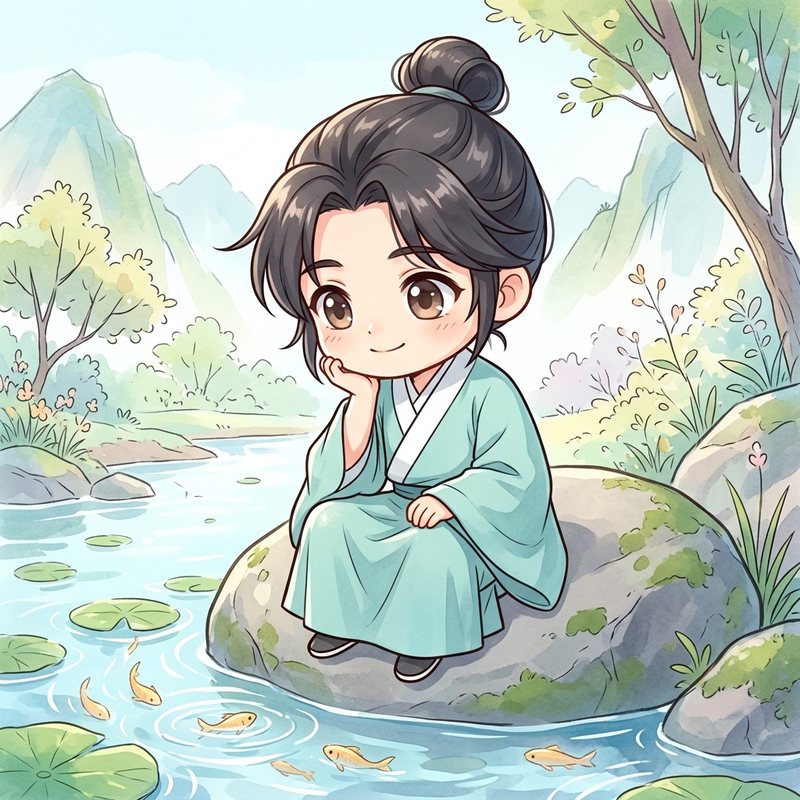
Born with Natural Wisdom: Observing the Cycles of Earth and Heaven
Humans follow the Earth; Earth follows Heaven; Heaven follows the Way; and the Way follows Nature.
Station Narration Script
Born in Ku County of Chu, Laozi showed profound quietude and reflective wisdom from early youth. Sitting beside the flowing Guo River, he observed seasonal cycles without human contrivance, arriving at his foundational insight: Nature obeys no external command, yet leaves nothing undone.
Departure Transition Script
Seeking civilizational roots in archaic charters, young Laozi journeyed westward to Luoyang, the grand royal capital of Eastern Zhou.
2
Eastern Zhou Capital Luoyang (Entering the Imperial Court)
-545 CE · Age 26
Imperial Capital of Eastern Zhou, modern Luoyang, Henan
To the Heart of Ancient Civilization: Seeking the Roots of Order
A journey of a thousand miles begins beneath one's feet. A tree of great girth springs from a tiny shoot.
Station Narration Script
In the ceremonial heart of Luoyang amidst bronze bells and stone palaces, Laozi immersed himself in archaic astronomical canons and lineage annals. He recognized that the greatest oaks spring from slender shoots, and a thousand miles begins with a single step.
Departure Transition Script
Recognized for his encyclopedic mastery of antiquity, Laozi was appointed guardian of the central royal archives of the Zhou Dynasty.
3
Zhou Royal Archives (Chief Librarian of Ancient China)
-535 CE · Age 36
Grand Royal Archives of Ancient China, Central Luoyang
Keeper of the Empire's Memory: The Grand Philosopher-Librarian
Great skill seems clumsy; great eloquence seems awkward. The greatest music has the faintest sound; the greatest image has no fixed form.
Station Narration Script
As Chief Royal Archivist in his thirties, Laozi guarded imperial scrolls and bronze records. Reading centuries of dynastic glory and ruin, he distilled eternal dialectics: 'Disaster is what good fortune leans on; good fortune is what disaster conceals within.'
Departure Transition Script
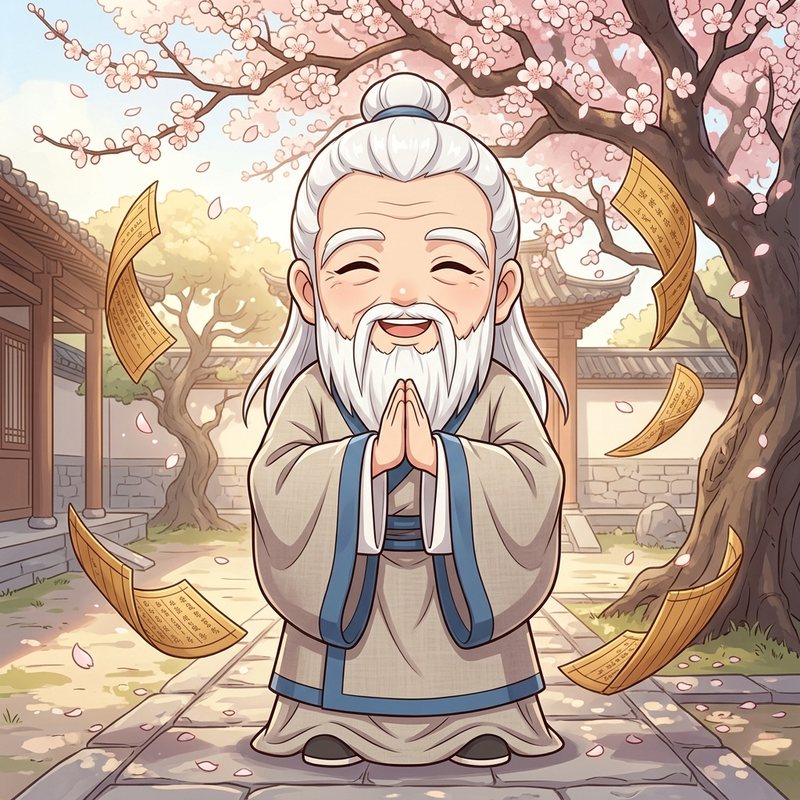
Renown traveled across states. At thirty-four, Confucius journeyed from Lu on a revered pilgrimage to consult Laozi on ancient rites.
4
Luoyang Cultural Summit (Confucius Inquires of the Rites)
-518 CE · Age 53
Historic Encounter of China's Two Greatest Minds, Luoyang
When the Dragon Met the Master: The Summit of Chinese Civilization
A great merchant hides his wealth and appears destitute; a gentleman of supreme virtue appears unassuming and simple. Today I met Laozi—he is truly like a dragon!
Station Narration Script
When Confucius sought his counsel on rites, Laozi advised shedding pride and worldly ambitions. Dazzled, Confucius told his followers: 'Birds fly, fish swim, but the dragon ascends to heaven upon clouds. Today I met Laozi, and he is verily like the dragon!'
Departure Transition Script
Tragedy soon struck when civil war erupted in Zhou. Prince Chao fled with royal scrolls amid carnage, leaving the capital broken.
5
Luoyang Royal War (The Prince Chao Rebellion & Retreat)
-516 CE · Age 55
Civil War Ruin of Imperial Zhou, Luoyang
Seeing Through the Carnage of Power: The Decision to Walk Away
“兵者不祥之器,非君子之器,不得已而用之,恬淡为上。”
Bīng zhě bù xiáng zhī qì, fēi jūn zǐ zhī qì, bù dé yǐ ér yòng zhī, tián dàn wéi shàng.
Weapons are instruments of ill omen, not tools for the gentleman. If forced to use them, calm detachment is best.
Station Narration Script
Witnessing civil strife and the loss of royal archives, Laozi recognized the fatal poison of power. Seeing the irreversible decline of Zhou, he practiced 'retire when your merit is accomplished,' mounting a green ox to depart westward into solitude.
Departure Transition Script
Riding his peaceful ox, the sage approached the formidable Hangu Pass, where warden Yin Xi observed purple mists billowing from the east.
6
Hangu Pass (Purple Clouds and the 5,000 Sacred Words)
-491 CE · Age 80
Ancient Strategic Gateway to the West, Lingbao, Sanmenxia, Henan
The Guard at the End of the World Who Saved the Wisdom of China
The Way that can be spoken is not the eternal Way; the name that can be named is not the eternal name. The highest good is like water: water benefits all things without competing, settling in places all despise; therefore it is near to the Way.
Station Narration Script
Warden Yin Xi bowed with deepest reverence, imploring the sage to write down his wisdom before departing. There Laozi composed the immortal five thousand words of the Dao De Jing: 'The Dao that can be told is not the eternal Dao... The highest good is like water, benefiting all without contending.'
Departure Transition Script
Passing through the rocky gorge, Laozi traveled west into Qin, erecting a rustic retreat at the foot of the scenic Zhongnan Mountains.
7
Louguan Terrace, Mount Zhongnan (Lecturing on the Way of Nature)
-485 CE · Age 86
Cradle of Daoist Hermit Sanctuaries, Zhouzhi, Xi'an, Shaanxi
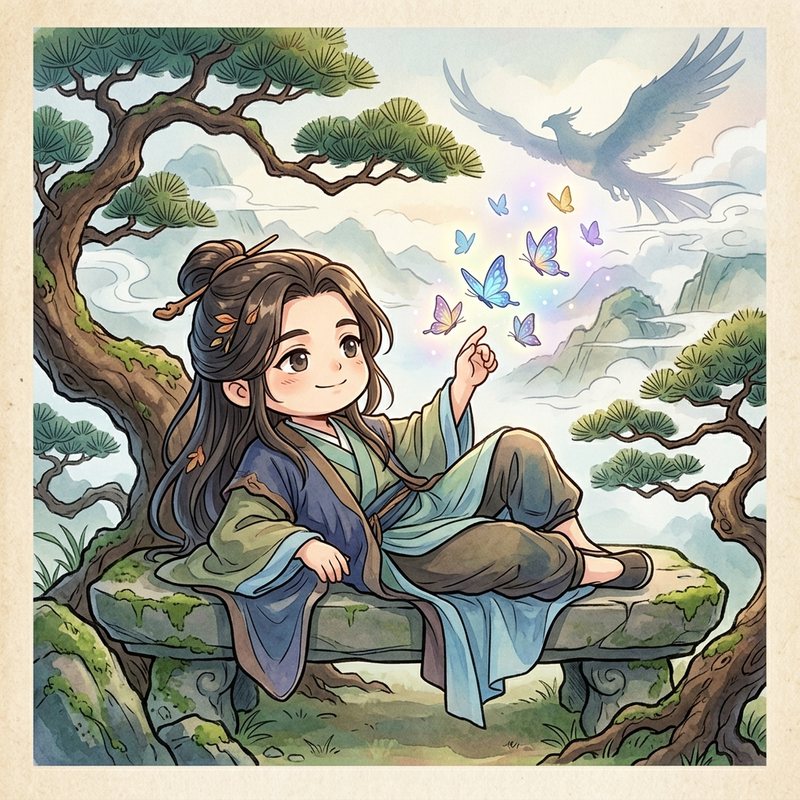
Teaching Effortless Action (Wu Wei) beneath Ancient Pines
Because one does not contend, no one in the world can contend with them. Knowing the masculine, preserve the feminine, and be the valley for the world.
Station Narration Script
At Louguan Terrace beneath Mount Zhongnan, Laozi taught disciples the art of attaining supreme emptiness and guarding profound stillness. Here he expounded how gentleness overcomes rigidity, establishing a philosophical fountainhead that would nurture Chinese civilization forever.
Departure Transition Script
With earthly mission fulfilled, the cosmic sage turned his ox toward the western desert, dissolving into the vast cosmic horizon.
8
Baoji Dasan Pass & Beyond (Dissolving into the Cosmos)
-471 CE · Age 100
Western Frontier of Classical Antiquity, Dasan Pass, Baoji, Shaanxi
No Grave, No Vanity: Melting into the Eternal Flow of Existence
The Way gives birth to One; One gives birth to Two; Two gives birth to Three; Three gives birth to all things. All things shoulder Yin and embrace Yang, blending energy to achieve harmony.
Station Narration Script
Sima Qian recorded: 'Laozi went beyond the pass, and none know where his life ended.' Leaving no monuments or worldly claims, he merged wholly with nature's breath. 'Heaven is long and Earth enduring, because they do not live for themselves.' His Way remains unbound and eternal.
Key Historical Inquiries & Context
· 核心史实公案与速览
Laozi (traditionally 6th century BCE), or Lao Tzu, is the venerated founder of Taoism and credited author of the Daodejing (Tao Te Ching). His philosophy emphasizes the Dao (the natural Way), Wu-Wei (effortless, non-contriving action), and harmonious cosmic humility.
The foundational sage of Taoism and composer of the 5,000-character Daodejing, revered across millennia for philosophy on cosmic harmony.
QWhat is Wu-Wei in Laozi's philosophy?
Wu-Wei translates to 'effortless action' or non-interference—acting in effortless alignment with natural reality rather than forcing rigid human control.
QWhere was Laozi's final departure?
According to Sima Qian, Laozi rode a blue ox westward through Hangu Pass, penned the Daodejing for the pass keeper Yin Xi, and ventured into the western frontier.
The Complete Life Journey & Biography of Laozi (Lao Tzu) (老子)
Chronological travel & exile routes mapped to modern Chinese cities across Spring and Autumn (c. 571 - 471 BCE) China — featuring bilingual scholar audio, classical poetry recitations, and historical cross-paths.
Luyi, Henan (Birthplace & Contemplating the Primordial) (河南鹿邑 (苦县降生与静观天道化育))
Age 20
Modern-day analog: Cradle of Daoist Wisdom, modern Luyi County, Zhoukou, Henan
Born with Natural Wisdom: Observing the Cycles of Earth and Heaven
Born in Ku County of Chu, Laozi showed profound quietude and reflective wisdom from early youth. Sitting beside the flowing Guo River, he observed seasonal cycles without human contrivance, arriving at his foundational insight: Nature obeys no external command, yet leaves nothing undone.
Seeking civilizational roots in archaic charters, young Laozi journeyed westward to Luoyang, the grand royal capital of Eastern Zhou.
“Humans follow the Earth; Earth follows Heaven; Heaven follows the Way; and the Way follows Nature.”
Eastern Zhou Capital Luoyang (Entering the Imperial Court) (河南洛阳 (入东周洛邑求索三代礼乐源流))
Age 26
Modern-day analog: Imperial Capital of Eastern Zhou, modern Luoyang, Henan
To the Heart of Ancient Civilization: Seeking the Roots of Order
In the ceremonial heart of Luoyang amidst bronze bells and stone palaces, Laozi immersed himself in archaic astronomical canons and lineage annals. He recognized that the greatest oaks spring from slender shoots, and a thousand miles begins with a single step.
Recognized for his encyclopedic mastery of antiquity, Laozi was appointed guardian of the central royal archives of the Zhou Dynasty.
“A journey of a thousand miles begins beneath one's feet. A tree of great girth springs from a tiny shoot.”
Zhou Royal Archives (Chief Librarian of Ancient China) (河南洛阳 (任东周守藏室之史博通古今))
Age 36
Modern-day analog: Grand Royal Archives of Ancient China, Central Luoyang
Keeper of the Empire's Memory: The Grand Philosopher-Librarian
As Chief Royal Archivist in his thirties, Laozi guarded imperial scrolls and bronze records. Reading centuries of dynastic glory and ruin, he distilled eternal dialectics: 'Disaster is what good fortune leans on; good fortune is what disaster conceals within.'
Renown traveled across states. At thirty-four, Confucius journeyed from Lu on a revered pilgrimage to consult Laozi on ancient rites.
“Great skill seems clumsy; great eloquence seems awkward. The greatest music has the faintest sound; the greatest image has no fixed form.”
Luoyang Cultural Summit (Confucius Inquires of the Rites) (河南洛阳东关 (孔子入周问礼叹老子其犹龙邪))
Age 53
Modern-day analog: Historic Encounter of China's Two Greatest Minds, Luoyang
When the Dragon Met the Master: The Summit of Chinese Civilization
When Confucius sought his counsel on rites, Laozi advised shedding pride and worldly ambitions. Dazzled, Confucius told his followers: 'Birds fly, fish swim, but the dragon ascends to heaven upon clouds. Today I met Laozi, and he is verily like the dragon!'
Tragedy soon struck when civil war erupted in Zhou. Prince Chao fled with royal scrolls amid carnage, leaving the capital broken.
“A great merchant hides his wealth and appears destitute; a gentleman of supreme virtue appears unassuming and simple. Today I met Laozi—he is truly like a dragon!”
Luoyang Royal War (The Prince Chao Rebellion & Retreat) (河南洛阳 (周景王崩王室血腥内乱辞官归隐))
Age 55
Modern-day analog: Civil War Ruin of Imperial Zhou, Luoyang
Seeing Through the Carnage of Power: The Decision to Walk Away
Witnessing civil strife and the loss of royal archives, Laozi recognized the fatal poison of power. Seeing the irreversible decline of Zhou, he practiced 'retire when your merit is accomplished,' mounting a green ox to depart westward into solitude.
Riding his peaceful ox, the sage approached the formidable Hangu Pass, where warden Yin Xi observed purple mists billowing from the east.
“Weapons are instruments of ill omen, not tools for the gentleman. If forced to use them, calm detachment is best.”
兵者不祥之器,非君子之器,不得已而用之,恬淡为上。 (Bīng zhě bù xiáng zhī qì, fēi jūn zǐ zhī qì, bù dé yǐ ér yòng zhī, tián dàn wéi shàng.)
Hangu Pass (Purple Clouds and the 5,000 Sacred Words) (河南灵宝 (紫气东来函谷关著道德经五千言))
Age 80
Modern-day analog: Ancient Strategic Gateway to the West, Lingbao, Sanmenxia, Henan
The Guard at the End of the World Who Saved the Wisdom of China
Warden Yin Xi bowed with deepest reverence, imploring the sage to write down his wisdom before departing. There Laozi composed the immortal five thousand words of the Dao De Jing: 'The Dao that can be told is not the eternal Dao... The highest good is like water, benefiting all without contending.'
Passing through the rocky gorge, Laozi traveled west into Qin, erecting a rustic retreat at the foot of the scenic Zhongnan Mountains.
“The Way that can be spoken is not the eternal Way; the name that can be named is not the eternal name. The highest good is like water: water benefits all things without competing, settling in places all despise; therefore it is near to the Way.”
Louguan Terrace, Mount Zhongnan (Lecturing on the Way of Nature) (陕西周至 (终南山楼观台结草为楼讲道说法))
Age 86
Modern-day analog: Cradle of Daoist Hermit Sanctuaries, Zhouzhi, Xi'an, Shaanxi
Teaching Effortless Action (Wu Wei) beneath Ancient Pines
At Louguan Terrace beneath Mount Zhongnan, Laozi taught disciples the art of attaining supreme emptiness and guarding profound stillness. Here he expounded how gentleness overcomes rigidity, establishing a philosophical fountainhead that would nurture Chinese civilization forever.
With earthly mission fulfilled, the cosmic sage turned his ox toward the western desert, dissolving into the vast cosmic horizon.
“Because one does not contend, no one in the world can contend with them. Knowing the masculine, preserve the feminine, and be the valley for the world.”
Baoji Dasan Pass & Beyond (Dissolving into the Cosmos) (陕西宝鸡/陇西流沙 (西出散关莫知其所终大化同体))
Age 100
Modern-day analog: Western Frontier of Classical Antiquity, Dasan Pass, Baoji, Shaanxi
No Grave, No Vanity: Melting into the Eternal Flow of Existence
Sima Qian recorded: 'Laozi went beyond the pass, and none know where his life ended.' Leaving no monuments or worldly claims, he merged wholly with nature's breath. 'Heaven is long and Earth enduring, because they do not live for themselves.' His Way remains unbound and eternal.
“The Way gives birth to One; One gives birth to Two; Two gives birth to Three; Three gives birth to all things. All things shoulder Yin and embrace Yang, blending energy to achieve harmony.”