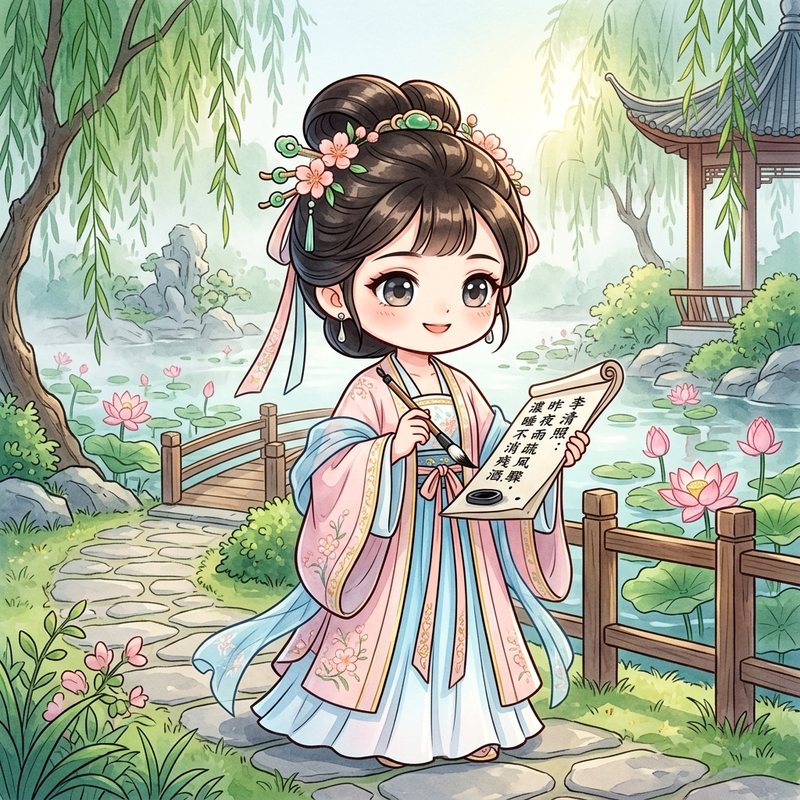
The Sappho of the East & Crown of Lyricists · 1084 – 1155
The Sappho of the East & Crown of Song Dynasty Lyricists
Stops9
Traversed~2,122km
Audio Tour~12min
“常记溪亭日暮,沉醉不知归路。兴尽晚回舟,误入藕花深处。争渡,争渡,惊起一滩鸥鹭。”
Often I remember the pavilion by the brook at sunset, so tipsy I lost my way. Sated with joy, late I turned the boat, straying deep into the lotus blossoms. Row! Row! Startling a flock of resting gulls and herons.
The Sappho of the East & Crown of LyricistsSong Dynasty (1084-1155)号易安居士 · 千古第一才女Audio Journey · 9 Stops
From joyous book-filled youth to surviving national collapse, writing the immortal voice of resilience.
China's Foremost Woman of Letters· Virginia Woolf & Jane AustenThe Heroic Voice of Resilience· Simone de Beauvoir
Unfolding the Historical Landscape…
印
Daily Wisdom & Resilience Oracle
The Unyielding Poetess
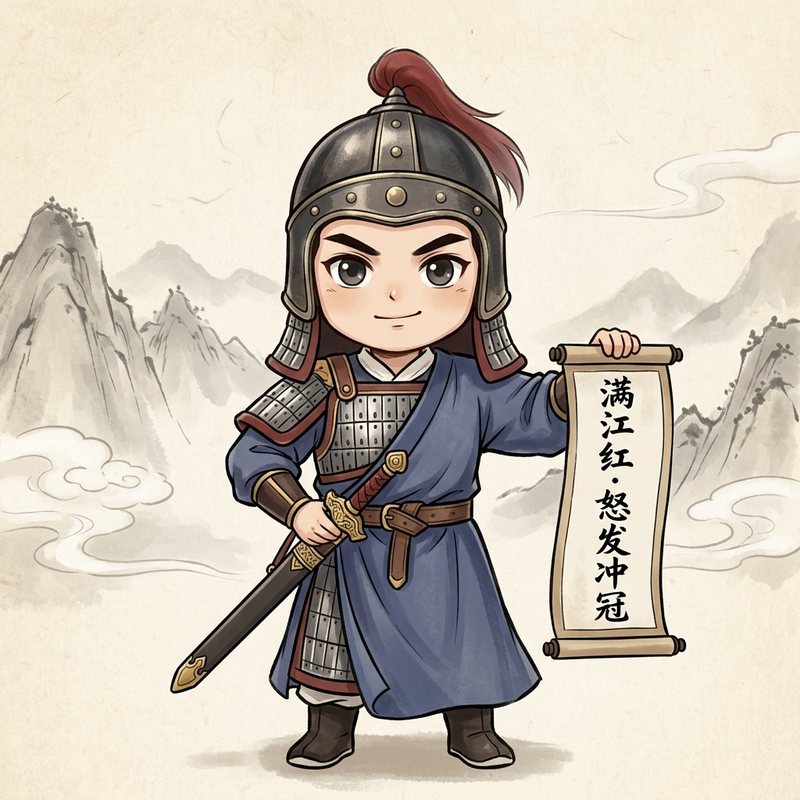
“生当作人杰,死亦为鬼雄。至今思项羽,不肯过江东。”
In life be a hero among the living; in death, a champion among ghosts. Even today we remember Xiang Yu, who refused to flee across the eastern Yangtze.
💡 Traveling south during national collapse, Li Qingzhao pens an unyielding patriotic masterpiece celebrating moral spine.
— Li Qingzhao(The Sappho of the East & Crown of Lyricists)
Historical Footprints & Narration Archive
9 Stations
1
Mingshui, Jinan (Shandong)
1100 CE · Age 16
Spring-water town near modern Jinan, Shandong
Rowing into Lotus Blossoms: The Vivacious Teenage Poet
Often I remember the pavilion by the brook at sunset, so tipsy I lost my way. Sated with joy, late I turned the boat, straying deep into the lotus blossoms. Row! Row! Startling a flock of resting gulls and herons.
Station Narration Script
Born in 1084 in Jinan, young Li Qingzhao boated among lotuses and wrote Like a Dream: 'Returning late, we strayed deep into lotus blossoms—hurry, hurry—startling a whole shore of gulls and egrets.'
Departure Transition Script
At eighteen she married scholar Zhao Mingcheng and moved to Kaifeng, beginning their legendary partnership.
2
Kaifeng Imperial Capital (Henan)
1101 CE · Age 18
Prosperous Northern Song imperial capital, modern Kaifeng, Henan
A Marriage of Minds: Betting on Memory over Steaming Tea
Say not this sorrow does not break the soul: when the west wind rolls up the curtain, I am more frail and slender than the yellow chrysanthemum.
Station Narration Script
In Kaifeng they spent their allowances on bronzes and rubbings, playfully competing over classical trivia. During separations she wrote: 'Say not my soul is not consumed—the curtain rolls in west wind; I am thinner than the yellow flowers.'
Departure Transition Script
Caught in factional politics, Zhao was dismissed. The couple retreated to Qingzhou in Shandong.
3
Qingzhou (Weifang, Shandong)
1108 CE · Age 25
Quiet scholar haven for bronze & stone research near Weifang, Shandong
Willingly would I grow old in this countryside; the calligraphy and paintings collected filled whole pavilions to overflowing.
Station Narration Script
For thirteen years at Guilai Hall she took the name Yi'an. In the Afterword to Records on Bronze and Stone she recalled being 'content to grow old in this place,' their scrolls filling the house.
Departure Transition Script
Zhao was recalled to office in Laizhou. She packed their precious scrolls and traveled to the coast.
4
Laizhou (Yantai, Shandong)
1121 CE · Age 38
Historic prefecture along the Bohai Sea coast, modern Yantai, Shandong
A Shift in the Wind: Melancholy beside the Yellow Sea
In quiet moments I contemplate deeply, finding so many precious things in life still impossible to surrender.
Station Narration Script
Looking over the Yellow Sea at Laizhou, her verse deepened. 'In stillness I have thought it through—still so much I cannot bear to leave,' she wrote, sensing storms along the northern frontier.
Departure Transition Script
When the Jin invaded and the Northern Song fell, she guided fifteen cartloads of antiques south to Nanjing.
5
Jiangning / Nanjing (Jiangsu)
1127 CE · Age 44
Southern wartime capital on the lower Yangtze during the Jin invasion, modern Nanjing, Jiangsu
Fall of the Empire: 'Alive, Be a Hero; Dead, a Champion Ghost!'
Alive, be a hero among men; dead, be a champion among ghosts. Even today we remember Xiang Yu, who refused to flee across the eastern river.
Station Narration Script
Outraged by court cowardice near Nanjing, she wrote at Wujiang: 'Alive, be a hero among men; dead, be a champion among ghosts. Still I think of Xiang Yu, who would not cross east of the river!'
Departure Transition Script
Zhao died of illness on the road. Grief-stricken, she fled along the Zhejiang coast guarding what remained.
6
Hangzhou / Lin'an (Zhejiang)
1129 CE · Age 46
Southern Song imperial haven and scenic West Lake capital, modern Hangzhou, Zhejiang
Heartbreak and Smoke: Guarding the Cultural Relics Alone
“物是人非事事休,欲语泪先流。”
Wù shì rén fēi shì shì xiū, yù yǔ lèi xiān liú.
Things remain while people have changed, and everything has come to an end; before words can form, tears flow first.
Station Narration Script
At forty-six, exiled around Hangzhou, she wrote: 'Things remain, people change, all is finished—before I speak, tears flow first.' Still she guarded the surviving antiques through war and homelessness.
Departure Transition Script
Alone and vulnerable, she was deceived into marrying Zhang Ruzhou—then fought back against abuse and fraud.
7
Lin'an / Hangzhou (Zhejiang)
1132 CE · Age 49
Southern Song judicial capital where Li Qingzhao bravely sued for divorce, Hangzhou
The Courage to Sue: Sacrificing Freedom to Break a Violent Marriage
When truth is distinguished, darkness gives way to light; justice stands unwavering before all under heaven.
Station Narration Script
Discovering Zhang's violence and greed, she risked the Song penalty for a wife accusing her husband, exposed his exam fraud, and won divorce—'hearing and sight finally cleared,' she wrote, a pioneer of women's legal courage.
Departure Transition Script
Free again, she took refuge in Jinhua, Zhejiang, and returned to her brush among the hills.
8
Jinhua / Bayong Tower (Zhejiang)
1134 CE · Age 51
Scenic mountainous refuge of eastern Zhejiang, modern Jinhua
Weighing Sorrow on the River: 'The Light Boat Cannot Bear Such Grief'
Only I fear the tiny grasshopper boats on the Twin Streams cannot bear the heavy weight of so much sorrow.
Station Narration Script
In Jinhua at fifty-one she climbed Eight Chants Tower, then wrote Spring in Wuling on the Twin Streams: 'I only fear that little boat cannot carry so much sorrow.'
Departure Transition Script
In old age she resettled in Hangzhou and finished the Afterword—her last testament to love, scholarship, and cultural memory.
9
Hangzhou / Lin'an (Zhejiang)
1155 CE · Age 72
Peaceful West Lake alleyways where Li Qingzhao finalized Records on Metal and Stone, Hangzhou
The Sound of Slow Loneliness: 'Searching, Searching, Seeking, Seeking...'
Searching, searching, seeking, seeking, so cold and clear, so sad and sorrowful and desolate. In this season of sudden warmth and lingering chill, how hardest it is to find peace.
Station Narration Script
Late in life she opened Slow, Slow Tune with fourteen stacked characters of searching loneliness. She died at about seventy-two—an undimmed pearl of world literature.
Key Historical Inquiries & Context
· 核心史实公案与速览
Li Qingzhao (1084–c. 1155 CE) is universally celebrated as the greatest female poet in Chinese history, famed for her delicate Ci poetry, connoisseurship of epigraphy, and defiant spirit during the fall of Northern Song.
李清照(1084–约1155),号易安居士。宋代杰出词人,婉约派代表,被誉为“千古第一才女”。
QWho was Li Qingzhao?
Li Qingzhao (1084–c. 1155 CE) was a Northern and Southern Song Dynasty poet widely regarded as the foremost woman writer in Chinese literature, celebrated for mastering the song lyric (Ci) genre.
QWhat happened to Li Qingzhao during the Jingkang Incident?
When Jurchen invaders captured the Northern Song capital of Kaifeng in 1127, Li Qingzhao and husband Zhao Mingcheng fled south with their priceless collection of ancient bronze and stone epigraphy, much of which was lost to war and theft.
The Complete Life Journey & Biography of Li Qingzhao (Poetess) (李清照)
Chronological travel & exile routes mapped to modern Chinese cities across Song Dynasty (1084-1155) China — featuring bilingual scholar audio, classical poetry recitations, and historical cross-paths.
Mingshui, Jinan (Shandong) (山东济南 (明水泉畔才情初绽))
Age 16
Modern-day analog: Spring-water town near modern Jinan, Shandong
Rowing into Lotus Blossoms: The Vivacious Teenage Poet
Born in 1084 in Jinan, young Li Qingzhao boated among lotuses and wrote Like a Dream: 'Returning late, we strayed deep into lotus blossoms—hurry, hurry—startling a whole shore of gulls and egrets.'
At eighteen she married scholar Zhao Mingcheng and moved to Kaifeng, beginning their legendary partnership.
“Often I remember the pavilion by the brook at sunset, so tipsy I lost my way. Sated with joy, late I turned the boat, straying deep into the lotus blossoms. Row! Row! Startling a flock of resting gulls and herons.”
Kaifeng Imperial Capital (Henan) (河南开封 (汴京结缡赵明诚赌书泼茶))
Age 18
Modern-day analog: Prosperous Northern Song imperial capital, modern Kaifeng, Henan
A Marriage of Minds: Betting on Memory over Steaming Tea
In Kaifeng they spent their allowances on bronzes and rubbings, playfully competing over classical trivia. During separations she wrote: 'Say not my soul is not consumed—the curtain rolls in west wind; I am thinner than the yellow flowers.'
Caught in factional politics, Zhao was dismissed. The couple retreated to Qingzhou in Shandong.
“Say not this sorrow does not break the soul: when the west wind rolls up the curtain, I am more frail and slender than the yellow chrysanthemum.”
Modern-day analog: Quiet scholar haven for bronze & stone research near Weifang, Shandong
Thirteen Years of Scholarly Bliss at Guilai Hall
For thirteen years at Guilai Hall she took the name Yi'an. In the Afterword to Records on Bronze and Stone she recalled being 'content to grow old in this place,' their scrolls filling the house.
Zhao was recalled to office in Laizhou. She packed their precious scrolls and traveled to the coast.
“Willingly would I grow old in this countryside; the calligraphy and paintings collected filled whole pavilions to overflowing.”
Modern-day analog: Historic prefecture along the Bohai Sea coast, modern Yantai, Shandong
A Shift in the Wind: Melancholy beside the Yellow Sea
Looking over the Yellow Sea at Laizhou, her verse deepened. 'In stillness I have thought it through—still so much I cannot bear to leave,' she wrote, sensing storms along the northern frontier.
When the Jin invaded and the Northern Song fell, she guided fifteen cartloads of antiques south to Nanjing.
“In quiet moments I contemplate deeply, finding so many precious things in life still impossible to surrender.”
Modern-day analog: Southern wartime capital on the lower Yangtze during the Jin invasion, modern Nanjing, Jiangsu
Fall of the Empire: 'Alive, Be a Hero; Dead, a Champion Ghost!'
Outraged by court cowardice near Nanjing, she wrote at Wujiang: 'Alive, be a hero among men; dead, be a champion among ghosts. Still I think of Xiang Yu, who would not cross east of the river!'
Zhao died of illness on the road. Grief-stricken, she fled along the Zhejiang coast guarding what remained.
“Alive, be a hero among men; dead, be a champion among ghosts. Even today we remember Xiang Yu, who refused to flee across the eastern river.”
Modern-day analog: Southern Song imperial haven and scenic West Lake capital, modern Hangzhou, Zhejiang
Heartbreak and Smoke: Guarding the Cultural Relics Alone
At forty-six, exiled around Hangzhou, she wrote: 'Things remain, people change, all is finished—before I speak, tears flow first.' Still she guarded the surviving antiques through war and homelessness.
Alone and vulnerable, she was deceived into marrying Zhang Ruzhou—then fought back against abuse and fraud.
“Things remain while people have changed, and everything has come to an end; before words can form, tears flow first.”
Modern-day analog: Southern Song judicial capital where Li Qingzhao bravely sued for divorce, Hangzhou
The Courage to Sue: Sacrificing Freedom to Break a Violent Marriage
Discovering Zhang's violence and greed, she risked the Song penalty for a wife accusing her husband, exposed his exam fraud, and won divorce—'hearing and sight finally cleared,' she wrote, a pioneer of women's legal courage.
Free again, she took refuge in Jinhua, Zhejiang, and returned to her brush among the hills.
“When truth is distinguished, darkness gives way to light; justice stands unwavering before all under heaven.”
Modern-day analog: Scenic mountainous refuge of eastern Zhejiang, modern Jinhua
Weighing Sorrow on the River: 'The Light Boat Cannot Bear Such Grief'
In Jinhua at fifty-one she climbed Eight Chants Tower, then wrote Spring in Wuling on the Twin Streams: 'I only fear that little boat cannot carry so much sorrow.'
In old age she resettled in Hangzhou and finished the Afterword—her last testament to love, scholarship, and cultural memory.
“Only I fear the tiny grasshopper boats on the Twin Streams cannot bear the heavy weight of so much sorrow.”
Modern-day analog: Peaceful West Lake alleyways where Li Qingzhao finalized Records on Metal and Stone, Hangzhou
The Sound of Slow Loneliness: 'Searching, Searching, Seeking, Seeking...'
Late in life she opened Slow, Slow Tune with fourteen stacked characters of searching loneliness. She died at about seventy-two—an undimmed pearl of world literature.
“Searching, searching, seeking, seeking, so cold and clear, so sad and sorrowful and desolate. In this season of sudden warmth and lingering chill, how hardest it is to find peace.”