The Architect of Neo-ConfucianismSong Dynasty(1130—1200)字元晦 · 字仲晦 · 号晦庵 · 谥文 · 徽国公Audio Journey · 10 Stops
Supreme synthesizer of Neo-Confucianism who established the Four Books as the core East Asian civil exam canon for seven centuries.
The Aristotle of East Asia· AristotleThe Thomas Aquinas of Neo-Confucianism· Thomas AquinasThe Living Spring of Epistemic Inwardness· The Socratic pursuit of examined life
Unfolding the Historical Landscape…
印
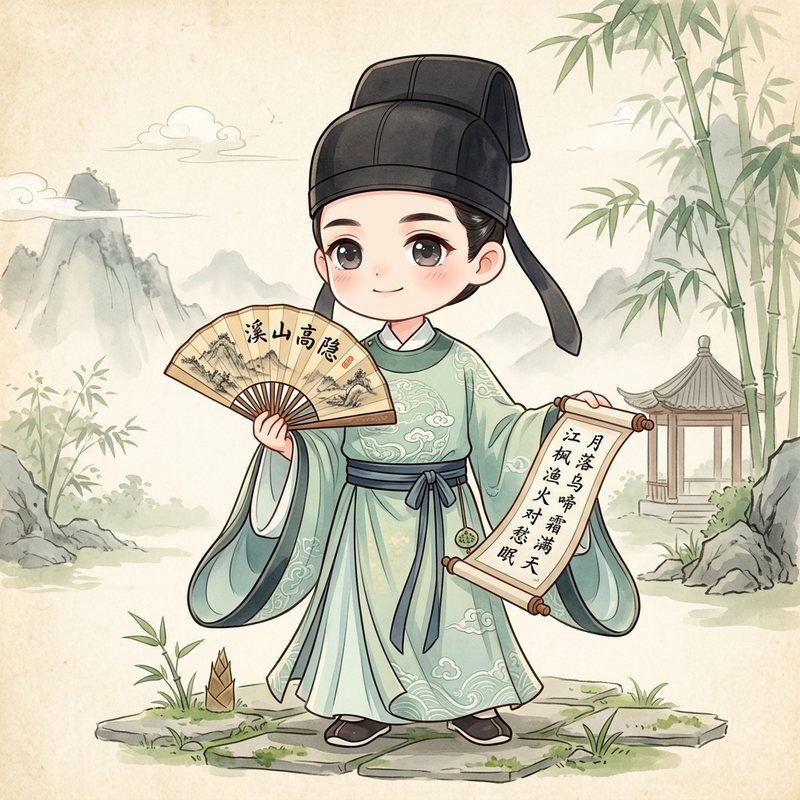
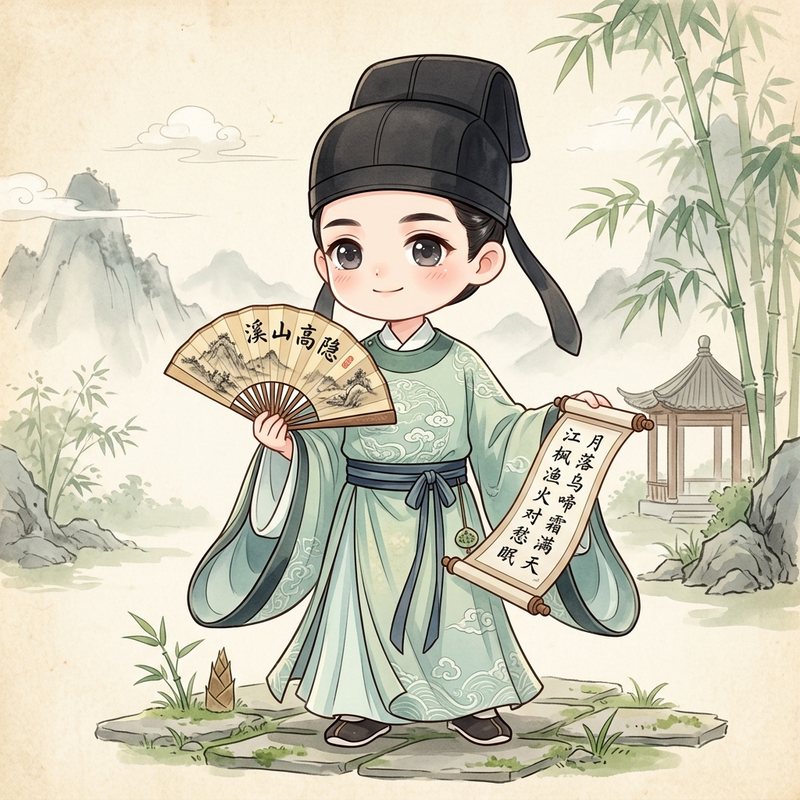
Daily Wisdom & Resilience Oracle
The Resilient Optimist
“竹杖芒鞋轻胜马,谁怕?一蓑烟雨任平生。”
Holding a bamboo cane and wearing straw sandals, I stride faster than a horse. Who is afraid? A straw cloak in the mist and rain — I live my life with equanimity.
💡 In the 3rd year of exile in Huangzhou, caught in a sudden downpour, Su Shi embraced the storm with supreme resilience.
— Su Shi (Dongpo)(The Renaissance Foodie & Optimist)
Historical Footprints & Narration Archive
10 Stations
1
Youxi County, Jianzhou
1130 CE · Age 1
Mountain basin along the Youxi River and birthplace of Zhu Xi, modern Youxi, Sanming, Fujian
As a four-year-old child looking up at the sky, he startled his father with a cosmic question: 'What lies beyond the edge of heaven?'
“天之上何物?”
Tiān zhī shàng hé wù?
What lies beyond the boundless sky?
Station Narration Script
In 1130, Zhu Xi was born in the sheriff's quarters of Youxi in mountainous Fujian. Raised by an upright father who rejected political cowardice, the boy displayed extraordinary philosophical curiosity, asking at age four what lay beyond heaven. Here in the serene valleys of Fujian, the intellectual foundations of East Asia's greatest Neo-Confucian synthesizer were first laid.
Departure Transition Script
Orphaned at fourteen, Zhu Xi moved to Wufu in Jianzhou under the tutelage of mountain masters, passing the highest imperial examinations at nineteen.
2
Wufu, Jianzhou
1148 CE · Age 19
Picturesque valley beneath Mount Wuyi and cultural retreat of Song scholars, modern Wufuzhen, Wuyishan, Fujian
Orphaned at fourteen and tutored by mountain hermits, he immersed himself in classics to win the Jinshi doctoral degree at age nineteen.
“胜日寻芳泗水滨,无边光景一时新。等闲识得东风面,万紫千红总是春。”
Shèng rì xún fāng Sìshuǐ bīn, wúbiān guāngjǐng yīshí xīn. Děngxián shí dé dōngfēng miàn, wànzǐqiānhóng zǒng shì chūn.
On a glorious day I seek blossoms along the Si River banks, where boundless vistas gleam renewed and bright. With effortless ease one recognizes the eastern wind's countenance: ten thousand blossoms of purple and crimson proclaim that spring has come.
Station Narration Script
Sheltered in Wufu village near Mount Wuyi, young Zhu Xi studied tirelessly under the Three Masters of Wuyi. Immersing himself in the deep springs of Confucian texts and broader philosophies, he cultivated profound scholarly discipline. In 1148, at just nineteen, he stunned the imperial examiners in the capital by passing the prestigious Jinshi examinations.
Departure Transition Script
Having earned his doctoral degree, Zhu Xi received his first official posting in coastal Tong'an, turning theory into practical civic reform.
3
Tong'an County, Quanzhou
1153 CE · Age 24
Coastal maritime prefecture near Xiamen Bay and historic center of civil administration, modern Tong'an, Xiamen, Fujian
Arriving in coastal Tong'an as a young magistrate registrar, he audited corrupt tax rolls, founded academies, and educated the common people.
“为政之要,辨善恶、明是非而已。”
Wéi zhèng zhī yào, biàn shàn'è, míng shìfēi éryǐ.
The supreme essence of governance lies simply in distinguishing good from evil and illuminating right from wrong.
Station Narration Script
In Tong'an, twenty-four-year-old Zhu Xi proved himself an exceptionally capable practical administrator. He audited county taxation records, ended extortion by entrenched clans, and founded the Jiaosi Academy to educate ordinary citizens. Here, Zhu Xi confirmed his core conviction: moral philosophy must bear fruit in the tangible soil of humane, practical governance.
Departure Transition Script
Completing his term, Zhu Xi hiked hundreds of miles to Yanping to seek Master Li Tong and unlock the core of Neo-Confucian metaphysics.
4
Yanping, Nanjianzhou
1158 CE · Age 29
Historic river junction of the Min River and sanctuary of orthodox Cheng brothers' Neo-Confucian teachings, modern Nanping, Fujian
Abandoning years of flirtation with Buddhism and Daoism, he walked hundreds of miles to learn from Li Tong, experiencing a profound philosophical rebirth.
Last night along the riverbank the spring tide rose, bearing giant warships light as a single feather. All the futile efforts spent in shoving them along before—today they glide effortlessly through the surging midstream.
Station Narration Script
Inside a humble retreat in Yanping, Zhu Xi experienced the decisive intellectual rebirth of his life. Studying under the seventy-year-old Master Li Tong, he shed his fascination with Buddhist quietism. Li taught him to discern eternal Principle within ordinary daily tasks. Zhu Xi achieved holistic clarity: Principle was unified yet manifest in infinite concrete forms, giving birth to his definitive philosophy.
Departure Transition Script
In 1163, Emperor Xiaozong ascended the throne, summoning Zhu Xi to the capital Lin'an for palace audiences on moral statecraft.
5
Imperial Palace, Lin'an
1163 CE · Age 34
Imperial capital palace halls where Zhu Xi petitioned the emperor on internal cultivation and good governance, modern Hangzhou, Zhejiang
Summoned to court by a martial emperor eager for immediate war, he boldly advised that moral self-restraint must precede military conquests.
“致知在格物者,言欲致吾之知,在即物而穷其理也。”
Zhì zhī zài gé wù zhě, yán yù zhì wú zhī zhī, zài jí wù ér qióng qí lǐ yě.
Extending knowledge through the investigation of things means that if we desire to perfect our comprehension, we must approach each phenomenon and exhaustively fathom its inherent principle.
Station Narration Script
Before the golden steps of Chuigong Hall in Lin'an, thirty-four-year-old Zhu Xi stood tall before an emperor hungry for quick military glory. Refusing to flatter, Zhu insisted that the true strength of a realm begins with the moral rectitude of the sovereign's own heart. His bold memorials challenged the hubris of the court, proving that a true philosopher speaks truth to absolute power.
Departure Transition Script
In 1175, scholar Lü Zuqian organized a historic gathering, prompting Zhu Xi to travel to Goose Lake Temple for an intellectual summit.
6
Goose Lake Temple, Qianshan
1175 CE · Age 46
Secluded monastery in the mountains of Jiangxi and site of the legendary Goose Lake Philosophical Debate, modern Qianshan, Jiangxi
In China's most famous philosophical showdown, he clashed with the Lu brothers over empirical study versus intuitive inner enlightenment.
Virtue and deed advance swift as the runes of sacred mountains; wisdom and courage surpass an army of ten thousand chariots. Hitherto our debate harmonized like zithers and harps, yet parting here our paths appear to diverge.
Station Narration Script
Beneath the towering pines of Goose Lake Temple, the most renowned debate in Chinese philosophy unfolded. Zhu Xi sat poised with his classical texts, methodically tracing the steps of empirical inquiry, while Lu Jiuyuan championed direct spiritual intuition. For days, China's greatest minds sparred with fierce intellectual vigor and mutual reverence, crystallizing the dual currents of Chinese moral philosophy.
Departure Transition Script
Four years later, appointed governor of Nankang, Zhu Xi visited Mount Lu and vowed to rebuild the ruined White Deer Grotto Academy.
7
White Deer Grotto Academy, Mount Lu
1179 CE · Age 50
World-renowned Confucian academy nestled below Mount Lu's Five Old Men Peaks, modern Lushan, Jiujiang, Jiangxi
Finding an ancient mountain academy choked with weeds, he resurrected it into the Oxford of ancient China, drafting an immortal educational charter.
A half-acre square pond opens like an unblemished mirror, where celestial light and cloud shadows wander in embrace. Ask how it remains so crystalline and clear: it is because a living spring ceaselessly flows from its source.
Station Narration Script
Nestled in the lush valleys beneath Mount Lu, Zhu Xi breathed vibrant life back into the abandoned White Deer Grotto Academy. To scholars gathering from across the empire, he presented the Academy Charter, declaring that true education aimed not at civil exam degrees, but at cultivating moral integrity. Beside the living spring of the campus pond, he even invited his debate rival Lu Jiuyuan to lecture, exemplifying open-minded scholarly grandeur.
Departure Transition Script
In 1190, sixty-one-year-old Zhu Xi governed Zhangzhou, implementing land tax reforms and printing his definitive Four Books.
8
Zhangzhou Prefecture
1190 CE · Age 61
Prosperous southern Fujian cultural region and birthplace of the published Four Books commentaries, modern Zhangzhou, Fujian
At sixty-one, he audited corrupt oligarchs' hidden estates to relieve poor peasants, while printing his definitive Four Books commentary.
“读书有三到,谓心到、眼到、口到。”
Dúshū yǒu sān dào, wèi xīn dào, yǎn dào, kǒu dào.
In reading there are three essential arrivals: the mind must arrive, the eyes must arrive, and the mouth must arrive.
Station Narration Script
Under the lamplight of the Zhangzhou government offices, sixty-one-year-old Zhu Xi displayed breathtaking reforming resolve. Confronting centuries of entrenched tax evasion by local gentry, he implemented systematic land audits, shielding destitute peasant households from ruination. It was also here that he published his Four Books commentaries, transforming the ancient classics into a clear moral guide for the entire East Asian world.
Departure Transition Script
In 1194, Zhu Xi was made governor of Hunan, arriving in Changsha to restore and teach at the Yuelu Academy.
9
Yuelu Academy, Tanzhou
1194 CE · Age 65
Spiritual heart of Huxiang scholarship and Yuelu Academy along the Xiang River, modern Changsha, Hunan
His open-air lectures at Yuelu Academy attracted thousands of scholars, packing the courtyards and drinking the campus pond completely dry.
Youth ages all too swiftly while profound learning is hard to achieve; not a single inch of time should ever be treated lightly. Before waking from the dream of spring grasses by the pond, the paulownia leaves before the courtyard steps are already whispering of autumn.
Station Narration Script
Beneath Mount Yuelu by the Xiang River, sixty-five-year-old Zhu Xi reached the zenith of his teaching career. In the newly restored academy lecture hall, Master Zhu expounded the inner mysteries of classical virtues to thousands of scholars who flocked from across China. The crowds were so vast that their horses drank the academy pool dry. With profound erudition and warmth, he ignited a beacon of learning that shone for centuries.
Departure Transition Script
In his final years, corrupt chancellors launched the Qingyuan Partisan Prohibition, forcing Zhu Xi to retire to Kaoting Academy.
10
Kaoting Academy, Jianyang
1200 CE · Age 71
Quiet riverside village of Kaoting along the Nanping riverbanks, final sanctuary and burial site of Zhu Xi, modern Jianyang, Fujian
Branded a dangerous heretic by corrupt dictators, he calmly polished his commentaries until death, his funeral attended by thousands defying imperial police.
That which fills heaven and earth is my body; that which directs heaven and earth is my nature.
Station Narration Script
Within Cangzhou Jingshe at Kaoting in Jianyang, ancient trees shadowed seventy-year-old Zhu Xi during his final days. Branded a heretic by corrupt dictators, he exhibited radiant equanimity beyond life and death. While enemies banned his writings, he calmly perfected his commentaries under lamplight. When he passed away in the spring of 1200, over a thousand scholars and commoners defied imperial threats to mourn him in white robes, enshrining his legacy forever.
Departure Transition Script
Weathering political storms, Zhu Xi's philosophical architecture became the state orthodoxy of China, permanently defining the moral soul of East Asia.
Key Historical Inquiries & Context
· 核心史实公案与速览
Zhu Xi (1130–1200), courtesy names Yuanhui and Zhonghui, art name Hui'an, was the preeminent Chinese philosopher, statesman, and educator of the Southern Song Dynasty who synthesized Neo-Confucianism (Lixue). Passing the Jinshi examinations at nineteen, he served in several administrative postings, reforming taxes and restoring celebrated classical academies including the White Deer Grotto and Yuelu academies. Zhu Xi integrated Confucian humanism with a comprehensive cosmological architecture based on the interaction of universal Principle (Li) and Material Force (Qi), championing the rational investigation of things (Gewu Zhizhi). His definitive commentary on the Four Books—the Great Learning, Doctrine of the Mean, Analects, and Mencius—became the official civil service examination curriculum throughout imperial China from 1313 to 1905, establishing him as the Aristotle and Thomas Aquinas of East Asian intellectual history.
Zhu Xi (1130–1200), courtesy names Yuanhui and Zhonghui, art name Hui'an, was the preeminent Chinese philosopher, statesman, and educator of the Southern Song Dynasty who synthesized Neo-Confucianism (Lixue). Passing the Jinshi examinations at nineteen, he served in several administrative postings, reforming taxes and restoring celebrated classical academies including the White Deer Grotto and Yuelu academies. Zhu Xi integrated Confucian humanism with a comprehensive cosmological architecture based on the interaction of universal Principle (Li) and Material Force (Qi), championing the rational investigation of things (Gewu Zhizhi). His definitive commentary on the Four Books—the Great Learning, Doctrine of the Mean, Analects, and Mencius—became the official civil service examination curriculum throughout imperial China from 1313 to 1905, establishing him as the Aristotle and Thomas Aquinas of East Asian intellectual history.
QWhat was Zhu Xi's primary cultural and historical legacy?
Zhu Xi is celebrated across world history as a pioneer of The Aristotle of East Asia, The Thomas Aquinas of Neo-Confucianism, The Living Spring of Epistemic Inwardness, leaving enduring philosophical insights, literature, and art.
QWhere does Zhu Xi's historical life journey map lead?
This interactive GIS map retraces 10 chronological stops across Song Dynasty China, originating from Youxi County, Jianzhou and spanning through Kaoting Academy, Jianyang.
The Complete Life Journey & Biography of Zhu Xi (Master Zhu) (朱熹)
Chronological travel & exile routes mapped to modern Chinese cities across Song Dynasty China — featuring bilingual scholar audio, classical poetry recitations, and historical cross-paths.
Youxi County, Jianzhou (尤溪县尉官舍)
Age 1
Modern-day analog: Mountain basin along the Youxi River and birthplace of Zhu Xi, modern Youxi, Sanming, Fujian
As a four-year-old child looking up at the sky, he startled his father with a cosmic question: 'What lies beyond the edge of heaven?'
In 1130, Zhu Xi was born in the sheriff's quarters of Youxi in mountainous Fujian. Raised by an upright father who rejected political cowardice, the boy displayed extraordinary philosophical curiosity, asking at age four what lay beyond heaven. Here in the serene valleys of Fujian, the intellectual foundations of East Asia's greatest Neo-Confucian synthesizer were first laid.
Orphaned at fourteen, Zhu Xi moved to Wufu in Jianzhou under the tutelage of mountain masters, passing the highest imperial examinations at nineteen.
“What lies beyond the boundless sky?”
天之上何物? (Tiān zhī shàng hé wù?)
Wufu, Jianzhou (建州崇安五夫里)
Age 19
Modern-day analog: Picturesque valley beneath Mount Wuyi and cultural retreat of Song scholars, modern Wufuzhen, Wuyishan, Fujian
Orphaned at fourteen and tutored by mountain hermits, he immersed himself in classics to win the Jinshi doctoral degree at age nineteen.
Sheltered in Wufu village near Mount Wuyi, young Zhu Xi studied tirelessly under the Three Masters of Wuyi. Immersing himself in the deep springs of Confucian texts and broader philosophies, he cultivated profound scholarly discipline. In 1148, at just nineteen, he stunned the imperial examiners in the capital by passing the prestigious Jinshi examinations.
Having earned his doctoral degree, Zhu Xi received his first official posting in coastal Tong'an, turning theory into practical civic reform.
“On a glorious day I seek blossoms along the Si River banks, where boundless vistas gleam renewed and bright. With effortless ease one recognizes the eastern wind's countenance: ten thousand blossoms of purple and crimson proclaim that spring has come.”
胜日寻芳泗水滨,无边光景一时新。等闲识得东风面,万紫千红总是春。 (Shèng rì xún fāng Sìshuǐ bīn, wúbiān guāngjǐng yīshí xīn. Děngxián shí dé dōngfēng miàn, wànzǐqiānhóng zǒng shì chūn.)
Tong'an County, Quanzhou (泉州同安县署)
Age 24
Modern-day analog: Coastal maritime prefecture near Xiamen Bay and historic center of civil administration, modern Tong'an, Xiamen, Fujian
Arriving in coastal Tong'an as a young magistrate registrar, he audited corrupt tax rolls, founded academies, and educated the common people.
In Tong'an, twenty-four-year-old Zhu Xi proved himself an exceptionally capable practical administrator. He audited county taxation records, ended extortion by entrenched clans, and founded the Jiaosi Academy to educate ordinary citizens. Here, Zhu Xi confirmed his core conviction: moral philosophy must bear fruit in the tangible soil of humane, practical governance.
Completing his term, Zhu Xi hiked hundreds of miles to Yanping to seek Master Li Tong and unlock the core of Neo-Confucian metaphysics.
“The supreme essence of governance lies simply in distinguishing good from evil and illuminating right from wrong.”
Modern-day analog: Historic river junction of the Min River and sanctuary of orthodox Cheng brothers' Neo-Confucian teachings, modern Nanping, Fujian
Abandoning years of flirtation with Buddhism and Daoism, he walked hundreds of miles to learn from Li Tong, experiencing a profound philosophical rebirth.
Inside a humble retreat in Yanping, Zhu Xi experienced the decisive intellectual rebirth of his life. Studying under the seventy-year-old Master Li Tong, he shed his fascination with Buddhist quietism. Li taught him to discern eternal Principle within ordinary daily tasks. Zhu Xi achieved holistic clarity: Principle was unified yet manifest in infinite concrete forms, giving birth to his definitive philosophy.
In 1163, Emperor Xiaozong ascended the throne, summoning Zhu Xi to the capital Lin'an for palace audiences on moral statecraft.
“Last night along the riverbank the spring tide rose, bearing giant warships light as a single feather. All the futile efforts spent in shoving them along before—today they glide effortlessly through the surging midstream.”
Modern-day analog: Imperial capital palace halls where Zhu Xi petitioned the emperor on internal cultivation and good governance, modern Hangzhou, Zhejiang
Summoned to court by a martial emperor eager for immediate war, he boldly advised that moral self-restraint must precede military conquests.
Before the golden steps of Chuigong Hall in Lin'an, thirty-four-year-old Zhu Xi stood tall before an emperor hungry for quick military glory. Refusing to flatter, Zhu insisted that the true strength of a realm begins with the moral rectitude of the sovereign's own heart. His bold memorials challenged the hubris of the court, proving that a true philosopher speaks truth to absolute power.
In 1175, scholar Lü Zuqian organized a historic gathering, prompting Zhu Xi to travel to Goose Lake Temple for an intellectual summit.
“Extending knowledge through the investigation of things means that if we desire to perfect our comprehension, we must approach each phenomenon and exhaustively fathom its inherent principle.”
Modern-day analog: Secluded monastery in the mountains of Jiangxi and site of the legendary Goose Lake Philosophical Debate, modern Qianshan, Jiangxi
In China's most famous philosophical showdown, he clashed with the Lu brothers over empirical study versus intuitive inner enlightenment.
Beneath the towering pines of Goose Lake Temple, the most renowned debate in Chinese philosophy unfolded. Zhu Xi sat poised with his classical texts, methodically tracing the steps of empirical inquiry, while Lu Jiuyuan championed direct spiritual intuition. For days, China's greatest minds sparred with fierce intellectual vigor and mutual reverence, crystallizing the dual currents of Chinese moral philosophy.
Four years later, appointed governor of Nankang, Zhu Xi visited Mount Lu and vowed to rebuild the ruined White Deer Grotto Academy.
“Virtue and deed advance swift as the runes of sacred mountains; wisdom and courage surpass an army of ten thousand chariots. Hitherto our debate harmonized like zithers and harps, yet parting here our paths appear to diverge.”
Modern-day analog: World-renowned Confucian academy nestled below Mount Lu's Five Old Men Peaks, modern Lushan, Jiujiang, Jiangxi
Finding an ancient mountain academy choked with weeds, he resurrected it into the Oxford of ancient China, drafting an immortal educational charter.
Nestled in the lush valleys beneath Mount Lu, Zhu Xi breathed vibrant life back into the abandoned White Deer Grotto Academy. To scholars gathering from across the empire, he presented the Academy Charter, declaring that true education aimed not at civil exam degrees, but at cultivating moral integrity. Beside the living spring of the campus pond, he even invited his debate rival Lu Jiuyuan to lecture, exemplifying open-minded scholarly grandeur.
In 1190, sixty-one-year-old Zhu Xi governed Zhangzhou, implementing land tax reforms and printing his definitive Four Books.
“A half-acre square pond opens like an unblemished mirror, where celestial light and cloud shadows wander in embrace. Ask how it remains so crystalline and clear: it is because a living spring ceaselessly flows from its source.”
Modern-day analog: Prosperous southern Fujian cultural region and birthplace of the published Four Books commentaries, modern Zhangzhou, Fujian
At sixty-one, he audited corrupt oligarchs' hidden estates to relieve poor peasants, while printing his definitive Four Books commentary.
Under the lamplight of the Zhangzhou government offices, sixty-one-year-old Zhu Xi displayed breathtaking reforming resolve. Confronting centuries of entrenched tax evasion by local gentry, he implemented systematic land audits, shielding destitute peasant households from ruination. It was also here that he published his Four Books commentaries, transforming the ancient classics into a clear moral guide for the entire East Asian world.
In 1194, Zhu Xi was made governor of Hunan, arriving in Changsha to restore and teach at the Yuelu Academy.
“In reading there are three essential arrivals: the mind must arrive, the eyes must arrive, and the mouth must arrive.”
Modern-day analog: Spiritual heart of Huxiang scholarship and Yuelu Academy along the Xiang River, modern Changsha, Hunan
His open-air lectures at Yuelu Academy attracted thousands of scholars, packing the courtyards and drinking the campus pond completely dry.
Beneath Mount Yuelu by the Xiang River, sixty-five-year-old Zhu Xi reached the zenith of his teaching career. In the newly restored academy lecture hall, Master Zhu expounded the inner mysteries of classical virtues to thousands of scholars who flocked from across China. The crowds were so vast that their horses drank the academy pool dry. With profound erudition and warmth, he ignited a beacon of learning that shone for centuries.
In his final years, corrupt chancellors launched the Qingyuan Partisan Prohibition, forcing Zhu Xi to retire to Kaoting Academy.
“Youth ages all too swiftly while profound learning is hard to achieve; not a single inch of time should ever be treated lightly. Before waking from the dream of spring grasses by the pond, the paulownia leaves before the courtyard steps are already whispering of autumn.”
Modern-day analog: Quiet riverside village of Kaoting along the Nanping riverbanks, final sanctuary and burial site of Zhu Xi, modern Jianyang, Fujian
Branded a dangerous heretic by corrupt dictators, he calmly polished his commentaries until death, his funeral attended by thousands defying imperial police.
Within Cangzhou Jingshe at Kaoting in Jianyang, ancient trees shadowed seventy-year-old Zhu Xi during his final days. Branded a heretic by corrupt dictators, he exhibited radiant equanimity beyond life and death. While enemies banned his writings, he calmly perfected his commentaries under lamplight. When he passed away in the spring of 1200, over a thousand scholars and commoners defied imperial threats to mourn him in white robes, enshrining his legacy forever.
Weathering political storms, Zhu Xi's philosophical architecture became the state orthodoxy of China, permanently defining the moral soul of East Asia.
“That which fills heaven and earth is my body; that which directs heaven and earth is my nature.”