Who Was Wen Tianxiang? The Unbroken Martyr of Song China
Top imperial scholar, defiant wartime Prime Minister, and author of the immortal 'Song of Righteousness' who refused Kublai Khan's crown to preserve his nation's dignity
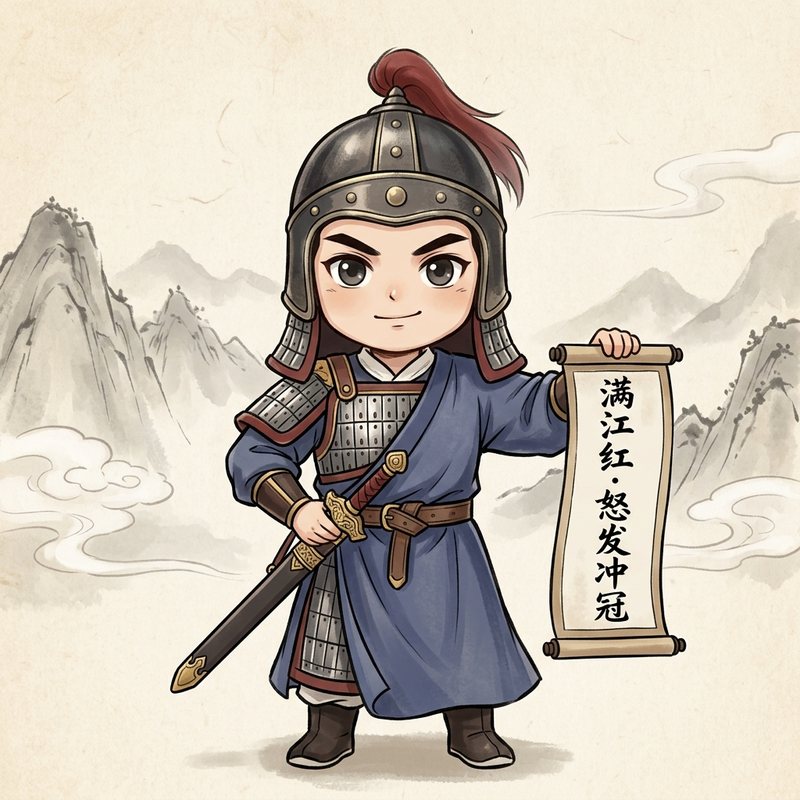
Wen Tianxiang (文天祥 · Wén Tiānxiáng)
字履善 · 又字宋瑞 · 号文山 · 世称信国公
Top imperial scholar, patriotic Prime Minister, and moral martyr of the Southern Song: his 'Song of Righteousness' and 'crimson heart' illuminated Chinese history.
南宋状元宰相、抗元民族英雄;以《过零丁洋》《正气歌》铸就千古不屈浩然气节,留取丹心照汗青。
- The Supreme Scholar-Statesman: Placed first in the 1256 imperial examinations with a 10,000-word treatise praising moral statecraft, praised by Emperor Lizong as 'Heaven's auspicious blessing.'
- Sacrificing Wealth for Duty: When royal defenses collapsed against Mongol forces in 1275, he spent his entire ancestral fortune to equip 30,000 volunteer fighters in Ganzhou.
- Fearless Diplomatic Stance: As Right Grand Chancellor, he confronted Mongol General Bayan unarmed at Gaotingshan, refusing to compromise the dignity of the Song throne.
- Immortal Literary Defiance: Composed 'Passing the Lingding Ocean' aboard an enemy warship and the 'Song of Righteousness' in a subterranean cell, defining Chinese patriotic philosophy.
- Unshakeable Martyrdom: Steadfastly spurned Kublai Khan's repeated personal entreaties to serve as Prime Minister, choosing execution at Chaishi to fulfill Confucian moral righteousness.
Phase 1: The Luling Prodigy & Imperial Exam Triumph (1236–1256)
Wen Tianxiang was born in 1236 in Luling, Jizhou (modern Ji'an, Jiangxi Province), an ancient cultural basin renowned for producing uncompromising scholar-officials. Raised in a distinguished gentry family, young Wen was guided by his father Wen Yi to master Confucian canonical literature. When visiting his local ancestral shrine, he gazed upon the portraits of famous Song patriots including Ouyang Xiu, Yang Wanli, and Hu Quan, who had all received the posthumous honorific 'Loyal' (Zhong). Deeply moved, the schoolboy declared: 'If upon my death I am not venerated among these heroes, then I have lived as no true man!'
南宋理宗端平三年(1236年),文天祥出生于江西吉州庐陵的名门书香之家。庐陵自古忠义之士辈出,父亲文仪注重名节道德教育。少时文天祥在乡学瞻仰欧阳修、杨万里、胡铨等先贤遗像,见其谥号皆有‘忠’字,慨然立誓:‘没不俎豆其间,非夫也!’少年心胸便埋下了以身许国的崇高志向。
In 1256, at just twenty years old, Wen Tianxiang traveled to the southern capital of Lin'an (modern Hangzhou) for the imperial palace examinations. Without drafting a preliminary outline, he penned a passionate ten-thousand-word treatise diagnosing the administrative decay of the realm and urging moral revitalization. Emperor Lizong personally ranked him first as Zhuangyuan, exclaiming: 'This talent is heaven's divine blessing, an auspicious omen sent to preserve the Song!' In tribute, Wen took the courtesy name Songrui ('Song's Auspicious Sign').
宝祐四年(1256年),年仅二十岁的文天祥赴临安参加集英殿殿试。他直抒胸臆,对策万言,不打草稿一气呵成。宋理宗阅后大加赞赏,亲擢其为第一名状元,御笔题道:‘此天之祥,乃宋之瑞也!’文天祥遂改字‘宋瑞’,名满天下。
没不俎豆其间,非夫也!
Mò bù zǔdòu qí jiān, fēi fū yě!
If upon death my spirit is not revered among these ancient patriots, then I have lived as no true man!
Context · Spoken by Wen Tianxiang in his youth at the Xiangshan Temple in Luling, establishing the unbending moral oath that guided his entire life.
Phase 2: Unbending Incorruptibility & The Hermit of Wenshan (1256–1274)
Entering public office, Wen Tianxiang immediately demonstrated that his exam essays were not empty rhetoric. In 1259, when Mongol armies advanced towards Ezhou, corrupt imperial court eunuch Dong Songchen urged Emperor Lizong to flee inland and abandon the capital. Outraged by this cowardice, Wen Tianxiang submitted a blistering memorial petitioning for Dong Songchen's immediate execution. Facing fierce retaliation from court factions, Wen promptly resigned his post to protect his moral independence.
及第入仕后,文天祥展现了言行如一的士大夫风骨。开庆元年(1259年)忽必烈围鄂州,宦官董宋臣蛊惑迁都逃避战火。文天祥愤然上书痛陈利害,乞斩董宋臣以厉人心。面对权阉与保守派的忌恨打击,文天祥毅然挂冠而去,宁退隐亦不与邪佞同流合污。
In 1270, Wen was appointed Judicial Intendant of Jiangxi and Prefect of Ruizhou (modern Gao'an). He reformed judicial corruption and safeguarded common citizens, but refused to bow before the autocratic Grand Chancellor Jia Sidao. When Jia Sidao engineered his dismissal through trumped-up charges, Wen retired to his mountain villa in Luling, adopting the literary moniker 'Master Wenshan' (Master of the Culture Mountain), gathering books and quietly preparing for the storm ahead.
咸淳六年(1270年),文天祥先后任江西提刑、知瑞州军州事,明断刑狱、造福士民。然而朝中权相贾似道专权误国,文天祥公事公办不假辞色,屡拒阿附。贾似道授意台臣诬陷弹劾,文天祥再次罢归,于吉州文山修筑别业,自号‘文山先生’。
Phase 3: Emptying the Family Coffers & Raising the Volunteer Army (1275)
In spring 1275, the defensive line along the Yangtze River shattered under Mongol Commander Bayan's offensive. With the imperial court in Lin'an teetering on the edge of collapse, Empress Dowager Xie issued an emergency imperial decree summoning regional garrisons to defend the dynasty. Stationed as Prefect of Ganzhou in southern Jiangxi, Wen Tianxiang read the summons through floods of tears. Without hesitation, he committed his entire personal family fortune to buy weapons, grain, and armaments, rallying thirty thousand volunteer militia fighters.
德祐元年(1275年),伯颜率元军精锐突破长江防线,南宋危在旦夕。临安行朝下发哀痛求援的勤王诏书。时任赣州知州的文天祥读诏涕泣,当即‘尽以家赀为军费’,号召豪杰与客籍志士,迅速集结义军三万人,誓死进卫临安。
Friends tried to dissuade him, cautioning: 'Pitting an untrained volunteer militia against hardened northern cavalry is like herding sheep to battle fierce tigers!' Wen Tianxiang delivered his legendary reply: 'The Son of Heaven has nurtured the realm for three hundred years. If in this desperate hour of peril not a single soldier or horse marches into the capital pass, it is an eternal shame on our nation. I offer my mortal flesh as a sacrifice, that true patriots across the four seas might awaken and rise to the call!'
挚友忧心劝阻:‘元兵精锐,以乌合之众趋之,何异驱群羊斗猛虎?’文天祥悲壮作答:‘圣主抚育天下三百载,一旦有急,征天下兵无一人一骑入关者,吾深恨于此!故不自量力以身殉之,庶天下忠臣义士闻风而起!’义军慷慨北上,震动江左。
第以身殉之,庶天下忠臣义士闻风而起!
Dì yǐ shēn xùn zhī, shù tiānxià zhōngchén yìshì wénfēng ér qǐ!
I offer my own body as a sacrifice, hoping that true patriots across the four seas will awaken and rise to the call!
Context · Wen Tianxiang's immortal declaration in Ganzhou when spending his entire family estate to assemble 30,000 anti-Mongol volunteer troops.
Phase 4: Defying Bayan & The Daring Night Escape Across the Yangtze (1276)
In January 1276, Mongol banners appeared at the outskirts of Lin'an. In desperation, the imperial court elevated Wen Tianxiang to Right Grand Chancellor and Minister of Privy Council, appointing him chief imperial envoy to negotiate terms at Gaotingshan. In Bayan's gold tent, surrounded by drawn scimitars, other court ministers quivered in panic. Wen Tianxiang alone stood upright, sternly demanding that the Mongols withdraw their vanguard to ensure a civilized truce and fearlessly condemning the invaders for breaking imperial treaties. Sensing his unbending spirit, Bayan detained him by force.
德祐二年(1276年)正月,元军逼近临安,行朝拜文天祥为右丞相兼枢密使,派其前往皋亭山元军大营议和。面对刀枪如林的蒙古中军金帐,南宋从官股栗失色,唯独文天祥慷慨陈词,直斥元军背约侵凌。伯颜见文天祥器量雄伟、威武不屈,遂违背外交礼节强行将其扣留。
While the Empress Dowager and child emperor formally surrendered the palace keys of Lin'an, Wen was placed under armed escort north toward Dadu. Reaching Zhenjiang on the Yangtze River in February 1276, Wen Tianxiang seized a fleeting moment of lax enemy surveillance. In the blackness of a stormy night, he and twelve loyal aides scaled walls, evaded patrol boats, and crossed the treacherous Yangtze waterways to Zhenzhou. Narrowly escaping death at every turn, he sailed southward into the open ocean to rejoin the loyalist court.
南宋投降后,元军将文天祥押解北上。行至江苏镇江,文天祥与部属杜浒等十二人乘暴雨夜色乘隙脱险,辗转潜逃至真州。沿途元军骑兵密布四出搜捕,文天祥九死一生横渡扬子江,乘船泛海浮沉南下,历尽千难万险寻访南方流亡朝廷。
臣心一片磁针石,不指南方不肯休。
Chén xīn yīpiàn cízhēnshí, bù zhǐ nánfāng bù kěn xiū.
My heart is like the needle of a mariner's compass: until it points directly southward, it will never come to rest.
Context · Written during Wen Tianxiang's dramatic escape across the Yangtze in 1276, using the metaphor of a magnetic compass needle to declare perpetual loyalty to the Southern Song.
Phase 5: Coastal Guerrilla Warfare & Ambush at Wupoling (1276–1278)
Reaching Fuzhou where young Prince Zhao Shi had been crowned Emperor Duanzong, Wen Tianxiang was appointed Commissioner of Military Affairs. Unlike ministers who preferred passive retreat on naval junks, Wen advocated establishing deep inland mountain bases. Setting up headquarters at Nanjianzhou (modern Nanping, Fujian), he mobilized southeastern regional forces. In 1277, his army pushed into southern Jiangxi, liberating Huichang and Yudu and igniting guerrilla uprisings across the province that shook Mongol garrisons.
抵达福州后,幼帝赵昰即位(端宗),文天祥受命开府建节。他力主深入闽赣内陆开展持久战,于南剑州(今福建南平)设立都督府,广纳义士。1277年文天祥挥师进军赣南,连克会昌、雩都等州县,江西抗元义军纷起响应,元将大为震骇。
However, the imperial maritime court lacked strategic coordination, leaving Wen's inland army isolated. Superior Mongol forces under Li Heng launched a counter-offensive, scattering the loyalist lines. In December 1278, while Wen's retreating units stopped to cook noon rations at Wupoling in Haifeng (Guangdong), a sudden Mongol cavalry vanguard commanded by Zhang Hongfan ambushed the camp. Wen attempted suicide by swallowing raw ice-camphor poison, but violent vomiting prevented death. Bound in chains, he stood erect and stared down his captors.
然而行朝偏安海上,缺乏战略协同,义军孤军无援。元军大举反扑,文天祥转战至广东潮阳、海丰一带。祥兴元年(1278年)十二月,文天祥余部于海丰五坡岭造饭时,突遭元将张弘范铁骑突袭。文天祥不甘受辱,吞服怀中毒药冰脑,因呕吐剧烈未死就缚,神色从容不屈。
Phase 6: 'Passing the Lingding Ocean' & The Fall of Song (1279)
In early 1279, Wen Tianxiang was brought aboard Zhang Hongfan's warship as the Mongol fleet sailed through Lingdingyang (the Lingding Ocean at the mouth of the Pearl River) to assault the last Song naval refuge at Yamen. Zhang Hongfan repeatedly pressured Wen to draft a letter urging loyalist General Zhang Shijie to capitulate. Refusing to become an instrument of treason, Wen picked up a calligraphy brush and wrote his crowning masterpiece, 'Passing the Lingding Ocean', concluding with the two lines that would echo through Chinese history.
祥兴二年(1279年)正月,元军都元帅张弘范将文天祥押载于战舰上驶入零丁洋,逼近崖山最后的南宋海上行朝。张弘范逼其修书招降守将张世杰,文天祥坚决拒绝,铺纸研墨挥毫写下千古名篇《过零丁洋》。
人生自古谁无死?留取丹心照汗青。
Rénshēng zìgǔ shuí wú sǐ? Liú qǔ dānxīn zhào hànqīng.
All humans throughout history face inescapable mortality; let my loyal crimson heart illuminate the green bamboo annals of history forever.
Context · Written in 1279 aboard a Mongol warship in Lingdingyang, handing commander Zhang Hongfan an immortal testament of defiance rather than a letter of surrender.
Zhang Hongfan read the poem, smiled bitterly, and pressed him no further. Weeks later, the naval Battle of Yamen culminated in catastrophic defeat. Rather than allow seven-year-old Emperor Zhao Bing to suffer capture, Prime Minister Lu Xiufu took the child sovereign upon his back and jumped into the churning sea. Wen Tianxiang wept blood as he watched his civilization submerge into the waves, remaining the sole living guardian of the dynasty's moral conscience.
张弘范读完诗默然良久,未再相逼。不久崖山海战终局,南宋全军溃败,左丞相陆秀夫负七岁幼帝赵昺蹈海殉国,十万军民随之投海。文天祥在舟中目睹惨烈终局,痛哭失声,写下哀痛欲绝的《哭崖山》,成为南宋三百年王朝最后的人格守护者。
Phase 7: Three Years in the Pit: 'Song of Righteousness' & Final Martyrdom (1279–1283)
Transported to Dadu (Beijing) in late 1279, Wen Tianxiang was cast into a damp, stinking subterranean cell at the Bingmasi. For three years and two months, he lived in filth, surrounded by toxic mold, rotting garbage, and sewage. While ordinary prisoners succumbed to disease within weeks, Wen retained radiant health and composure. When asked his secret, he revealed that he drew strength from the eternal moral fabric of the universe, immortalized in his sublime poem 'Song of Righteousness' (Zhengqi Ge).
1279年冬,文天祥被押解至元大都,囚禁于兵马司阴暗潮湿、臭气熏蒸的土牢中长达三年零二个月。牢狱中水湿之气、腐尸恶臭交织,狱卒囚犯多生重病,文天祥却神清气爽安之若素。他作《正气歌》,指出天地之间充塞着浩然正气,只要心存光明,世间任何污浊阴霾皆不能侵害其身。
天地有正气,杂然赋流形。下则为河岳,上则为日星。於人曰浩然,沛乎塞苍冥。
Tiāndì yǒu zhèngqì, zárán fù liúxíng. Xià zé wéi héyuè, shàng zé wéi rìxīng. Yú rén yuē hàorán, pèihū sè cāngmíng.
In heaven and earth there exists a righteous spirit, taking diverse shapes and infusing all forms: below, it becomes the rivers and sacred mountains; above, the sun and the stars; in mankind, it is the vast moral force filling the celestial void.
Context · Opening lines of the 'Song of Righteousness' (Zhengqi Ge), composed in 1281 in the Beijing subterranean prison, articulating the metaphysical foundation of moral courage.
Kublai Khan deeply admired Wen's intellect and repeatedly dispatched former Song ministers, including defected grand chancellors, to bribe him with supreme honors. Finally, on January 8, 1283, Kublai Khan summoned Wen Tianxiang to his imperial throne room, offering him the position of Prime Minister of the Yuan Empire. Wen calmly bowed and replied: 'I am a minister of the fallen Song. I can serve only one master. My sole wish is that Your Majesty grant me death, so my loyalty may be complete.' Kublai sighed deeply and granted his wish.
元世祖忽必烈对文天祥由衷敬慕,屡派降官甚至旧相劝降,皆遭痛骂唾斥。1283年1月8日忽必烈亲自召见文天祥于大殿,许以中书宰相高位。文天祥长揖不跪,从容道:‘天祥受宋恩,为宰相,安事二姓?愿赐之一死足矣!’忽必烈扼腕长叹,遂成全其忠节。
On January 9, 1283 (至元十九年十二月初九), Wen Tianxiang was led to the execution ground at Chaishi in Dadu. Facing thousands of weeping spectators, he asked the bailiff which direction was south. Turning toward his fallen southern homeland, he bowed reverently and said: 'My duty is finished.' After his execution, officials found a piece of silk sewn inside his robe belt bearing his final inscription: 'Confucius spoke of achieving Benevolence; Mencius spoke of embracing Righteousness... From this day forward, I have lived without a trace of shame.'
至元十九年十二月初九(1283年1月9日),文天祥被押往大都柴市刑场。面对数万围观垂泪的百姓,文天祥向狱卒询问南方方位,向南从容拜辞:‘吾事毕矣!’引颈就戮,面无惧色。其妻收尸,于其衣带中发现绝笔赞词:‘孔曰成仁,孟曰取义。惟其义尽,所以仁至。读圣贤书,所学何事?而今而后,庶几无愧!’天下闻之莫不泣下。
| Perspective 视角 | Wen Tianxiang (Confucian Moral Martyr) | William Wallace (Scottish National Hero) |
|---|---|---|
| Core Historical Mission | Led patriotic resistance to save the Southern Song civilization from Mongol conquest, exhausting his personal wealth to rally volunteer armies. | Led Scottish resistance against King Edward I of England to defend Scottish sovereign independence and liberation. |
| Supreme Weapon | Unmatched classical erudition, moral philosophy, and immortal poetry ('Song of Righteousness', 'Passing the Lingding Ocean'). | Military tactical brilliance, battlefield bravery, and stirring popular insurrection at the Battle of Stirling Bridge. |
| Defiance Before Power | Spurned Kublai Khan's personal offer of prime ministership after 3 years in a dungeon, choosing death over treason. | Refused to swear fealty to King Edward I in Westminster Hall, declaring he had never been a subject of the English crown. |
| Enduring Cultural Impact | Venerated across seven centuries as the supreme archetype of national integrity ('Danxin'); his poems are recited by every schoolchild. | Immortalized as Scotland's premier patriot and martyr; remembered globally as a timeless champion of freedom. |
Trace Wen Tianxiang's Footsteps on the Interactive Topographic Map
Follow his actual historical trail across 10 imperial stations—from childhood in Luling and imperial examinations in Lin'an, to daring Yangtze escapes and his final defiance in Lingdingyang and Dadu.
Launch Interactive Journey MapFrequently Asked Questions (FAQ)
Why did Wen Tianxiang refuse Kublai Khan's offer of Prime Minister?
Wen Tianxiang believed that personal survival purchased through moral betrayal was meaningless. As the top Zhuangyuan scholar and Prime Minister of the Southern Song, he saw himself as the sacred trustee of Confucian ethics. Accepting office under the conquerors would betray his emperor, his troops, and his nation's conscience. By choosing death, he preserved an immortal benchmark of integrity.
What does the line 'Liú qǔ dānxīn zhào hànqīng' mean?
Literally translating to 'Let my crimson heart illuminate the green bamboo annals,' this famous couplet from 'Passing the Lingding Ocean' articulates a profound philosophy of historical immortality. In ancient China, history was inscribed on green bamboo strips (hanqing). Wen declared that while biological death is universal, an unyielding loyal spirit outlasts physical demise and inspires generations.
What is the 'Song of Righteousness' (Zhengqi Ge)?
Composed in 1281 in a foul subterranean prison in Dadu, the 'Song of Righteousness' is a 60-line classical masterpiece articulating the cosmic power of moral virtue. Wen argued that a vast, righteous energy (Zhengqi) animates the natural universe as mountains and stars, and reveals itself in humanity as unwavering moral duty in times of national crisis.
Who were the 'Three Loyal Princes of the Song'?
Wen Tianxiang, Lu Xiufu, and Zhang Shijie are universally revered as the 'Three Loyal Princes of the Song' (Song Mo San Jie). Together, they directed the final desperate defense of Chinese civilization against Mongol conquest: Wen as ideological leader, Lu Xiufu as civil chancellor, and Zhang Shijie as military fleet admiral.
How did Wen Tianxiang escape from Zhenjiang in 1276?
After being illegally detained by Mongol commander Bayan during peace negotiations, Wen was marched north under armed guard. At Zhenjiang on the Yangtze River, Wen and twelve loyal companions exploited an unguarded moment during a pitch-black storm to scale the compound walls, sneak through enemy naval patrols, and reach southern waters.
What was discovered in Wen Tianxiang's clothing after his execution?
When Wen Tianxiang's wife Lady Ouyang recovered his body from the Chaishi execution ground, she discovered an inscription written on silk sewn inside his belt: 'Confucius taught benevolence; Mencius taught righteousness... Reading the sacred books of the sages, what else was I meant to learn? From this moment on, I have lived without shame.'
Walk with Wen Tianxiang Across China
随文天祥漫步华夏河山 · 亲历命运逆境与精神涅槃