Chinese Stoicism: Zhuangzi vs Stoicism for Modern Anxiety
Chinese Stoicism: Zhuangzi vs Stoicism for Modern Anxiety
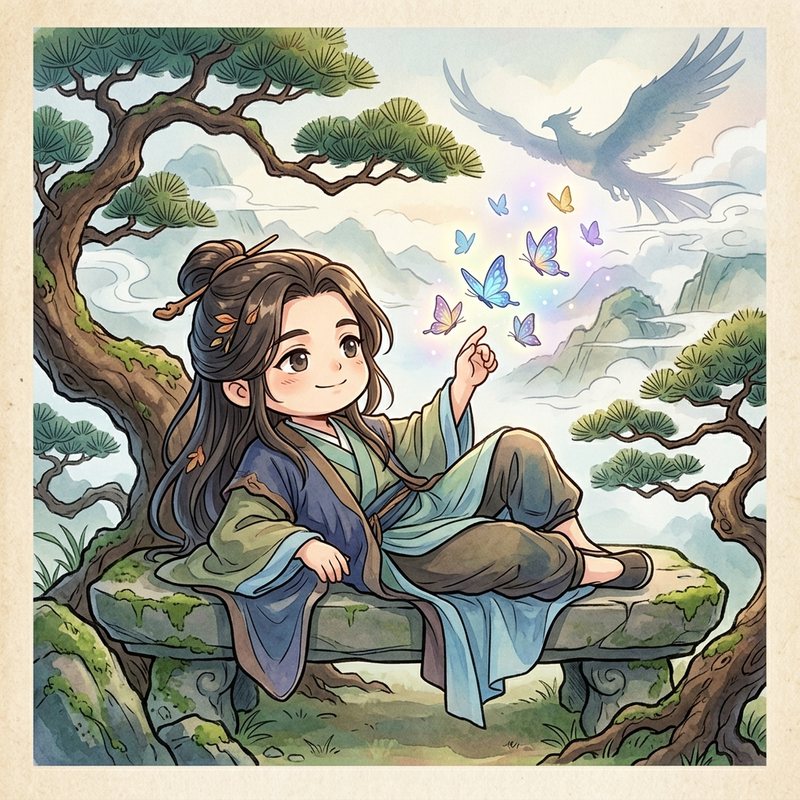
Zhuangzi (Chuang Tzu) (庄子 (庄周) · Zhuāng Zǐ)
字子休 · 南华真人
The Master of Carefree Wandering & Eastern Philosophical Freedom
道家哲理宗师 · 独与天地精神往来的逍遥逍遥客
- Zhuangzi and Stoicism both target anxiety, but prescribe different freedoms.
- Stoicism vs Taoism: one files judgment so you can keep your post; the other loosens the need to hold a post.
- Use Zhuangzi for perspective shifts; Stoicism for daily cognitive discipline.
- Together they form a practical East–West toolkit against modern burnout narratives.
Stoicism vs Taoism: Where They Agree and Split
People searching 'stoicism vs taoism' are usually not asking for a museum label. They want to know which toolkit to use on a bad week. Both say: stop wasting life on what you cannot steer. They part on how. Stoicism trains judgment so you can keep your post. Taoism (here, Zhuangzi more than temple ritual) loosens the need to hold a post at all. Logos is a rational order you align with by thinking; the Dao is a current you stop arguing with. Marcus journals. Zhuangzi drums on a tub.
搜 stoicism vs taoism 的人通常不是要博物馆标签,而是这周该用哪套工具。两边都说:别把命耗在你转不动的东西上。分歧在方法。斯多葛训练判断,好让你还能守岗;道家(这里主要是庄子,不是宫观科仪)松开「必须守岗」这件事。Logos 是你用理性去对齐的秩序;道是你不再争辩的水流。马可写日记。庄子敲瓦盆。
| Perspective 视角 | Stoicism | Taoism (Zhuangzi) |
|---|---|---|
| Core problem | False judgments about what is good, bad, or yours to control | Forcing life against its grain; clinging to a useful identity |
| Method | Daily examination, dichotomy of control, duty in public life | Wu wei, uselessness, humor, dropping the rigid self |
| Sage | The disciplined citizen or emperor who still shows up | The uncarved person who can refuse a premiership and go fishing |
| Best modern use | High-pressure work, anger, outcomes you cannot own | Burnout from over-usefulness, identity panic, grief |
The Dichotomy of Control vs. Flowing with the Dao
Stoic philosopher Epictetus famously opened his Enchiridion by dividing reality into two categories: 'Things in our control' (our beliefs, impulses, desires) and 'Things not in our control' (our reputation, health, external outcomes). Peace comes from ruthlessly ignoring the latter.
斯多葛导师爱比克泰德将世事严谨划分为“可控之物”(欲望、信念)与“不可控之物”(名誉、财富、外在结果),主张不为不可控之外物消耗精神。
Zhuangzi goes one step further: instead of fighting to control one's inner mind with iron will, he advises us to align with the 'Dao' (the natural rhythm of reality) like Cook Ding carving an ox — finding the empty spaces between the joints without ever dulling the blade.
庄子则更进一步:他并不强调用意志力去强行抗衡,而是主张顺应天道。正如《庖丁解牛》中“以无厚入有间”,在纷繁世事中依乎天理,刀刃历经十九载依然锋芒如初。
Facing Mortality: Marcus Aurelius vs. The Drum on the Clay Tub
When Stoic emperor Marcus Aurelius meditated on death, he reminded himself that death is merely a natural biological decomposition: 'Pass then through this little space of time conformably to nature, and end thy journey in content.'
斯多葛代表人物马可·奥勒留常以理性凝视死亡,提醒自己生命如一片落叶,顺应自然节律归于尘土。
When Zhuangzi's beloved wife died, his friend Huizi arrived to offer condolences and was horrified to find Zhuangzi sitting cross-legged, singing cheerfully while banging on an upturned clay tub. Zhuangzi explained:
而当庄子的妻子去世时,好友惠子前往吊唁,却见庄子箕踞鼓盆而歌。惠子大惊,庄子却平静说道:
察其始而本无生;非徒无生也,而本无形;非徒无形也,而本无气。 人且偃然寝于巨室,而我噭噭然随而哭之,自以为不通乎命,故止也。
Chá qí shǐ ér běn wú shēng; fēi tú wú shēng yě, ér běn wú xíng; fēi tú wú xíng yě, ér běn wú qì. Rén qiě yǎnrán qǐn yú jùshì, ér wǒ jiàojiào rán suí ér kū zhī, zì yǐwéi bù tōng hū mìng, gù zhǐ yě.
Looking back at the beginning, she originally had no life, no form, not even energy. Now she rests peacefully in the vast chamber of the universe. If I were to weep and wail over her, I would be acting as though I understood nothing of destiny. So I stopped.
Context · From Zhuangzi, Chapter 18: 'Perfect Happiness' (至乐) — celebrating death not as an end, but as a return to the cosmic rhythm.
The Usefulness of the 'Useless' Tree
In modern society, we are judged purely by our economic output and career utility. Zhuangzi noticed that a gnarled, twisted oak tree by the roadside survived for a thousand years because carpenters found its wood useless for making boats or beams. 'All people know the utility of the useful, but none know the utility of the useless,' wrote Zhuangzi.
当代社会常陷入功利主义内卷。庄子在路旁见到一棵枝桠扭曲的参天大树,正因木匠嫌其“无用”而未遭斧钺砍伐,得享千载天年。庄子叹道:“人皆知有用之用,而莫知无用之用也。”
Which is better for stress: Stoicism or Daoism?
Stoicism is exceptional for tactical focus, emotional resilience, and taking responsibility in high-pressure leadership. Daoism (Zhuangzi) is unmatched for recovering from burnout, healing overthinking, and breaking free from rigid societal metrics of success.
What is the difference between Stoicism and Taoism?
They share the diagnosis that most suffering is extra. Stoicism answers with trained judgment and civic duty. Taoism, in Zhuangzi's version, answers with wu wei and a lighter self. One files the mind; the other stops over-filing it.
Is Stoicism similar to Taoism?
Similar in the refusal to be owned by reputation, wealth, and other people's moods. Not the same path: a Stoic still wants virtue as a project; Zhuangzi is suspicious of projects, including the project of becoming a sage.
Stoicism vs Taoism vs Buddhism — which is for anxiety?
Stoicism for rumination about outcomes. Taoism for the feeling that you are forcing a life-shape. Buddhism for craving and the story of a solid self. They can be stacked; they should not be mashed into one quote-card.
Hear Zhuangzi Drum on the Tub
Open the map at the station where Zhuangzi answers grief without Stoic drill — then walk to the butterfly dream. Audio is on the trail, not in this comparison table.
Open Zhuangzi's Grief StationWalk with Zhuangzi (Chuang Tzu) Across China
随庄子 (庄周)漫步华夏河山 · 亲历命运逆境与精神涅槃