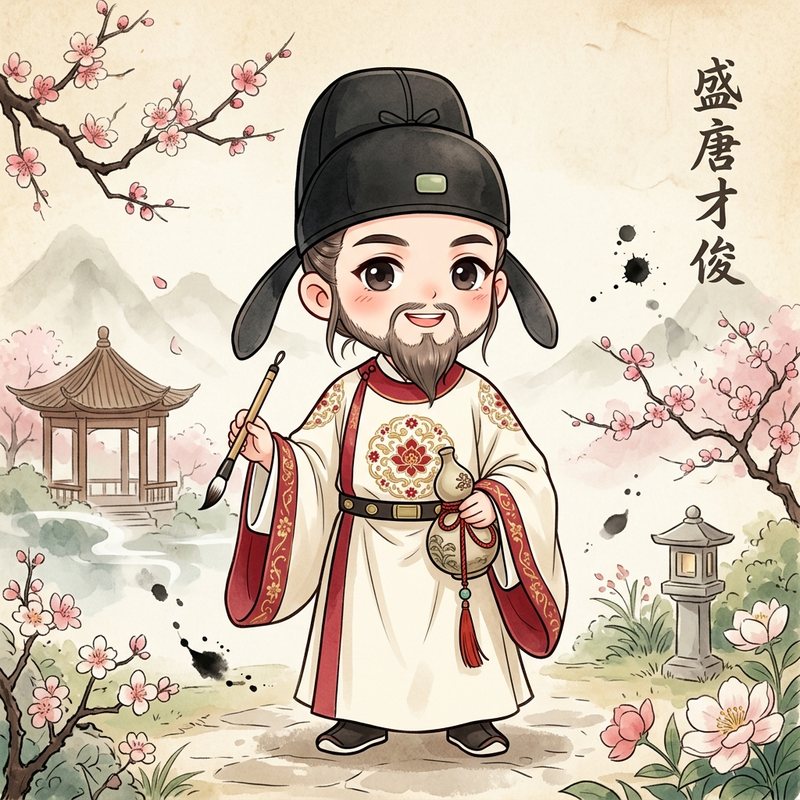
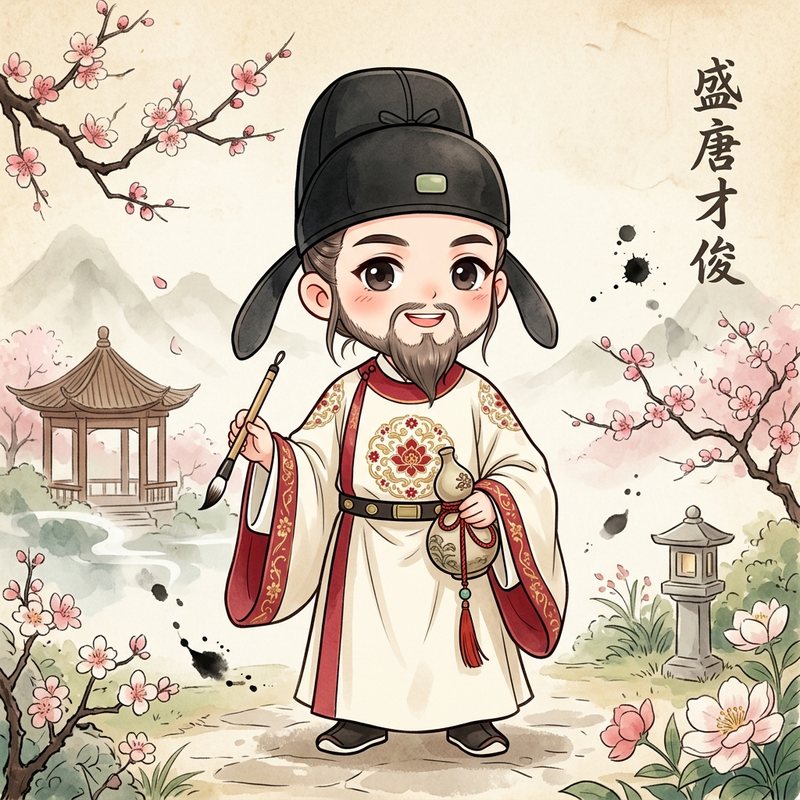
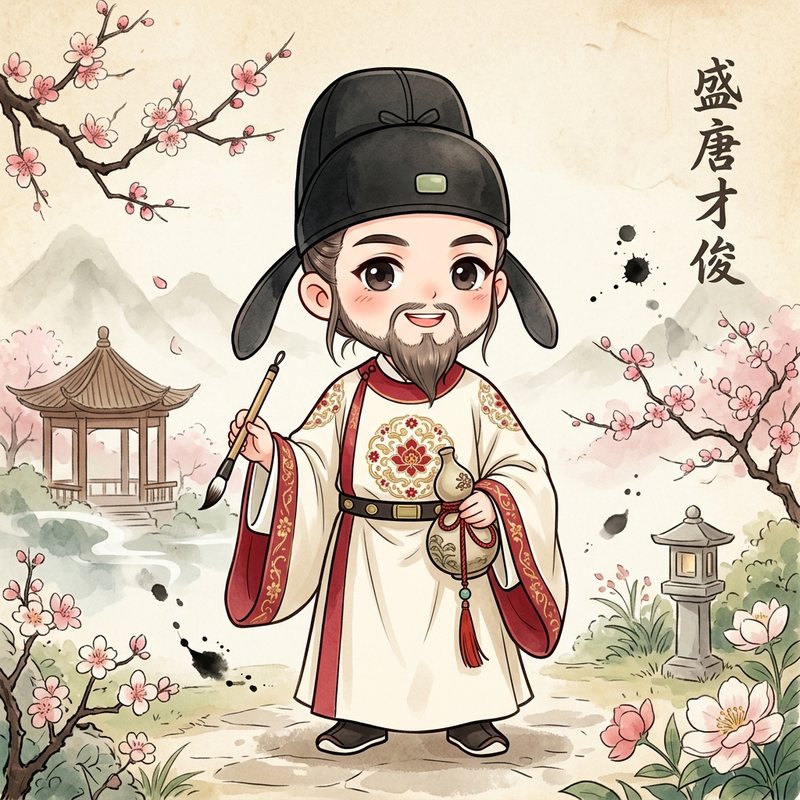
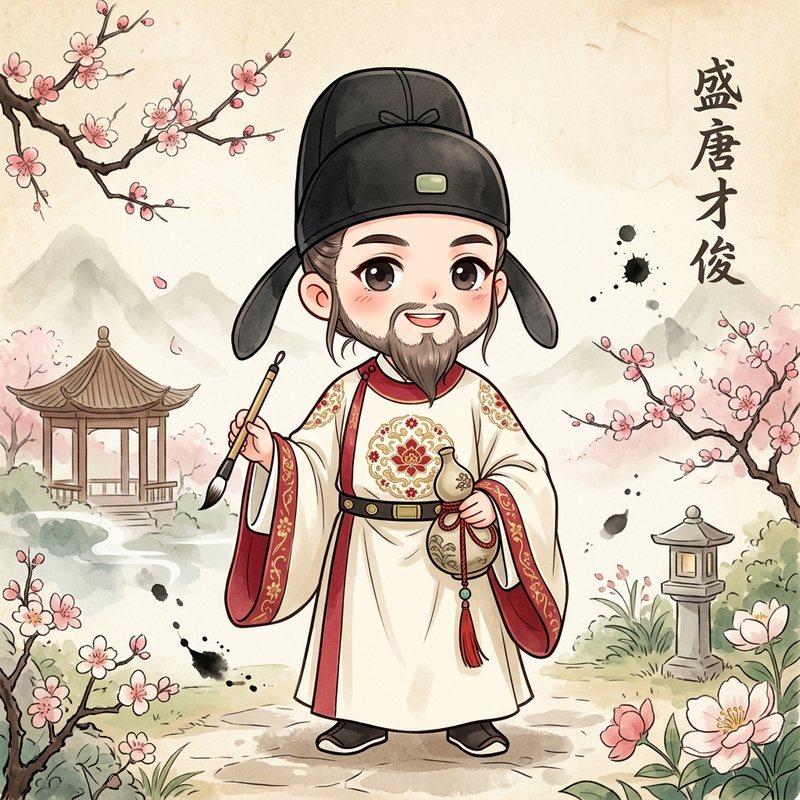
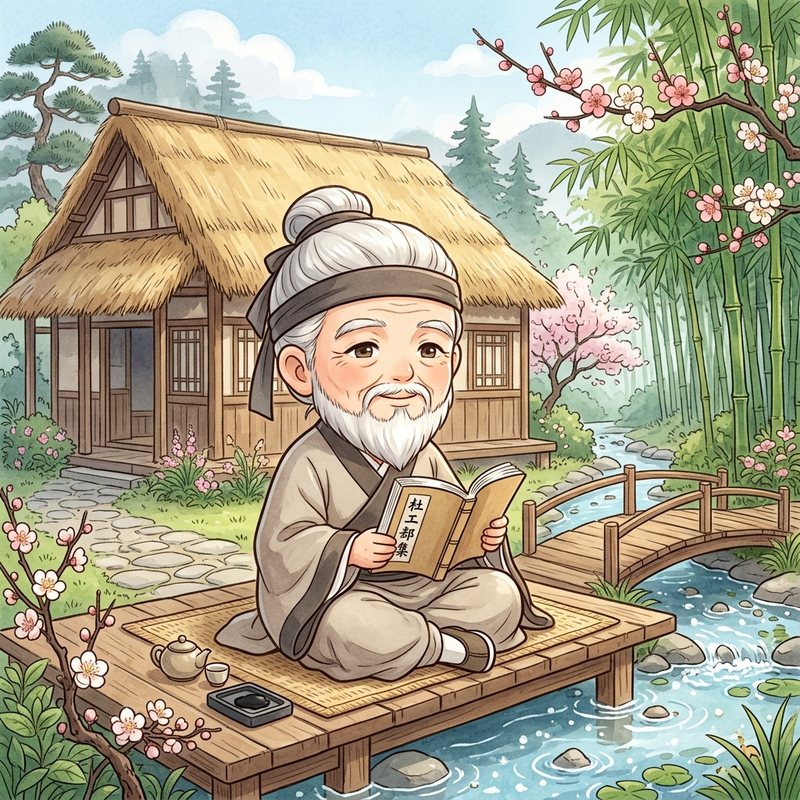
The People's PoetMiddle to Late Tang Dynasty(772—846)字乐天 · 香山居士Audio Journey · 8 Stops
The People's Poet: From a fierce imperial critic to a transcendent philosopher.
The People's Poet· William WordsworthMaster of Epic Narrative Verse· OvidThe Civic Governor of West Lake· A public-works visionary
Unfolding the Historical Landscape…
印
Daily Wisdom & Resilience Oracle
The Resilient Optimist
“竹杖芒鞋轻胜马,谁怕?一蓑烟雨任平生。”
Holding a bamboo cane and wearing straw sandals, I stride faster than a horse. Who is afraid? A straw cloak in the mist and rain — I live my life with equanimity.
💡 In the 3rd year of exile in Huangzhou, caught in a sudden downpour, Su Shi embraced the storm with supreme resilience.
— Su Shi (Dongpo)(The Renaissance Foodie & Optimist)
Historical Footprints & Narration Archive
8 Stations
1
Xinzheng
772 CE · Age 1
Modern Zhengzhou, Henan
A childhood steeped in Confucian classics and the dream of serving the emperor.
“致君尧舜上,再使风俗淳。”
Zhì jūn yáo shùn shàng, zài shǐ fēng sú chún.
To elevate the emperor to the heights of Yao and Shun, and restore purity to the customs of the people.
Station Narration Script
In the quiet courtyards of Xinzheng, young Bai Juyi was raised not with gold, but with strict Confucian tenets. Taught by his father and grandfather, he absorbed the profound moral duty to serve the people and the emperor, planting a seed of integrity that would define his turbulent life.
Departure Transition Script
However, the peace was shattered by regional warlords. To escape the ravages of war, the young boy fled south with his family, embarking on a grueling journey of survival.
2
Fuli
784 CE · Age 13
Modern Suzhou City, Anhui
Studying until his mouth bled and elbows calloused in a war-torn refugee town.
“野火烧不尽,春风吹又生。”
Yě huǒ shāo bù jìn, chūn fēng chuī yòu shēng.
Even wild fires cannot burn it entirely; when the spring breeze blows, it will rise again.
Station Narration Script
In freezing Fuli, teenage Bai Juyi studied with brutal obsession—reading until his tongue bled and elbows blistered. Amidst poverty, he fell deeply in love with the neighbor girl Xiangling. Standing in a withered field at age sixteen, he penned 'Wildfires cannot destroy the grass; it rises again with the spring breeze'—a resilient roar against fate.
Departure Transition Script
At twenty-eight, pressured by his mother to save the family's declining status, he agonizingly parted ways with Xiangling. Armed only with his poetry scrolls, he headed for the imperial capital.
3
Chang'an
800 CE · Age 29
Imperial Capital Chang'an (Modern Xi'an)
Stunning the literary giants and penning the ultimate epic of imperial tragedy.
“在天愿作比翼鸟,在地愿为连理枝。”
Zài tiān yuàn zuò bǐ yì niǎo, zài dì yuàn wéi lián lǐ zhī.
In heaven we shall be birds flying side by side; on earth, we shall be trees with branches entwined.
Station Narration Script
In Chang'an, arrogant literary giants tried to dismiss him, only to be struck dumb by his genius. Passing the grueling imperial exam at twenty-nine, he tasted ultimate triumph. Later, as a rural sheriff sheltering from night rain at a mountain temple, he poured his own romantic sorrow into 'The Song of Everlasting Sorrow', a tragic imperial epic that became a nationwide sensation overnight.
Departure Transition Script
The nationwide fame of his epic poem opened the palace doors. At thirty-six, Emperor Xianzong summoned him to the inner imperial academy, propelling him into the highest political echelons.
4
Chang'an Court
807 CE · Age 36
The Inner Imperial Court
Risking his life to expose the darkest imperial truths through poetry.
“唯歌生民病,愿得天子知。”
Wéi gē shēng mín bìng, yuàn dé tiān zǐ zhī.
I sing only of the afflictions of the people, praying that the Emperor might know their suffering.
Station Narration Script
The glazed tiles of the imperial palace could not hide a rotting empire. Standing in the eye of the political storm, Bai Juyi chose the most dangerous path. Discarding romantic verses, he wielded his pen like a scalpel, writing fifty blistering poems exposing peasant starvation and eunuch extortion. 'I sing only of the people's pain,' he wrote—not merely poetry, but a blood-written petition risking his own life.
Departure Transition Script
Assassins struck down the Prime Minister in the streets. Bai Juyi's fearless demand for justice enraged the corrupt factions. A cold edict of exile stripped him of everything, casting him out of Chang'an into the abyss.
5
Jiujiang
815 CE · Age 44
Modern Jiujiang, Jiangxi
Two outcasts finding profound solace on a freezing, autumn river.
Both of us are fallen outcasts at the end of the world; why must we have known each other to find kinship upon meeting?
Station Narration Script
A freezing autumn wind sliced across the Jiujiang river. Stripped of power and grieving his mother, Bai Juyi was backed into life's darkest corner. Moored at night, he heard a melancholic lute cutting through the reeds. The player was an aging, discarded courtesan from Chang'an. Separated by a thin boat wall, the exiled official and the wandering musician understood each other's shattered souls. Weeping in the dark, he penned 'The Pipa Song', an eternal monument to shared human sorrow.
Departure Transition Script
Three years of cold exile extinguished his fierce political fire, yet forged a resilient inner peace. When orders arrived transferring him to Zhongzhou, he departed not in anger, but in quiet clarity.
6
Zhongzhou
818 CE · Age 47
Modern Zhongxian, Chongqing
Healing a broken heart by planting flowers on a barren eastern slope.
“持钱买花树,城东坡上栽。”
Chí qián mǎi huā shù, chéng dōng pō shàng zāi.
Taking my coins to buy flowering trees, I plant them upon the eastern slope of the city.
Station Narration Script
Fog choked the gorges, and Zhongzhou's soil yielded only thorns. Yet the new governor refused to despair. Taking off his official robes, Bai Juyi spent his meager salary on saplings. He led the peasants to clear the rugged 'Eastern Slope', planting hibiscus and lychee trees. The sweat and blooming flowers slowly mended his shattered spirit. Calling himself the 'Resident of the Eastern Slope' (Dongpo), his defiance in the mud would, two centuries later, spiritually save another legendary exile—Su Shi.
Departure Transition Script
As the hibiscus bloomed, the imperial court summoned him once more. At fifty, with his soul reforged, Bai Juyi boarded a boat bound for the lush landscapes of Jiangnan.
7
Hangzhou
822 CE · Age 51
Hangzhou (The Venice of the East)
Transforming youthful outrage into a massive causeway that fed a million farmers.
I can never walk enough along the eastern shore, beneath the green willows of the white sand causeway.
Station Narration Script
The Qiantang tide roared, but West Lake was choked with silt. Arriving as Governor, Bai Juyi abandoned his angry Chang'an edge. Instead of attacking corrupt ministers, he rolled up his trousers and led massive dredging and dam-building projects, turning political fury into life-giving irrigation for a thousand farms. Riding along the willow-lined white sand causeway, he realized that leaving a legacy in the soil was far more eternal than any political argument.
Departure Transition Script
On his departure, the citizens of Hangzhou poured into the streets, weeping for him to stay. Leaving his entire salary behind to fund future bridges, he rode away empty-handed to his next posting.
8
Luoyang
829 CE · Age 58
Modern Luoyang, Henan
Walking away from the crumbling empire's power struggles to live as a transcendent hermit.
“达哉达哉白乐天,漫说向人意自得。”
Dá zāi dá zāi Bái Lètiān, màn shuō xiàng rén yì zì dé.
How open and free is Bai Letian; let us not speak of it, for within my heart I am fully content.
Station Narration Script
The twilight chill of a dying empire crept over Luoyang. Disgusted by the bloody factional warfare, Bai Juyi repeatedly declined the highest offices to retire at Xiangshan Temple. In his golden years, he gave away his wealth to the poor and cleared river rapids to protect sailors. Drinking wine with old friends like Liu Yuxi, he let go of life and death, fame and ruin. From the furious young rebel of Chang'an to the smiling sage of Xiangshan, he finally attained the deepest, most transcendent freedom.
Key Historical Inquiries & Context
· 核心史实公案与速览
Bai Juyi championed the New Yuefu Movement by using accessible language to expose societal injustices. His life traced a dramatic arc from a fierce political reformer to an exiled official, ultimately finding peace as a pragmatic governor building the iconic causeways of West Lake.
Bai Juyi championed the New Yuefu Movement by using accessible language to expose societal injustices. His life traced a dramatic arc from a fierce political reformer to an exiled official, ultimately finding peace as a pragmatic governor building the iconic causeways of West Lake.
QWhat was Bai Juyi's primary cultural and historical legacy?
Bai Juyi is celebrated across world history as a pioneer of The People's Poet, Master of Epic Narrative Verse, The Civic Governor of West Lake, leaving enduring philosophical insights, literature, and art.
QWhere does Bai Juyi's historical life journey map lead?
This interactive GIS map retraces 8 chronological stops across Middle to Late Tang Dynasty China, originating from Xinzheng and spanning through Luoyang.
The Complete Life Journey & Biography of Bai Juyi (Po Chü-i) (白居易)
Chronological travel & exile routes mapped to modern Chinese cities across Middle to Late Tang Dynasty China — featuring bilingual scholar audio, classical poetry recitations, and historical cross-paths.
Xinzheng (新郑)
Age 1
Modern-day analog: Modern Zhengzhou, Henan
A childhood steeped in Confucian classics and the dream of serving the emperor.
In the quiet courtyards of Xinzheng, young Bai Juyi was raised not with gold, but with strict Confucian tenets. Taught by his father and grandfather, he absorbed the profound moral duty to serve the people and the emperor, planting a seed of integrity that would define his turbulent life.
However, the peace was shattered by regional warlords. To escape the ravages of war, the young boy fled south with his family, embarking on a grueling journey of survival.
“To elevate the emperor to the heights of Yao and Shun, and restore purity to the customs of the people.”
Studying until his mouth bled and elbows calloused in a war-torn refugee town.
In freezing Fuli, teenage Bai Juyi studied with brutal obsession—reading until his tongue bled and elbows blistered. Amidst poverty, he fell deeply in love with the neighbor girl Xiangling. Standing in a withered field at age sixteen, he penned 'Wildfires cannot destroy the grass; it rises again with the spring breeze'—a resilient roar against fate.
At twenty-eight, pressured by his mother to save the family's declining status, he agonizingly parted ways with Xiangling. Armed only with his poetry scrolls, he headed for the imperial capital.
“Even wild fires cannot burn it entirely; when the spring breeze blows, it will rise again.”
Modern-day analog: Imperial Capital Chang'an (Modern Xi'an)
Stunning the literary giants and penning the ultimate epic of imperial tragedy.
In Chang'an, arrogant literary giants tried to dismiss him, only to be struck dumb by his genius. Passing the grueling imperial exam at twenty-nine, he tasted ultimate triumph. Later, as a rural sheriff sheltering from night rain at a mountain temple, he poured his own romantic sorrow into 'The Song of Everlasting Sorrow', a tragic imperial epic that became a nationwide sensation overnight.
The nationwide fame of his epic poem opened the palace doors. At thirty-six, Emperor Xianzong summoned him to the inner imperial academy, propelling him into the highest political echelons.
“In heaven we shall be birds flying side by side; on earth, we shall be trees with branches entwined.”
在天愿作比翼鸟,在地愿为连理枝。 (Zài tiān yuàn zuò bǐ yì niǎo, zài dì yuàn wéi lián lǐ zhī.)
Chang'an Court (长安宫廷)
Age 36
Modern-day analog: The Inner Imperial Court
Risking his life to expose the darkest imperial truths through poetry.
The glazed tiles of the imperial palace could not hide a rotting empire. Standing in the eye of the political storm, Bai Juyi chose the most dangerous path. Discarding romantic verses, he wielded his pen like a scalpel, writing fifty blistering poems exposing peasant starvation and eunuch extortion. 'I sing only of the people's pain,' he wrote—not merely poetry, but a blood-written petition risking his own life.
Assassins struck down the Prime Minister in the streets. Bai Juyi's fearless demand for justice enraged the corrupt factions. A cold edict of exile stripped him of everything, casting him out of Chang'an into the abyss.
“I sing only of the afflictions of the people, praying that the Emperor might know their suffering.”
Two outcasts finding profound solace on a freezing, autumn river.
A freezing autumn wind sliced across the Jiujiang river. Stripped of power and grieving his mother, Bai Juyi was backed into life's darkest corner. Moored at night, he heard a melancholic lute cutting through the reeds. The player was an aging, discarded courtesan from Chang'an. Separated by a thin boat wall, the exiled official and the wandering musician understood each other's shattered souls. Weeping in the dark, he penned 'The Pipa Song', an eternal monument to shared human sorrow.
Three years of cold exile extinguished his fierce political fire, yet forged a resilient inner peace. When orders arrived transferring him to Zhongzhou, he departed not in anger, but in quiet clarity.
“Both of us are fallen outcasts at the end of the world; why must we have known each other to find kinship upon meeting?”
Healing a broken heart by planting flowers on a barren eastern slope.
Fog choked the gorges, and Zhongzhou's soil yielded only thorns. Yet the new governor refused to despair. Taking off his official robes, Bai Juyi spent his meager salary on saplings. He led the peasants to clear the rugged 'Eastern Slope', planting hibiscus and lychee trees. The sweat and blooming flowers slowly mended his shattered spirit. Calling himself the 'Resident of the Eastern Slope' (Dongpo), his defiance in the mud would, two centuries later, spiritually save another legendary exile—Su Shi.
As the hibiscus bloomed, the imperial court summoned him once more. At fifty, with his soul reforged, Bai Juyi boarded a boat bound for the lush landscapes of Jiangnan.
“Taking my coins to buy flowering trees, I plant them upon the eastern slope of the city.”
Modern-day analog: Hangzhou (The Venice of the East)
Transforming youthful outrage into a massive causeway that fed a million farmers.
The Qiantang tide roared, but West Lake was choked with silt. Arriving as Governor, Bai Juyi abandoned his angry Chang'an edge. Instead of attacking corrupt ministers, he rolled up his trousers and led massive dredging and dam-building projects, turning political fury into life-giving irrigation for a thousand farms. Riding along the willow-lined white sand causeway, he realized that leaving a legacy in the soil was far more eternal than any political argument.
On his departure, the citizens of Hangzhou poured into the streets, weeping for him to stay. Leaving his entire salary behind to fund future bridges, he rode away empty-handed to his next posting.
“I can never walk enough along the eastern shore, beneath the green willows of the white sand causeway.”
Walking away from the crumbling empire's power struggles to live as a transcendent hermit.
The twilight chill of a dying empire crept over Luoyang. Disgusted by the bloody factional warfare, Bai Juyi repeatedly declined the highest offices to retire at Xiangshan Temple. In his golden years, he gave away his wealth to the poor and cleared river rapids to protect sailors. Drinking wine with old friends like Liu Yuxi, he let go of life and death, fame and ruin. From the furious young rebel of Chang'an to the smiling sage of Xiangshan, he finally attained the deepest, most transcendent freedom.
“How open and free is Bai Letian; let us not speak of it, for within my heart I am fully content.”