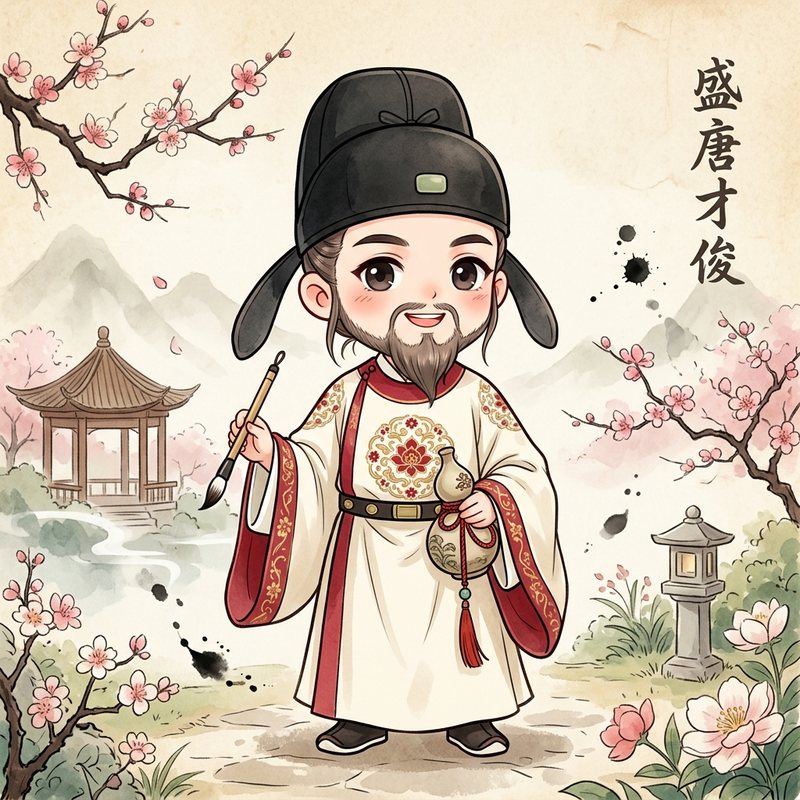
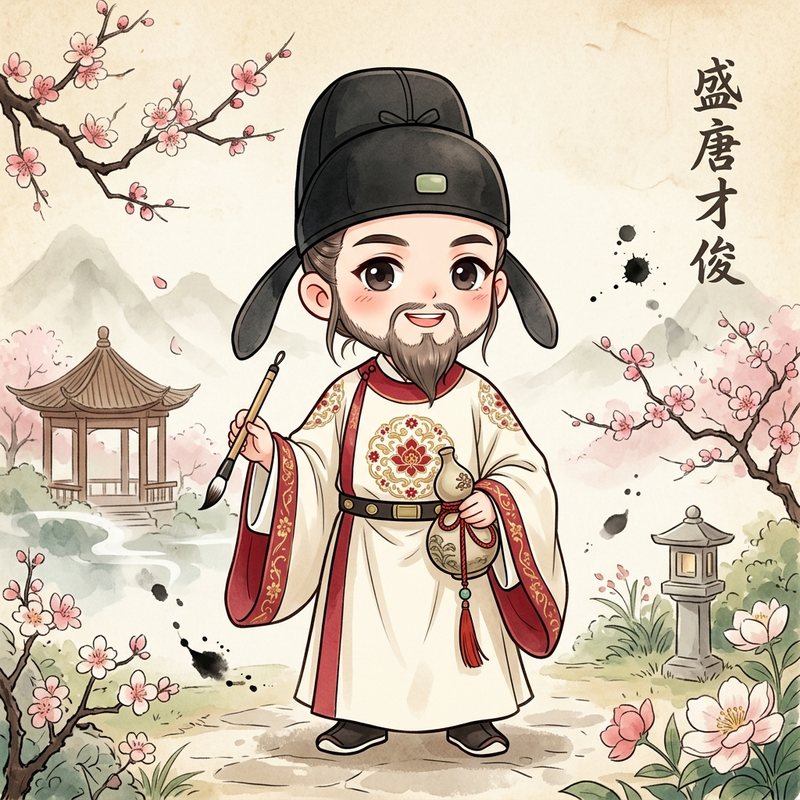
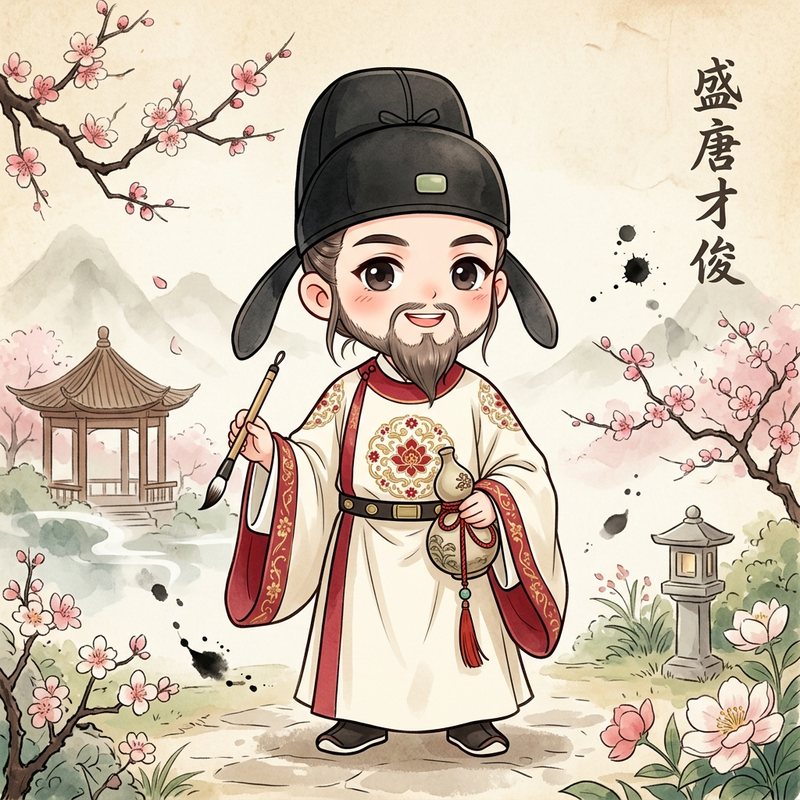
The Confucian Luther & Literary Revolutionary · 768 – 824
The Confucian Luther of Tang China: leader of the Classical Prose Movement who revived rational Confucianism and reshaped Chinese literature.
Stops10
Traversed~8,652km
Audio Tour~12min
“业精于勤,荒于嬉;行成于思,毁于随。”
Excellence in work is forged through diligence and wasted by frivolity; success in action is achieved through deliberate thought and ruined by blind conformity.
The Confucian Luther of Tang China: leader of the Classical Prose Movement who revived Confucian rationalism and reshaped Chinese literature.
The Confucian Luther· Martin LutherThe Fearless Whistleblower· A fearless ombudsman who defied the throneThe Teacher of Teachers· The champion of the teaching profession
Unfolding the Historical Landscape…
印
Daily Wisdom & Resilience Oracle
The Resilient Optimist
“竹杖芒鞋轻胜马,谁怕?一蓑烟雨任平生。”
Holding a bamboo cane and wearing straw sandals, I stride faster than a horse. Who is afraid? A straw cloak in the mist and rain — I live my life with equanimity.
💡 In the 3rd year of exile in Huangzhou, caught in a sudden downpour, Su Shi embraced the storm with supreme resilience.
— Su Shi (Dongpo)(The Renaissance Foodie & Optimist)
Historical Footprints & Narration Archive
10 Stations
1
Heyang Birthplace
768 CE · Age 0
Modern Mengzhou, Henan
Orphaned in infancy and raised by his elder brother, born into a lineage of imperial scholar-officials.
Excellence in work is forged through diligence and wasted by frivolity; success in action is achieved through deliberate thought and ruined by blind conformity.
Station Narration Script
In 768, Han Yu was born into an official family in Heyang, Henan. Orphaned in infancy, he was raised by his elder brother Han Hui. Raised on Confucian classics in a scholarly household, the young boy planted the seed of a life devoted to literature and moral renewal.
Departure Transition Script
Around 771, his brother took an imperial post, and young Han Yu moved with the family to Xuancheng in the south to begin his formal education.
2
Xuancheng & Shaozhou
771 CE · Age 3
Modern Xuancheng, Anhui & Shaoguan, Guangdong
Following his brother into political exile, burying himself in the classics by lamplight through every hardship.
“师者,所以传道受业解惑也。”
Shī zhě, suǒ yǐ chuán dào shòu yè jiě huò yě.
A teacher is one who transmits the Way, imparts knowledge, and resolves doubts.
Station Narration Script
By lamplight in Xuancheng, young Han Yu buried himself in the classics. Around 777, his brother was demoted and the family moved south to Shaozhou. Through every hardship, he turned adversity into fuel for learning.
Departure Transition Script
In 786, at eighteen, Han Yu journeyed west to the imperial capital Chang'an to sit the examinations.
3
Chang'an Struggles
786 CE · Age 18
Modern Xi'an, Shaanxi
Thrice failing the prestigious imperial selection exam, yet persevering in poverty and championing bold prose.
“千里马常有,而伯乐不常有。”
Qiānlǐ mǎ cháng yǒu, ér Bólè bù cháng yǒu.
A thousand-li steed may be common, but a discerning Bole who recognizes it is rare.
Station Narration Script
The examination halls of Chang'an proved brutally unforgiving: Han Yu failed the prestigious Boxue Hongci exam three times. Reduced to poverty, he persevered, submitting his bold prose to high ministers and challenging the hollow euphuism of the age.
Departure Transition Script
In 796, Han Yu finally passed the examinations and entered official service as a registrar in Bianzhou.
4
Bianzhou & Xuzhou
796 CE · Age 28
Modern Kaifeng & Xuzhou, China
Passing the examinations at last and entering official service as a registrar.
“大凡物不得其平则鸣。”
Dà fán wù bù dé qí píng zé míng.
Whenever things are denied their due balance, they cry out.
Station Narration Script
In the military governor's offices of Bianzhou and Xuzhou, Han Yu honed his skills as a pragmatic administrator, upholding the integrity of a Confucian scholar amid the turbulent politics of the late Tang.
Departure Transition Script
In 802, Han Yu was appointed to the Imperial University, and the next year became a Censor. When he petitioned the throne to relieve famine victims, he offended powerful ministers and was exiled to Yangshan.
5
Chang'an Censor
802 CE · Age 34
Modern Xi'an, Shaanxi
As Imperial Censor, petitioning the throne to relieve famine and being banished to Yangshan for his courage.
One memorial at dawn before the nine-tiered throne, by dusk exiled eight thousand li to Chaozhou.
Station Narration Script
As Imperial Censor, Han Yu witnessed famine ravage the land and boldly petitioned the throne to aid the starving, defying powerful ministers. For his fearless conscience, he was banished to the remote southern county of Yangshan.
Departure Transition Script
Exiled to Yangshan, Han Yu transformed the desolate southern frontier into a center of learning and civic renewal.
6
Yangshan Exile
803 CE · Age 35
Modern Yangshan, Qingyuan, Guangdong
In the desolate southern frontier, building schools and winning the love of the people, turning exile into a mission of education.
A fine rain on the capital's street falls soft as butter; the grass's green is seen from afar, but vanishes up close.
Station Narration Script
In remote Yangshan, Han Yu built schools and taught the local people, winning their deep affection. He turned his exile into a mission of education, proving that a true scholar thrives even in the wilderness.
Departure Transition Script
In 806, Han Yu was recalled to Chang'an, serving as a senior scholar and drafting the memorial commemorating the pacification of the Huaixi rebellion.
7
Chang'an Court
806 CE · Age 38
Modern Xi'an, Shaanxi
Recalled to high office, authoring his philosophical masterpieces, then banished to Chaozhou for denouncing imperial Buddhist relic veneration.
“文起八代之衰,道济天下之溺。”
Wén qǐ bā dài zhī shuāi, dào jì tiān xià zhī nì.
He revived literature after eight dynasties of decay, and rescued the Way from the drowning of the age.
Station Narration Script
In 819, when Emperor Xianzong venerated a Buddhist relic, Han Yu submitted a fierce memorial denouncing it, risking execution. Banished to Chaozhou, he wrote: 'One memorial at dawn before the throne, by dusk exiled eight thousand li to Chaozhou.'
Departure Transition Script
Arriving in Chaozhou, Han Yu spent just eight months there, yet eradicated crocodiles, freed bonded slaves, and revitalized education.
8
Chaozhou Exile
819 CE · Age 51
Modern Chaozhou, Guangdong
In eight months in Chaozhou, driving out crocodiles, freeing slaves, and reviving education, transforming a wild frontier.
One memorial at dawn before the nine-tiered throne, by dusk exiled eight thousand li to Chaozhou.
Station Narration Script
In Chaozhou, Han Yu wrote his famous 'Crocodile Proclamation' to drive away the beasts, emancipated debt slaves, built waterworks, and revived the local academy. In eight months, he turned a wild frontier into a land of learning, earning the eternal gratitude of its people.
Departure Transition Script
In 820, Han Yu was pardoned and made governor of Yuanzhou, where he continued freeing slaves and building schools, before returning to the capital as head of the Imperial University.
9
Yuanzhou Governorship
820 CE · Age 52
Modern Yichun, Jiangxi
Pardoned and made governor of Yuanzhou, continuing to free slaves and build schools before returning to lead the Imperial University.
Excellence in work is forged through diligence and wasted by frivolity; success in action is achieved through deliberate thought and ruined by blind conformity.
Station Narration Script
As governor of Yuanzhou, Han Yu freed more bonded debt slaves and established schools. That year, he returned to the capital as Chancellor of the Imperial University, shaping the minds of a generation.
Departure Transition Script
In 821, Han Yu returned to Chang'an, rising to the highest ranks of the Tang bureaucracy as Minister of Rites and Minister of Personnel.
10
Chang'an Final Rest
821 CE · Age 53
Modern Xi'an, Shaanxi
Rising to the highest ranks of the Tang bureaucracy, dying in Chang'an, and being honored as the supreme master of letters.
“文起八代之衰,道济天下之溺。”
Wén qǐ bā dài zhī shuāi, dào jì tiān xià zhī nì.
He revived literature after eight dynasties of decay, and rescued the Way from the drowning of the age.
Station Narration Script
In 824, Han Yu died in Chang'an at the age of fifty-six, posthumously honored as Minister of Rites with the title 'Wen' (Cultured). His disciple Li Han compiled the 'Collected Works of Changli', preserving the legacy of the man Su Shi hailed as 'reviving literature after eight dynasties of decay.'
Departure Transition Script
Han Yu devoted his life to literature and the Way. His spirit shines on, illuminating a millennium of Chinese letters and the integrity of its scholars.
Key Historical Inquiries & Context
· 核心史实公案与速览
Han Yu (768–824), styled Tuizhi, was the foremost literary figure of the Tang Dynasty—the acknowledged head of the Eight Great Prose Masters of Tang and Song and the leader of the Classical Prose Movement. Orphaned young and thrice failing the imperial examinations, he never lost his ambition. As Imperial Censor he petitioned the throne to relieve famine and was banished to Yangshan; later his fierce memorial against imperial Buddhist relic veneration earned him exile to Chaozhou. Wherever he went, he built schools and served the people: teaching in Yangshan, driving out crocodiles and freeing slaves in Chaozhou, and reviving academies in Yuanzhou. Championing rational Confucianism against Buddhist mysticism and ornate parallel prose, he was hailed by Su Shi as the man who 'revived literature after eight dynasties of decay.'
Han Yu (768–824), styled Tuizhi, was the foremost literary figure of the Tang Dynasty—the acknowledged head of the Eight Great Prose Masters of Tang and Song and the leader of the Classical Prose Movement. Orphaned young and thrice failing the imperial examinations, he never lost his ambition. As Imperial Censor he petitioned the throne to relieve famine and was banished to Yangshan; later his fierce memorial against imperial Buddhist relic veneration earned him exile to Chaozhou. Wherever he went, he built schools and served the people: teaching in Yangshan, driving out crocodiles and freeing slaves in Chaozhou, and reviving academies in Yuanzhou. Championing rational Confucianism against Buddhist mysticism and ornate parallel prose, he was hailed by Su Shi as the man who 'revived literature after eight dynasties of decay.'
QWhat was Han Yu's primary cultural and historical legacy?
Han Yu is celebrated across world history as a pioneer of The Confucian Luther, The Fearless Whistleblower, The Teacher of Teachers, leaving enduring philosophical insights, literature, and art.
QWhere does Han Yu's historical life journey map lead?
This interactive GIS map retraces 10 chronological stops across Tang Dynasty China, originating from Heyang Birthplace and spanning through Chang'an Final Rest.
The Complete Life Journey & Biography of Han Yu (Tang Prose Master) (韩愈)
Chronological travel & exile routes mapped to modern Chinese cities across Tang Dynasty China — featuring bilingual scholar audio, classical poetry recitations, and historical cross-paths.
Heyang Birthplace (河阳出生)
Age 0
Modern-day analog: Modern Mengzhou, Henan
Orphaned in infancy and raised by his elder brother, born into a lineage of imperial scholar-officials.
In 768, Han Yu was born into an official family in Heyang, Henan. Orphaned in infancy, he was raised by his elder brother Han Hui. Raised on Confucian classics in a scholarly household, the young boy planted the seed of a life devoted to literature and moral renewal.
Around 771, his brother took an imperial post, and young Han Yu moved with the family to Xuancheng in the south to begin his formal education.
“Excellence in work is forged through diligence and wasted by frivolity; success in action is achieved through deliberate thought and ruined by blind conformity.”
Modern-day analog: Modern Xuancheng, Anhui & Shaoguan, Guangdong
Following his brother into political exile, burying himself in the classics by lamplight through every hardship.
By lamplight in Xuancheng, young Han Yu buried himself in the classics. Around 777, his brother was demoted and the family moved south to Shaozhou. Through every hardship, he turned adversity into fuel for learning.
In 786, at eighteen, Han Yu journeyed west to the imperial capital Chang'an to sit the examinations.
“A teacher is one who transmits the Way, imparts knowledge, and resolves doubts.”
Thrice failing the prestigious imperial selection exam, yet persevering in poverty and championing bold prose.
The examination halls of Chang'an proved brutally unforgiving: Han Yu failed the prestigious Boxue Hongci exam three times. Reduced to poverty, he persevered, submitting his bold prose to high ministers and challenging the hollow euphuism of the age.
In 796, Han Yu finally passed the examinations and entered official service as a registrar in Bianzhou.
“A thousand-li steed may be common, but a discerning Bole who recognizes it is rare.”
千里马常有,而伯乐不常有。 (Qiānlǐ mǎ cháng yǒu, ér Bólè bù cháng yǒu.)
Bianzhou & Xuzhou (汴州徐州)
Age 28
Modern-day analog: Modern Kaifeng & Xuzhou, China
Passing the examinations at last and entering official service as a registrar.
In the military governor's offices of Bianzhou and Xuzhou, Han Yu honed his skills as a pragmatic administrator, upholding the integrity of a Confucian scholar amid the turbulent politics of the late Tang.
In 802, Han Yu was appointed to the Imperial University, and the next year became a Censor. When he petitioned the throne to relieve famine victims, he offended powerful ministers and was exiled to Yangshan.
“Whenever things are denied their due balance, they cry out.”
大凡物不得其平则鸣。 (Dà fán wù bù dé qí píng zé míng.)
Chang'an Censor (长安御史)
Age 34
Modern-day analog: Modern Xi'an, Shaanxi
As Imperial Censor, petitioning the throne to relieve famine and being banished to Yangshan for his courage.
As Imperial Censor, Han Yu witnessed famine ravage the land and boldly petitioned the throne to aid the starving, defying powerful ministers. For his fearless conscience, he was banished to the remote southern county of Yangshan.
Exiled to Yangshan, Han Yu transformed the desolate southern frontier into a center of learning and civic renewal.
“One memorial at dawn before the nine-tiered throne, by dusk exiled eight thousand li to Chaozhou.”
Modern-day analog: Modern Yangshan, Qingyuan, Guangdong
In the desolate southern frontier, building schools and winning the love of the people, turning exile into a mission of education.
In remote Yangshan, Han Yu built schools and taught the local people, winning their deep affection. He turned his exile into a mission of education, proving that a true scholar thrives even in the wilderness.
In 806, Han Yu was recalled to Chang'an, serving as a senior scholar and drafting the memorial commemorating the pacification of the Huaixi rebellion.
“A fine rain on the capital's street falls soft as butter; the grass's green is seen from afar, but vanishes up close.”
Recalled to high office, authoring his philosophical masterpieces, then banished to Chaozhou for denouncing imperial Buddhist relic veneration.
In 819, when Emperor Xianzong venerated a Buddhist relic, Han Yu submitted a fierce memorial denouncing it, risking execution. Banished to Chaozhou, he wrote: 'One memorial at dawn before the throne, by dusk exiled eight thousand li to Chaozhou.'
Arriving in Chaozhou, Han Yu spent just eight months there, yet eradicated crocodiles, freed bonded slaves, and revitalized education.
“He revived literature after eight dynasties of decay, and rescued the Way from the drowning of the age.”
In eight months in Chaozhou, driving out crocodiles, freeing slaves, and reviving education, transforming a wild frontier.
In Chaozhou, Han Yu wrote his famous 'Crocodile Proclamation' to drive away the beasts, emancipated debt slaves, built waterworks, and revived the local academy. In eight months, he turned a wild frontier into a land of learning, earning the eternal gratitude of its people.
In 820, Han Yu was pardoned and made governor of Yuanzhou, where he continued freeing slaves and building schools, before returning to the capital as head of the Imperial University.
“One memorial at dawn before the nine-tiered throne, by dusk exiled eight thousand li to Chaozhou.”
Pardoned and made governor of Yuanzhou, continuing to free slaves and build schools before returning to lead the Imperial University.
As governor of Yuanzhou, Han Yu freed more bonded debt slaves and established schools. That year, he returned to the capital as Chancellor of the Imperial University, shaping the minds of a generation.
In 821, Han Yu returned to Chang'an, rising to the highest ranks of the Tang bureaucracy as Minister of Rites and Minister of Personnel.
“Excellence in work is forged through diligence and wasted by frivolity; success in action is achieved through deliberate thought and ruined by blind conformity.”
Rising to the highest ranks of the Tang bureaucracy, dying in Chang'an, and being honored as the supreme master of letters.
In 824, Han Yu died in Chang'an at the age of fifty-six, posthumously honored as Minister of Rites with the title 'Wen' (Cultured). His disciple Li Han compiled the 'Collected Works of Changli', preserving the legacy of the man Su Shi hailed as 'reviving literature after eight dynasties of decay.'
Han Yu devoted his life to literature and the Way. His spirit shines on, illuminating a millennium of Chinese letters and the integrity of its scholars.
“He revived literature after eight dynasties of decay, and rescued the Way from the drowning of the age.”