Who Was Han Yu? The Confucian Luther of Tang Dynasty China
Leader of the Classical Prose Movement, fearless imperial censor, and champion of rational humanism across exiles in Yangshan and Chaozhou
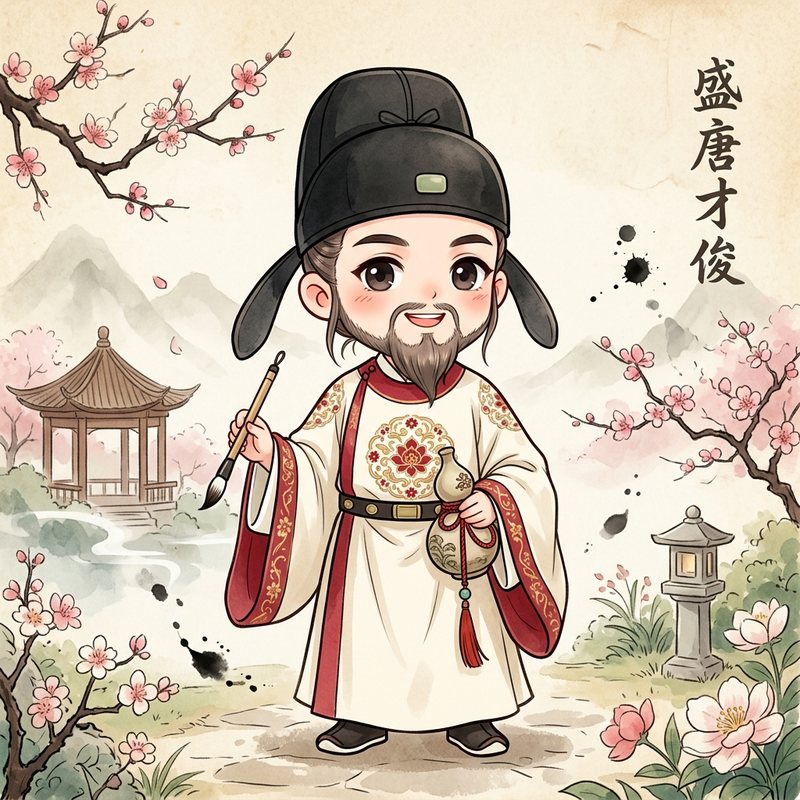
Han Yu (韩愈 · Hán Yù)
字退之 · 谥号文
The Confucian Luther of Tang China: leader of the Classical Prose Movement who revived rational Confucianism and reshaped Chinese literature.
文起八代之衰,道济天下之溺;唐宋八大家之首,复兴儒学的唐代文宗,以刚正铁骨与雄健古文重塑华夏文脉。
- The Confucian Luther: Spearheaded the Classical Prose Movement to overthrow hollow parallel prose and revitalized rational Confucian philosophy against dominant religious mysticism.
- Unflinching Moral Defiance: Repeatedly risked imperial execution—protesting famine relief cover-ups in 803 and denouncing imperial Buddhist relic veneration in 819.
- Civic Savior in Exile: Exiled to rugged Yangshan and Chaozhou, he eradicated predatory crocodiles, emancipated bonded debt slaves, built schools, and transformed desolate backwaters.
- First of the Eight Masters: Head of the Eight Great Prose Masters of Tang and Song, immortalized by Su Shi as 'reviving literature after eight dynasties of decay.'
Phase 1: The Orphan Scholar & The Trials of Chang'an (768–792)
Han Yu was born in 768 CE into an official family in Heyang (modern Mengzhou, Henan Province). Claiming Changli as his ancestral seat, he was known throughout his life as Han Changli. Tragedy struck almost immediately: his father, Han Zhongqing, passed away during Han Yu's infancy, leaving him in the care of his elder brother, Han Hui.
唐代宗大历三年(768年),韩愈生于河南河阳的官宦之家。其家族远祖居于昌黎,故世称‘韩昌黎’。幼年丧父的韩愈由长兄韩会抚养成人,在坎坷动荡中开启了求学生涯。
Between roughly 771 and 777 CE, Han Yu lived with his brother and sister-in-law in Xuancheng (modern Anhui Province), receiving rigorous early classical schooling. Around 777 CE, Han Hui was demoted from his imperial post, forcing the family to relocate south to remote Shaozhou (modern Shaoguan, Guangdong Province). This early exposure to the empire's southern peripheries broadened young Han Yu's understanding of provincial hardship.
约公元771至777年间,兄长韩会任起居舍人,年幼的韩愈随兄嫂居于宣城,发愤读书,接受严格的儒学启蒙。约777年韩会贬官,韩愈随迁至岭南韶州(今广东韶关),早早体味了人世浮沉与边陲疾苦。
Determined to realize his civil calling, Han Yu journeyed west to the imperial capital of Chang'an in 786 CE. Despite his towering talent, the examination halls proved brutally unforgiving: he failed the prestigious Boxue Hongci imperial selection examination three consecutive times between 786 and 792 CE. Reduced to bitter poverty in the capital's alleys, he persevered by actively submitting literary essays and petitions to high ministers.
贞元二年(786年),韩愈毅然西赴长安应举。然而科举之路充满险阻,他三度应试吏部博学宏词科皆未得中,衣食维艰,困居京华。但他从未自暴自弃,依然积极干谒公卿,投献文章,矢志以文载道。
千里马常有,而伯乐不常有。
Qiān lǐ mǎ cháng yǒu, ér Bó Lè bù cháng yǒu.
Thousand-league steeds are ever common, but a Bo Le with the discernment to recognize them is exceedingly rare.
Context · Written during Han Yu's impoverished early years in Chang'an, his allegorical fable 'On Horses' (马说) championed unrecognized merit against entrenched aristocratic privilege.
Phase 2: Examination Triumph & Provincial Military Staff (796–799)
Han Yu's relentless discipline finally bore fruit when he passed the rigorous Jinshi imperial examination. Between 796 and 799 CE, he launched his public career as an Observation Judge (Tuiguan) in Bianzhou under Xuanwu Military Commissioner Dong Jin. Following Dong Jin's death, Han Yu transitioned to the regional headquarters of Xuzhou, serving as Staff Judge (Jiedu Tuiguan) under Military Commissioner Zhang Jianfeng.
贞元十二年至十五年(796–799年),进士及第后的韩愈正式步入仕途。他先受宣武节度使董晋辟荐,任汴州观察推官;董晋去世后,转投徐州节度使张建封幕府,出任节度推官。
Stationed on the volatile frontline of the provincial military garrisons, Han Yu witnessed firsthand the administrative fractures plaguing the post-An Lushan Tang Empire. Amid regional rebellion and bureaucratic stagnation, he began forging his philosophical crusade: reviving the unadorned, morally upright prose of antiquity to replace the shallow, ornate parallel verse then dominating literary circles.
在藩镇割据与军务纷繁的幕府生涯中,韩愈深切洞悉了盛唐衰落后的时弊积重。他决心以古代儒家经世精神重铸文风,反对浮华绮靡的骈文,呼唤刚健质朴的古文。
大凡物不得其平则鸣。
Dà fán wù bù dé qí píng zé míng.
All things in the universe give voice when they are denied harmony and equilibrium.
Context · From Han Yu's preface seeing off poet Meng Jiao ('送孟东野序'), this timeless declaration framed literature as an organic moral outcry against injustice and suffering.
Phase 3: The Fearless Censor & First Exile to Yangshan (802–805)
In 802 CE, Han Yu was appointed Simen Doctor (Doctor of the Four Gates) at the Imperial Academy (Guozijian) in Chang'an, before earning promotion the following year to Investigating Censor (Jiancha Yushi). As a guardian of administrative integrity, he refused to turn a blind eye to royal complacency. When devastating droughts triggered widespread starvation around the capital, local magistrates continued mercilessly extorting grain taxes.
贞元十八年(802年),韩愈获授国子监四门博士,次年晋升监察御史。面对关中关东连年大旱、赤地千里而官府仍强征暴敛的惨状,身居监察之职的韩愈不避斧钺,毅然拍案而起。
Han Yu submitted his courageous memorial, 'Report on Severe Drought and Human Famine from the Censorate' (御史台上论天旱人饥状), begging the throne for tax remissions on behalf of the starving populace. The memorial gravely offended powerful court ministers. Before winter ended in 803 CE, Han Yu was stripped of capital rank and exiled thousands of miles south to serve as magistrate of mountainous Yangshan (modern Qingyuan, Guangdong Province).
韩愈上《御史台上论天旱人饥状》,痛切陈词为民请命,揭露灾情真相。此举触怒权贵,他在803年岁末惨遭贬谪,被赶出京师,远徙荒僻的岭南阳山县(今广东清远阳山)出任县令。
Rather than succumbing to despair in the remote mountain valleys between 803 and 805 CE, Magistrate Han poured his boundless vitality into civil governance. He established public academies, personally taught classical moral values to local youths, and won universal reverence. Scholars traveled across mountain ranges to study under his tutelage, planting the seeds of classical learning in Lingnan.
在阳山任职的两年间(803–805年),韩愈展现出极高的政治韧性与爱民情怀。他兴办官学、教化黎民、革除弊俗,深得百姓爱戴。各地青年学者更是不远千里跋涉而来,拜于门下求学,阳山文风由此大盛。
师者,所以传道受业解惑也。
Shī zhě, suǒ yǐ chuán dào shòu yè jiě huò yě.
A teacher is one who transmits the moral Dao, imparts professional knowledge, and resolves perplexities.
Context · From Han Yu's epoch-making manifesto 'On Teachers' (师说), composed during his educational tenure to smash aristocratic taboos against public mentorship.
Phase 4: Return to Power, The Huaixi Campaign & The Fatal Memorial (806–819)
Following the accession of Emperor Xianzong, Han Yu was recalled to Chang'an in 806 CE. Over the next decade, he held a sequence of prestigious appointments, including Doctor of the Imperial Academy (Guozi Boshi), Director in the Ministry of Justice, Historiography Compiler, and Drafter in the Secretariat (Zhongshu Sheren). During this golden period, he formulated the core philosophical manifestos of Neo-Confucianism, notably 'On the Origin of the Moral Way' (原道) and 'On the Origin of Human Nature' (原性).
元和初年(806年),韩愈获赦召回京师。在此后十余年间,他历任国子博士、都官员外郎、史馆修撰、中书舍人等要职,写就《原道》《原性》等奠定宋代理学先声的宏篇巨著,成为朝廷重臣与文坛领袖。
When the warlord Wu Yuanji entrenched his rebellion in the Huaixi garrison, Han Yu marched with the imperial suppression forces as a strategic military advisor. Following the brilliant capture of Caizhou in 817 CE, Emperor Xianzong selected Han Yu to author the monumental commemorative inscription: 'The Memorial Stele of Pacifying Huaixi' (平淮西碑), celebrating imperial unity with grand, archaic rhetoric.
元和十二年(817年),淮西藩镇吴元济叛乱,韩愈作为行军司马随同宰相裴度亲赴前线平叛。大军奇袭蔡州平定淮西后,宪宗皇帝钦点韩愈撰写纪功名篇《平淮西碑》,以磅礴史笔震烁古今。
Yet high court glory did not temper Han Yu's moral intransigence. In the spring of 819 CE, Emperor Xianzong planned a magnificent state festival to welcome a finger bone relic of the Buddha into the Forbidden City. Viewing this as state-sponsored religious superstition that squandered the empire's treasury and subverted rational governance, Han Yu submitted his blistering 'Memorial on the Bone of Buddha' (论佛骨表).
元和十四年(819年),唐宪宗欲大举奉迎法门寺佛骨入宫供奉,举国若狂。韩愈目睹朝野沉溺迷信、糜费民脂,激愤难抑,上呈名震青史的《论佛骨表》,痛陈佞佛之弊,力谏皇帝息止妄动。
Enraged by the memorial's assertion that dynasties indulging in excessive Buddhism suffered truncated reigns, Emperor Xianzong initially ordered Han Yu's immediate execution. Intercession by senior colleagues narrowly spared his life. Commuted to a punitive banishment, the 51-year-old statesman was cast out of Chang'an on a snowy morning, condemned to serve as governor of subtropical Chaozhou (over 8,000 leagues away).
宪宗读表勃然大怒,欲立斩韩愈。赖裴度等重臣极力营救,方得免除一死,却被连贬八千里,即日押解出京,发配至极南偏荒的潮州刺史任上。
一封朝奏九重天,夕贬潮州路八千。
Yī fēng zhāo zòu jiǔ chóng tiān, xī biǎn Cháozhōu lù bā qiān.
At dawn a single memorial was submitted to the nine heavens of the court; by dusk I was exiled to Chaozhou, eight thousand leagues away.
Context · Written in bitter blizzards at Lan Pass atop the Qinling Mountains to his grand-nephew Han Xiang, capturing Han Yu's monumental fortitude in the face of political ruin.
Phase 5: Subduing Crocodiles in Chaozhou & Liberating Slaves in Yuanzhou (819–820)
Han Yu arrived in subtropical Chaozhou in March 819 CE. Although he remained at his post for a mere eight months, his administration transformed the region forever. The local waterways were infested by massive, predatory crocodiles that devoured livestock and terrorized villagers. Standing on the riverbank with sacrificial offerings, Han Yu declaimed his legendary 'Ode to the Crocodile' (祭鳄鱼文), ordering the reptiles into the southern sea and eradicating the threat through organized civic determination.
元和十四年(819年)三月,韩愈抵粤东潮州。在任仅短短八个月,他却以雷霆手段为百姓建功立德。当时恶溪鳄鱼为患、残害人畜,韩愈亲自登坛宣读《祭鳄鱼文》,陈明利害、限期驱逐,终使鳄害平息、海宴河清。
More significantly, Han Yu tackled deeply rooted social abuses. He used municipal revenues to ransom and liberate hundreds of poor citizens who had fallen into hereditary bonded slavery due to extortionate debt. He constructed vital water conservancy networks and donated his personal salary to re-establish public grammar schools. The grateful inhabitants of Chaozhou subsequently renamed Mount Bifeng to Mount Han and the Crocodile River to the Han River, an honor surviving to this day.
更令人称颂的是,韩愈在潮州大行德政:出公资赎放因债务沦为奴婢的穷苦百姓、兴修水利以御旱涝,并捐出私俸延聘名师重修州学。潮州百姓感念其浩荡德政,将笔架山改名韩山,将恶溪改名韩江,世代供奉香火。
In the autumn of 820 CE, following an imperial pardon, Han Yu was transferred north to serve as governor of Yuanzhou (modern Yichun, Jiangxi Province). Continuing his humanitarian crusade, he emancipated further victims of debt bondage, eradicated human collateral practices, and revitalized regional education. By the close of 820 CE, he was formally summoned back to the capital as Rector of the Imperial Academy (Guozi Jijiu).
元和十五年(820年)秋,韩愈遇赦量移袁州刺史(今江西宜春)。他继续推行仁政,废除以人为抵押的高利贷弊习,释免被卖为奴婢的平民,大力发展官学。年末,朝廷正式召其回京,出任国子祭酒。
业精于勤,荒于嬉;行成于思,毁于随。
Yè jīng yú qín, huāng yú xī; xíng chéng yú sī, huǐ yú suí.
Mastery in scholarship thrives on diligence and decays through frivolous play; moral conduct achieves greatness through deliberate thought and crumbles through thoughtless conformity.
Context · From Han Yu's famous dialogue 'Encouragement to Learning' (进学解), formulating the ultimate Confucian academic creed during his imperial educational directorship.
Phase 6: High Statesman, Final Peace & The Eternal Legacy of Master Wen (821–824)
During the reign of Emperor Muzong (821–824 CE), Han Yu rose to the highest administrative echelons of the Tang central government. He served successively as Rector of the Imperial Academy, Vice Minister of War (Bingbu Shilang), and Vice Minister of Personnel (Libu Shilang). Even in his final years, he displayed legendary personal bravery, famously riding unarmed into the rebel garrison of Zhenzhou to successfully persuade the renegade general Wang Tingcou into imperial submission.
长庆年间(821–824年),韩愈在长安位极人臣,历任国子祭酒、兵部侍郎、吏部侍郎。其间镇州藩镇兵变,韩愈不顾个人安危单骑入营宣慰,以大义与雄辩慑服叛将王廷凑,化干戈为玉帛,再展国士无双之气度。
In December 824 CE (the fourth year of Changqing), Han Yu passed away peacefully at his Jing'an residence in Chang'an at the age of fifty-seven. The imperial court posthumously bestowed upon him the rank of Minister of Rites (Libu Shangshu) and the revered posthumous title 'Wen' (文, The Cultured), leading later generations to venerate him as Han Wengong. His devoted disciple Li Han compiled the canonical forty-volume 'Collected Works of Master Changli' (昌黎先生集).
长庆四年(824年)十二月,一代文宗韩愈于长安靖安里寓所病逝,享年五十七岁。朝廷追赠礼部尚书,赐谥号‘文’,世称‘韩文公’。门人李汉悉心编纂《昌黎先生集》四十卷行世,成为后世士林奉为圭臬的中华文化瑰宝。
天街小雨润如酥,草色遥看近却无。
Tiān jiē xiǎo yǔ rùn rú sū, cǎo sè yáo kàn jìn què wú.
On imperial boulevards fine drizzle falls moist and rich as clarified butter; grass shows a hint of green from afar, yet vanishes when seen close up.
Context · From Han Yu's lyrical masterpiece 'Presented to Zhang Eighteen of the Water Board in Early Spring', capturing Chang'an's delicate seasonal awakening with poetic genius.
| Perspective 视角 | Han Yu (The Confucian Reformer) | Martin Luther (The Protestant Reformer) |
|---|---|---|
| Core Intellectual Mission | Revitalized pure pre-Qin Confucian moral humanism against dominant Buddhist and Daoist religious establishments. | Revitalized scriptural biblical faith and grace against medieval ecclesiastical corruption and indulgences. |
| Literary Revolution | Pioneered the Classical Prose Movement, replacing rigid euphuistic parallel prose with vigorous, natural discourse. | Translated the Bible into the German vernacular, standardizing the modern German literary language. |
| Courage Before Power | Submitted the Memorial on the Bone of Buddha directly to Emperor Xianzong, risking execution for public reason. | Nailed the 95 Theses to Wittenberg's door and declared 'Here I stand' before Emperor Charles V at the Diet of Worms. |
| Enduring Legacy | Revered as the head of the Eight Great Prose Masters of Tang and Song; hailed as 'reviving literature after eight dynasties of decay.' | Recognized as the father of the Protestant Reformation, permanently transforming European religion, politics, and culture. |
Trace Han Yu's Footsteps on the Interactive Topographic Map
Follow his actual historical trail across 10 imperial stations—from childhood in Heyang and schooling in Xuancheng to exiles in Yangshan and Chaozhou.
Launch Interactive Journey MapFrequently Asked Questions (FAQ)
Why was Han Yu exiled by Emperor Xianzong in 819 CE?
In 819 CE, Emperor Xianzong organized an extravagant state spectacle to escort a relic finger bone of the Buddha into the Forbidden City. Han Yu submitted his blistering 'Memorial on the Bone of Buddha' (论佛骨表), warning that imperial indulgence in foreign religious mysticism had historically ruined dynasties and squandered public wealth. Enraged by his audacity, the emperor initially intended to execute Han Yu, but court appeals spared his life, commuting the sentence to sudden exile as governor of remote Chaozhou.
What was the Classical Prose Movement (Guwen Yundong) led by Han Yu?
The Classical Prose Movement was a transformative literary and philosophical revolution in middle Tang Dynasty China led by Han Yu and Liu Zongyuan. It rejected the decadent, rigid parallel prose (Pianwen) that prioritized artificial tonal symmetry and vacuous ornamentation over substance. Han Yu advocated a return to the direct, vigorous, and morally purposeful prose of antiquity ('Wen Yi Zai Dao'—literature as the vehicle of ethical truth).
Why is Han Yu called 'The Confucian Luther of Tang China'?
Western sinologists often describe Han Yu as 'The Confucian Luther of Tang China' because both figures launched monumental cultural and linguistic revolutions against entrenched religious establishments. Just as Luther challenged Roman papal authority and translated scripture into vigorous German vernacular, Han Yu challenged widespread Buddhist-Daoist institutional dominance, returned to original Confucian humanist texts, and forged an expressive, natural prose style that democratized scholarship.
What were Han Yu's greatest achievements during his eight months in Chaozhou?
Despite being exiled to subtropical Chaozhou (over 8,000 leagues from the capital), Han Yu served with astonishing vigor for eight months. He famously wrote the ceremonial 'Ode to the Crocodile' (祭鳄鱼文) to eradicate dangerous reptilian plagues, used municipal revenue to emancipate hundreds of citizens trapped in generational debt slavery, built community waterworks, and founded modern academies. In gratitude, the people of Chaozhou renamed Mount Bifeng to Mount Han and the river to the Han River.
What does the famous line 'A teacher transmits the Dao, imparts knowledge, and resolves doubts' mean?
From Han Yu's seminal educational essay 'On Teachers' (师说, Shi Shuo), this statement redefined the sacred role of education in imperial China: '师者,所以传道受业解惑也'. Han Yu argued that learning is not defined by social status or age, but by the pursuit of moral truth (the Dao). Anyone who possesses insight can be a teacher, breaking the aristocratic monopoly on intellectual guidance.
Walk with Han Yu Across China
随韩愈漫步华夏河山 · 亲历命运逆境与精神涅槃