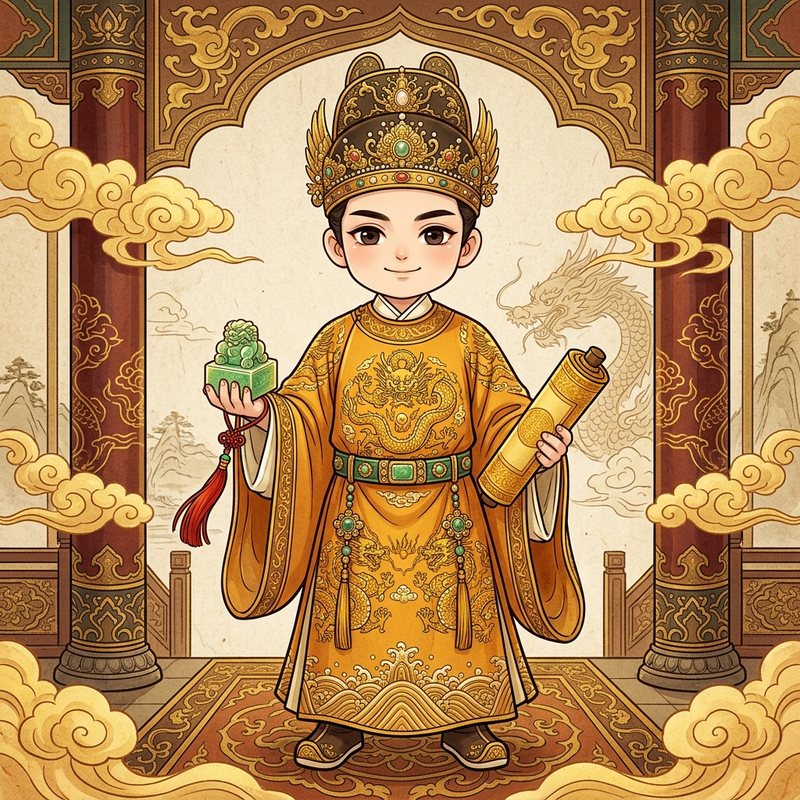
The Emperor of China's Golden AgeTang Dynasty(685—762)庙号玄宗 · 世称唐明皇 / 临淄王Audio Journey · 10 Stops
Architect of the Kaiyuan Golden Age and patron founder of Chinese performing arts, whose tragic twilight defined the rise and fall of High Tang.
Sovereign of the Golden Age· Marcus AureliusPatron of the Pear Garden· Apollo and Louis XIVTragedy of the An Lushan Cataclysm· King Lear
Unfolding the Historical Landscape…
印
Daily Wisdom & Resilience Oracle
The Resilient Optimist
“竹杖芒鞋轻胜马,谁怕?一蓑烟雨任平生。”
Holding a bamboo cane and wearing straw sandals, I stride faster than a horse. Who is afraid? A straw cloak in the mist and rain — I live my life with equanimity.
💡 In the 3rd year of exile in Huangzhou, caught in a sudden downpour, Su Shi embraced the storm with supreme resilience.
— Su Shi (Dongpo)(The Renaissance Foodie & Optimist)
Historical Footprints & Narration Archive
10 Stations
1
Luoyang Birthplace
685 CE · Age 0
Eastern Tang capital and cradle of imperial succession along the Luo River, modern Luoyang, Henan
Born into the perils of Empress Wu Zetian's court in Luoyang, cultivating patience and mastery of music.
A hidden dragon does not act, for its light remains below; concealing brilliance in dark waters, it gathers strength for the skies.
Station Narration Script
In 685 CE, Li Longji was born in the Eastern Capital of Luoyang, amid the tightening grip of his formidable grandmother, Empress Wu Zetian. Witnessing lethal court purges throughout his youth, the young prince concealed his fiery political ambition behind music and poetry, patiently waiting for the moment history would call upon him.
Departure Transition Script
As new conspiracies threatened the dynasty after Wu Zetian's death, Li Longji moved west to Chang'an, poised to launch a fateful strike for the throne.
2
Chang'an: The Tanglong Coup
710 CE · Age 25
Imperial metropolis and political powerhouse of Tang China, modern Xi'an, Shaanxi
At age twenty-five, leading a midnight raid through the palace gates to overthrow usurpers.
“百灵滋景祚,万国庆昌期。”
Bǎi líng zī jǐng zuò, wàn guó qìng chāng qī.
A hundred deities enrich our auspicious fortune; ten thousand kingdoms rejoice in this age of enduring glory.
Station Narration Script
In 710 CE, palace tensions exploded in Chang'an. Refusing to let Empress Wei usurp supreme power, twenty-five-year-old Li Longji orchestrated the daring Tanglong Coup. Charging through the Xuanwu Gate beneath the cover of darkness, his cavalry eradicated the usurpers in a single night, securing the throne for his father and making himself imperial crown prince.
Departure Transition Script
Now crown prince, Li Longji knew the struggle was far from over as his powerful aunt, Princess Taiping, maneuvered for ultimate control.
3
Chang'an: Dawn of Kaiyuan
713 CE · Age 28
Tang imperial seat at Daming Palace, hub of central administration, modern Xi'an, Shaanxi
Crushing rival factions in the Xiantian Coup and inaugurating the historic Kaiyuan Era.
“兄弟怡怡,礼义齐齐。”
Xiōngdì yíyí, lǐyì qíqí.
Brothers live in joyful harmony; ritual propriety and righteous duty flourish together in perfection.
Station Narration Script
In 713 CE, the newly crowned Emperor Xuanzong faced his supreme test of survival. His aunt Princess Taiping dominated the court, commanding four of the empire's seven chancellors. Moving with ruthless speed, Xuanzong launched the Xiantian Coup, dissolving the opposition. Proclaiming the era name 'Kaiyuan', he opened a golden chapter of renewal.
Departure Transition Script
With imperial authority secured, Xuanzong turned his fierce energy toward statecraft, searching for visionary ministers to build an empire of abundance.
4
Chang'an: Kaiyuan Reforms
716 CE · Age 31
Center of imperial bureaucratic reform and prosperity in Chang'an, modern Xi'an, Shaanxi
Appointing visionary chancellors Yao Chong and Song Jing to implement sweeping structural reforms.
“达人轻禄位,居守恋风徽。”
Dárén qīng lùwèi, jūshǒu liàn fēnghuī.
Enlightened souls hold rank and wealth in light regard; guardians of the realm cherish enduring virtue and renown.
Station Narration Script
During the early Kaiyuan years, Chang'an became the stage for one of history's finest partnerships between ruler and ministers. Xuanzong appointed Yao Chong and Song Jing, strictly adhering to meritocracy and anti-corruption laws. Demonstrating his resolve, the emperor burned luxurious imperial brocades in public. Within years, Tang harvests broke all historical records.
Departure Transition Script
With the Tang Dynasty at the summit of prosperity, Xuanzong embarked on a grand eastern progress to report his triumph to Heaven atop sacred Mount Tai.
5
Mount Tai: Fengshan Sacrifices
725 CE · Age 40
Sacred eastern mountain of imperial ascendancy and ritual legitimation, Tai'an, Shandong
Performing the sacred Fengshan sacrifices atop Mount Tai and paying personal homage to Confucius.
What manner of man was the Master, laboring anxiously through his lifetime? The land remains the village of Zou; his home became the Prince of Lu's palace. Sighing for the phoenix he lamented his fortune; weeping for the qilin he grieved that the Dao had reached its end. Seeing today the offerings between the two pillars, it must be just as he once foresaw in his dream.
Station Narration Script
In the autumn of 725 CE, Mount Tai witnessed the grandest imperial spectacle in Tang history. Leading an immense train of officials and foreign ambassadors from Byzantium, Persia, and Japan, Xuanzong ascended the peak for the Fengshan sacrifice. Descending the mountain, he visited Confucius' temple in Qufu, composing his famous poem that honored wisdom above conquest.
Departure Transition Script
Returning to Chang'an, Xuanzong immersed himself in the celestial arts, turning his court into an eternal salon of music, dance, and poetry.
6
Chang'an: The Pear Garden
744 CE · Age 59
Cultural epicenter of High Tang music, poetry, and palace pageantry at Xingqing Palace, modern Xi'an
Founding the imperial Pear Garden and summoning Poet Immortal Li Bai to court.
Clouds evoke her drifting robes, blossoms her countenance; the spring breeze brushes the balustrade, rich with glistening dew.
Station Narration Script
In the early Tianbao years, Xingqing Palace was the undisputed artistic center of East Asia. The musically gifted Xuanzong created the Pear Garden, personally beating the Jie drum and teaching orchestrations. When peonies blossomed by the Chenxiang Pavilion, he summoned Li Bai, whose wine-scented brushes captured Consort Yang's beauty in the immortal 'Qingping Diao'.
Departure Transition Script
Yet amidst the rapturous melodies and courtly luxury, neither the emperor nor his poets saw the war storms gathering across the northern border.
7
Huaqing Palace, Mount Li
755 CE · Age 70
Imperial winter palace and geothermal resort beneath Mount Li, Lintong, Xi'an
Basking in the hot springs of Huaqing Palace as rebel war drums shatter the golden peace.
“渔阳鼙鼓动地来,惊破霓裳羽衣曲。”
Yúyáng pígǔ dòng dì lái, jīng pò Nícháng Yǔyī Qū.
The war drums of Yuyang came shaking the very earth, shattering into pieces the song of Rainbow Skirts and Feathered Robes.
Station Narration Script
In the winter of 755 CE, Huaqing Palace beneath Mount Li was an oasis of warmth and indulgence. The seventy-year-old emperor revelled with Consort Yang to the ethereal strains of the Rainbow Skirt Dance. But the illusion was shattered in November: general An Lushan rebelled with 150,000 troops, sweeping across northern China and marching directly on the undefended capitals.
Departure Transition Script
When the vital mountain pass at Tongguan fell, Chang'an was doomed. Xuanzong fled the city gates at dawn, embarking on a desperate journey toward the mountains of Sichuan.
8
Mawei Courier Station
756 CE · Age 71
Historic courier post on the road to Sichuan, tragic site of the imperial mutiny, Xingping, Shaanxi
Trapped by mutinous guards at Mawei, forced to execute his beloved consort to save the dynasty.
“六军不发无奈何,宛转蛾眉马嵬死。”
Liù jūn bù fā wúnàihé, wǎnzhuǎn éméi Mǎwéi sǐ.
The imperial armies refused to advance, leaving no choice; writhing in agony, the delicate moth-eyebrow beauty died at Mawei.
Station Narration Script
On July 15, 756 CE, beneath driving rain at Mawei Courier Station, imperial majesty reached its darkest hour. Starving, exhausted palace soldiers mutinied, slaying Chancellor Yang Guozhong and surrounding the emperor's lodge with drawn swords. Powerless to save his beloved, the weeping 71-year-old monarch ordered Consort Yang strangled under a pear tree, trading love for dynastic survival.
Departure Transition Script
Choked with unspeakable sorrow, the shattered emperor was escorted onto the perilous mountain trails of Sichuan.
9
Chengdu: Refuge & Abdication
756 CE · Age 71
Brocade haven of Sichuan basin sheltering the imperial court in exile, modern Chengdu, Sichuan
Reaching safety in Chengdu and voluntarily stepping down as Retired Emperor to aid the war effort.
The Sword Pavilion stands craggy and towering; if one guard holds the pass, ten thousand men cannot force their way through.
Station Narration Script
After navigating the terrifying precipices of the Shu Roads, Xuanzong reached Chengdu. Word soon arrived from the northern frontier: Crown Prince Li Heng had been proclaimed Emperor Suzong by the armies at Lingwu. Rather than spark civil war, Xuanzong demonstrated statesmanship, ratifying the accession and stepping aside as Retired Emperor to preserve Tang unity.
Departure Transition Script
As imperial marshals recaptured the dual capitals, the retired emperor prepared for his bittersweet homecoming to Chang'an.
10
Chang'an: Twilight & Legacy
762 CE · Age 77
Imperial palace courtyards where the retired emperor spent his solitary twilight, modern Xi'an, Shaanxi
Returning to a scarred capital, spending his solitary twilight reflecting on High Tang glory and tragic loss.
Recalling the golden days of Kaiyuan in their prime, even small towns harbored ten thousand households. Rice flowed glistening and grain shone white; public and private storehouses overflowed with abundance.
Station Narration Script
Late in 757 CE, the retired emperor returned to a scarred, quiet Chang'an. The grand halls were haunted by memories; the beloved consort and vibrant musicians were gone. On May 3, 762 CE, Li Longji passed away peacefully at age seventy-seven. Having created China's most radiant golden age and witnessed its fall, his life remains a timeless monument to human grandeur and imperial heartbreak.
Departure Transition Script
Though Xuanzong's epic journey came to an end, the radiant brilliance of Kaiyuan and the poignant sorrow of Mawei remain etched forever in the soul of civilization.
Key Historical Inquiries & Context
· 核心史实公案与速览
Emperor Xuanzong of Tang (Li Longji, 685–762 CE) was the seventh emperor of the Tang Dynasty, reigning for forty-four transformative years (712–756). Ascending the throne after bold coups against rival factions, he inaugurated the Kaiyuan Golden Age alongside brilliant chancellors Yao Chong and Song Jing, guiding the Tang empire to its economic, cultural, and demographic pinnacle. A virtuoso musician and calligrapher, he founded the Pear Garden academy and composed the Rainbow Skirt Dance, revered as the patron deity of Chinese theatre. His later complacency and love for Consort Yang Guifei allowed the devastating An Lushan Rebellion to erupt, forcing his flight to Shu and tragic abdication. His life remains China's ultimate historical drama of imperial zenith and heartbreaking sorrow.
Emperor Xuanzong of Tang (Li Longji, 685–762 CE) was the seventh emperor of the Tang Dynasty, reigning for forty-four transformative years (712–756). Ascending the throne after bold coups against rival factions, he inaugurated the Kaiyuan Golden Age alongside brilliant chancellors Yao Chong and Song Jing, guiding the Tang empire to its economic, cultural, and demographic pinnacle. A virtuoso musician and calligrapher, he founded the Pear Garden academy and composed the Rainbow Skirt Dance, revered as the patron deity of Chinese theatre. His later complacency and love for Consort Yang Guifei allowed the devastating An Lushan Rebellion to erupt, forcing his flight to Shu and tragic abdication. His life remains China's ultimate historical drama of imperial zenith and heartbreaking sorrow.
QWhat was Li Longji's primary cultural and historical legacy?
Li Longji is celebrated across world history as a pioneer of Sovereign of the Golden Age, Patron of the Pear Garden, Tragedy of the An Lushan Cataclysm, leaving enduring philosophical insights, literature, and art.
QWhere does Li Longji's historical life journey map lead?
This interactive GIS map retraces 10 chronological stops across Tang Dynasty China, originating from Luoyang Birthplace and spanning through Chang'an: Twilight & Legacy.
The Complete Life Journey & Biography of Li Longji (Emperor Xuanzong) (李隆基)
Chronological travel & exile routes mapped to modern Chinese cities across Tang Dynasty China — featuring bilingual scholar audio, classical poetry recitations, and historical cross-paths.
Luoyang Birthplace (洛阳降诞)
Age 0
Modern-day analog: Eastern Tang capital and cradle of imperial succession along the Luo River, modern Luoyang, Henan
Born into the perils of Empress Wu Zetian's court in Luoyang, cultivating patience and mastery of music.
In 685 CE, Li Longji was born in the Eastern Capital of Luoyang, amid the tightening grip of his formidable grandmother, Empress Wu Zetian. Witnessing lethal court purges throughout his youth, the young prince concealed his fiery political ambition behind music and poetry, patiently waiting for the moment history would call upon him.
As new conspiracies threatened the dynasty after Wu Zetian's death, Li Longji moved west to Chang'an, poised to launch a fateful strike for the throne.
“A hidden dragon does not act, for its light remains below; concealing brilliance in dark waters, it gathers strength for the skies.”
Modern-day analog: Imperial metropolis and political powerhouse of Tang China, modern Xi'an, Shaanxi
At age twenty-five, leading a midnight raid through the palace gates to overthrow usurpers.
In 710 CE, palace tensions exploded in Chang'an. Refusing to let Empress Wei usurp supreme power, twenty-five-year-old Li Longji orchestrated the daring Tanglong Coup. Charging through the Xuanwu Gate beneath the cover of darkness, his cavalry eradicated the usurpers in a single night, securing the throne for his father and making himself imperial crown prince.
Now crown prince, Li Longji knew the struggle was far from over as his powerful aunt, Princess Taiping, maneuvered for ultimate control.
“A hundred deities enrich our auspicious fortune; ten thousand kingdoms rejoice in this age of enduring glory.”
Modern-day analog: Tang imperial seat at Daming Palace, hub of central administration, modern Xi'an, Shaanxi
Crushing rival factions in the Xiantian Coup and inaugurating the historic Kaiyuan Era.
In 713 CE, the newly crowned Emperor Xuanzong faced his supreme test of survival. His aunt Princess Taiping dominated the court, commanding four of the empire's seven chancellors. Moving with ruthless speed, Xuanzong launched the Xiantian Coup, dissolving the opposition. Proclaiming the era name 'Kaiyuan', he opened a golden chapter of renewal.
With imperial authority secured, Xuanzong turned his fierce energy toward statecraft, searching for visionary ministers to build an empire of abundance.
“Brothers live in joyful harmony; ritual propriety and righteous duty flourish together in perfection.”
兄弟怡怡,礼义齐齐。 (Xiōngdì yíyí, lǐyì qíqí.)
Chang'an: Kaiyuan Reforms (励精图治)
Age 31
Modern-day analog: Center of imperial bureaucratic reform and prosperity in Chang'an, modern Xi'an, Shaanxi
Appointing visionary chancellors Yao Chong and Song Jing to implement sweeping structural reforms.
During the early Kaiyuan years, Chang'an became the stage for one of history's finest partnerships between ruler and ministers. Xuanzong appointed Yao Chong and Song Jing, strictly adhering to meritocracy and anti-corruption laws. Demonstrating his resolve, the emperor burned luxurious imperial brocades in public. Within years, Tang harvests broke all historical records.
With the Tang Dynasty at the summit of prosperity, Xuanzong embarked on a grand eastern progress to report his triumph to Heaven atop sacred Mount Tai.
“Enlightened souls hold rank and wealth in light regard; guardians of the realm cherish enduring virtue and renown.”
Modern-day analog: Sacred eastern mountain of imperial ascendancy and ritual legitimation, Tai'an, Shandong
Performing the sacred Fengshan sacrifices atop Mount Tai and paying personal homage to Confucius.
In the autumn of 725 CE, Mount Tai witnessed the grandest imperial spectacle in Tang history. Leading an immense train of officials and foreign ambassadors from Byzantium, Persia, and Japan, Xuanzong ascended the peak for the Fengshan sacrifice. Descending the mountain, he visited Confucius' temple in Qufu, composing his famous poem that honored wisdom above conquest.
Returning to Chang'an, Xuanzong immersed himself in the celestial arts, turning his court into an eternal salon of music, dance, and poetry.
“What manner of man was the Master, laboring anxiously through his lifetime? The land remains the village of Zou; his home became the Prince of Lu's palace. Sighing for the phoenix he lamented his fortune; weeping for the qilin he grieved that the Dao had reached its end. Seeing today the offerings between the two pillars, it must be just as he once foresaw in his dream.”
Modern-day analog: Cultural epicenter of High Tang music, poetry, and palace pageantry at Xingqing Palace, modern Xi'an
Founding the imperial Pear Garden and summoning Poet Immortal Li Bai to court.
In the early Tianbao years, Xingqing Palace was the undisputed artistic center of East Asia. The musically gifted Xuanzong created the Pear Garden, personally beating the Jie drum and teaching orchestrations. When peonies blossomed by the Chenxiang Pavilion, he summoned Li Bai, whose wine-scented brushes captured Consort Yang's beauty in the immortal 'Qingping Diao'.
Yet amidst the rapturous melodies and courtly luxury, neither the emperor nor his poets saw the war storms gathering across the northern border.
“Clouds evoke her drifting robes, blossoms her countenance; the spring breeze brushes the balustrade, rich with glistening dew.”
Modern-day analog: Imperial winter palace and geothermal resort beneath Mount Li, Lintong, Xi'an
Basking in the hot springs of Huaqing Palace as rebel war drums shatter the golden peace.
In the winter of 755 CE, Huaqing Palace beneath Mount Li was an oasis of warmth and indulgence. The seventy-year-old emperor revelled with Consort Yang to the ethereal strains of the Rainbow Skirt Dance. But the illusion was shattered in November: general An Lushan rebelled with 150,000 troops, sweeping across northern China and marching directly on the undefended capitals.
When the vital mountain pass at Tongguan fell, Chang'an was doomed. Xuanzong fled the city gates at dawn, embarking on a desperate journey toward the mountains of Sichuan.
“The war drums of Yuyang came shaking the very earth, shattering into pieces the song of Rainbow Skirts and Feathered Robes.”
渔阳鼙鼓动地来,惊破霓裳羽衣曲。 (Yúyáng pígǔ dòng dì lái, jīng pò Nícháng Yǔyī Qū.)
Mawei Courier Station (马嵬惊变)
Age 71
Modern-day analog: Historic courier post on the road to Sichuan, tragic site of the imperial mutiny, Xingping, Shaanxi
Trapped by mutinous guards at Mawei, forced to execute his beloved consort to save the dynasty.
On July 15, 756 CE, beneath driving rain at Mawei Courier Station, imperial majesty reached its darkest hour. Starving, exhausted palace soldiers mutinied, slaying Chancellor Yang Guozhong and surrounding the emperor's lodge with drawn swords. Powerless to save his beloved, the weeping 71-year-old monarch ordered Consort Yang strangled under a pear tree, trading love for dynastic survival.
Choked with unspeakable sorrow, the shattered emperor was escorted onto the perilous mountain trails of Sichuan.
“The imperial armies refused to advance, leaving no choice; writhing in agony, the delicate moth-eyebrow beauty died at Mawei.”
Modern-day analog: Brocade haven of Sichuan basin sheltering the imperial court in exile, modern Chengdu, Sichuan
Reaching safety in Chengdu and voluntarily stepping down as Retired Emperor to aid the war effort.
After navigating the terrifying precipices of the Shu Roads, Xuanzong reached Chengdu. Word soon arrived from the northern frontier: Crown Prince Li Heng had been proclaimed Emperor Suzong by the armies at Lingwu. Rather than spark civil war, Xuanzong demonstrated statesmanship, ratifying the accession and stepping aside as Retired Emperor to preserve Tang unity.
As imperial marshals recaptured the dual capitals, the retired emperor prepared for his bittersweet homecoming to Chang'an.
“The Sword Pavilion stands craggy and towering; if one guard holds the pass, ten thousand men cannot force their way through.”
Modern-day analog: Imperial palace courtyards where the retired emperor spent his solitary twilight, modern Xi'an, Shaanxi
Returning to a scarred capital, spending his solitary twilight reflecting on High Tang glory and tragic loss.
Late in 757 CE, the retired emperor returned to a scarred, quiet Chang'an. The grand halls were haunted by memories; the beloved consort and vibrant musicians were gone. On May 3, 762 CE, Li Longji passed away peacefully at age seventy-seven. Having created China's most radiant golden age and witnessed its fall, his life remains a timeless monument to human grandeur and imperial heartbreak.
Though Xuanzong's epic journey came to an end, the radiant brilliance of Kaiyuan and the poignant sorrow of Mawei remain etched forever in the soul of civilization.
“Recalling the golden days of Kaiyuan in their prime, even small towns harbored ten thousand households. Rice flowed glistening and grain shone white; public and private storehouses overflowed with abundance.”