Who Was Li Longji? Emperor Xuanzong & Fall of High Tang
Who Was Li Longji? Emperor Xuanzong & Fall of High Tang
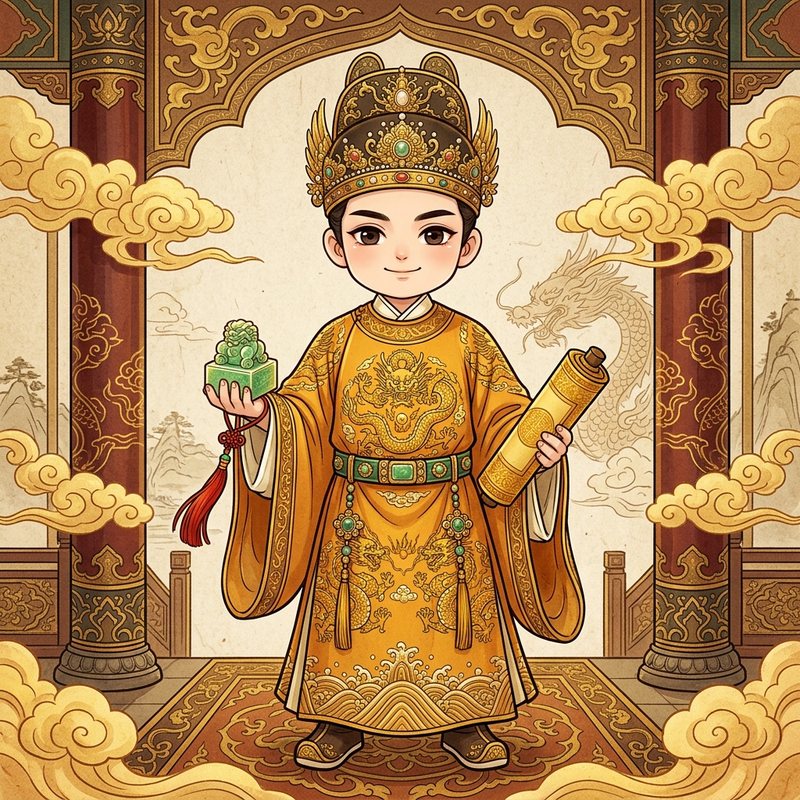
Li Longji (李隆基 · Lǐ Lóngjī)
庙号玄宗 · 世称唐明皇 / 临淄王
Architect of the Kaiyuan Golden Age and patron founder of Chinese performing arts, whose tragic twilight defined the rise and fall of High Tang.
在位四十四年开创开元盛世,设立梨园被尊为戏曲祖师;晚年安史之乱马嵬诀别,谱写盛极而衰的千古长恨。
- Architect of the Kaiyuan Zenith: Governed for 44 years (712–756 CE), elevating the Tang Dynasty to its geopolitical, economic, and demographic peak.
- Patron of Chinese Performing Arts: Founded the Pear Garden (Liyuan) imperial academy and composed the Rainbow Skirt Dance, venerated as the patron deity of Chinese theatre.
- Courage in Youth: Overthrew the dangerous Empress Wei and Princess Taiping factions through daring midnight palace coups to restore the rightful Tang dynasty.
- Tragic Archetype of Hubris: Neglected court vigilance in late life for artistic luxury and his beloved consort Yang Guifei, paving the way for the devastating An Lushan Rebellion.
- The Chinese Marcus Aurelius: Paralleled the Roman philosopher-emperor who held the Pax Romana at its height right before civil war and long-term decline.
Phase 1: The Gilded Shadows & Daring Midnight Coups (685–713)
Li Longji was born in 685 CE in the Eastern Capital of Luoyang, the third son of Emperor Ruizong. His childhood unfolded under the terrifying shadow of his grandmother, Empress Wu Zetian, the only female monarch in Chinese history. While imperial relatives were routinely executed on suspicion of treason, young Longji masked his razor-sharp intellect behind music, calligraphy, and court decorum, patiently waiting for the dynastic tide to turn.
垂拱元年(685年),李隆基出生于东都洛阳。其童年与少年时代完全笼罩在祖母武则天的铁腕威仪之下。在宗室屡遭酷吏屠戮的险恶时局中,这位年轻皇子韬光养晦,寄情于音律与经籍,在重重危机中淬炼出极高的隐忍智慧与敏锐的政治决断力。
Following Wu Zetian's death, the court plunged into renewed peril as Empress Wei and Princess Anle murdered Emperor Zhongzong in 710 CE, scheming to seize supreme power. The twenty-five-year-old Prince of Linzi made his move. Leading trusted palace guards through the Xuanwu Gate in the dead of night, Li Longji executed the Tanglong Coup, annihilating the usurpers and placing his father back upon the dragon throne.
神龙政变武后退位后,唐廷再度陷入暗流涌动。景龙四年(710年),韦皇后与安乐公主毒杀中宗企图夺权。年仅二十五岁的临淄王李隆基展现出霹雳手段,深夜亲率飞骑破玄武门而入发动‘唐隆政变’,一举诛灭韦氏集团,迎立其父李旦复位,以定策大功册封皇太子。
Ascending the throne in 712 CE after his father's abdication, Xuanzong confronted his formidable aunt, Princess Taiping, who controlled four of the empire's seven chancellors. In July 713 CE, Xuanzong struck first with the Xiantian Coup, eliminating her faction and decisively reclaiming unchallenged imperial authority. In December, he proclaimed the era name 'Kaiyuan' (Beginning of the Era), inaugurating thirty years of uninterrupted renewal.
延和元年(712年)李隆基登基即位。然而姑母太平公主权倾朝野,图谋废立。先天二年(713年),二十八岁的年轻天子以雷霆手段发动‘先天政变’,彻底铲除太平公主党羽,终结了武周以来女主干政的乱局。同年十二月改元‘开元’,大唐昂首迈入全新盛世。
兄弟怡怡,礼义齐齐。
Xiōng dì yí yí, lǐ yì qí qí.
Brothers live together in joyful harmony; sacred rituals and righteous duty flourish in unison.
Context · From Emperor Xuanzong's canonical calligraphic treasure 'Song of the Wagtails' (鹡鸰颂), celebrating fraternal unity after decades of bloody palace turmoil.
Phase 2: The Kaiyuan Golden Age & Sacrifices at Mount Tai (713–741)
Determined to forge an uncorrupted realm, Emperor Xuanzong enlisted legendary statesmen Yao Chong and Song Jing as chancellors. Yao Chong drafted the celebrated 'Ten Principles of Governance,' curbing ministerial overreach, trimming bloated government rolls, and prohibiting imperial relatives from interfering in state policy. Xuanzong demonstratively burned imperial jewels and brocades in the palace courtyard to command nationwide frugality.
立志革新图治的唐玄宗打破门阀成见,破格拜名相姚崇、宋璟主持朝政。姚崇上‘十事要说’,力行吏治清明、裁汰冗员、严禁外戚预政。玄宗甚至带头焚毁宫中珍宝锦绣以倡导节俭,整顿漕运、兴修水利、清查漏税庄园,迅速扭转了武周晚期财政空虚的积弊。
Under Xuanzong's stewardship, grain granaries overflowed, banditry vanished along the Silk Road, and the population surged past fifty million. In 725 CE, Xuanzong led imperial ministers, armies, and ambassadors from Byzantium, Persia, Arabia, and Japan to Mount Tai for the sacred Fengshan sacrifices. Ascending the peak, he reported peace and abundance to Heaven, before visiting Qufu to offer personal sacrifice before the tomb of Confucius.
在开元治世下,大唐仓廪丰实、路不拾遗,丝绸之路商旅云集,全国人口突破五千万。开元十三年(725年),玄宗统领庞大仪仗及波斯、大食、日本等万国使节东巡泰山,举行极其神圣的封禅大典昭告天下太平,随后巡幸曲阜孔庙隆重祭祀孔子,尊儒崇学,盛唐气象登峰造极。
夫子何为者,栖栖一代中。今看两楹奠,当与梦时同。
Fū zǐ hé wéi zhě, qī qī yī dài zhōng. Jīn kàn liǎng yíng diàn, dāng yǔ mèng shí tóng.
What manner of man was the Master, laboring anxiously through his lifetime? Seeing today the offerings between the two pillars, it must be just as he once foresaw in his dream.
Context · From Xuanzong's imperial poem 'Passing Through Lu to Sacrifice to Confucius and Lamenting Him' (经鲁祭孔子而叹之), placed first among five-character regulated verses in the canonical Three Hundred Tang Poems.
Phase 3: The Pear Garden & The Celestial Age of High Tang Art (742–755)
Emperor Xuanzong was an accomplished musician, calligrapher, and poet. In the Xingqing Palace, he founded the Pear Garden (Liyuan), personally training hundreds of elite musicians, actors, and dancers. For his artistic contributions, he is venerated across East Asia as the patron founding ancestor of Chinese opera and dramatic arts.
唐玄宗不仅是治世明君,更是中国历史上罕见的艺术天才。他精通横笛与羯鼓,在兴庆宫设立‘梨园’,亲自挑选教习乐工数百人,创制了灿烂辉煌的乐舞体系,被后世尊奉为华夏戏曲界的鼻祖——‘梨园祖师’。
In the 740s, Xuanzong fell passionately in love with Lady Yang Yuhuan, bestowing upon her the exalted rank of Noble Consort (Yang Guifei). Smitten by her grace, the emperor composed the mesmerizing 'Rainbow Skirt and Feathered Robe Dance' (Ni Shang Yu Yi Qu). In 744 CE, he summoned the drunken Poet Immortal Li Bai into the palace to immortalize consort and peony blossoms in radiant verse.
天宝初年,玄宗册封绝世佳人杨玉环为贵妃。帝妃相知,玄宗御制传奇乐舞《霓裳羽衣曲》,将天竺婆罗门旋律与华夏道曲完美融为一体。天宝三年(744年),玄宗召诗仙李白供奉翰林,于沉香亭畔命李白挥毫泼墨赋《清平调》,将盛唐文人的浪漫与绝代风华镌刻进文明史册。
云想衣裳花想容,春风拂槛露华浓。
Yún xiǎng yī shang huā xiǎng róng, chūn fēng fú kǎn lù huá nóng.
Clouds evoke her drifting robes, blossoms her countenance; the spring breeze brushes the balustrade, rich with glistening dew.
Context · Written by Poet Immortal Li Bai upon imperial command by Emperor Xuanzong beside the Peony Pavilion at Xingqing Palace.
Phase 4: The An Lushan Cataclysm & The Tragedy of Mawei (755–756)
Behind the veil of luxury, administrative rot deepened. Weary of governance, Xuanzong entrusted state power to scheming chancellors Li Linfu and later Yang Guozhong (Consort Yang's cousin). To guard the frontiers, he concentrated immense military firepower under non-Han regional commanders (Jiedushi), most notably An Lushan, who commanded three northern frontier garrisons. In November 755 CE, An Lushan launched his rebellion from Fanyang with 150,000 veteran cavalry.
然而繁华之下暗流汹涌。晚年玄宗渐生怠政之心,朝政先任奸相李林甫‘口蜜腹剑’,继任杨国忠专擅弄权;边防兵制亦从府兵制蜕变为藩镇节度使尾大不掉。玄宗对镇守北方三镇的胡将安禄山深信不疑,终酿大祸。天宝十四载(755年)十一月,安禄山起兵十五万叛乱,铁骑长驱南下,安史之乱爆发。
When the strategic Tongguan Pass collapsed in June 756 CE, Chang'an lay defenseless. Xuanzong fled west into the mountains toward Sichuan. At Mawei Courier Station (modern Xingping, Shaanxi), his exhausted imperial guards mutinied, slaughtering Chancellor Yang Guozhong and surrounding the emperor. Under threat of total massacre, the 71-year-old sovereign wept bitterly as he ordered his trusted eunuch Gao Lishi to strangle Consort Yang under a pear tree, a heartbreaking sacrifice to ensure dynastic survival.
天宝十五载(756年)六月,潼关陷落,长安震动。玄宗仓皇开延秋门西奔入蜀。行至陕西兴平马嵬驿,疲饿交加的禁军将士发生哗变,斩杀奸相杨国忠并团团围住驿馆。面对不可遏制的兵变,年逾古稀的老皇帝痛断肝肠,万般无奈下只得赐死挚爱杨贵妃,盛世在血泪中轰然崩塌。
渔阳鼙鼓动地来,惊破霓裳羽衣曲。六军不发无奈何,宛转蛾眉马嵬死。
Yú yáng pí gǔ dòng dì lái, jīng pò Ní cháng Yǔ yī Qū. Liù jūn bù fā wú nài hé, wǎn zhuǎn é méi Mǎ wéi sǐ.
The war drums of Yuyang came shaking the very earth, shattering the melody of Rainbow Skirts; the six armies refused to march leaving no recourse, as the delicate beauty writhed in death at Mawei.
Context · From Bai Juyi's epic 'Song of Everlasting Sorrow' (长恨歌), immortalizing Xuanzong's fall from celestial bliss to unbearable mortal agony.
Phase 5: Refuge in Shu, Abdication, and Twilight in Chang'an (756–762)
Crossing the formidable plank roads over the Qinling Mountains, Xuanzong reached sanctuary in Chengdu. Meanwhile, Crown Prince Li Heng marched north to Lingwu, where frontier troops proclaimed him Emperor Suzong to coordinate the war effort. When word reached Chengdu, Xuanzong demonstrated seasoned wisdom: he promptly ratified the accession, stepping down as Retired Emperor (Taishang Huang) and transferring full military authority to his son.
翻越艰险险峻的秦岭剑门蜀道后,玄宗抵达锦官城成都建立行在。与此前行途中,太子李亨北上灵武重整朔方军力,在将士拥戴下登基为唐肃宗。消息传至蜀中,玄宗展现出顾全大局的政治智慧,顺应大势册认肃宗,退位为太上皇,全权将平定叛乱的大权移交新君。
Following the recapture of Chang'an in 757 CE, Xuanzong returned to the battered capital. Stripped of influence, the old emperor lived quietly in Xingqing and Taiji Palaces, mourning his lost consort and recalling the golden days of Kaiyuan. On May 3, 762 CE, Li Longji passed away at the age of seventy-seven. His forty-four-year reign remains the defining pivot of the Tang Dynasty—a golden summit remembered with awe, and a cautionary tale remembered with sorrow.
至德二载(757年)长安收复,玄宗回銮居于兴庆宫。晚年物是人非,宫苑荒凉,忠心侍奉的高力士亦遭构陷流放。宝应元年(762年)五月,一代明皇李隆基在神龙殿安详崩逝,享年七十七岁。其四十余年的统治成为唐代文明最高亢的颂歌,亦是人类历史上一柄刻骨铭心的警世青锋。
忆昔开元全盛日,小邑犹藏万家室。稻米流脂粟米白,公私仓廪俱丰实。
Yì xī Kāi yuán quán shèng rì, xiǎo yì yóu cáng wàn jiā shì. Dào mǐ liú zhī sù mǐ bái, gōng sī cāng lǐn jù fēng shí.
Recalling the golden days of Kaiyuan in their prime, even small towns harbored ten thousand households. Rice flowed glistening and grain shone white; public and private storehouses overflowed with abundance.
Context · Du Fu's timeless nostalgic masterpiece 'Remembering the Past' (忆昔), immortalizing Xuanzong's Kaiyuan era as the golden age of Chinese civilization.
| Perspective 视角 | Emperor Xuanzong (Li Longji) | Marcus Aurelius (Roman Emperor) |
|---|---|---|
| Zenith of Imperial Civilization | Presided over the Kaiyuan Golden Age (713–741), marking the geopolitical, demographic, and artistic pinnacle of the Tang Dynasty. | Presided over the culmination of the Pax Romana as the last of the revered 'Five Good Emperors' of Rome. |
| Artistic & Intellectual Passion | Master composer, calligrapher, and poet who founded the Pear Garden and patronized titans like Li Bai. | Stoic philosopher-monarch who authored the seminal 'Meditations' while campaigning on the empire's frontiers. |
| Cataclysmic Crisis | Late-reign complacency and regional warlord empowerment unleashed the catastrophic An Lushan Rebellion in 755 CE. | Devastated by the Antonine Plague and grueling, relentless warfare against Germanic Marcomanni along the Danube. |
| Enduring Legacy | Venerated as the patron deity of Chinese theatre and immortalized as the dramatic archetype of tragic sovereign love. | Celebrated globally as the philosopher-king ideal, whose death in 180 CE signaled the twilight of Roman imperial stability. |
Trace Emperor Xuanzong's Footsteps on the Interactive Topographic Map
Follow Xuanzong's historic trail across 10 imperial stations—from birth in Luoyang and coups in Chang'an to the Fengshan sacrifices at Mount Tai and refuge in Chengdu.
Launch Interactive Journey MapFrequently Asked Questions (FAQ)
Why was the Kaiyuan Era under Emperor Xuanzong considered China's Golden Age?
The Kaiyuan Era (713–741 CE) represented the summit of the Tang Dynasty. With visionary chancellors Yao Chong and Song Jing, Xuanzong reformed taxation, curtailed aristocratic graft, and nurtured universal agriculture. Chang'an became the world's most populous international metropolis, thriving with Silk Road merchants, poets, and embassies from across Eurasia.
What was Emperor Xuanzong's role in Chinese opera and the Pear Garden?
Emperor Xuanzong was an extraordinarily gifted composer who personally established the Pear Garden (Liyuan) academy in his palace. He trained hundreds of vocalists, instrumentalists, and dramatic dancers, composing masterpieces like the Rainbow Skirt Dance. To this day, Chinese opera performers honor him as the patron ancestor 'Liyuan Zhushi'.
How did Emperor Xuanzong's relationship with Consort Yang Guifei end in tragedy?
During his later years, Xuanzong neglected governance to revel with Consort Yang at Huaqing Palace. When An Lushan rebelled in 755 CE and seized Chang'an, the imperial court fled. At Mawei Courier Station, mutinous guards blamed the Yang family and forced the heartbroken emperor to execute Yang Guifei.
Why is Emperor Xuanzong compared to the Roman Emperor Marcus Aurelius?
Both sovereigns presided over the absolute apex of their respective ancient empires—Xuanzong over the High Tang and Marcus Aurelius over Rome's Pax Romana. Both were refined intellectuals whose reigns represented golden civilizational zeniths immediately preceding sudden military cataclysms that irreversibly decentralized imperial power.
What caused the An Lushan Rebellion during Emperor Xuanzong's reign?
Xuanzong's later complacency led him to delegate military defenses to regional military commissioners (Jiedushi). General An Lushan accumulated command over three massive northern border armies while court chancellors engaged in corrupt infighting. In 755 CE, An Lushan exploited this imperial weakness to march on the capitals.
Walk with Li Longji Across China
随李隆基漫步华夏河山 · 亲历命运逆境与精神涅槃