Chronological travel & exile routes mapped to modern Chinese cities across Tang Dynasty China — featuring bilingual scholar audio, classical poetry recitations, and historical cross-paths.
Wugong Villa (Birthplace) (武功别馆(济世安民))
Age 1Modern-day analog: Modern Wugong County, Shaanxi Province
Born in Wugong into the aristocratic Li clan, a seer prophesied imperial destiny and gave him the name 'Shimin', meaning 'to save the world and comfort the people'.
In the villa of Wugong, encircled by the Qishui River, a seer beheld the infant and prophesied an imperial destiny, bestowing the name "Shimin"—to save the world and comfort the people. Born into the aristocratic Guanlong clan, the boy loved archery and horses, mastered the classics, and wielded extraordinary strength. At seventeen, when the Sui Emperor was trapped at Yanmen Pass, he scattered decoy banners and broke the siege with audacious cunning. Amid the flames of a crumbling empire, the seed of a resolve to pacify the realm quietly took root in his heart.
A crumbling world would not let the youth linger over his books. As the Sui order dissolved and warlords rose, the nineteen-year-old stood upon the walls of Taiyuan, gazing at a land engulfed in flames, where a decision that would reshape China awaited him.
“To deliver the world and bring peace to the people is the aspiration of a noble leader.”
济世安民,君子之志。 (Jì shì ān mín, jūn zǐ zhī zhì.)
Jinyang (Taiyuan, The Spark of Tang) (晋阳(太原起义,定乱经略))
Age 19Modern-day analog: Modern Taiyuan, Shanxi Province
At nineteen, Li Shimin persuaded his father Li Yuan to raise the righteous army at Jinyang, marching three myriad troops westward to seize Chang'an.
In the flickering candlelight of the Jinyang Palace, the empire was collapsing, yet his father Li Yuan hesitated. The nineteen-year-old Li Shimin secretly enlisted the counsellors Pei Ji and Liu Wenjing, and declared with fierce conviction: "Opportunity must not slip away; to take arms and pacify all under Heaven begins today!" The righteous army swore its oath at Taiyuan. He led from the front, storming Huoyi and Linfen, sweeping into Guanzhong with lightning force. With blood and resolve, a youth raised the curtain on the founding of the Tang.
Chang'an had fallen and the Tang was founded, yet rival warlords still carved up the Central Plains. The young Prince of Qin rode across the battlefield, where a life-or-death duel awaited him at Hulao Pass.
“Opportunity must not slip away; to take arms and pacify all under Heaven begins today!”
时机不可失,起义安天下,正在今日! (Shí jī bù kě shī, qǐ yì ān tiān xià, zhèng zài jīn rì!)
Hulao Pass (Capturing Two Kings in One Blow) (虎牢关(一战擒双王,天策上将))
Age 23Modern-day analog: Near modern Xingyang (Sishui Town), Henan Province
Holding Hulao Pass with three thousand iron cavalry, he besieged Wang Shichong at Luoyang and captured Dou Jiande in battle, reuniting China in one blow.
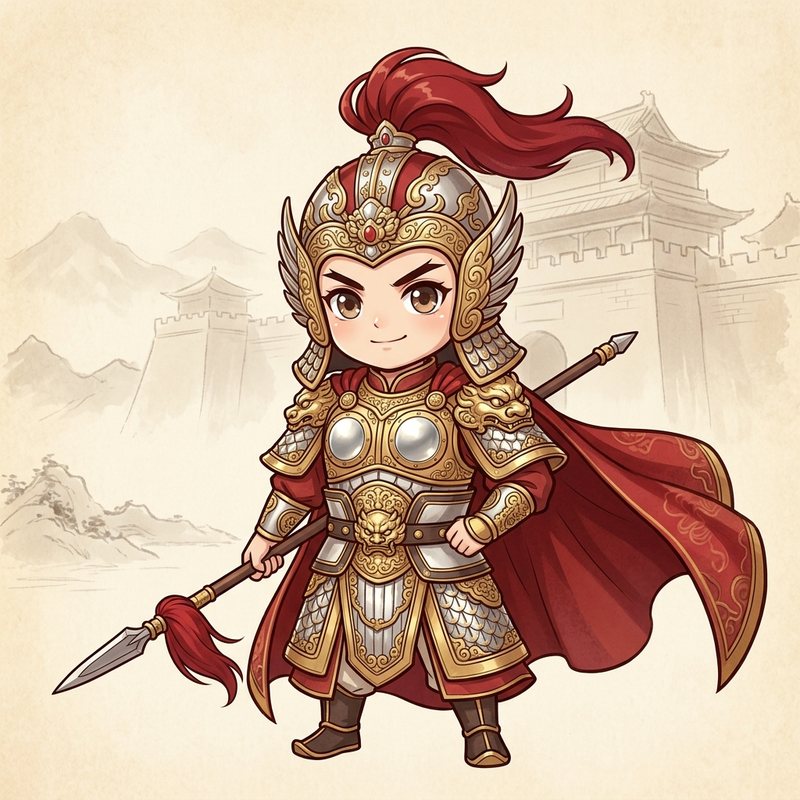
In the fourth year of Wude, as Luoyang lay under siege, Dou Jiande rushed a hundred thousand troops to its relief. While his generals trembled, Li Shimin defied them all, seizing the Hulao Pass with just three thousand Black Armour Cavalry. Feigning weakness, he lured the enemy deep, then, when they were spent, charged straight into their command and captured Dou Jiande alive. Hearing the news, Wang Shichong surrendered. Half of China was settled in a single stroke. The war song of the Black Armour Cavalry—"uniting mountain and river to bring peace to the people"—echoed across the realm.
Having captured two kings in one blow, the Prince of Qin was hailed across the realm and made General of Heavenly Strategy. Yet his glory shadowed the throne, and the storm of Xuanwu Gate was gathering—a choice that would decide the fate of the Tang.
“Breaching the enemy lines, the Black Armored Cavalry sweeps the field, uniting mountain and river to bring peace to the people.”
破阵子,玄甲骑,一统山河万民安。 (Pò zhèn zǐ, xuán jiǎ qí, yī tǒng shān hé wàn mín ān.)
Taiji & Daming Palaces (Chang'an) (长安太极殿(贞观之治,虚心纳谏))
Age 28Modern-day analog: Modern Xi'an, Shaanxi Province
Ascending the throne, he inaugurated the legendary 'Reign of Zhenguan'; viewing Wei Zheng as a human mirror, he welcomed blunt criticism to forge an enlightened empire.
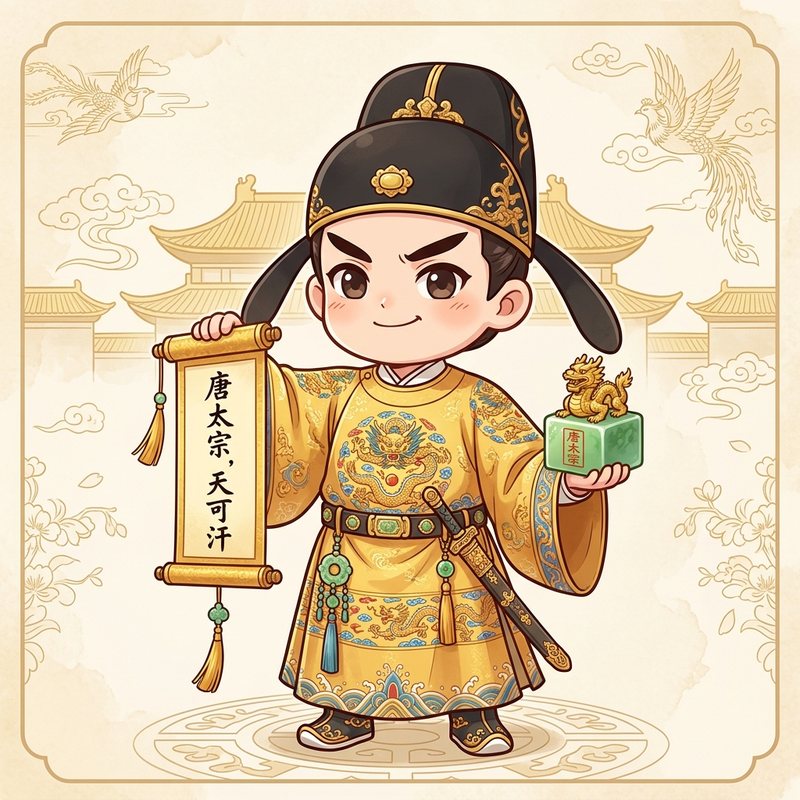
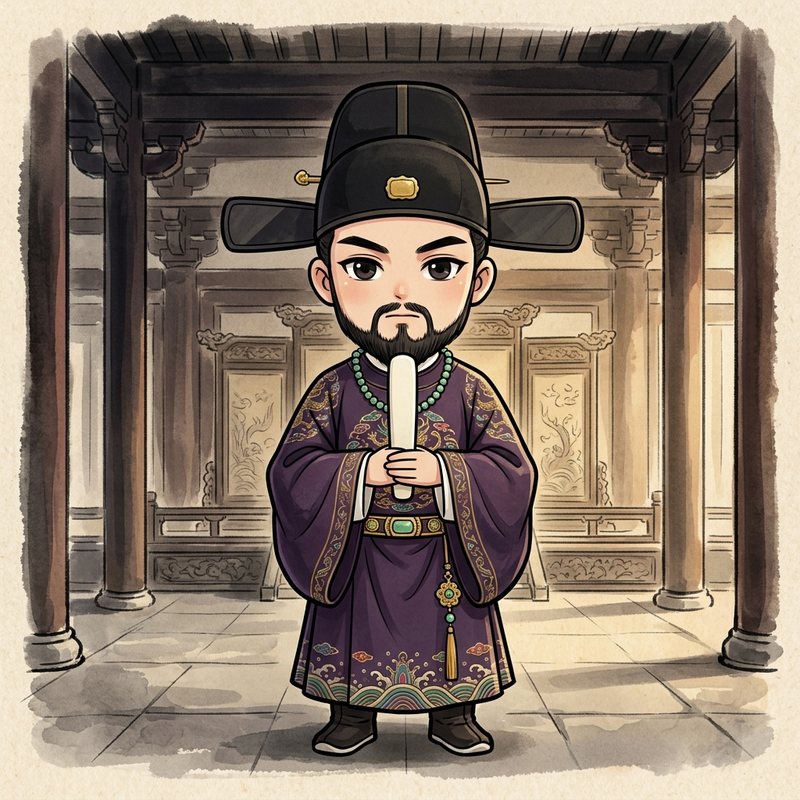
Upon the throne at Taiji Palace, the twenty-eight-year-old Li Shimin ruled the realm. Setting aside old grudges, he appointed his former rivals Wei Zheng and Wang Gui, and reminded himself that "water can float a boat, but it can also capsize it." He streamlined governance into the Three Departments and Six Ministries, introduced the equal-field and tax systems, lightened burdens, and ruled with mercy—so that doors were left unlocked at night and lost goods lay untouched in the streets. When Wei Zheng died, he cried: "With bronze as a mirror, one can dress properly; with history as a mirror, one knows the rise and fall; with people as a mirror, one clarifies gains and losses. Now that Wei Zheng has passed away, I have lost one of my mirrors!" The Reign of Zhenguan became the model of Chinese political brilliance.
The Reign of Zhenguan flourished in governance, yet the northern frontier never rested. When Turkic horsemen thundered across the Weishui River, how would the future Heavenly Khagan turn back two hundred thousand warriors with a single rider's courage?
“With bronze as a mirror, one can dress properly; with history as a mirror, one knows the rise and fall; with people as a mirror, one clarifies gains and losses. I have kept these three mirrors to guard against errors. Now that Wei Zheng has passed away, I have lost one of my mirrors!”
以铜为镜,可以正衣冠;以古为镜,可以知兴替;以人为镜,可以明得失。朕常保此三镜,以防己过。今魏徵殂逝,遂亡一镜矣! (Yǐ tóng wéi jìng, kě yǐ zhèng yì guān; yǐ gǔ wéi jìng, kě yǐ zhī xīng tì; yǐ rén wéi jìng, kě yǐ míng dé shī.)
Weishui & Northern Frontier (Pax Sinica) (渭水与漠北(四海归心,天可汗之尊))
Age 32Modern-day analog: Weishui River in Xi'an to Northern Steppes
Following the pacification of the Eastern Steppes, Eurasian leaders traveled to Chang'an to confer upon him the supreme title 'Tian Kehan' (The Heavenly Khagan).
In the early years of Zhenguan, Jieli Khagan led two hundred thousand horsemen to the Weishui Bridge. Li Shimin rode out alone, calmly parleying and turning back the invaders by sheer audacity. Four years later he sent General Li Jing on a night raid across the Yin Mountains, utterly subjugating the Eastern Turks. Leaders of the northern tribes journeyed to Chang'an to acclaim him "Heavenly Khagan." He proclaimed grandly: "From antiquity rulers have favored the Central Plains and despised the frontier peoples; I alone cherish them all as equals." Peoples of every tribe lived as one family, the great road to the khagans linked Eurasia, and the Silk Road ran unbroken—the Tang, with its all-embracing spirit, became the cosmopolitan heart of a world that came to pay homage.
The fame of the Heavenly Khagan spread across Eurasia. Yet time spares no one. In the twenty-third year of Zhenguan, the emperor who had forged this golden age reached the end of his life at Cuiwei Palace in the Zhongnan Mountains, and would rest forever in the embrace of Mount Jiuzong.
“From antiquity rulers have favored the Central Plains and despised the frontier peoples; I alone cherish them all as equals, and thus they regard me as their father.”
自古皆贵中华,贱夷狄,朕独爱之如一,故其种落皆依朕如父母。 (Zì gǔ jiē guì zhōng huá, jiàn yí dí, zhèn dú ài zhī rú yī.)
Zhaoling Mausoleum (Mount Jiuzong) (九嵕山昭陵(依山为陵,六骏长伴))
Age 51Modern-day analog: Liquan County, Xianyang, Shaanxi Province
Passing away in the Zhongnan Mountains, he was entombed inside Mount Jiuzong, accompanied by the immortal stone reliefs of the Six Steeds of Zhaoling.
In the twenty-third year of Zhenguan, the fifty-one-year-old Emperor Taizong passed away at Cuiwei Palace in the Zhongnan Mountains. Rejecting ostentatious earth mounds, he pioneered a frugal new style, carving his tomb deep into the heart of Mount Jiuzong. Before it, the six beloved warhorses painted from life by Yan Liben—Baitiwu, Telebiao, Saluzi, Quanmaogua, Qingzhui, and Shifachi—were sculpted into stone reliefs, standing eternal guard over the founding emperor. "The setting sun illumines the imperial banners, the horses whinny as the wind gently blows." The Six Steeds keep their vigil; an eternal path of good governance, the golden glory of the Tang. The spirit of the Heavenly Khagan now lives forever with the mountains and rivers.
“The setting sun illumines the imperial banners, the horses whinny as the wind gently blows. An eternal path of good governance, the golden glory of the Tang.”
落日照大旗,马鸣风萧萧。千秋治道,万古盛唐。 (Luò rì zhào dà qí, mǎ míng fēng xiāo xiāo.)