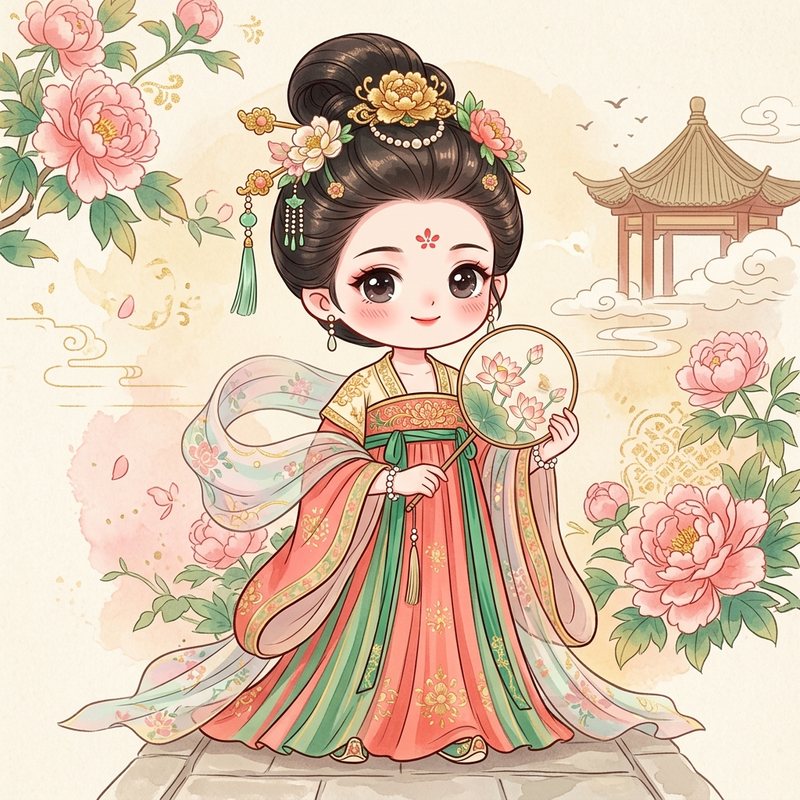
The Lady Chancellor & Imperial ScribeTang Dynasty(664—710)世称上官昭容 · 巾帼宰相Audio Journey · 8 Stops
From palace slave to imperial chancellor: drafting state decrees and judging imperial poetry with brilliant statesmanship.
The Lady Chancellor & Imperial Scribe· Aspasia of AthensSupreme Arbiter of Imperial Poetry· Madame de StaëlUnbroken Mind in the Palace Maze· Empress Theodora
Unfolding the Historical Landscape…
印
Daily Wisdom & Resilience Oracle
The Resilient Optimist
“竹杖芒鞋轻胜马,谁怕?一蓑烟雨任平生。”
Holding a bamboo cane and wearing straw sandals, I stride faster than a horse. Who is afraid? A straw cloak in the mist and rain — I live my life with equanimity.
💡 In the 3rd year of exile in Huangzhou, caught in a sudden downpour, Su Shi embraced the storm with supreme resilience.
— Su Shi (Dongpo)(The Renaissance Foodie & Optimist)
Historical Footprints & Narration Archive
8 Stations
1
Shanzhou Birthplace
664 CE · Age 0
Historic Yellow River gorge gateway near Sanmenxia, cradle of the Shangguan lineage
Born into an eminent official family in Shanzhou, plunged into palace slavery in infancy when her grandfather was executed.
“叶下洞庭初,思君万里馀。”
Yè xià Dòngtíng chū, sī jūn wàn lǐ yú.
As the first autumn leaves flutter across Lake Dongting, my longing for my lord stretches across ten thousand leagues.
Station Narration Script
In 664 CE, Shangguan Wan'er was born into an illustrious chancellor's home in Shanzhou. Yet before she could take her first steps, tragedy shattered her family. Her grandfather was executed for opposing Empress Wu, and her father died with him. Condemned to the imperial harem as royal slaves, baby Wan'er and her mother entered the deepest shadows of palace captivity, where an extraordinary mind would slowly form.
Departure Transition Script
Under her mother's devoted tutelage, young Wan'er studied classics late into the night within the palace walls.
2
Ye Ting Palace Academy
677 CE · Age 13
Imperial palace slave quarters & inner court academy in historic Chang'an, modern Xi'an
After fourteen years of classical study in slave quarters, she aced Empress Wu's imperial test and won instant emancipation.
“密叶因裁吐,新花逐翦舒。”
Mì yè yīn cái tǔ, xīn huā zhú jiǎn shū.
Dense foliage sprouts forth from clever shears; fresh blossoms unfurl as the scissors dance.
Station Narration Script
The iron gates of Chang'an's Ye Ting could not contain her astonishing brilliance. Summoned before Empress Wu in the great Daming Palace, fourteen-year-old Wan'er dipped her brush and composed with effortless grace. Her prose captivated the ruler, earning instant pardon and a post as confidential royal scribe. With words as her weapon, the former slave stepped directly into the imperial light.
Departure Transition Script
As Empress Wu shifted the imperial court eastward to Luoyang, Wan'er accompanied the sovereign as her key counselor.
3
Divine Capital Luoyang
684 CE · Age 20
Mingtang ceremonial center & Eastern Capital of the Tang-Zhou transition, modern Luoyang
Accompanying the sovereign to Luoyang, she drafted grand ceremonial texts for the Mingtang and coronation rituals.
“去岁迎新岁,今年后去年。”
Qù suì yíng xīn suì, jīn nián hòu qù nián.
Passing years welcome the dawn of the new; this present year succeeds the seasons that came before.
Station Narration Script
In the Divine Capital of Luoyang, the soaring towers of the Mingtang pierced the clouds, witnessing an unprecedented era. Standing beside Empress Wu's imperial dais, twenty-year-old Wan'er drafted the grand edicts that reverberated across Asia. She was far more than a literary scribe—she was the voice of the imperial will, shaping the majesty of a new dynasty.
Departure Transition Script
With Empress Wu placing ultimate trust in her intellect, Wan'er assumed total control over state petitions.
4
Ziwei Palace Inner Cabinet
696 CE · Age 32
Inner imperial secretariat of the Tang-Zhou palace city, modern Luoyang
Entrusted with reviewing all hundred-ministry petitions and drafting imperial policy as de facto chancellor.
Consort Zhaorong dominated court brilliance across two reigns; amid ten thousand state affairs a day, she responded with the speed of an echo whenever consulted.
Station Narration Script
In the depths of the Ziwei Palace in Luoyang, Shangguan Wan'er held the reins of imperial administration. Stacks of memorials from every corner of China met her sharp gaze and decisive red-ink brushes. She balanced factional rivalries while safeguarding dynastic stability. Without the formal title, she exercised full ministerial power, creating a landmark of female governance in Chinese history.
Departure Transition Script
Expanding her influence into the cultural realm, Wan'er convened the empire's greatest minds to compile an imperial encyclopedia.
5
Imperial Academy Compilation
698 CE · Age 34
Imperial library pavilion and scholarly compilation hall in Luoyang
Led forty eminent scholars to compile the 1,300-volume Sanjiao Zhuying, establishing literary leadership.
“文以贯道,群英竞秀。”
Wén yǐ guàn dào, qún yīng jìng xiù.
Literature channels universal truths; an assembly of eminent talents competes in brilliant splendor.
Station Narration Script
Inside the Xiouwen Pavilion in Luoyang, the scent of ink drifted among thousands of parchment scrolls. Forty of the realm's most learned Confucian masters sat together, led by Shangguan Wan'er. Over 1,300 volumes of the Sanjiao Zhuying united the philosophical heritage of China. Her scholarly rigor earned the deep reverence of the intellectual elite, setting the cultural foundation for the High Tang.
Departure Transition Script
When the Shenlong Coup restored the Tang dynasty in 705, Wan'er returned with the imperial court to Chang'an.
6
Daming Palace Zhaowenguan
705 CE · Age 41
Imperial academy hall & secretariat of Daming Palace, historic Chang'an, modern Xi'an
Elevated to Consort Zhaorong, she urged the expansion of the academy to recruit scholars across the empire.
Though the Han praised Ban Zhao and Jin celebrated Zuo Fen, their literary paths were similar, yet her civil governance and counsel far surpassed them all.
Station Narration Script
The sudden political shift in Chang'an could not shake Wan'er's calm authority. Restored Emperor Zhongzong elevated her to Consort Zhaorong, keeping state edicts firmly in her hands. Yet Wan'er looked far beyond the palace walls. She championed civil education, opening academy doors to scholars of humble birth. Beneath the eaves of Daming Palace, her enlightened policies set the stage for the golden age of Tang literature.
Departure Transition Script
Balancing statecraft with poetic passion, Wan'er led court scholars to the scenic waters of Kunming Lake.
7
Kunming Lake Poetry Pavilion
709 CE · Age 45
Expansive imperial lake park & royal water tournament grounds southwest of Chang'an
Presided over the grand tournament at Kunming Lake, tossing rejected drafts and codifying High Tang poetic meter.
Looking afar, lightning leaps as dragons turn to steeds; looking back, frost glitters as wild geese form bowstrings across the sky.
Station Narration Script
Across the sparkling waters of Kunming Lake, imperial courtiers held their breath before the grand silk pavilion. Forty-five-year-old Shangguan Wan'er sat by the railing, judging the kingdom's finest poetic minds. Rejected scrolls fluttered down into the breeze like snow, while her chosen verses defined the meter and grandeur of High Tang poetry. That pavilion stood as an eternal monument to a woman's intellectual supremacy over a literary empire.
Departure Transition Script
Yet court factionalism darkened swiftly; following Emperor Zhongzong's sudden death, Chang'an descended into coup.
8
Imperial Palace & Hongdu Tomb
710 CE · Age 46
Imperial palace courtyards of Chang'an and commemorative Hongdu tomb in Xianyang
Met nocturnal coup forces holding candles before execution; her 2013 excavated tomb epitaph vindicated her loyalty.
The waters of the Xiao and Xiang run dry; Mount Wanwei collapses. The pearl sinks and amber shatters, laying her life to eternal rest. For a thousand years, for ten thousand years, the pepper blossoms will sing her praises.
Station Narration Script
On a bloodstained night in Chang'an, Shangguan Wan'er walked toward the coup forces holding a single candle. Facing drawn swords, she held up the imperial testament she had drafted to save the dynasty. Though political brutality cut her down beneath the banners, history would not forget her. In 2013, her stone epitaph was unearthed from Xianyang: 'For ten thousand years, pepper blossoms will sing her praises,' vindicating China's extraordinary female chancellor for eternity.
Departure Transition Script
Rising from slavery through pure intellect, Shangguan Wan'er governed an empire and shaped a golden age of poetry.
Key Historical Inquiries & Context
· 核心史实公案与速览
Shangguan Wan'er (664–710) was a prominent Tang Dynasty statesman, imperial secretary, and poet from Shanzhou, Henan. The granddaughter of Chancellor Shangguan Yi, she was enslaved in the palace harem as an infant following her family's fall. Raised under adversity, she mastered classical literature and statecraft, winning emancipation at fourteen when Empress Wu Zetian tested her literary genius. Entrusted with drafting state decrees and reviewing petitions from 696 onward, she functioned as de facto prime minister. Under Emperor Zhongzong, she was made imperial consort Zhaorong, expanded the imperial academy, and served as supreme judge in grand poetry contests, shaping High Tang verse. Killed during the 710 palace coup, she was honored with an excavated 982-character epitaph and a 20-volume imperial collection.
Shangguan Wan'er (664–710) was a prominent Tang Dynasty statesman, imperial secretary, and poet from Shanzhou, Henan. The granddaughter of Chancellor Shangguan Yi, she was enslaved in the palace harem as an infant following her family's fall. Raised under adversity, she mastered classical literature and statecraft, winning emancipation at fourteen when Empress Wu Zetian tested her literary genius. Entrusted with drafting state decrees and reviewing petitions from 696 onward, she functioned as de facto prime minister. Under Emperor Zhongzong, she was made imperial consort Zhaorong, expanded the imperial academy, and served as supreme judge in grand poetry contests, shaping High Tang verse. Killed during the 710 palace coup, she was honored with an excavated 982-character epitaph and a 20-volume imperial collection.
QWhat was Shangguan Wan'er's primary cultural and historical legacy?
Shangguan Wan'er is celebrated across world history as a pioneer of The Lady Chancellor & Imperial Scribe, Supreme Arbiter of Imperial Poetry, Unbroken Mind in the Palace Maze, leaving enduring philosophical insights, literature, and art.
QWhere does Shangguan Wan'er's historical life journey map lead?
This interactive GIS map retraces 8 chronological stops across Tang Dynasty China, originating from Shanzhou Birthplace and spanning through Imperial Palace & Hongdu Tomb.
The Complete Life Journey & Biography of Shangguan Wan'er (Poetess) (上官婉儿)
Chronological travel & exile routes mapped to modern Chinese cities across Tang Dynasty China — featuring bilingual scholar audio, classical poetry recitations, and historical cross-paths.
Shanzhou Birthplace (陕州降生)
Age 0
Modern-day analog: Historic Yellow River gorge gateway near Sanmenxia, cradle of the Shangguan lineage
Born into an eminent official family in Shanzhou, plunged into palace slavery in infancy when her grandfather was executed.
In 664 CE, Shangguan Wan'er was born into an illustrious chancellor's home in Shanzhou. Yet before she could take her first steps, tragedy shattered her family. Her grandfather was executed for opposing Empress Wu, and her father died with him. Condemned to the imperial harem as royal slaves, baby Wan'er and her mother entered the deepest shadows of palace captivity, where an extraordinary mind would slowly form.
Under her mother's devoted tutelage, young Wan'er studied classics late into the night within the palace walls.
“As the first autumn leaves flutter across Lake Dongting, my longing for my lord stretches across ten thousand leagues.”
Modern-day analog: Imperial palace slave quarters & inner court academy in historic Chang'an, modern Xi'an
After fourteen years of classical study in slave quarters, she aced Empress Wu's imperial test and won instant emancipation.
The iron gates of Chang'an's Ye Ting could not contain her astonishing brilliance. Summoned before Empress Wu in the great Daming Palace, fourteen-year-old Wan'er dipped her brush and composed with effortless grace. Her prose captivated the ruler, earning instant pardon and a post as confidential royal scribe. With words as her weapon, the former slave stepped directly into the imperial light.
As Empress Wu shifted the imperial court eastward to Luoyang, Wan'er accompanied the sovereign as her key counselor.
“Dense foliage sprouts forth from clever shears; fresh blossoms unfurl as the scissors dance.”
Modern-day analog: Mingtang ceremonial center & Eastern Capital of the Tang-Zhou transition, modern Luoyang
Accompanying the sovereign to Luoyang, she drafted grand ceremonial texts for the Mingtang and coronation rituals.
In the Divine Capital of Luoyang, the soaring towers of the Mingtang pierced the clouds, witnessing an unprecedented era. Standing beside Empress Wu's imperial dais, twenty-year-old Wan'er drafted the grand edicts that reverberated across Asia. She was far more than a literary scribe—she was the voice of the imperial will, shaping the majesty of a new dynasty.
With Empress Wu placing ultimate trust in her intellect, Wan'er assumed total control over state petitions.
“Passing years welcome the dawn of the new; this present year succeeds the seasons that came before.”
Modern-day analog: Inner imperial secretariat of the Tang-Zhou palace city, modern Luoyang
Entrusted with reviewing all hundred-ministry petitions and drafting imperial policy as de facto chancellor.
In the depths of the Ziwei Palace in Luoyang, Shangguan Wan'er held the reins of imperial administration. Stacks of memorials from every corner of China met her sharp gaze and decisive red-ink brushes. She balanced factional rivalries while safeguarding dynastic stability. Without the formal title, she exercised full ministerial power, creating a landmark of female governance in Chinese history.
Expanding her influence into the cultural realm, Wan'er convened the empire's greatest minds to compile an imperial encyclopedia.
“Consort Zhaorong dominated court brilliance across two reigns; amid ten thousand state affairs a day, she responded with the speed of an echo whenever consulted.”
Modern-day analog: Imperial library pavilion and scholarly compilation hall in Luoyang
Led forty eminent scholars to compile the 1,300-volume Sanjiao Zhuying, establishing literary leadership.
Inside the Xiouwen Pavilion in Luoyang, the scent of ink drifted among thousands of parchment scrolls. Forty of the realm's most learned Confucian masters sat together, led by Shangguan Wan'er. Over 1,300 volumes of the Sanjiao Zhuying united the philosophical heritage of China. Her scholarly rigor earned the deep reverence of the intellectual elite, setting the cultural foundation for the High Tang.
When the Shenlong Coup restored the Tang dynasty in 705, Wan'er returned with the imperial court to Chang'an.
“Literature channels universal truths; an assembly of eminent talents competes in brilliant splendor.”
文以贯道,群英竞秀。 (Wén yǐ guàn dào, qún yīng jìng xiù.)
Daming Palace Zhaowenguan (长安昭容)
Age 41
Modern-day analog: Imperial academy hall & secretariat of Daming Palace, historic Chang'an, modern Xi'an
Elevated to Consort Zhaorong, she urged the expansion of the academy to recruit scholars across the empire.
The sudden political shift in Chang'an could not shake Wan'er's calm authority. Restored Emperor Zhongzong elevated her to Consort Zhaorong, keeping state edicts firmly in her hands. Yet Wan'er looked far beyond the palace walls. She championed civil education, opening academy doors to scholars of humble birth. Beneath the eaves of Daming Palace, her enlightened policies set the stage for the golden age of Tang literature.
Balancing statecraft with poetic passion, Wan'er led court scholars to the scenic waters of Kunming Lake.
“Though the Han praised Ban Zhao and Jin celebrated Zuo Fen, their literary paths were similar, yet her civil governance and counsel far surpassed them all.”
Modern-day analog: Expansive imperial lake park & royal water tournament grounds southwest of Chang'an
Presided over the grand tournament at Kunming Lake, tossing rejected drafts and codifying High Tang poetic meter.
Across the sparkling waters of Kunming Lake, imperial courtiers held their breath before the grand silk pavilion. Forty-five-year-old Shangguan Wan'er sat by the railing, judging the kingdom's finest poetic minds. Rejected scrolls fluttered down into the breeze like snow, while her chosen verses defined the meter and grandeur of High Tang poetry. That pavilion stood as an eternal monument to a woman's intellectual supremacy over a literary empire.
Yet court factionalism darkened swiftly; following Emperor Zhongzong's sudden death, Chang'an descended into coup.
“Looking afar, lightning leaps as dragons turn to steeds; looking back, frost glitters as wild geese form bowstrings across the sky.”
Modern-day analog: Imperial palace courtyards of Chang'an and commemorative Hongdu tomb in Xianyang
Met nocturnal coup forces holding candles before execution; her 2013 excavated tomb epitaph vindicated her loyalty.
On a bloodstained night in Chang'an, Shangguan Wan'er walked toward the coup forces holding a single candle. Facing drawn swords, she held up the imperial testament she had drafted to save the dynasty. Though political brutality cut her down beneath the banners, history would not forget her. In 2013, her stone epitaph was unearthed from Xianyang: 'For ten thousand years, pepper blossoms will sing her praises,' vindicating China's extraordinary female chancellor for eternity.
Rising from slavery through pure intellect, Shangguan Wan'er governed an empire and shaped a golden age of poetry.
“The waters of the Xiao and Xiang run dry; Mount Wanwei collapses. The pearl sinks and amber shatters, laying her life to eternal rest. For a thousand years, for ten thousand years, the pepper blossoms will sing her praises.”