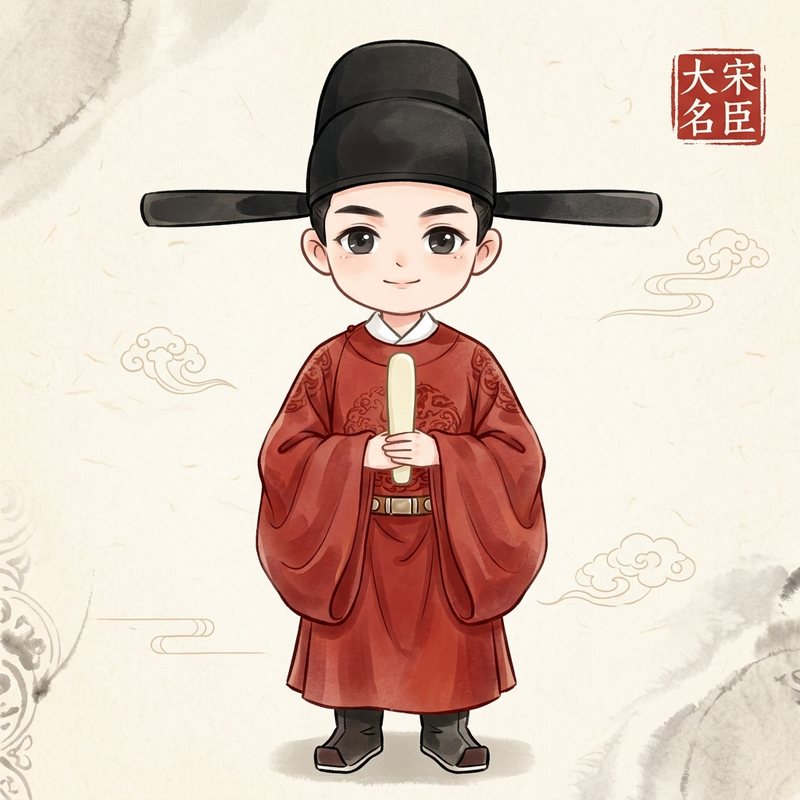
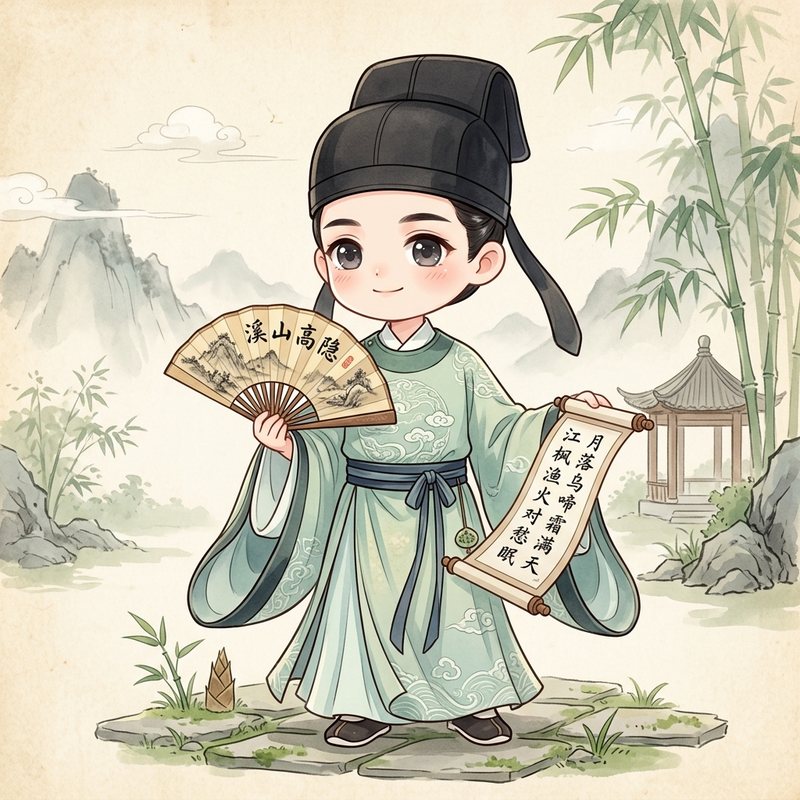
Architect of the Comprehensive Mirror & Conservative SageSong Dynasty(1019—1086)字君实 · 陕州夏县人 · 世称温国公/涑水先生Audio Journey · 8 Stops
Grand historian who forged the 294-volume Comprehensive Mirror in Aid of Governance and principled conservative chancellor of the Northern Song.
The Roman Livy of China· Titus Livius (Livy)The Jar-Smashing Prodigy· Young Alexander unraveling the Gordian KnotThe Conservative Pillar of Statecraft· Edmund Burke
Unfolding the Historical Landscape…
印
Daily Wisdom & Resilience Oracle
The Resilient Optimist
“竹杖芒鞋轻胜马,谁怕?一蓑烟雨任平生。”
Holding a bamboo cane and wearing straw sandals, I stride faster than a horse. Who is afraid? A straw cloak in the mist and rain — I live my life with equanimity.
💡 In the 3rd year of exile in Huangzhou, caught in a sudden downpour, Su Shi embraced the storm with supreme resilience.
— Su Shi (Dongpo)(The Renaissance Foodie & Optimist)
Historical Footprints & Narration Archive
8 Stations
1
Guangshan Birthplace
1019 CE · Age 0
Ancestral birth residence in southern Henan, modern Guangshan County, Xinyang
At age seven, he smashed a giant water vat with a heavy boulder to save a drowning comrade, displaying legendary crisis composure.
“众人皆弃去,光持石击瓮破之,水迸,儿得活。”
Zhòngrén jiē qì qù, Guāng chí shí jī wèng pò zhī, shuǐ bèng, ér dé huó.
While all the other children fled in panic, Guang took up a stone and smashed the vat to pieces; the water gushed out, and the child was saved.
Station Narration Script
In the quiet courtyard of Guangshan's county magistrate quarters, children's laughter was shattered by a cry of terror. A young boy had fallen into a deep ceramic water vat, thrashing helplessly under the surface. While all the other children scattered in panic, seven-year-old Sima Guang stood his ground. With astonishing poise, he hoisted a heavy garden boulder and hurled it against the thick clay wall. Water gushed through the shattered pottery, saving his friend and creating an immortal Chinese legend of crisis leadership.
Departure Transition Script
After years of rigorous classical schooling, Sima Guang set out for the imperial capital to take the civil service examinations.
2
Kaifeng Examination Hall
1038 CE · Age 19
Northern Song imperial examination halls, modern Kaifeng, Henan
Passed the highest imperial exams at nineteen, stunning the capital by refusing lavish banquet ornaments to uphold frugality.
“由俭入奢易,由奢入俭难。”
Yóu jiǎn rù shē yì, yóu shē rù jiǎn nán.
It is easy to transition from frugality to luxury, but exceedingly difficult to return from luxury to frugality.
Station Narration Script
Inside the bustling banquet halls of Kaifeng, imperial musicians played as triumphant scholars celebrated their newly won civil service titles. Amid flash, gold, and boasting, nineteen-year-old Sima Guang sat upright and motionless. He rejected the ornate floral ornaments offered by courtiers, guarding his humble soul against aristocratic extravagance. The elder statesmen observed in silence, recognizing a future pillar of the empire in this remarkably self-disciplined young scholar.
Departure Transition Script
Following his examination triumph, Sima Guang turned away from capital glamour, journeying west to assume his first judicial post in Huazhou.
3
Huazhou Prefecture
1039 CE · Age 20
Administrative prefecture at the foot of Mount Hua, modern Huazhou District, Weinan, Shaanxi
Served as a provincial judicial magistrate, mastering statutory legal codes to protect commoners from corrupt officials.
“夫法者,天下之准绳也。”
Fú fǎ zhě, tiānxià zhī zhǔnshéng yě.
The law is the upright plumb line of the world, against which all justice is measured.
Station Narration Script
Beneath the rugged cliffs of Mount Hua, twenty-year-old Sima Guang pored over court documents by candlelight. He refused to rubber-stamp convictions, personally visiting freezing jail cells to cross-examine confessions. Conquering local corruption and shielding impoverished families from rapacious landlords, he forged an unshakeable belief that statutory equity and moral temperance are the true defenses of civilization.
Departure Transition Script
Recognized for exceptional legal competence, Sima Guang was reassigned north to the militarized frontier garrison of Bingzhou.
4
Bingzhou Garrison
1041 CE · Age 22
Strategic northern military bastion on the Fen River, modern Taiyuan, Shanxi
Fortified the northern frontier against the Tangut Empire, assisting mentor Pang Ji with defensive border statecraft.
Dwelling in safety yet contemplating danger, preparing for the unexpected—this is the far-reaching foresight of sovereign rule.
Station Narration Script
Atop the frostbitten parapets of Taiyuan, freezing gales howled across the borderlands. Facing the looming threat of Tangut cavalry, twenty-two-year-old Sima Guang analyzed supply lines and terrain advantages alongside commander Pang Ji. Rejecting hollow jingoism, he championed defensive bastions and sustainable grain reserves that kept the peace. The harsh northern frontier forged iron resilience into the young scholar's soul.
Departure Transition Script
Having stabilized the northern border, Sima Guang was summoned back to Kaifeng to enter the highest central administrative bodies.
5
Imperial Remonstrance Bureau
1050 CE · Age 31
Imperial Remonstrance Bureau and Hall of Hanlin Academicians, modern Kaifeng, Henan
Chief Remonstrator fighting for free speech, clashing in epic philosophical debates against Wang Anshi's radical reforms.
“为政之要,在于用人、赏善、罚恶而已。”
Wéi zhèng zhī yào, zàiyú yòng rén, shǎng shàn, fá è éryǐ.
The essence of governance lies merely in employing the worthy, rewarding good, and punishing evil.
Station Narration Script
Inside the imperial palace in Kaifeng, incense hung heavy in the air as tension reached boiling point. Confronting the eager Emperor Shenzong and his ambitious friend Wang Anshi, Sima Guang delivered an uncompromising rebuke. 'Wealth under Heaven does not multiply by decree,' he warned; 'if the treasury takes more, the people have less!' Even as Wang's New Policies captured the court's imagination, Sima Guang refused to compromise his principles, becoming the conscience of the realm.
Departure Transition Script
Seeing that the emperor had chosen radical transformation, Sima Guang withdrew gracefully, seeking a quiet scholarly sinecure in ancient Luoyang.
6
Luoyang Duleyuan Garden
1071 CE · Age 52
Duleyuan Garden and historiographical retreat in the ancient western capital, modern Luoyang, Henan
Spent fifteen years in his Luoyang retreat, sleeping on a round wooden log to complete the 294-volume Comprehensive Mirror.
When moral virtue surpasses talent, one is termed a gentleman; when talent surpasses moral virtue, one is termed a petty man.
Station Narration Script
In his modest Luoyang study, stacks of manuscripts climbed to the ceiling. Between ages fifty-two and sixty-six, Sima Guang spent fifteen solitary, glorious years compiling history. When autumn leaves fell outside his window, his only companions were a flicker of candlelight and a rolling wooden log. Sifting through thousands of contradictory imperial annals, he verified every date and fact with scientific rigor. When the 294 volumes were completed, Sima Guang had gifted Chinese civilization an immortal mirror that would illuminate political wisdom forever.
Departure Transition Script
Upon Emperor Shenzong's death, an urgent imperial decree arrived in Luoyang summoning the revered elder statesman back to lead the government.
7
Kaifeng Prime Minister Bureau
1085 CE · Age 66
Imperial Secretariat and Grand Council chambers during the Yuanyou era, modern Kaifeng, Henan
Summoned to lead the empire as Chancellor at sixty-six, welcomed by cheering crowds and repealing burdensome state monopolies.
The grand works of Heaven and Earth cannot be rushed in haste; the lasting foundations of monarchs must endure through the long ages.
Station Narration Script
Outside the gates of Kaifeng, an ocean of people gathered with incense. As sixty-six-year-old Sima Guang rode slowly into the capital on a plain horse, soldiers and merchants wept in relief, crying that their savior had returned. Bearing the immense weight of the empire, the frail master spent eighteen hours a day reviewing policies. He swiftly repealed predatory agrarian taxes, restoring stability to the realm with his last remaining vitality.
Departure Transition Script
Eight months later, worn out by ceaseless public toil, the devoted chancellor collapsed at his writing desk.
8
Prime Minister Residence in Kaifeng
1086 CE · Age 67
Final residence and premier's bureau in the Song imperial capital, modern Kaifeng, Henan
Died in office after a lifetime of selfless duty; posthumously honored as Duke of Wen and celebrated as China's eternal moral compass.
No longer do willow catkins drift with the wanton wind; only the sunflower remains, steadfastly leaning toward the sun.
Station Narration Script
Autumn breezes swept through Kaifeng as Master Wenzheng breathed his last. When attendants inventoried his personal effects, they found only stacks of state papers, worn blankets, and not a single spare ounce of silver. The capital closed its markets in grief; citizens crowded painting shops to buy his portrait, offering prayers in their living rooms. Su Shi wept as he carved his tombstone, declaring Sima Guang the irreplaceable pillar of the state. Through sixty-seven years of incorruptible devotion, Sima Guang left an immortal mirror that will illuminate human civilization forever.
Departure Transition Script
From the child hero who smashed the vat to the grand master who finished the Comprehensive Mirror, Sima Guang's moral courage shines across the ages.
Key Historical Inquiries & Context
· 核心史实公案与速览
Sima Guang (1019–1086), styled Junshi, was a preeminent historian and statesman of the Northern Song Dynasty from Xia County, Shanzhou (modern Shanxi). Famous in childhood for smashing a ceramic water vat to rescue a drowning friend, he passed the imperial examinations at nineteen and served as Chief Remonstrator, Hanlin Academician, and Chancellor. Counterbalancing Wang Anshi's New Policies, he championed institutional continuity and the welfare of commoners over state profit-seeking. Self-exiled in Luoyang for fifteen years, he masterminded the 294-volume Zizhi Tongjian (Comprehensive Mirror in Aid of Governance), spanning 1,362 years as an eternal guide for imperial statecraft. Later leading the Yuanyou Restoration as prime minister, he was posthumously honored as Duke of Wen and Master Wenzheng.
Sima Guang (1019–1086), styled Junshi, was a preeminent historian and statesman of the Northern Song Dynasty from Xia County, Shanzhou (modern Shanxi). Famous in childhood for smashing a ceramic water vat to rescue a drowning friend, he passed the imperial examinations at nineteen and served as Chief Remonstrator, Hanlin Academician, and Chancellor. Counterbalancing Wang Anshi's New Policies, he championed institutional continuity and the welfare of commoners over state profit-seeking. Self-exiled in Luoyang for fifteen years, he masterminded the 294-volume Zizhi Tongjian (Comprehensive Mirror in Aid of Governance), spanning 1,362 years as an eternal guide for imperial statecraft. Later leading the Yuanyou Restoration as prime minister, he was posthumously honored as Duke of Wen and Master Wenzheng.
QWhat was Sima Guang's primary cultural and historical legacy?
Sima Guang is celebrated across world history as a pioneer of The Roman Livy of China, The Jar-Smashing Prodigy, The Conservative Pillar of Statecraft, leaving enduring philosophical insights, literature, and art.
QWhere does Sima Guang's historical life journey map lead?
This interactive GIS map retraces 8 chronological stops across Song Dynasty China, originating from Guangshan Birthplace and spanning through Prime Minister Residence in Kaifeng.
The Complete Life Journey & Biography of Sima Guang (Zizhi Tongjian) (司马光)
Chronological travel & exile routes mapped to modern Chinese cities across Song Dynasty China — featuring bilingual scholar audio, classical poetry recitations, and historical cross-paths.
Guangshan Birthplace (光州官舍)
Age 0
Modern-day analog: Ancestral birth residence in southern Henan, modern Guangshan County, Xinyang
At age seven, he smashed a giant water vat with a heavy boulder to save a drowning comrade, displaying legendary crisis composure.
In the quiet courtyard of Guangshan's county magistrate quarters, children's laughter was shattered by a cry of terror. A young boy had fallen into a deep ceramic water vat, thrashing helplessly under the surface. While all the other children scattered in panic, seven-year-old Sima Guang stood his ground. With astonishing poise, he hoisted a heavy garden boulder and hurled it against the thick clay wall. Water gushed through the shattered pottery, saving his friend and creating an immortal Chinese legend of crisis leadership.
After years of rigorous classical schooling, Sima Guang set out for the imperial capital to take the civil service examinations.
“While all the other children fled in panic, Guang took up a stone and smashed the vat to pieces; the water gushed out, and the child was saved.”
众人皆弃去,光持石击瓮破之,水迸,儿得活。 (Zhòngrén jiē qì qù, Guāng chí shí jī wèng pò zhī, shuǐ bèng, ér dé huó.)
Kaifeng Examination Hall (汴京登科)
Age 19
Modern-day analog: Northern Song imperial examination halls, modern Kaifeng, Henan
Passed the highest imperial exams at nineteen, stunning the capital by refusing lavish banquet ornaments to uphold frugality.
Inside the bustling banquet halls of Kaifeng, imperial musicians played as triumphant scholars celebrated their newly won civil service titles. Amid flash, gold, and boasting, nineteen-year-old Sima Guang sat upright and motionless. He rejected the ornate floral ornaments offered by courtiers, guarding his humble soul against aristocratic extravagance. The elder statesmen observed in silence, recognizing a future pillar of the empire in this remarkably self-disciplined young scholar.
Following his examination triumph, Sima Guang turned away from capital glamour, journeying west to assume his first judicial post in Huazhou.
“It is easy to transition from frugality to luxury, but exceedingly difficult to return from luxury to frugality.”
Modern-day analog: Administrative prefecture at the foot of Mount Hua, modern Huazhou District, Weinan, Shaanxi
Served as a provincial judicial magistrate, mastering statutory legal codes to protect commoners from corrupt officials.
Beneath the rugged cliffs of Mount Hua, twenty-year-old Sima Guang pored over court documents by candlelight. He refused to rubber-stamp convictions, personally visiting freezing jail cells to cross-examine confessions. Conquering local corruption and shielding impoverished families from rapacious landlords, he forged an unshakeable belief that statutory equity and moral temperance are the true defenses of civilization.
Recognized for exceptional legal competence, Sima Guang was reassigned north to the militarized frontier garrison of Bingzhou.
“The law is the upright plumb line of the world, against which all justice is measured.”
Modern-day analog: Strategic northern military bastion on the Fen River, modern Taiyuan, Shanxi
Fortified the northern frontier against the Tangut Empire, assisting mentor Pang Ji with defensive border statecraft.
Atop the frostbitten parapets of Taiyuan, freezing gales howled across the borderlands. Facing the looming threat of Tangut cavalry, twenty-two-year-old Sima Guang analyzed supply lines and terrain advantages alongside commander Pang Ji. Rejecting hollow jingoism, he championed defensive bastions and sustainable grain reserves that kept the peace. The harsh northern frontier forged iron resilience into the young scholar's soul.
Having stabilized the northern border, Sima Guang was summoned back to Kaifeng to enter the highest central administrative bodies.
“Dwelling in safety yet contemplating danger, preparing for the unexpected—this is the far-reaching foresight of sovereign rule.”
Modern-day analog: Imperial Remonstrance Bureau and Hall of Hanlin Academicians, modern Kaifeng, Henan
Chief Remonstrator fighting for free speech, clashing in epic philosophical debates against Wang Anshi's radical reforms.
Inside the imperial palace in Kaifeng, incense hung heavy in the air as tension reached boiling point. Confronting the eager Emperor Shenzong and his ambitious friend Wang Anshi, Sima Guang delivered an uncompromising rebuke. 'Wealth under Heaven does not multiply by decree,' he warned; 'if the treasury takes more, the people have less!' Even as Wang's New Policies captured the court's imagination, Sima Guang refused to compromise his principles, becoming the conscience of the realm.
Seeing that the emperor had chosen radical transformation, Sima Guang withdrew gracefully, seeking a quiet scholarly sinecure in ancient Luoyang.
“The essence of governance lies merely in employing the worthy, rewarding good, and punishing evil.”
为政之要,在于用人、赏善、罚恶而已。 (Wéi zhèng zhī yào, zàiyú yòng rén, shǎng shàn, fá è éryǐ.)
Luoyang Duleyuan Garden (独乐园修史)
Age 52
Modern-day analog: Duleyuan Garden and historiographical retreat in the ancient western capital, modern Luoyang, Henan
Spent fifteen years in his Luoyang retreat, sleeping on a round wooden log to complete the 294-volume Comprehensive Mirror.
In his modest Luoyang study, stacks of manuscripts climbed to the ceiling. Between ages fifty-two and sixty-six, Sima Guang spent fifteen solitary, glorious years compiling history. When autumn leaves fell outside his window, his only companions were a flicker of candlelight and a rolling wooden log. Sifting through thousands of contradictory imperial annals, he verified every date and fact with scientific rigor. When the 294 volumes were completed, Sima Guang had gifted Chinese civilization an immortal mirror that would illuminate political wisdom forever.
Upon Emperor Shenzong's death, an urgent imperial decree arrived in Luoyang summoning the revered elder statesman back to lead the government.
“When moral virtue surpasses talent, one is termed a gentleman; when talent surpasses moral virtue, one is termed a petty man.”
Modern-day analog: Imperial Secretariat and Grand Council chambers during the Yuanyou era, modern Kaifeng, Henan
Summoned to lead the empire as Chancellor at sixty-six, welcomed by cheering crowds and repealing burdensome state monopolies.
Outside the gates of Kaifeng, an ocean of people gathered with incense. As sixty-six-year-old Sima Guang rode slowly into the capital on a plain horse, soldiers and merchants wept in relief, crying that their savior had returned. Bearing the immense weight of the empire, the frail master spent eighteen hours a day reviewing policies. He swiftly repealed predatory agrarian taxes, restoring stability to the realm with his last remaining vitality.
Eight months later, worn out by ceaseless public toil, the devoted chancellor collapsed at his writing desk.
“The grand works of Heaven and Earth cannot be rushed in haste; the lasting foundations of monarchs must endure through the long ages.”
Modern-day analog: Final residence and premier's bureau in the Song imperial capital, modern Kaifeng, Henan
Died in office after a lifetime of selfless duty; posthumously honored as Duke of Wen and celebrated as China's eternal moral compass.
Autumn breezes swept through Kaifeng as Master Wenzheng breathed his last. When attendants inventoried his personal effects, they found only stacks of state papers, worn blankets, and not a single spare ounce of silver. The capital closed its markets in grief; citizens crowded painting shops to buy his portrait, offering prayers in their living rooms. Su Shi wept as he carved his tombstone, declaring Sima Guang the irreplaceable pillar of the state. Through sixty-seven years of incorruptible devotion, Sima Guang left an immortal mirror that will illuminate human civilization forever.
From the child hero who smashed the vat to the grand master who finished the Comprehensive Mirror, Sima Guang's moral courage shines across the ages.
“No longer do willow catkins drift with the wanton wind; only the sunflower remains, steadfastly leaning toward the sun.”