Who Was Sima Guang? Historian of the Comprehensive Mirror
Architect of the monumental 294-volume Zizhi Tongjian, child hero of the legendary water vat story, and principled chancellor of the Northern Song Dynasty
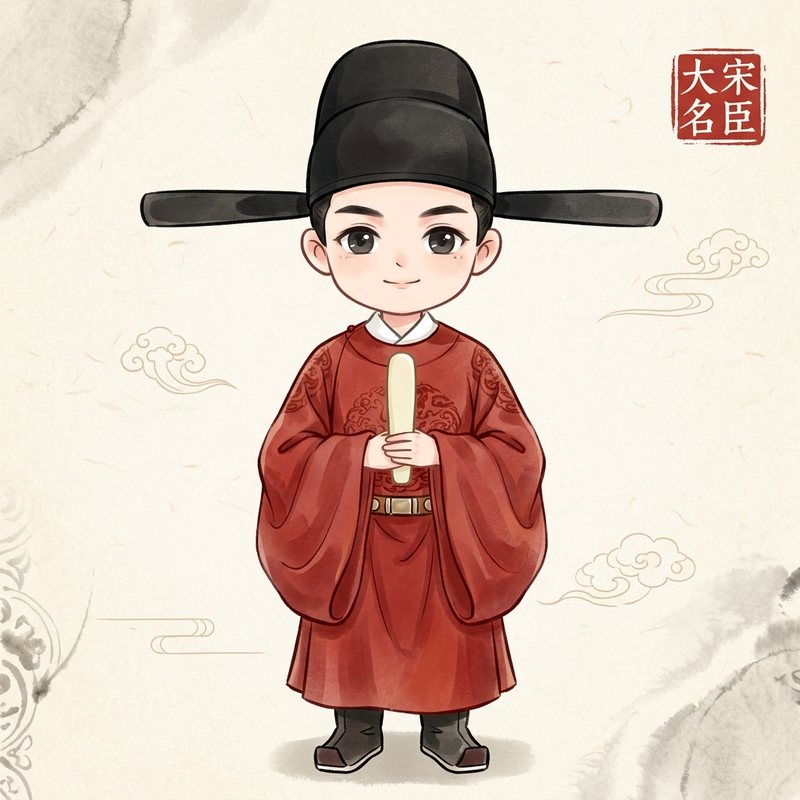
Sima Guang (司马光 · Sīmǎ Guāng)
字君实 · 陕州夏县人 · 世称温国公/涑水先生
Grand historian who forged the 294-volume Comprehensive Mirror in Aid of Governance and principled conservative chancellor of the Northern Song.
历十五载修成《资治通鉴》二百九十四卷;砸缸救友传千古,居安思危辅两朝。
- Architect of the Comprehensive Mirror: Masterminded the 294-volume Zizhi Tongjian, covering 1,362 years of Chinese history across 16 dynasties as the premier chronological guide to imperial statecraft.
- The Water Vat Hero: Immortalized across Chinese popular culture for shattering a massive ceramic water vat with a heavy boulder at age seven to rescue a drowning playmate.
- Champion of Principled Conservatism: Led the political opposition against Wang Anshi's radical New Policies, arguing that state profit-seeking, market manipulation, and rapid institutional churn devastated peasant livelihoods.
- Fifteen-Year Historiographical Exile: Self-exiled from the capital to Luoyang's modest Duleyuan (Garden of Solitary Joy), laboring through sleepless nights with a wooden wake-up pillow to finish his historical monument.
- The Yuanyou Restoration Chancellor: Summoned to lead the empire as prime minister at age sixty-six, celebrated by cheering street crowds as 'Prime Minister Sima' and posthumously venerated as Duke Wen of Sima.
Phase 1: The Water Vat Prodigy & The Ban of Flashy Luxuries (1019–1038)
Sima Guang was born in 1019 CE in Guangshan County (modern Xinyang, Henan Province), where his father, Sima Chi, was serving as the county magistrate. Named 'Guang' after the prefecture, he displayed astonishing cognitive precocity. By age seven, he was already reciting the foundational Spring and Autumn Annals from memory, comprehending historical cause and effect far beyond his years.
宋真宗天禧三年(1019年),司马光出生于光州光山县官舍,其父司马池时任县令,因地取名为‘光’。司马光幼而颖悟,七岁便能熟读《左氏春秋》,不仅能成诵如流,更能深明其中大义。
It was during these childhood years that the defining folk anecdote of Chinese civilization took place. While playing in the family courtyard, a young boy climbed onto the rim of a giant ceramic water vat (weng) and fell into the deep water. As other terrified children scattered and wailed in panic, seven-year-old Sima Guang remained completely calm. Grabbing a heavy rock from the garden path, he hurled it against the base of the urn, shattering the thick pottery. The water gushed outward, and the drowning boy was safely pulled free.
正在这一时期,发生了妇孺皆知的‘司马光砸缸’。一日与群儿嬉戏于庭院,一小儿跌入注满水的大瓮中。众儿皆惊惶四散逃哭,唯七岁的司马光镇定自若,急中生智搬起庭院巨石狠击大缸,水迸而出,溺水小儿得以获救。
众人皆弃去,光持石击瓮破之,水迸,儿得活。
Zhòngrén jiē qì qù, Guāng chí shí jī wèng pò zhī, shuǐ bèng, ér dé huó.
While all the other children fled in panic, Guang took up a stone and smashed the vat to pieces; the water gushed out, and the child was saved.
Context · Recorded in the official History of Song (宋史), documenting the famous crisis composure that established seven-year-old Sima Guang as a folk hero across China.
In 1038 CE, at the young age of nineteen, Sima Guang passed the imperial civil service examination with the highest Jinshi honors. At the ceremonial Qionglin imperial banquet, celebrating scholars adorned their caps with extravagant royal floral crowns. Sima Guang sat stone-faced and refused to wear the frivolous ornament, only yielding when an elder scholar gently reminded him that imperial gifts must be formally accepted. This innate contempt for luxury would later produce his famous family manual 'On Frugality'.
宋仁宗宝元元年(1038年),年仅十九岁的司马光登进士甲科。在繁华绮丽的琼林国宴上,同科进士争相簪花夸耀,唯司马光端坐肃然、独不戴花,直至同僚提醒‘君赐不可违’方勉强簪上一朵。其崇尚俭德、拒绝浮华之风骨由此名动京师。
由俭入奢易,由奢入俭难。
Yóu jiǎn rù shē yì, yóu shē rù jiǎn nán.
It is easy to transition from frugality to luxury, but exceedingly difficult to return from luxury to frugality.
Context · From Sima Guang's celebrated ethical letter 'Admonition on Frugality to My Son Sima Kang' (训俭示康), urging future generations to embrace temperance over corruption.
Phase 2: Frontier Fortresses & Practical Statecraft (1039–1044)
Unlike scholars who remained insulated in imperial academies, Sima Guang's early public career was forged in the grueling realities of provincial administration. In 1039 CE, he assumed his first official post as Judicial Officer (Tuiguan) in Huazhou, situated beneath the rugged granite cliffs of Mount Hua. Here, he spent long nights mastering statutory penal codes, systematically exonerating wrongfully accused commoners and learning the delicate balance of rule-of-law governance.
及第之后,司马光并未留恋京华清要,而是奔赴地方基层砥砺才干。1039年他首任华州判官,在西岳华山脚下精研刑名律法,体恤民间疾苦,平反疑狱冤案,树立了以严明法治守护公平的实政理念。
By 1041 CE, he was reassigned north as Vice Prefect (Tongpan) of Bingzhou (modern Taiyuan, Shanxi Province), facing the dangerous militarized border of the Tangut Western Xia Empire. Serving under the renowned elder general and commissioner Pang Ji, Sima Guang inspected garrison outposts and submitted memorials advocating defensive border fortifications and agricultural self-sufficiency. Pang Ji recognized Sima Guang's monumental depth, becoming his lifelong political mentor. When Pang later died, Sima Guang cared for his widow and children with filial devotion.
1041年,司马光调任并州通判,协助经略安抚使庞籍整饬北疆防务,直面西夏大军的锋芒。他亲临关防隘口,上书主张筑垒屯田、守正持重,深得老帅庞籍赏识。庞籍既是其仕途伯乐,更如长辈导师。庞公去世后,司马光扶持其遗孤如同己出,信义之举为人称颂。
Phase 3: Fearless Imperial Remonstrance & The Clash with Wang Anshi (1050–1070)
Summoned to the capital Kaifeng, Sima Guang served in prominent central offices, including Chief Remonstrator (Zhi Jian Yuan) and Academician of the Hanlin Academy. He gained national renown for fearless memorials urging Emperor Renzong to designate an imperial heir, fearlessly attacking palace corruption and arguing that honest remonstrance is the true lifeline of the state.
入朝之后,司马光历任开封府推官、知谏院、翰林学士等要职。他刚直不阿,数度上书恳请仁宗早建储贰以安社稷,痛斥佞幸、力开言路,成为台谏百官清议之领袖。
为政之要,在于用人、赏善、罚恶而已。
Wéi zhèng zhī yào, zàiyú yòng rén, shǎng shàn, fá è éryǐ.
The essence of governance lies merely in employing the worthy, rewarding good, and punishing evil.
Context · From Sima Guang's influential court memorial 'Requesting Open Paths for Remonstrance' (乞开言路札子), emphasizing institutional clarity over bureaucratic excess.
When Emperor Shenzong ascended the throne in 1067 CE eager to enrich the state treasury and conquer border rivals, he appointed the visionary economist Wang Anshi to launch the sweeping New Policies (Xinfa). Sima Guang and Wang Anshi had been close, respectful intellectual friends, but their divergent worldviews now sparked the most famous political duel in Chinese history. Wang believed the imperial state must actively mobilize economic capital, issue state farm loans, and regulate trade. Sima Guang vehemently disagreed, warning that state monopolies always invite predatory official corruption and drain the common people's meager livelihood.
熙宁年间宋神宗即位,起用王安石推行熙宁变法。司马光与王安石本为莫逆知交,却在国家根本政治哲学上发生剧烈对立。王安石主张国家全面干预经济、推行青苗法与市易法富国强兵;司马光则坚决捍卫‘不与民争利’、‘祖宗法度不可骤变’的传统秩序,在紫宸殿前与王安石展开长达数年的思想交锋。
Phase 4: Fifteen Years in Luoyang & The 294-Volume Masterpiece (1071–1085)
Recognizing that Emperor Shenzong was fully committed to Wang Anshi's radical reforms, Sima Guang refused to compromise his principles for ministerial rank. In 1071 CE, he requested demotion to a sinecure in the ancient western capital of Luoyang, exiling himself from national power for fifteen consecutive years. Purchasing a modest residence with dilapidated walls, he named his garden 'Duleyuan' (The Garden of Solitary Joy).
见神宗变法之意已决,司马光不愿随波逐流阿附权贵,毅然于熙宁四年(1071年)自请外任,判西京留司御史台,退居洛阳长达十五载。他在洛阳辟建简朴陋室,题名‘独乐园’,闭门谢客,潜心向学。
In Luoyang, Sima Guang gathered three brilliant editorial assistants—Liu Ban (Han Dynasty specialist), Liu Shu (Six Dynasties specialist), and Fan Zuyu (Tang Dynasty specialist). Together, they combed through more than thirty thousand historical texts, official annals, private diaries, and forgotten tomb inscriptions. Sima Guang worked with monastic asceticism, resting his head on a round wooden log termed the 'alarm pillow' (Jingzhen); whenever he drifted off, the rolling log would jolt him awake, sending him immediately back to his manuscripts.
在独乐园中,司马光延请史学名家刘攽、刘恕、范祖禹三位助手,披阅数万卷群书异籍。他自制一节圆木‘警枕’,伏案稍困眠熟则枕转首落而惊醒,随即起坐展卷、秉烛批削。经过十五年如一日的艰苦磨砺,终于铸就了中国史学史上的无上奇迹。
德胜才,谓之君子;才胜德,谓之小人。
Dé shèng cái, wèi zhī jūnzǐ; cái shèng dé, wèi zhī xiǎorén.
When moral virtue surpasses talent, one is termed a gentleman; when talent surpasses moral virtue, one is termed a petty man.
Context · From the opening commentary of Volume 1 of the Comprehensive Mirror in Aid of Governance (资治通鉴), warning rulers against brilliant courtiers lacking moral character.
The completed 'Comprehensive Mirror in Aid of Governance' (资治通鉴, Zizhi Tongjian) reached an astonishing 294 volumes containing over three million Chinese characters. Spanning 1,362 years from the Partition of Jin in 403 BCE to the founding of the Song in 960 CE, it organized China's sprawling history into a seamless, year-by-year chronological tapestry. Emperor Shenzong himself wrote the imperial preface, proclaiming that the text offered monarchs an incorruptible mirror to understand why empires flourish and fall.
这部全长二百九十四卷、逾三百万字的《资治通鉴》,上起周威烈王二十三年三家分晋(前403年),下迄后周显德六年(959年),横跨十六朝一千三百六十二年。神宗皇帝亲赐书名并作序,称其‘鉴于往事,有资于治道’,成为中华历代帝王与士大夫案头必读的政治圣经。
更无柳絮因风起,惟有葵花向日倾。
Gèng wú liǔ xù yīn fēng qǐ, wéi yǒu kuí huā xiàng rì qīng.
No longer do willow catkins drift with the wanton wind; only the sunflower remains, steadfastly leaning toward the sun.
Context · From Sima Guang's lyrical poem 'Early Summer in Solitude' (客中初夏), expressing his unwavering, solitary devotion to the state during his Luoyang retreat.
Phase 5: The Yuanyou Restoration & The Passing of Duke Wen (1085–1086)
In March 1085 CE, Emperor Shenzong passed away, leaving his ten-year-old son Emperor Zhezong under the regency of the revered Empress Dowager Gao. Deeply distressed by the social dislocation wrought by the New Policies, Empress Dowager Gao immediately summoned Sima Guang back to Kaifeng. As the sixty-six-year-old historian rode through the capital gates, tens of thousands of cheering citizens and soldiers thronged the avenues, throwing incense and crying out, 'Save us, Prime Minister Sima!'
元丰八年(1085年)神宗驾崩,年幼的哲宗即位,宣仁太后高氏临朝称制。高太后深知民间疾苦,力排众议急召司马光还朝。六十六岁的司马光抵京之日,汴京数十万百姓军民夹道焚香欢呼‘司马相公活我’,声震九重宫阙。
Appointed Chancellor (Left Prime Minister), Sima Guang launched the 'Yuanyou Restoration' (元祐更化). Working alongside fellow conservatives like Su Shi and Fan Chunren, he dismantled the burdensome Green Sprouts farm taxes, dissolved aggressive state monopolies, and repealed harsh household militia conscriptions to grant the peasantry breathing room. Yet the crushing burden of state affairs overwhelmed his failing health. On October 11, 1086 CE, Sima Guang collapsed and passed away in office at age sixty-seven.
拜相之后,司马光主持‘元祐更化’,起用苏轼、范纯仁等名臣,尽罢青苗、免役、保甲等苛法,减赋轻徭、休养生息。然而常年积劳摧毁了他的健康,元祐元年(1086年)九月初一,司马光于相邸病逝,享年六十七岁。
When news of his death broke, the entire capital shuttered its markets in mourning, and ordinary families placed his portrait in their homes to offer prayers. Emperor Zhezong posthumously conferred upon him the title Duke of Wen (温国公) and the supreme civic honor 'Wenzheng' (Civil and Upright). Su Shi famously carved his spirit inscription, declaring Sima Guang's incorruptible moral courage an eternal lighthouse for Chinese civilization.
司马光逝世的消息传出,京师罢市哀悼,万民号哭于市,画像祭奠于家。朝廷追赠太师、温国公,赐谥‘文正’。知交苏轼亲撰神道碑文,盖棺定论其为社稷之臣。司马光的道德风范与《资治通鉴》,成为中华文明天幕上永不熄灭的北斗明灯。
| Perspective 视角 | Sima Guang (The Chinese Sage Historian) | Titus Livius / Livy (The Roman Sage Historian) |
|---|---|---|
| Magnum Opus Scope | 294-volume Zizhi Tongjian spanning 1,362 years (403 BCE–959 CE) across 16 dynasties. | 142-book Ab Urbe Condita spanning nearly 800 years from Rome's mythic founding to Augustus. |
| Core Civic Mission | Didactic mirror to guide emperors: demonstrating that moral character and continuity sustain dynasties. | Patriotic monument to remind Romans of ancestral virtus and diagnose moral decadence. |
| Political Philosophy | Principled Confucian conservatism: opposed aggressive state economic monopolies and disruptive social churning. | Republican conservative moralism: praised traditional agrarian fortitude and institutional balance. |
| Historiographical Style | Strict chronological (annalistic) rigor with meticulous textual variance cross-examination (Kao Yi). | Vivid annalistic narrative enriched with dramatic moral orations and legendary character sketches. |
Trace Sima Guang's Footsteps on the Interactive Topographic Map
Follow his actual historical trail across 8 imperial stations—from the childhood water vat rescue in Guangshan and frontier defense in Bingzhou to fifteen years of monumental scholarship in Luoyang's Duleyuan.
Launch Interactive Journey MapFrequently Asked Questions (FAQ)
What is the true story behind Sima Guang smashing the water jar?
When Sima Guang was seven years old in Guangshan, a playmate slipped into a giant ceramic vat filled with water. While all the other children fled screaming in terror, Sima Guang stayed calm, picked up a large garden stone, and smashed the base of the vat. The water drained out immediately, rescuing the drowning boy.
What is the Zizhi Tongjian and why is it so important in world history?
The Zizhi Tongjian (Comprehensive Mirror in Aid of Governance) is a monumental 294-volume chronicle covering 1,362 years of Chinese history across sixteen dynasties. Compiled over fifteen years, it systematically organized past political triumphs and moral catastrophes into a chronological master textbook for imperial governance.
Why did Sima Guang and Wang Anshi become fierce political rivals?
Though they shared deep mutual respect as scholars, they fundamentally clashed over statecraft. Wang Anshi believed the imperial state should actively monopolize markets and issue commercial loans. Sima Guang argued that state profit-seeking inevitably spawns official extortion, destabilizes markets, and destroys the livelihoods of ordinary farmers.
Why is Sima Guang frequently compared to the Roman historian Livy?
Both Sima Guang and Livy spent decades composing monumental annalistic histories designed as moral mirrors for rulers and citizens. Both historians championed traditional civic virtue, revered ancestral institutions, and believed that an empire's survival depends on moral integrity rather than unrestrained imperial expansion.
What was Sima Guang's famous wooden wake-up pillow (Jingzhen)?
While compiling the Comprehensive Mirror in Luoyang, Sima Guang used a small, rounded log as a pillow known as the 'alarm pillow' (Jingzhen). Whenever he fell into deep slumber, his head would slide off the rolling wood onto the desk, jolting him awake so he could immediately resume writing.
What does Sima Guang's famous line 'From frugality to luxury is easy' mean?
In his family admonition 'Xunjian Shi Kang', Sima Guang wrote: '由俭入奢易,由奢入俭难'—transitioning from frugal simplicity to lavish excess is effortless, but returning from luxury to humble discipline is exceedingly difficult. It serves as an enduring warning that moral corruption begins with unbridled vanity.
Walk with Sima Guang Across China
随司马光漫步华夏河山 · 亲历命运逆境与精神涅槃