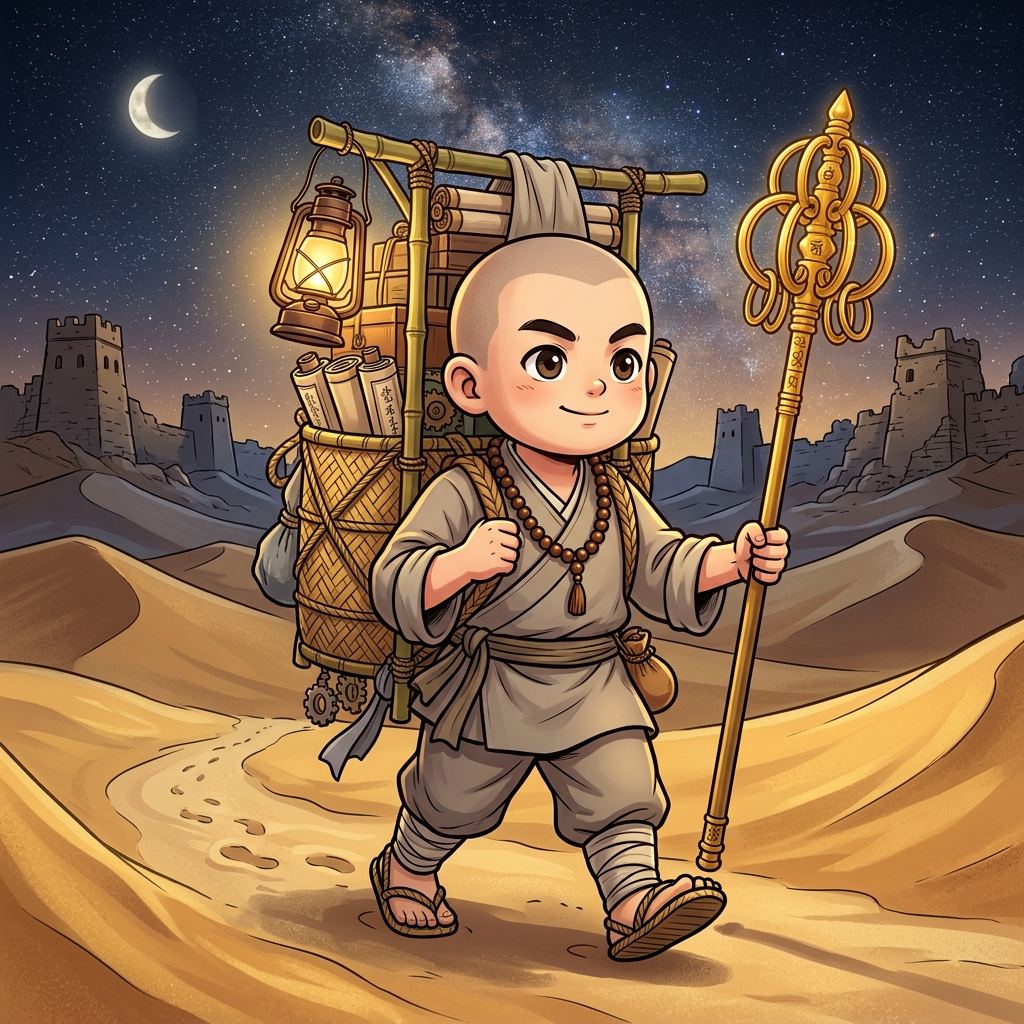
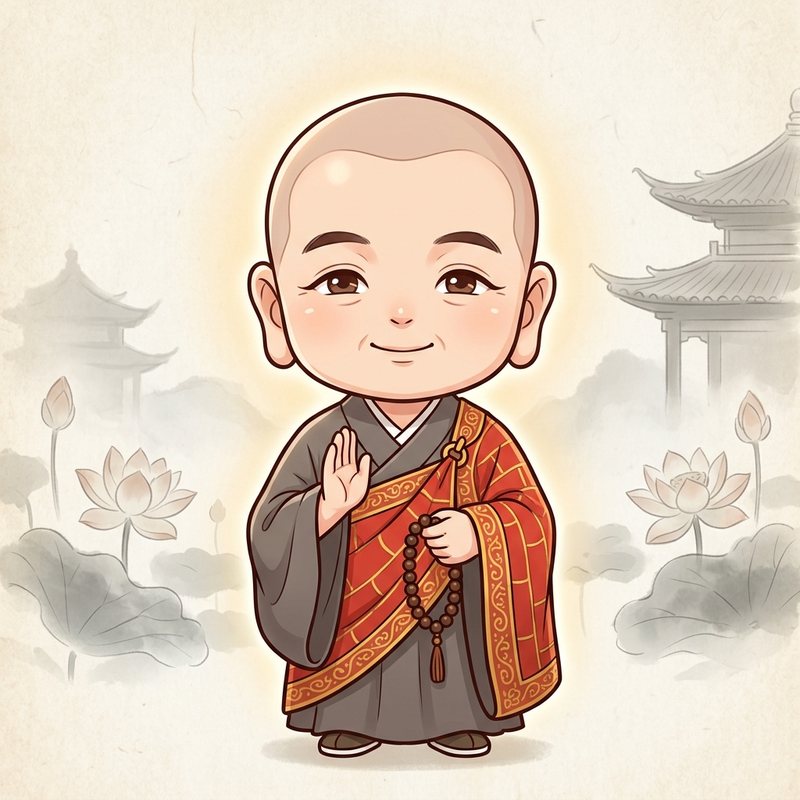
The 16-Year Solo ExplorerTang Dynasty (602-664)俗姓陈 · 法名玄奘 · 尊称三藏法师Audio Journey · 11 Stops
Walked 50,000 miles alone through deserts and blizzards to bring enlightenment back to China.
The Great Silk Road Pilgrim· Marco Polo & Thomas AquinasMaster of Cross-Civilizational Translation· Saint Jerome & Erasmus
Unfolding the Historical Landscape…
印
Daily Wisdom & Resilience Oracle
The Fearless Seeker
“宁可就西而死,岂归东而生!”
I would rather take one step westward into death than retreat one step eastward to live!
💡 Facing death in the 800-li Gobi desert without water, Xuanzang makes his immortal vow to pursue truth at all costs.
— Xuanzang(The 16-Year Solo Explorer)
Historical Footprints & Narration Archive
11 Stations
1
Luoyang (Ordination & Mastery), Henan
622 CE · Age 20
Ancestral home near Luoyang where Xuanzang was born into an official family, Henan
Ordained as a Prodigy Monk in the Eastern Capital
“远绍如来,近光遗法。”
Yuǎn shào Rúlái, jìn guāng yífǎ.
From afar, to inherit the Buddha's true wisdom; in the present, to illuminate his eternal teachings.
Station Narration Script
Born near Luoyang in 602, Xuanzang was ordained as a prodigy monk at age thirteen. Master of classical texts, he identified deep contradictions in existing translations and vowed to seek authentic teachings at their Indian source.
Departure Transition Script
Moving to Chang'an, Xuanzang sought imperial travel permits, but border tensions led the Emperor to ban foreign travel. Undaunted at age twenty-five, Xuanzang resolved to risk death, secretly slipping past border guards on his westbound pilgrimage.
2
Chang'an (The Solemn Vow to the West), Shaanxi
627 CE · Age 25
Grand Tang Buddhist center where Xuanzang vowed to travel west for original scriptures, Xi'an
Defying the Emperor's Travel Ban for the Sake of Truth
I vow to dedicate this mortal body to the Great Dharma, swearing to venture west to seek the original scriptures.
Station Narration Script
At Chang'an's Zhuangyan Temple, Xuanzang took his solemn vow before the altar. Alone and defying imperial edict, he embarked upon a perilous 10,000-mile journey across deserts and icy mountains.
Departure Transition Script
Past the Yumen Gate, Xuanzang stepped into the vast Moheyan Gobi Desert—a barren sea of death spanning 800 miles where no birds fly and only bleaching bones mark the trail.
3
Moheyanqi Desert (Sea of Death), Hexi
627 CE · Age 25
Treacherous Gobi desert where Xuanzang nearly perished of thirst, Gansu/Xinjiang
'I Would Rather Die Moving One Step West, Than Live by Returning East!'
“宁可就西而死,岂能东归而生!”
Nìngkě jiù xī ér sǐ, qǐnéng dōng guī ér shēng!
I would rather die taking one more step west, than live in regret by returning one step east!
Station Narration Script
In the desert, Xuanzang accidentally dropped his water flask, going four days and five nights without a single drop of water. Collapsing in hallucinations, he recited the Heart Sutra until his horse smelled water, miraculously surviving.
Departure Transition Script
Emerging from the desert, Xuanzang entered the Kingdom of Gaochang. King Qu Wentai tried to detain him as State Preceptor. Xuanzang went on hunger strike until the touched King swore brotherhood and equipped him with silver and bodyguards.
4
Gaochang Kingdom (Turpan Oasis), Xinjiang
628 CE · Age 26
Silk Road kingdom whose king became Xuanzang's sworn brother, Turpan, Xinjiang
The King Held Him Hostage Out of Love: A Royal Blood Brotherhood
Xuanzang ventures west for the Dharma, ready to sacrifice his life; if you must retain my body here, you shall keep only my bones!
Station Narration Script
Supplied with royal gold, silk, and 24 travel letters to Central Asian kings, Xuanzang set forth along the Tian Shan mountain range, carrying the goodwill of the Oasis Kingdoms into Central Asia.
Departure Transition Script
Trekking across avalanche-swept glaciated passes, Xuanzang crossed Suyab and Samarkand in Sogdiana, meeting the Western Turkic Khagan before traversing the Hindu Kush into ancient India.
5
Suyab & Samarkand, Central Asia (Silk Road Heart)
628 CE · Age 27
Ancient Western Turkic khaganate hub along Lake Issyk-Kul, Kyrgyzstan
Audience with the Great Khan of the Western Turkic Empire
Ice and snow mingle in raging tempests; glaciers never melt amidst howling blizzards and hurtling hailstones.
Station Narration Script
At Suyab, the Western Turkic Khagan was captivated by Xuanzang's eloquence, providing cavalry escorts to guide him through the Iron Gates toward the colossal Giant Buddhas of Bamiyan in Afghanistan.
Departure Transition Script
After marveling at the towering Bamiyan Buddhas, Xuanzang crossed the mighty Indus River, finally entering ancient India and proceeding toward Nalanda University, the apex of global Buddhist scholarship.
6
Bamiyan & Gandhara (Giant Buddhas), Afghanistan
630 CE · Age 28
Fabled Bamiyan Valley and Gandharan Buddhist artistic crossroads, Afghanistan
To the northeast of the royal city on a mountain cliff stands a stone Buddha statue, 150 feet high, dazzling with bright gold and adorned with radiant jewels.
Station Narration Script
Before the Bamiyan cliffside grottos, Xuanzang documented the world's largest standing Buddha statues in gleaming gold, preserving eyewitness records for world cultural heritage.
Departure Transition Script
After three grueling years and 10,000 miles, Xuanzang arrived at Nalanda University in Magadha. Ten thousand monks lined the entrance with incense and banners to welcome the venerable master from the Great Tang.
7
Nalanda University (Zenith of Ancient Wisdom), India
631 CE · Age 33
Ancient Buddhist mega-monastery & university in Bihar, India
Entering the Harvard of Ancient Asia: The Supreme Scholar of Nalanda
All phenomena arise from interrelated causes; of these causes, the Buddha has taught the true nature and their cessation.
Station Narration Script
At Nalanda, Xuanzang studied for about eight years under Chancellor Silabhadra. Mastering Sanskrit and epistemology, he was selected as one of the ten Chief Lecturers of the university.
Departure Transition Script
At the grand debate in Kanyakubja, Xuanzang defended his treatises without a single refute. Victorious, he declined all royal entreaties and prepared for his long journey back to China.
8
Kanyakubja Grand Assembly (King Harsha), India
642 CE · Age 40
Imperial assembly hosted by King Harsha where Xuanzang defended Mahayana, India
The Grand Debate of 18 Days: Crowned Supreme Philosopher of India
If anyone can find a single flaw in my thesis and refute it, I shall offer my head in forfeit!
Station Narration Script
At Kanyakubja, eighteen monarchs and thousands of philosophers assembled. Xuanzang's mastery earned him the revered titles of 'Deva of the Great Vehicle' across all of India.
Departure Transition Script
Carrying 657 sacred Sanskrit manuscripts and relics, Xuanzang embarked on the arduous eastward return across the treacherous Pamir Mountains.
9
Pamir Plateau & Khotan (Trekking Home with 657 Sutras)
643 CE · Age 42
Historic Silk Road jade kingdom where Xuanzang crossed the Pamir Mountains, Xinjiang
Crossing the Roof of the World with 657 Sacred Sanskrit Manuscripts
Tens of thousands of miles crossed in peril and storm, fortunately safe and sound; now bearing the sacred Dharma treasures, I behold the majesty of Great Tang once more!
Station Narration Script
On the return, an elephant carrying scriptures drowned while fording a river and some manuscripts were lost. Xuanzang had copies remade at Khotan and other oases, then crossed the Pamirs to bring the bulk of the canon safely home.
Departure Transition Script
In 645, Xuanzang arrived at Chang'an. Emperor Taizong ordered Chancellor Fang Xuanling and hundreds of thousands of citizens to welcome the heroic master.
Great Wild Goose Pagoda built by Xuanzang to translate sacred scriptures, Xi'an
19 Years of Translation: Building the Giant Wild Goose Pagoda
“色不异空,空不异色;色即是空,空即是色。”
Sè bù yì kōng, kōng bù yì sè; sè jí shì kōng, kōng jí shì sè.
Form is not different from emptiness; emptiness is not different from form. Form is itself emptiness; emptiness is itself form.
Station Narration Script
Xuanzang led the state translation bureau at Da Ci'en Temple, declining high office and dictating the 'Great Tang Records on the Western Regions'. He petitioned for a pagoda to house the Sanskrit manuscripts; the Big Wild Goose Pagoda, built under Crown Prince (later Emperor Gaozong) Li Zhi, became that repository. Over nineteen years he translated 1,335 fascicles.
Departure Transition Script
In his final years, seeking tranquility to translate the 600-volume Great Prajnaparamita Sutra, Xuanzang moved to Yuhua Temple in the quiet Zhongnan Mountains.
11
Yuhua Palace, Shaanxi (Final Chapter & Maha Prajna)
664 CE · Age 62
Imperial mountain retreat where Xuanzang translated the Great Prajnaparamita, Shaanxi
'My Work is Finished': A Giant of World Civilization Enters Nirvana
Xuanzang's task with this sacred scripture is fully finished; when my life expires, I shall depart in peace. Measuring my remaining strength, I shall translate no more.
Station Narration Script
In 664, Xuanzang passed away peacefully at age 62. Emperor Gaozong wept: 'I have lost my greatest national treasure.' Over a million mourners gathered at Bailuyuan to bid farewell to this monumental pioneer of global civilization.
Key Historical Inquiries & Context
· 核心史实公案与速览
Xuanzang (602–664) was the Tang monk who walked to India and back — the historical traveler behind Journey to the West. This map is the 16-year Silk Road route (Chang'an, Gobi, Nalanda), not the novel's monkey king. The essays separate the real monk from the fiction.
The Complete Life Journey & Biography of Xuanzang (Tripitaka) (玄奘)
Chronological travel & exile routes mapped to modern Chinese cities across Tang Dynasty (602-664) China — featuring bilingual scholar audio, classical poetry recitations, and historical cross-paths.
Modern-day analog: Ancestral home near Luoyang where Xuanzang was born into an official family, Henan
Ordained as a Prodigy Monk in the Eastern Capital
Born near Luoyang in 602, Xuanzang was ordained as a prodigy monk at age thirteen. Master of classical texts, he identified deep contradictions in existing translations and vowed to seek authentic teachings at their Indian source.
Moving to Chang'an, Xuanzang sought imperial travel permits, but border tensions led the Emperor to ban foreign travel. Undaunted at age twenty-five, Xuanzang resolved to risk death, secretly slipping past border guards on his westbound pilgrimage.
“From afar, to inherit the Buddha's true wisdom; in the present, to illuminate his eternal teachings.”
远绍如来,近光遗法。 (Yuǎn shào Rúlái, jìn guāng yífǎ.)
Chang'an (The Solemn Vow to the West), Shaanxi (陕西西安 (大唐都城长安 · 发愿西行))
Age 25
Modern-day analog: Grand Tang Buddhist center where Xuanzang vowed to travel west for original scriptures, Xi'an
Defying the Emperor's Travel Ban for the Sake of Truth
At Chang'an's Zhuangyan Temple, Xuanzang took his solemn vow before the altar. Alone and defying imperial edict, he embarked upon a perilous 10,000-mile journey across deserts and icy mountains.
Past the Yumen Gate, Xuanzang stepped into the vast Moheyan Gobi Desert—a barren sea of death spanning 800 miles where no birds fly and only bleaching bones mark the trail.
“I vow to dedicate this mortal body to the Great Dharma, swearing to venture west to seek the original scriptures.”
Moheyanqi Desert (Sea of Death), Hexi (甘肃敦煌/瓜州 (莫贺延碛沙漠 · 八百里死海))
Age 25
Modern-day analog: Treacherous Gobi desert where Xuanzang nearly perished of thirst, Gansu/Xinjiang
'I Would Rather Die Moving One Step West, Than Live by Returning East!'
In the desert, Xuanzang accidentally dropped his water flask, going four days and five nights without a single drop of water. Collapsing in hallucinations, he recited the Heart Sutra until his horse smelled water, miraculously surviving.
Emerging from the desert, Xuanzang entered the Kingdom of Gaochang. King Qu Wentai tried to detain him as State Preceptor. Xuanzang went on hunger strike until the touched King swore brotherhood and equipped him with silver and bodyguards.
“I would rather die taking one more step west, than live in regret by returning one step east!”
宁可就西而死,岂能东归而生! (Nìngkě jiù xī ér sǐ, qǐnéng dōng guī ér shēng!)
Modern-day analog: Silk Road kingdom whose king became Xuanzang's sworn brother, Turpan, Xinjiang
The King Held Him Hostage Out of Love: A Royal Blood Brotherhood
Supplied with royal gold, silk, and 24 travel letters to Central Asian kings, Xuanzang set forth along the Tian Shan mountain range, carrying the goodwill of the Oasis Kingdoms into Central Asia.
Trekking across avalanche-swept glaciated passes, Xuanzang crossed Suyab and Samarkand in Sogdiana, meeting the Western Turkic Khagan before traversing the Hindu Kush into ancient India.
“Xuanzang ventures west for the Dharma, ready to sacrifice his life; if you must retain my body here, you shall keep only my bones!”
Suyab & Samarkand, Central Asia (Silk Road Heart) (中亚碎叶城与撒马尔罕 (欧亚大陆心脏 · 会见突厥可汗))
Age 27
Modern-day analog: Ancient Western Turkic khaganate hub along Lake Issyk-Kul, Kyrgyzstan
Audience with the Great Khan of the Western Turkic Empire
At Suyab, the Western Turkic Khagan was captivated by Xuanzang's eloquence, providing cavalry escorts to guide him through the Iron Gates toward the colossal Giant Buddhas of Bamiyan in Afghanistan.
After marveling at the towering Bamiyan Buddhas, Xuanzang crossed the mighty Indus River, finally entering ancient India and proceeding toward Nalanda University, the apex of global Buddhist scholarship.
“Ice and snow mingle in raging tempests; glaciers never melt amidst howling blizzards and hurtling hailstones.”
Modern-day analog: Fabled Bamiyan Valley and Gandharan Buddhist artistic crossroads, Afghanistan
Gazing at the Colossal Golden Bamiyan Buddhas
Before the Bamiyan cliffside grottos, Xuanzang documented the world's largest standing Buddha statues in gleaming gold, preserving eyewitness records for world cultural heritage.
After three grueling years and 10,000 miles, Xuanzang arrived at Nalanda University in Magadha. Ten thousand monks lined the entrance with incense and banners to welcome the venerable master from the Great Tang.
“To the northeast of the royal city on a mountain cliff stands a stone Buddha statue, 150 feet high, dazzling with bright gold and adorned with radiant jewels.”
Nalanda University (Zenith of Ancient Wisdom), India (印度那烂陀大学 (全印学术之巅 · 拜戒贤法师))
Age 33
Modern-day analog: Ancient Buddhist mega-monastery & university in Bihar, India
Entering the Harvard of Ancient Asia: The Supreme Scholar of Nalanda
At Nalanda, Xuanzang studied for about eight years under Chancellor Silabhadra. Mastering Sanskrit and epistemology, he was selected as one of the ten Chief Lecturers of the university.
At the grand debate in Kanyakubja, Xuanzang defended his treatises without a single refute. Victorious, he declined all royal entreaties and prepared for his long journey back to China.
“All phenomena arise from interrelated causes; of these causes, the Buddha has taught the true nature and their cessation.”
Kanyakubja Grand Assembly (King Harsha), India (印度曲女城 (戒日王无遮辩经大会 · 名震五印))
Age 40
Modern-day analog: Imperial assembly hosted by King Harsha where Xuanzang defended Mahayana, India
The Grand Debate of 18 Days: Crowned Supreme Philosopher of India
At Kanyakubja, eighteen monarchs and thousands of philosophers assembled. Xuanzang's mastery earned him the revered titles of 'Deva of the Great Vehicle' across all of India.
Carrying 657 sacred Sanskrit manuscripts and relics, Xuanzang embarked on the arduous eastward return across the treacherous Pamir Mountains.
“If anyone can find a single flaw in my thesis and refute it, I shall offer my head in forfeit!”
Pamir Plateau & Khotan (Trekking Home with 657 Sutras) (新疆和田与帕米尔高原 (携657部梵经翻越葱岭东归))
Age 42
Modern-day analog: Historic Silk Road jade kingdom where Xuanzang crossed the Pamir Mountains, Xinjiang
Crossing the Roof of the World with 657 Sacred Sanskrit Manuscripts
On the return, an elephant carrying scriptures drowned while fording a river and some manuscripts were lost. Xuanzang had copies remade at Khotan and other oases, then crossed the Pamirs to bring the bulk of the canon safely home.
In 645, Xuanzang arrived at Chang'an. Emperor Taizong ordered Chancellor Fang Xuanling and hundreds of thousands of citizens to welcome the heroic master.
“Tens of thousands of miles crossed in peril and storm, fortunately safe and sound; now bearing the sacred Dharma treasures, I behold the majesty of Great Tang once more!”
Modern-day analog: Great Wild Goose Pagoda built by Xuanzang to translate sacred scriptures, Xi'an
19 Years of Translation: Building the Giant Wild Goose Pagoda
Xuanzang led the state translation bureau at Da Ci'en Temple, declining high office and dictating the 'Great Tang Records on the Western Regions'. He petitioned for a pagoda to house the Sanskrit manuscripts; the Big Wild Goose Pagoda, built under Crown Prince (later Emperor Gaozong) Li Zhi, became that repository. Over nineteen years he translated 1,335 fascicles.
In his final years, seeking tranquility to translate the 600-volume Great Prajnaparamita Sutra, Xuanzang moved to Yuhua Temple in the quiet Zhongnan Mountains.
“Form is not different from emptiness; emptiness is not different from form. Form is itself emptiness; emptiness is itself form.”
色不异空,空不异色;色即是空,空即是色。 (Sè bù yì kōng, kōng bù yì sè; sè jí shì kōng, kōng jí shì sè.)
Modern-day analog: Imperial mountain retreat where Xuanzang translated the Great Prajnaparamita, Shaanxi
'My Work is Finished': A Giant of World Civilization Enters Nirvana
In 664, Xuanzang passed away peacefully at age 62. Emperor Gaozong wept: 'I have lost my greatest national treasure.' Over a million mourners gathered at Bailuyuan to bid farewell to this monumental pioneer of global civilization.
“Xuanzang's task with this sacred scripture is fully finished; when my life expires, I shall depart in peace. Measuring my remaining strength, I shall translate no more.”