Shang Yang: The Ruthless Reformer Torn Apart by Chariots
Who Was Shang Yang? Qin's Ruthless Legalist Reformer
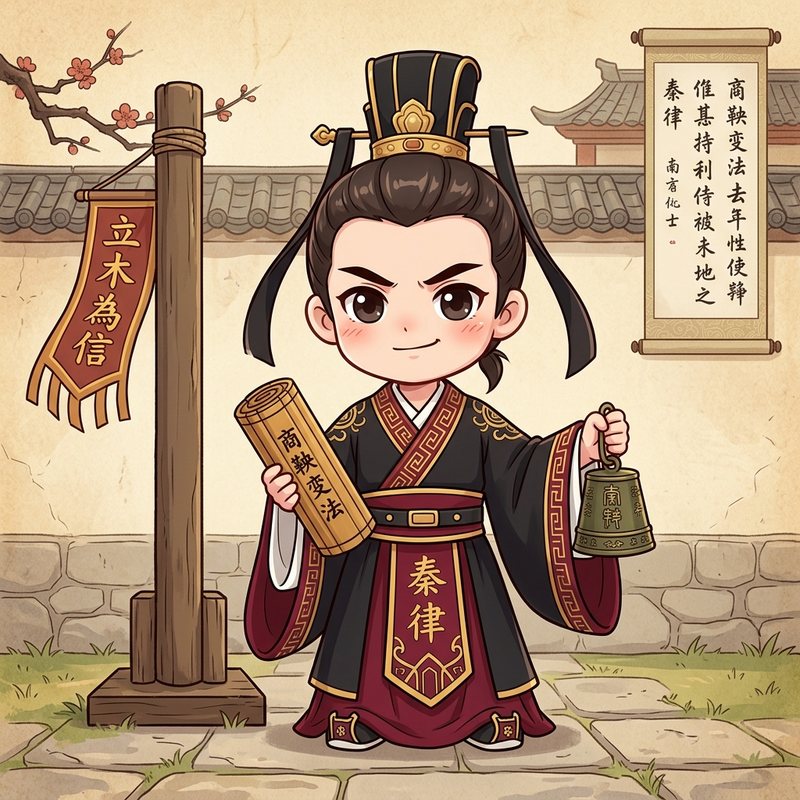
Shang Yang (Lord Shang) (商鞅 · Shāng Yāng)
卫鞅 · 公孙鞅 · 商君
To govern the realm, one need not emulate antiquity; to benefit the state, one must forge new laws.
治世不一道,便国不法古;徙木立信,法行天下,开创大一统帝国之万世根基。
- Shang Yang's reforms prioritized measurable contribution—especially farming and fighting—over birth.
- Standardized incentives and punishments made Qin administration harsher and more predictable.
- He is central to 'Legalism vs Confucianism' debates still searched by students worldwide.
- His own end—torn by chariots after political reversal—became a moral caution tale in later texts.
Why Qin Hired a Ruthless Systems Thinker
Fourth-century BCE China was a kill-or-be-killed state system. Qin needed population mobilized for grain and war. Shang Yang's program treated society like an organization: clear metrics, harsh anti-corruption theater, and ladders of advancement that ambitious commoners could climb.
战国竞争极端残酷。秦要的是把民力变成粮与兵。商鞅把国家当成可度量的组织:指标清晰、赏罚狠、给编户齐民向上通道。
Reform Core: Law Over Pedigree
Key moves included collective responsibility units, restrictions on private feuds, and ranking households by service. Whether every anecdote (moving a log for reward) is literal matters less than the brand: the state keeps promises and breaks aristocratic vetoes.
什伍连坐、禁私斗、以军功与耕织定名分。『徙木立信』真伪次要,重要的是国家信用与打破世卿世禄的制度形象。
| Perspective 视角 | Shang Yang (Legalism) | Confucian Critique |
|---|---|---|
| Human nature assumption | People respond to incentives and fear | People should be cultivated through ritual and virtue |
| Social mobility | Open ranks via service | Hierarchy stabilized by moral roles and pedigree norms |
| Legacy | State capacity for conquest | Warning against harshness without humanity |
How Shang Yang Died — By the Law He Wrote
After his patron Duke Xiao died, court enemies charged Shang Yang with treason. He fled, but inns refused a guest without official papers — the registration rule he himself had imposed. Captured, he was executed by being torn apart by chariots (338 BCE). The anecdote is later moral theater; the structural point is not: Legalist systems outlive their authors, and they do not grant the author an exemption.
孝公死后政敌告商鞅谋反。他出逃,客舍因无验不得留人——正是他定下的什伍之制。前 338 年车裂而死。故事有后儒渲染,结构事实仍在:法家制度比立法者活得更久,且不给立法者豁免。
Follow Shang Yang's Qin Arc
Open Shang Yang's map: Qin reforms, court reversal, and the death later ages turned into a caution tale.
Open Shang Yang MapFrequently Asked Questions
Who was Shang Yang?
Shang Yang (also Lord Shang, Gongsun Yang, Wei Yang) was a Warring States Legalist reformer in Qin. He ranked people by farming and fighting, not birth, and helped turn Qin into the war state that later unified China.
Is Shang Yang the same as Lord Shang?
Yes. English books often call him Lord Shang. Older sources also use Gongsun Yang or Wei Yang. They are the same person: the Qin reformer who died in 338 BCE.
How did Shang Yang die?
After Duke Xiao of Qin died, rivals accused him of treason. He was captured and executed by chariot-tearing in 338 BCE. Later writers stressed that he died under the travel-permit laws he had created.
What did Shang Yang reform?
Merit ranks for soldiers and farmers, collective responsibility units, bans on private feuds, and strict, public punishments — Legalism as a measurable state machine, not a virtue sermon.
Why was Shang Yang executed despite making Qin powerful?
Shang Yang strictly enforced laws without exception, famously punishing the Crown Prince's tutors. When King Huiwen took power, resentful nobles accused him of treason. He was defeated and executed by chariot dismemberment (五马分尸)—yet his Legalist laws remained, enabling Qin to unify China.
Walk with Shang Yang (Lord Shang) Across China
随商鞅漫步华夏河山 · 亲历命运逆境与精神涅槃