Who Was Yan Zhenqing? The Tang Calligraphy Titan & Martyr
Master of the Yan script, defender against the An Lushan Rebellion, and creator of the world's most agonizing calligraphic masterpiece
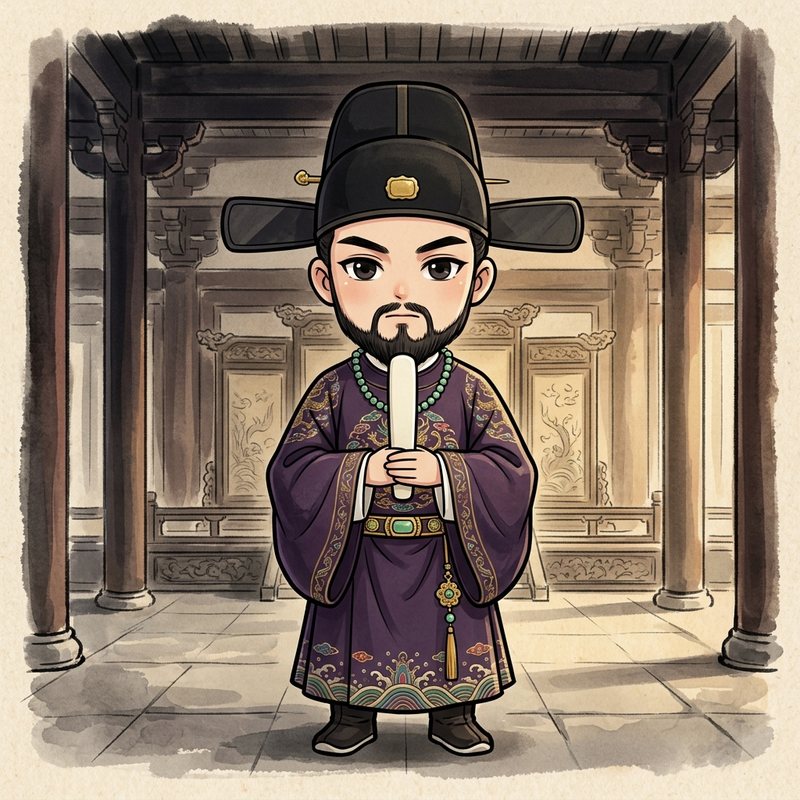
Yan Zhenqing (颜真卿 · Yán Zhēnqīng)
字清臣 · 封鲁国公 · 谥文忠
Master of regular script who reshaped Chinese calligraphy with monumental gravitas, defended against An Lushan, and died an immortal martyr.
盛唐楷书宗师,以‘颜体’重塑书法骨力;安史之乱血战平原,七十六岁从容殉国,书品与人格铸就千秋丰碑。
- The Michelangelo of Calligraphy: Transformed Chinese calligraphy from delicate, aristocratic finesse into muscular, monumental regular script (Yan Ti) that mirrored his incorruptible character.
- The Fortress of Pingyuan: Anticipated the An Lushan Rebellion, fortified Pingyuan Commandery, and united seventeen commanderies with 200,000 allied soldiers to halt rebel expansion.
- The Supreme Requiem: Channeled unbearable grief over his decapitated martyr nephew into the 'Draft of a Requiem to My Nephew' (Ji Zhi Wen Gao), universally celebrated as the world's second greatest running script.
- Martyrdom of Iron Integrity: Sent into rebel headquarters at age seventy-four, he scoffed at bribes of chancellor titles and death threats over open pyres, dying a fearless martyr in Caizhou.
Phase 1: The Orphan Prodigy & The Walls of Clay (709–734)
Yan Zhenqing was born in 709 CE in Wannian near the Tang capital of Chang'an (modern Xi'an, Shaanxi Province). He hailed from the prestigious Yan clan of Langya, whose revered ancestor Yan Zhitui had authored the canonical 'Family Instructions for the Yan Clan' (颜氏家训). When Yan Zhenqing was just three years old, his father passed away, leaving him and his siblings in the sole care of his devoted mother, Lady Yin.
唐中宗景龙三年(709年),颜真卿生于京兆万年。其家族为琅邪名门,北齐重臣颜之推为其五代祖,《颜氏家训》立德树人。颜真卿三岁丧父,由母亲殷氏含辛茹苦抚育成人,恪守清白门风。
Living in deep poverty, the family could not afford ink and paper for the young boy. Undeterred, Yan Zhenqing took a coarse brush, dipped it into yellow clay water, and practiced calligraphy relentlessly on crumbling brick walls. He absorbed classical philosophy, moral governance, and calligraphic techniques passed down by his paternal uncle Yan Yuansun, forging an inner discipline that would anchor his lifelong courage.
早年家贫无资市纸,年幼的颜真卿便以毛笔蘸黄土扫壁苦练书法。他勤读经史、兼习金石,深得族伯父颜元孙笔法与训诂真传,磨砺出非凡的意志与安贫乐道的儒者节操。
三更灯火五更鸡,正是男儿读书时。黑发不知勤学早,白首方悔读书迟。
Sān gēng dēng huǒ wǔ gēng jī, zhèng shì nán'ér dú shū shí. Hēi fà bù zhī qín xué zǎo, bái shǒu fāng huǐ dú shū chí.
At midnight oil lamps flare, at fifth watch roosters crow—this is the prime hour for young men to study. If dark hair knows not the virtue of early diligence, white locks will rue too late the neglect of books.
Context · A celebrated educational poem traditionally attributed to Yan Zhenqing, capturing his childhood devotion to midnight study and intellectual rigor.
Phase 2: Imperial Censor & The Duobaota Stele (734–752)
In 734 CE (the twenty-second year of Kaiyuan), Yan Zhenqing passed the rigorous Jinshi imperial examination, followed by the demanding Boxue Hongci examination. He entered the imperial administration, serving successively as Collator in the Palace Library, Liquan County Defender, Investigating Censor, and Palace Censor. In court, he earned widespread renown for his impartiality, clearing innocent prisoners and denouncing corrupt magistrates.
开元二十二年(734年),颜真卿进士及第,再举博学宏词科登第。历任校书郎、醴泉县尉、监察御史、殿中侍御史,按察风俗、雪洗冤狱,以刚直方正饮誉朝野。
In 752 CE, Yan Zhenqing was commissioned to write the 'Duobaota Stele' (多宝塔碑) for the Qianfu Temple in Chang'an. Demonstrating crisp, disciplined structure and upright vertical strokes, this masterpiece established his fame as the foremost calligrapher of the capital. However, his unyielding refusal to flatter Emperor Xuanzong's corrupt prime minister, Yang Guozhong, led to his political demotion and exile to regional outposts.
天宝十一载(752年),颜真卿为千福寺书写《多宝塔感应微文碑》,点画劲挺、结构谨严,名动京师。但他因刚正不阿、不肯曲事权相杨国忠,屡受排挤,被调离中央出任地方官。
点如坠石,画如夏云,钩如屈金,戈如发弩。
Diǎn rú zhuì shí, huà rú xià yún, gōu rú qū jīn, gē rú fā nǔ.
Dots strike like falling boulders, strokes billow like summer clouds, hooks bend like forged gold, and spears release like triggered crossbows.
Context · The classical evaluation in the 'Sequel to Calligraphy Judgments' (续书断) celebrating the physical power and kinetic architecture of Yan Zhenqing's regular script.
Phase 3: The Fortress of Pingyuan & Defiance Against An Lushan (753–757)
In 753 CE, Yan Zhenqing was dispatched as Governor of Pingyuan (in modern Dezhou, Shandong Province). Sensing that regional military commissioner An Lushan was harboring treacherous ambitions, Governor Yan secretly dredged the city moats, fortified ramparts, and accumulated stockpiles of grain. To lull An Lushan's spies into complacency, he feigned the lifestyle of a leisurely scholar, hosting banquets and writing poetry on pleasure boats.
天宝十二载(753年),颜真卿任平原太守。他敏锐察觉安禄山反谋,假借防洪之名深浚城堑、高筑坚垒、多蓄军粮,表面上则泛舟赋诗以麻痹安禄山谍者。
When the catastrophic An Lushan Rebellion erupted in late 755 CE, rebel cavalry swept across northern China, and commanderies fell like dominoes. Pingyuan alone stood completely impregnable. Yan Zhenqing coordinated with his cousin, Yan Gaoqing (Governor of Changshan), rallying seventeen loyal commanderies into a formidable allied league of 200,000 soldiers. Their resistance severed the rebels' supply corridors and bought the imperial dynasty precious time to regroup.
天宝十四载安禄山叛兵暴起,河北诸郡望风而靡,唯平原城池坚如磐石。颜真卿联络堂兄常山太守颜杲卿,联结河北十七郡推其为盟主,聚兵二十万,拦腰阻断叛军南侵咽喉。
义兵齐举,群胡丧胆。
Yì bīng qí jǔ, qún hú sàng dǎn.
When righteous banners rose as one across the northern plains, the rebel hordes trembled in mortal dismay.
Context · Historical chronicles recorded the shock of An Lushan's generals when Governor Yan's volunteer army rose against them in Pingyuan.
Phase 4: The Agony of Puzhou & The Immortal Requiem (758)
Though Pingyuan held valiantly, the fall of Changshan brought horrific personal tragedy. An Lushan's commanders butchered Yan Gaoqing and over thirty members of the Yan lineage. Gaoqing's youthful son, Yan Jiming, was decapitated before his father's eyes. In 758 CE, while stationed as Prefect of Puzhou (modern Yongji, Shanxi Province), Yan Zhenqing sent relatives to recover the family's remains. They returned carrying only Yan Jiming's severed skull.
然而常山陷落,堂兄颜杲卿与颜季明父子壮烈死节,满门三十余口殉难。乾元元年(758年),颜真卿任蒲州刺史,派人前往常山寻得侄儿季明之首级,血肉残缺,惨绝人寰。
Faced with his nephew's blackened skull, the fifty-year-old statesman was overwhelmed by raw paternal sorrow and divine rage. Dipping his brush into thick ink, he began drafting the 'Draft of a Requiem to My Nephew' (祭侄文稿). The manuscript is frantic with tears, smudges, crossed-out characters, and explosive dry strokes. Transcending conventional aesthetic grace, it stands as the rawest emotional diary in human history, re-venerated across centuries as the Second Greatest Running Script under Heaven.
面对殉国侄儿的焦黑头颅,五十岁的颜真卿肝肠寸断。他提笔起草《祭侄文稿》,满纸涂改淋漓、狂草飞白,悲恸化为惊雷,被历代公认为仅次于王羲之《兰亭序》的‘天下第二行书’。
贼臣不救,孤城围逼,父陷子死,巢倾卵覆。
Zéi chén bù jiù, gū chéng wéi bī, fù xiàn zǐ sǐ, cháo qīng luǎn fù.
The treacherous generals withheld aid, leaving the isolated city encircled; father fell and son perished, the nest overturned and the eggs smashed.
Context · From the rawest, most heart-shattering passage of the 'Draft of a Requiem to My Nephew', denouncing military betrayal and lamenting the slaughter of his kin.
Phase 5: Duke of Lu & Master of the Altar (764–779)
In 764 CE, Emperor Daizong rewarded Yan Zhenqing's immense wartime contributions by enfeoffing him as the Duke of Lu (鲁国公), whence his revered moniker 'Yan Lugong' derived. Yet capital politics remained treacherous. When imperial eunuch Yu Chao'en bullied high ministers and disrupted court seating hierarchies, Yan Zhenqing penned his fiery 'Letter on the Dispute of Seats' (争座位帖), fearlessly championing constitutional dignity over tyranny.
广德二年(764年),代宗晋封颜真卿为鲁郡开国公,世称‘颜鲁公’。面对掌权大宦官鱼朝恩的跋扈与百官谄媚,他奋笔写下《争座位帖》,厉声喝止坏法乱纪之举,力挽朝廷尊严。
Slandered by jealous Chancellor Yuan Zai, Yan Zhenqing was subsequently demoted to Prefect of Fuzhou in Jiangnan (modern Jiangxi Province). Far from harboring bitterness, he dredged irrigation canals, restored civic peace, and climbed Mount Magu, where he engraved the sublime regular script masterpiece 'Record of the Altar of Immortal Magu' (麻姑山仙坛记) in 771 CE. In his seventies, he erected the monumental 'Yan Qinli Stele' (颜勤礼碑) in Luoyang, cementing the mature architectural majesty of the Yan style.
后遭宰相元载嫉恨,颜真卿贬为抚州刺史。他在任兴修水利、保境安民,并于大历六年书刻《麻姑山仙坛记》。古稀之年在洛阳刻立《颜勤礼碑》,颜体楷书臻于雄浑宏阔、大巧若拙的至高境地。
沧海桑田,更变无穷,仙迹宛然。
Cāng hǎi sāng tián, gēng biàn wú qióng, xiān jì wǎn rán.
Vast seas turn to mulberry fields in endless transformations, yet the sacred traces of immortals endure vivid and clear.
Context · Inscribed in 771 CE on Mount Magu in Fuzhou, reflecting on cosmic resilience and transcendent permanence amidst human political exile.
Phase 6: The Final Defiance & Martyrdom in Caizhou (782–785)
In 782 CE, regional warlord Li Xilie staged a massive mutiny in Huai-Xi, overrunning Ruzhou. Scheming Chancellor Lu Qi, eager to eliminate Yan Zhenqing once and for all, convinced Emperor Dezong to dispatch the seventy-four-year-old elder as imperial envoy to persuade the rebel army. Recognizing this death sentence, Yan Zhenqing declared: 'It is the emperor's order—how could I evade it?' and embarked unarmed into the rebel stronghold.
建中三年(782年),淮西李希烈叛乱攻陷汝州。奸相卢杞借刀杀人,奏请派遣年逾古稀的颜真卿单车宣抚叛营。明知陷阱,颜真卿从容赴命:‘君命也,将焉避之!’
Upon arrival in Xu County, rebel soldiers drew swords to butcher him, but Yan Zhenqing did not flinch. Li Xilie offered him the supreme title of Prime Minister if he would submit; Yan Zhenqing spat in contempt. Transferred to Longxing Temple in Caizhou, rebels dug burial pits and lit towering pyres to burn him alive; the old master lunged forward to jump into the flames himself, terrifying his captors.
抵营后叛卒拔刀环伺,李希烈许以宰相尊位诱降,颜真卿怒目呵斥。移囚蔡州龙兴寺后,叛军掘深坑欲活埋,积烈柴欲焚杀,老宗师纵身欲跃入火海,反令叛将心惊胆寒。
On August 23, 785 CE (the first year of Zhenyuan), knowing imperial rescue was impossible, the seventy-six-year-old sage calmly penned his own funeral epitaph and sacrifice prayer. Rebel assassins entered and strangled him with a silken cord. When news reached Chang'an, Emperor Dezong wept bitterly, suspended court sessions for five days, and bestowed the posthumous title 'Wenzhong' (The Cultured and Loyal). The immortal titan was laid to rest, his spirit forever carved into the soul of Chinese civilization.
贞元元年(785年)八月二十四日,颜真卿自度必死,从容自撰墓志后事。李希烈密遣阉奴将其缢杀于龙兴寺,终年七十六岁。德宗痛哭罢朝五日,追赠司徒,谥号‘文忠’,千秋忠烈名垂青史。
吾受国恩,守节而死,岂从尔反邪!
Wú shòu guó ēn, shǒu jié ér sǐ, qǐ cóng ěr fǎn yé!
I have received the benevolence of the imperial state and shall die guarding my honor; how could I ever join your rebellion!
Context · Yan Zhenqing's final thunderous rebuke to rebel warlord Li Xilie, choosing honorable strangulation over treasonous survival.
| Perspective 视角 | Yan Zhenqing (The Chinese Calligraphic Titan) | Michelangelo Buonarroti (The Renaissance Master) |
|---|---|---|
| Aesthetic Monumentality | Pioneered the muscular, architectural 'Yan Ti' regular script, replacing delicate courtly elegance with square, imposing moral gravitas. | Pioneered muscular, heroic forms in marble sculpture and Sistine frescoes, discarding decorative Gothic grace for superhuman vitality. |
| The Masterpiece of Agony | Composed the 'Draft of a Requiem to My Nephew' (Ji Zhi Wen Gao) amidst frantic tears over his nephew's severed skull. | Sculpted the sorrowful Pietà and the terrifying Last Judgment, channeling human tragedy and cosmic judgment into eternal art. |
| Civic & Military Fortitude | Fortified Pingyuan, led 200,000 allied soldiers against An Lushan, and faced burning pyres unarmed in rebel Caizhou. | Designed and supervised the fortifications of Florence during the 1529 imperial siege, defending the Republic against tyranny. |
| Art as Moral Character | Epitomized the ancient Chinese doctrine that 'the calligraphy is the man' (字如其人)—brushstrokes as reflections of inner virtue. | Declared that great art is an earthly reflection of divine proportion and spiritual devotion, demanding relentless moral sacrifice. |
Trace Yan Zhenqing's Footsteps on the Interactive Topographic Map
Follow his dramatic historical trail across 10 imperial stations—from early studies in Chang'an and fortress defense in Pingyuan to the creation of his immortal Requiem in Puzhou and martyrdom in Caizhou.
Launch Interactive Journey MapFrequently Asked Questions (FAQ)
What makes Yan Zhenqing's calligraphy style (Yan Ti) so revolutionary?
Before Yan Zhenqing, Chinese calligraphy was dominated by the elegant, slender, and aristocratic aesthetics of Wang Xizhi. Yan Zhenqing broke this mold by inventing 'Yan Ti' (颜体): a bold, muscular regular script characterized by broad, square structures, dense center strokes, and balanced architectural symmetry. His style mirrored his unyielding Confucian morality, turning every stroke into an enduring pillar of moral weight.
Why is the 'Draft of a Requiem to My Nephew' called the 'Second Greatest Running Script'?
Second only to Wang Xizhi's 'Preface to the Orchid Pavilion', Yan Zhenqing's 'Draft of a Requiem to My Nephew' (祭侄文稿) is revered as a supreme emotional treasure. Written after recovering his nephew's severed head following the An Lushan Rebellion, its hurried corrections, ragged dry brushwork, and bleeding ink capture raw human grief transforming into celestial defiance.
How did Yan Zhenqing resist An Lushan's rebellion at Pingyuan?
In 753 CE, sensing An Lushan's planned treason, Governor Yan secretly fortified Pingyuan's ramparts and accumulated emergency rations while pretending to be an idle drunkard writing poetry. When the rebellion erupted in 755 CE and northern commanderies surrendered, Pingyuan alone held firm. Yan mobilized seventeen commanderies with 200,000 allied troops, disrupting rebel supply lines.
Why was Yan Zhenqing sent on a suicide mission to rebel warlord Li Xilie?
In 783 CE, corrupt Tang Chancellor Lu Qi grew intensely jealous of Yan Zhenqing's towering moral prestige. To eliminate him without taking the blame, Lu Qi convinced Emperor Dezong to send the seventy-four-year-old elder unarmed to pacify the ferocious rebel warlord Li Xilie, orchestrating an intentional death trap.
How did Yan Zhenqing die as a martyr in Caizhou?
Held captive in Caizhou, Yan Zhenqing was subjected to severe death threats, including open graves and blazing pyres, yet he spat at rebel titles and attempted to throw himself into the flames. On August 23, 785 CE, after calmly drafting his own funeral epitaph, the seventy-six-year-old master was strangled by rebel assassins.
Why do art historians compare Yan Zhenqing to Michelangelo?
Both Yan Zhenqing and Michelangelo revolutionized the artistic visual language of their cultures with immense muscularity, structural power, and architectural balance. Furthermore, both artists personally engaged in military defense against oppressive tyrants, proving that their towering masterpieces were born from real, unyielding moral heroism and civic sacrifice.
Walk with Yan Zhenqing Across China
随颜真卿漫步华夏河山 · 亲历命运逆境与精神涅槃