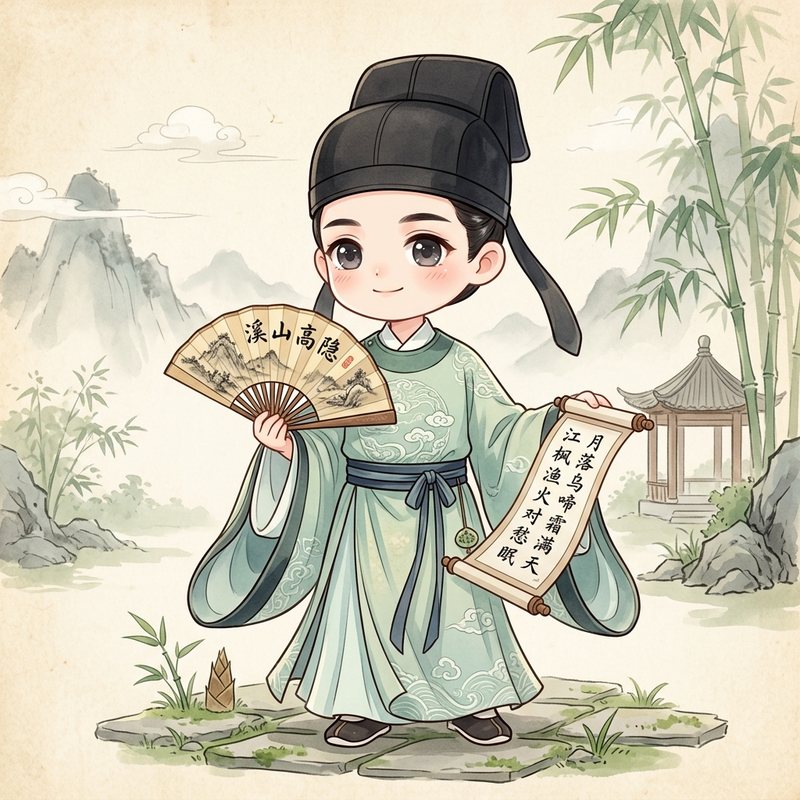
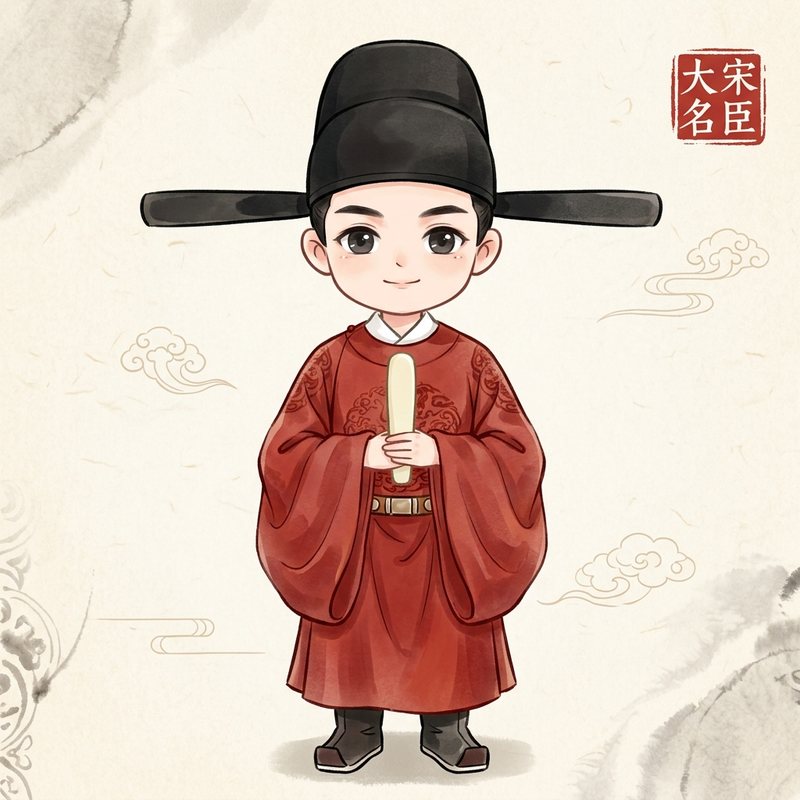
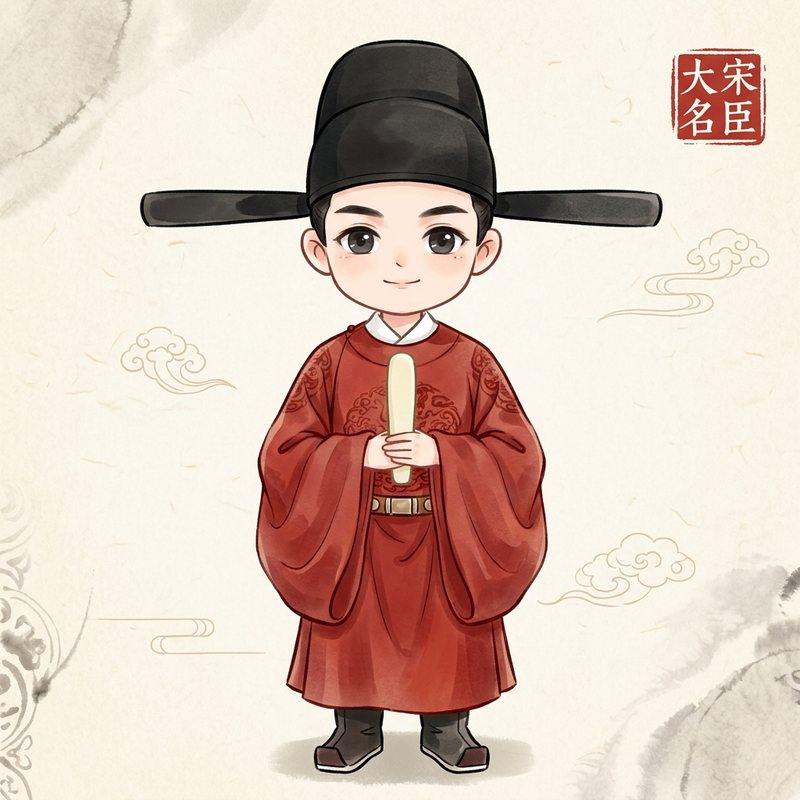
Master Mentor & Supreme Patriarch of Song Letters · 1007 – 1072
The Master Mentor of Song: Father of the Classical Prose Movement, the beloved sage of Drunkard's Pavilion who single-handedly nurtured an entire golden generation.
Stops6
Traversed~1,706km
Audio Tour~12min
“善不可失,恶不可长。”
Virtue must never be lost; evil must never be allowed to grow.
Master Mentor & Supreme Patriarch of Song LettersNorthern Song Dynasty(1007—1072)字永叔 · 号醉翁 · 晚号六一居士 · 谥号文忠Audio Journey · 6 Stops
Father of the Classical Prose Movement, the beloved sage of Drunkard's Pavilion who nurtured a golden generation.
The Master Mentor of Song· A legendary talent scoutThe Father of Classical Prose· A literary reformerThe Joyful Sage of Drunkard's Pavilion· A serene hedonist-philosopher
Unfolding the Historical Landscape…
印
Daily Wisdom & Resilience Oracle
The Resilient Optimist
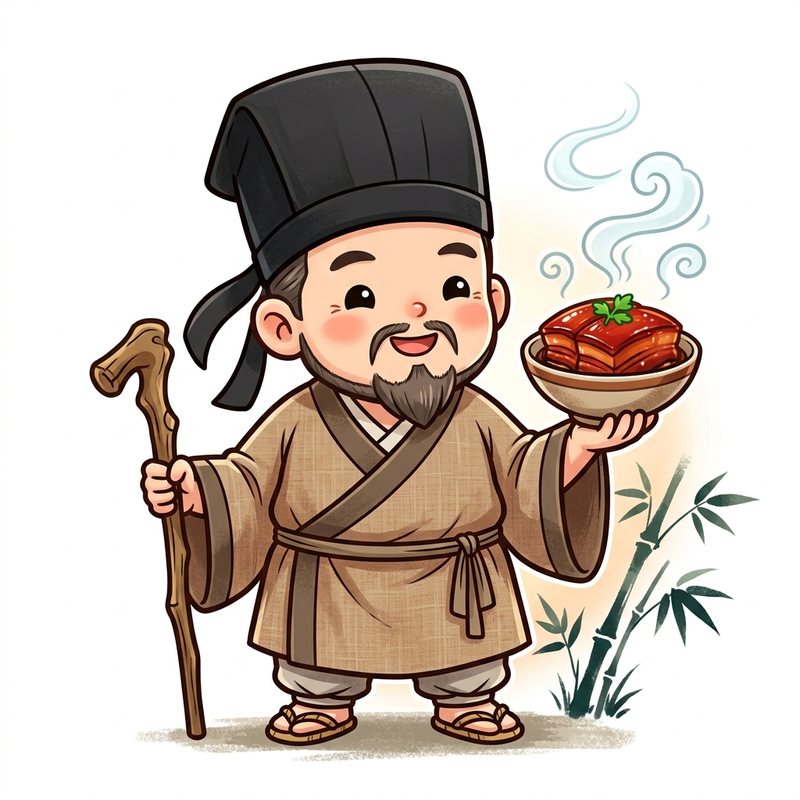
“竹杖芒鞋轻胜马,谁怕?一蓑烟雨任平生。”
Holding a bamboo cane and wearing straw sandals, I stride faster than a horse. Who is afraid? A straw cloak in the mist and rain — I live my life with equanimity.
💡 In the 3rd year of exile in Huangzhou, caught in a sudden downpour, Su Shi embraced the storm with supreme resilience.
— Su Shi (Dongpo)(The Renaissance Foodie & Optimist)
Historical Footprints & Narration Archive
6 Stations
1
Suizhou
1010 CE · Age 4
Modern Suizhou, Hubei
A penniless orphan learning to write on sand with reeds.
“善不可失,恶不可长。”
Shàn bù kě shī, è bù kě zhǎng.
Virtue must never be lost; evil must never be allowed to grow.
Station Narration Script
Outside a ramshackle hut in Suizhou, a widowed mother held her young boy's hand, pressing a dried reed stem into damp sand. Fatherless at four, Ouyang Xiu's first paper was dirt, and his first pen was a river reed. Yet poverty could not cage his genius. At ten, rummaging through garbage, he found torn pages of Han Yu's essays. Electrified by their raw power, the barefoot child made a silent vow: he would one day sweep away the decadent fluff of imperial literature and restore iron and soul to Chinese writing.
Departure Transition Script
At twenty-three, he swept first place in three successive exams, passing the imperial examinations at the very top. The brilliant youth set out for the ancient capital of Luoyang.
2
Western Capital Luoyang
1031 CE · Age 25
Modern Luoyang, Henan
The brilliant young prodigy igniting the Song classical prose revolution in Luoyang.
This year the blossoms surpass the red of years gone by; alas, next year they will bloom even brighter—who will be by my side to see them?
Station Narration Script
Peonies bloomed in riotous crimson across Luoyang. In his twenties, Ouyang Xiu was living the golden springtime of his youth. Allied with fellow prodigies Yin Zhu and Mei Yaochen, he explored imperial ruins and debated literature over wine. Scorning empty ornate rhetoric, they wrote with clarity, rhythm, and moral purpose. This wasn't merely youthful revelry; it was the spark of the Song Classical Prose Movement that would permanently transform Chinese thought.
Departure Transition Script
Yet the salon's warmth was shattered by political hurricanes. Transferred to the capital Kaifeng, he stepped straight into a life-or-death battle of conscience.
3
Kaifeng Imperial Court
1036 CE · Age 30
Imperial Capital Kaifeng
Publishing the fiercest open letter in Chinese history, declaring a corrupt censor 'utterly shameless'.
To act as you have done is to prove that you know not even that shame exists in the human world!
Station Narration Script
Storm clouds hung heavy over Kaifeng. When reform champion Fan Zhongyan was exiled, hundreds of officials hung their heads in terrified silence. Chief Censor Gao Ruone cowardly piled on accusations. 30-year-old junior scholar Ouyang Xiu could not stomach the cowardice. Beneath a flickering lamp, he penned the legendary 'Letter to Censor Gao': 'Acting thus, you prove you do not even know that shame exists among humans!' The blast shattered court pretenses. An imperial decree instantly banished him to remote Yiling, but he boarded the exile boat with head held high.
Departure Transition Script
Sailing up the perilous Yangtze Gorges, he arrived in the isolated backwater of Yiling. Yet exile did not break him; it sharpened his administrative genius.
4
Chuzhou Old Drunkard Pavilion
1045 CE · Age 39
Modern Chuzhou, Anhui
The Old Drunkard's heart lies not in the wine, but in the beauty of rivers and mountains.
The Old Drunkard's heart lies not in the wine, but in the mountains and waters. The joy of mountains and waters is captured in the soul and given expression through wine.
Station Narration Script
Fresh spring waters bubbled down Mount Langya. At thirty-nine, battered by political purges, Ouyang Xiu arrived in Chuzhou. Refusing to succumb to bitterness, he cut red tape and eased taxes. In his spare time, he hiked into the bamboo forests with monks and commoners. Building the Pavilion of the Old Drunkard, he wrote his immortal prose: 'The Old Drunkard's heart lies not in the wine, but in the mountains and waters.' Commoners thought the governor was simply intoxicated, but Ouyang Xiu knew that sharing simple joy with the common people was the highest, purest form of wisdom.
Departure Transition Script
When he departed Chuzhou, weeping crowds blocked the roads. Serving across Jiangnan, his fame swelled. In 1054, Emperor Renzong finally recalled him to imperial Kaifeng.
5
Kaifeng Imperial Examination
1057 CE · Age 51
Imperial Examination Hall, Kaifeng
The greatest chief examiner in Chinese history, single-handedly discovering Su Shi and his entire generation.
Reading Su Shi's work, cold sweat breaks out on my brow; what joy, what absolute joy! This old man must step aside and let him surpass me by a head!
Station Narration Script
Candles burned through the night at the Ministry of Rites. 51-year-old Chief Examiner Ouyang Xiu risked his entire career on a cultural revolution. He decreed that every candidate writing pretentious, jargon-heavy essays be ruthlessly failed. Mobbed and threatened in the streets, he stood unshaken. Reading an anonymous exam paper, he encountered the luminous prose of 20-year-old Su Shi. Sweating with pure delight, he told Mei Yaochen: 'This old man must yield the road and let him soar a head above us all!' That single examination roster gave China Su Shi, Su Zhe, Zeng Gong, and Cheng Hao. One man's generosity midwifed an entire golden civilization.
Departure Transition Script
Having forged the new literary era and co-authored the official history of the Tang Dynasty, Ouyang Xiu was sick of factional mudslinging. Repeatedly petitioning to retire, he sought peace.
6
Yingzhou West Lake
1071 CE · Age 65
Modern Fuyang, Anhui
The Hermit of Six Ones sailing on West Lake, finding serene perfection in his twilight.
Wú jiā cáng shū yī wàn juàn, jí lù sān dài yǐ lái jīn shí yí wén yī qiān juàn, yǒu qín yī zhāng, yǒu qí yī jú, ér cháng zhì jiǔ yī hú...
In my home I have ten thousand scrolls of books, one thousand ancient rubbings, one zither, one chessboard, and one pot of wine... An old man aging peacefully among these five—is that not Six Ones?
Station Narration Script
Lotuses bloomed in quiet serenity across the West Lake of Yingzhou. 65-year-old Ouyang Xiu discarded imperial silks to become 'The Hermit of Six Ones': ten thousand scrolls of books, a thousand bronze rubbings, a zither, a chessboard, a flask of wine, and one contented old man. Drifting across the lake, the breeze gently stirred his white beard. There was no regret—only the profound peace of a mentor whose students had outshone the stars. In 1072, Ouyang Xiu passed away peacefully, leaving behind a civilization that would forever burn with his light.
Key Historical Inquiries & Context
· 核心史实公案与速览
Ouyang Xiu was a towering statesman, historian, and the supreme literary patriarch of the Song dynasty. Raised in extreme poverty, he broke through imperial examinations and became a fierce critic of corruption. Exiled after political purges, he penned 'The Old Drunkard's Pavilion' in Chuzhou, celebrating serenity and shared human joy. In 1057, as chief examiner, he revolutionised imperial literary standards and discovered Su Shi, Su Zhe, and Zeng Gong, fathering China's cultural golden age.
Ouyang Xiu was a towering statesman, historian, and the supreme literary patriarch of the Song dynasty. Raised in extreme poverty, he broke through imperial examinations and became a fierce critic of corruption. Exiled after political purges, he penned 'The Old Drunkard's Pavilion' in Chuzhou, celebrating serenity and shared human joy. In 1057, as chief examiner, he revolutionised imperial literary standards and discovered Su Shi, Su Zhe, and Zeng Gong, fathering China's cultural golden age.
QWhat was Ouyang Xiu's primary cultural and historical legacy?
Ouyang Xiu is celebrated across world history as a pioneer of The Master Mentor of Song, The Father of Classical Prose, The Joyful Sage of Drunkard's Pavilion, leaving enduring philosophical insights, literature, and art.
QWhere does Ouyang Xiu's historical life journey map lead?
This interactive GIS map retraces 6 chronological stops across Northern Song Dynasty China, originating from Suizhou and spanning through Yingzhou West Lake.
The Complete Life Journey & Biography of Ouyang Xiu (Song Master) (欧阳修)
Chronological travel & exile routes mapped to modern Chinese cities across Northern Song Dynasty China — featuring bilingual scholar audio, classical poetry recitations, and historical cross-paths.
Suizhou (随州画荻)
Age 4
Modern-day analog: Modern Suizhou, Hubei
A penniless orphan learning to write on sand with reeds.
Outside a ramshackle hut in Suizhou, a widowed mother held her young boy's hand, pressing a dried reed stem into damp sand. Fatherless at four, Ouyang Xiu's first paper was dirt, and his first pen was a river reed. Yet poverty could not cage his genius. At ten, rummaging through garbage, he found torn pages of Han Yu's essays. Electrified by their raw power, the barefoot child made a silent vow: he would one day sweep away the decadent fluff of imperial literature and restore iron and soul to Chinese writing.
At twenty-three, he swept first place in three successive exams, passing the imperial examinations at the very top. The brilliant youth set out for the ancient capital of Luoyang.
“Virtue must never be lost; evil must never be allowed to grow.”
善不可失,恶不可长。 (Shàn bù kě shī, è bù kě zhǎng.)
Western Capital Luoyang (洛阳交游)
Age 25
Modern-day analog: Modern Luoyang, Henan
The brilliant young prodigy igniting the Song classical prose revolution in Luoyang.
Peonies bloomed in riotous crimson across Luoyang. In his twenties, Ouyang Xiu was living the golden springtime of his youth. Allied with fellow prodigies Yin Zhu and Mei Yaochen, he explored imperial ruins and debated literature over wine. Scorning empty ornate rhetoric, they wrote with clarity, rhythm, and moral purpose. This wasn't merely youthful revelry; it was the spark of the Song Classical Prose Movement that would permanently transform Chinese thought.
Yet the salon's warmth was shattered by political hurricanes. Transferred to the capital Kaifeng, he stepped straight into a life-or-death battle of conscience.
“This year the blossoms surpass the red of years gone by; alas, next year they will bloom even brighter—who will be by my side to see them?”
Publishing the fiercest open letter in Chinese history, declaring a corrupt censor 'utterly shameless'.
Storm clouds hung heavy over Kaifeng. When reform champion Fan Zhongyan was exiled, hundreds of officials hung their heads in terrified silence. Chief Censor Gao Ruone cowardly piled on accusations. 30-year-old junior scholar Ouyang Xiu could not stomach the cowardice. Beneath a flickering lamp, he penned the legendary 'Letter to Censor Gao': 'Acting thus, you prove you do not even know that shame exists among humans!' The blast shattered court pretenses. An imperial decree instantly banished him to remote Yiling, but he boarded the exile boat with head held high.
Sailing up the perilous Yangtze Gorges, he arrived in the isolated backwater of Yiling. Yet exile did not break him; it sharpened his administrative genius.
“To act as you have done is to prove that you know not even that shame exists in the human world!”
The Old Drunkard's heart lies not in the wine, but in the beauty of rivers and mountains.
Fresh spring waters bubbled down Mount Langya. At thirty-nine, battered by political purges, Ouyang Xiu arrived in Chuzhou. Refusing to succumb to bitterness, he cut red tape and eased taxes. In his spare time, he hiked into the bamboo forests with monks and commoners. Building the Pavilion of the Old Drunkard, he wrote his immortal prose: 'The Old Drunkard's heart lies not in the wine, but in the mountains and waters.' Commoners thought the governor was simply intoxicated, but Ouyang Xiu knew that sharing simple joy with the common people was the highest, purest form of wisdom.
When he departed Chuzhou, weeping crowds blocked the roads. Serving across Jiangnan, his fame swelled. In 1054, Emperor Renzong finally recalled him to imperial Kaifeng.
“The Old Drunkard's heart lies not in the wine, but in the mountains and waters. The joy of mountains and waters is captured in the soul and given expression through wine.”
The greatest chief examiner in Chinese history, single-handedly discovering Su Shi and his entire generation.
Candles burned through the night at the Ministry of Rites. 51-year-old Chief Examiner Ouyang Xiu risked his entire career on a cultural revolution. He decreed that every candidate writing pretentious, jargon-heavy essays be ruthlessly failed. Mobbed and threatened in the streets, he stood unshaken. Reading an anonymous exam paper, he encountered the luminous prose of 20-year-old Su Shi. Sweating with pure delight, he told Mei Yaochen: 'This old man must yield the road and let him soar a head above us all!' That single examination roster gave China Su Shi, Su Zhe, Zeng Gong, and Cheng Hao. One man's generosity midwifed an entire golden civilization.
Having forged the new literary era and co-authored the official history of the Tang Dynasty, Ouyang Xiu was sick of factional mudslinging. Repeatedly petitioning to retire, he sought peace.
“Reading Su Shi's work, cold sweat breaks out on my brow; what joy, what absolute joy! This old man must step aside and let him surpass me by a head!”
The Hermit of Six Ones sailing on West Lake, finding serene perfection in his twilight.
Lotuses bloomed in quiet serenity across the West Lake of Yingzhou. 65-year-old Ouyang Xiu discarded imperial silks to become 'The Hermit of Six Ones': ten thousand scrolls of books, a thousand bronze rubbings, a zither, a chessboard, a flask of wine, and one contented old man. Drifting across the lake, the breeze gently stirred his white beard. There was no regret—only the profound peace of a mentor whose students had outshone the stars. In 1072, Ouyang Xiu passed away peacefully, leaving behind a civilization that would forever burn with his light.
“In my home I have ten thousand scrolls of books, one thousand ancient rubbings, one zither, one chessboard, and one pot of wine... An old man aging peacefully among these five—is that not Six Ones?”
吾家藏书一万卷,集录三代以来金石遗文一千卷,有琴一张,有棋一局,而常置酒一壶……客曰:‘是为五一尔,奈何?’居士曰:‘以吾一翁,老于此五物之间,是岂不为六一乎?’ (Wú jiā cáng shū yī wàn juàn, jí lù sān dài yǐ lái jīn shí yí wén yī qiān juàn, yǒu qín yī zhāng, yǒu qí yī jú, ér cháng zhì jiǔ yī hú...)