Who Was Ouyang Xiu? The Master Mentor of the Song Dynasty
Father of the Classical Prose Movement, author of the Old Drunkard's Pavilion, and the chief examiner who discovered Su Shi and an entire golden generation
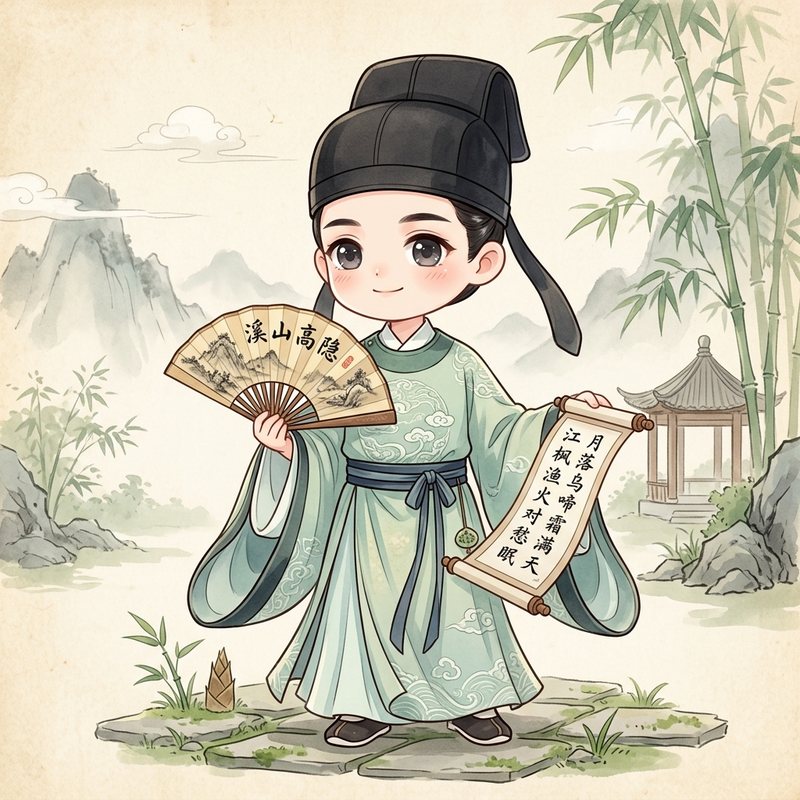
Ouyang Xiu (欧阳修 · Ōuyáng Xiū)
字永叔 · 号醉翁 · 晚号六一居士 · 谥号文忠
The Master Mentor of Song: Father of the Classical Prose Movement, the beloved sage of Drunkard's Pavilion who single-handedly nurtured an entire golden generation.
醉翁之意不在酒,在乎山水之间也;一榜点出半座宋朝文脉的千古伯乐与文宗领袖。
- The Master Mentor of Song: As chief examiner in 1057, Ouyang Xiu discovered Su Shi, Su Zhe, Zeng Gong, Zhang Zai, and Cheng Hao in a single roster—single-handedly nurturing an entire golden generation of Chinese letters.
- Father of the Classical Prose Movement: Leading the revolt against ornate parallel prose, he championed clear, expressive writing that permanently reshaped Chinese literature.
- The Joyful Sage of Drunkard's Pavilion: Exiled and demoted, he wrote the immortal 'Record of the Old Drunkard's Pavilion', celebrating that 'the heart lies not in the wine, but in the mountains and waters'.
- Unbending Moral Courage: He published the fiercest open letter in Chinese history denouncing a corrupt censor as 'utterly shameless', and willingly accepted exile to defend his principles.
- The Hermit of Six Ones: In his twilight he shed every honorary title to retire by West Lake, finding serene perfection as a contented old man among his books, zither, chessboard, and wine.
Phase 1: Reed-Writing in Suizhou & The Early Vow (1010–1029)
Ouyang Xiu was born in 1007 CE, but his story truly begins in Suizhou (modern Hubei Province), where he was sent after his father died when he was just four years old. Living in deep poverty with his uncle, he could not afford ink or paper. His widowed mother Zheng broke dried reed stems and taught him to write on damp sand—his first paper was dirt, and his first pen was a river reed. Yet poverty could not cage his genius. At ten, rummaging through a dustheap, he found torn pages of Han Yu's essays. Electrified by their raw power, the barefoot child made a silent vow: he would one day sweep away the decadent fluff of imperial literature and restore iron and soul to Chinese writing.
北宋景德四年(1007年),欧阳修出生。然而他的人生真正起点,始于四岁丧父后寄居的随州(今湖北)。家境极其贫寒,买不起纸笔,母亲郑氏折断荻草秸秆,在湿润的黄沙上一笔一划地教他练字。欧阳修生命的第一张『纸』是泥土,第一支『笔』是荻草。然而清贫从未折断灵魂的脊梁。十岁那年,他在旧纸堆里翻出了韩愈的散文残篇,惊叹世间竟有如此雄健古朴的文字。在泥泞里握着芦苇杆的孩子暗暗发誓:有朝一日,定要洗净满天下浮靡的脂粉气,还世间一个朗朗乾坤!
善不可失,恶不可长。
Shàn bù kě shī, è bù kě zhǎng.
Virtue must never be lost; evil must never be allowed to grow.
Context · The family motto passed down from Ouyang Xiu's righteous mother, the moral compass of his entire life.
Phase 2: The Luoyang Salon & The Prose Revolution (1031–1034)
At twenty-three, Ouyang Xiu swept first place in three successive examinations, passing the imperial exams at the very top. He was appointed an aide in the Western Capital of Luoyang, where he was embraced by his patron Qian Weiyan. There he formed lifelong friendships with Yin Zhu and Mei Yaochen. By day they hiked sacred mountains and explored imperial ruins; by night they debated literature over wine. Scorning the empty, ornate rhetoric of the Xikun style, they wrote with clarity, rhythm, and moral purpose. This was not merely youthful revelry—it was the spark of the Song Classical Prose Movement that would permanently transform Chinese thought.
二十三岁那年,欧阳修三试皆第一,一举中进士甲科,意气风发地踏上前往西京洛阳的官道。任西京留守推官,深得上司钱惟演赏识。在此他与尹洙、梅尧臣结为莫逆之交,白昼游山玩水,夜间切磋诗文。他们坚决摒弃华而不实的西昆体,挥笔写下一篇篇斩断骈体束缚、直抒胸臆的散文。年轻的欧阳修才思如泉涌,词句清丽流转,声震洛中。这不仅是一群文人的宴饮风流,更是大宋古文运动在历史长河中泛起的璀璨第一道浪花。
今年花胜去年红。可惜明年花更好,知与谁同?
Jīn nián huā shèng qù nián hóng. Kě xī míng nián huā gèng hǎo, zhī yǔ shuí tóng?
This year the blossoms surpass the red of years gone by; alas, next year they will bloom even brighter—who will be by my side to see them?
Context · From 'Lang Tao Sha' (浪淘沙), composed during Ouyang Xiu's romantic, triumphant Luoyang youth.
Phase 3: The Kaifeng Open Letter & Moral Courage (1036)
The salon's warmth was soon shattered by political hurricanes. Transferred to the imperial capital of Kaifeng, Ouyang Xiu stepped straight into a life-or-death battle of conscience. When reform pioneer Fan Zhongyan was framed and exiled by the Prime Minister, hundreds of officials hung their heads in terrified silence. But Chief Censor Gao Ruone cowardly piled on accusations. Enraged, the thirty-year-old junior scholar penned the legendary 'Letter to Censor Gao', publicly denouncing him: 'You do not even know that shame exists in the human world!' The blast shattered court pretenses. An imperial decree instantly banished him to the remote gorges of Yiling—but he boarded the exile boat with his head held high.
然而,文人的温存很快被朝堂的风暴撕裂。景祐元年,欧阳修被调入汴京。范仲淹因直言敢谏被宰相吕夷简构陷贬官,满朝噤若寒蝉。谏官高若讷不仅不救,反而上书落井下石。年仅三十岁的馆阁校勘欧阳修怒不可遏。在案头孤灯下,他握笔如刀,写下了名震千古的《与高司谏书》:『足下如此,可谓不知人间有羞耻事尔!』这声怒吼撕碎了官场的虚伪与懦弱。一道贬书随即砸下,将他发配千里之外的峡州夷陵。但他昂首登舟,无怨无悔!
足下如此,可谓不知人间有羞耻事尔!
Zú xià rú cǐ, kě wèi bù zhī rén jiān yǒu xiū chǐ shì ěr!
To act as you have done is to prove that you know not even that shame exists in the human world!
Context · From 'Letter to Censor Gao' (与高司谏书), the supreme rebuke of political opportunism in Chinese history.
Phase 4: Chuzhou & The Old Drunkard's Pavilion (1045–1048)
Sailing up the perilous Yangtze Gorges, Ouyang Xiu arrived in the isolated backwater of Yiling, then was exiled again for supporting the Qingli Reforms—this time to rural Chuzhou. Refusing to succumb to bitterness, he enacted lenient governance, cutting red tape and easing taxes. In his spare time he hiked into the bamboo forests with monks and commoners. On Mount Langya, a mountain monk built him a pavilion, and he styled himself 'The Old Drunkard'. There he wrote his immortal prose: 'The Old Drunkard's heart lies not in the wine, but in the mountains and waters.' Commoners thought the governor was simply intoxicated, but Ouyang Xiu knew that sharing simple joy with the common people was the highest, purest form of wisdom.
溯长江而上,穿过险滩重重的三峡,欧阳修被流放到了荒凉偏僻的峡州夷陵。因支持『庆历新政』,他再度被贬滁州。面对政治逆境,他没有在郁闷中沉沦,而是脱下官威,实行『宽简政治』,轻徭薄赋,让百姓休养生息。政务之暇,他与宾客幕僚常游山林。山僧智仙为他建亭,他自号『醉翁』。写下《醉翁亭记》的那一刻,他看透了权力的虚妄:『醉翁之意不在酒,在乎山水之间也!』人人都笑他醉了,只有他懂得,能看到黎民百姓安居乐业、与民同乐,才是生命至高无上的清醒与慈悲。
醉翁之意不在酒,在乎山水之间也。山水之乐,得之心而寓之酒也。
Zuì wēng zhī yì bù zài jiǔ, zài hū shān shuǐ zhī jiān yě. Shān shuǐ zhī lè, dé zhī xīn ér yù zhī jiǔ yě.
The Old Drunkard's heart lies not in the wine, but in the mountains and waters. The joy of mountains and waters is captured in the soul and given expression through wine.
Context · From 'Record of the Old Drunkard's Pavilion' (醉翁亭记), Ouyang Xiu's timeless masterpiece of shared joy and transcendence.
Phase 5: The Jia'you Dragon-Tiger Roster & The Greatest Mentor (1057)
When he departed Chuzhou, weeping crowds blocked the roads. Serving across Jiangnan, his fame swelled, and in 1054 Emperor Renzong finally recalled him to imperial Kaifeng. In 1057, at age fifty-one, Ouyang Xiu served as Chief Examiner—and risked his entire career on a cultural revolution. He decreed that every candidate writing pretentious, jargon-heavy 'Taixue style' essays be ruthlessly failed. Mobbed and threatened in the streets, he stood unshaken. Reading an anonymous exam paper, he encountered the luminous prose of twenty-year-old Su Shi. Sweating with pure delight, he told Mei Yaochen: 'This old man must yield the road and let him soar a head above us all!' That single examination roster gave China Su Shi, Su Zhe, Zeng Gong, Zhang Zai, and Cheng Hao—a golden generation that became the foundation of Chinese philosophy and literature.
离任滁州时,百姓遮道相送。他在江南历任扬州、颍州,声名远播。公元1054年,仁宗皇帝终于重新起用这位一代文豪,将其召回帝都开封。嘉祐二年,五十一岁的欧阳修出任知贡举(科举主考官),决定赌上毕生名誉发动一场风暴。他下令将所有堆砌辞藻、晦涩诡怪的『太学体』考卷一律除名。落榜考生甚至聚众围攻他的府邸,他却面不改色。在一份糊名试卷前,他读到了苏轼那篇大气磅礴的奇文,欣喜若狂到冷汗涔涔。他感慨万千地对梅尧臣说:『老夫当避路,放他出一头地也!』这一榜,走出了苏轼、苏辙、曾巩、张载、程颢。一个人的胸襟,点亮了整个华夏文明的黄金时代!
读轼书,不觉汗出,快哉快哉!老夫当避路,放他出一头地也!
Dú Shì shū, bù jué hàn chū, kuài zāi kuài zāi! Lǎo fū dāng bì lù, fàng tā chū yī tóu dì yě!
Reading Su Shi's work, cold sweat breaks out on my brow; what joy, what absolute joy! This old man must step aside and let him surpass me by a head!
Context · Ouyang Xiu's breathtakingly humble praise of twenty-year-old Su Shi, giving birth to the idiom 'Chutou Didi' (出头地).
Phase 6: The Hermit of Six Ones & Serene Twilight (1071–1072)
Having forged the new literary era and co-authored the official history of the Tang Dynasty, Ouyang Xiu was sick of factional mudslinging. Repeatedly petitioning to retire, he finally shed every honorary title and settled beside the West Lake of Yingzhou. He styled himself 'The Hermit of Six Ones': ten thousand scrolls of books, a thousand bronze rubbings, one zither, one chessboard, one pot of wine, and one contented old man. Drifting across the lake, the breeze gently stirred his white beard. There was no regret—only the profound peace of a mentor whose students had outshone the stars. In August 1072, Ouyang Xiu passed away peacefully, leaving behind a civilization that would forever burn with his light.
文坛新风已立,欧阳修在朝中官至参知政事,主修《新唐书》《新五代史》。晚年的他厌倦了激烈的党争,连上数道辞呈,一心归老江湖。熙宁四年,他以太子少师致仕,定居颍州西湖,自号『六一居士』:一万卷藏书、一千卷金石、一张古琴、一局围棋、一壶清酒,以及一个看淡浮生的大宗师。他泛舟湖上,微风拂动白须。他没有政治家的失落,只有文化火种薪火相传的欣慰。苏轼已经名动天下,后辈群星璀璨。公元1072年,欧阳修在颍州安详阖眼。他走得无比从容,因为他留下的,是一个永远不会熄灭的华夏黄金时代。
吾家藏书一万卷,集录三代以来金石遗文一千卷,有琴一张,有棋一局,而常置酒一壶……以吾一翁,老于此五物之间,是岂不为六一乎?
Wú jiā cáng shū yī wàn juàn, jí lù sān dài yǐ lái jīn shí yí wén yī qiān juàn, yǒu qín yī zhāng, yǒu qí yī jú, ér cháng zhì jiǔ yī hú... Yǐ wú yī wēng, lǎo yú cǐ wǔ wù zhī jiān, shì qǐ bù wéi liù yī hū?
In my home I have ten thousand scrolls of books, one thousand ancient rubbings, one zither, one chessboard, and one pot of wine... An old man aging peacefully among these five—is that not Six Ones?
Context · From 'Biography of the Hermit of Six Ones' (六一居士传), the ultimate portrait of serene, transcendent retirement.
| Perspective 视角 | Ouyang Xiu (The Master Mentor of Song) | Samuel Johnson (The Literary Arbiter of England) |
|---|---|---|
| Core Literary Mission | Led the Classical Prose Movement, sweeping away ornate parallel prose and championing clear, expressive writing that reshaped Chinese literature. | Presided over English letters in the 18th century, championing plain, vigorous prose and setting the standard for English style through his Dictionary and essays. |
| Role as a Mentor | As chief examiner in 1057, discovered Su Shi, Su Zhe, Zeng Gong, Zhang Zai, and Cheng Hao in a single roster, nurturing an entire golden generation. | Presided over the literary club of London, mentoring and championing a generation of writers including James Boswell and Oliver Goldsmith. |
| Response to Adversity | Exiled repeatedly for his moral courage, he found transcendence in nature, penning the 'Old Drunkard's Pavilion' and celebrating shared joy with the common people. | Battled poverty, illness, and depression throughout his life, yet channeled suffering into monumental literary achievement and moral wisdom. |
| Enduring Legacy | One of the Eight Great Masters of Tang and Song prose; his 'Record of the Old Drunkard's Pavilion' remains among the most memorized essays in Chinese schools today. | The defining literary figure of 18th-century England, whose Dictionary and moral essays shaped the English language and remain cornerstones of English literature. |
Trace Ouyang Xiu's Footsteps on the Interactive Topographic Map
Follow his actual historical trail across 6 imperial stations—from reed-writing in Suizhou and the Luoyang salon to the Kaifeng open letter, the Old Drunkard's Pavilion in Chuzhou, the legendary Jia'you examination roster, and the serene twilight of Yingzhou's West Lake.
Launch Interactive Journey MapFrequently Asked Questions (FAQ)
Who was Ouyang Xiu?
Ouyang Xiu (1007–1072) was the supreme literary patriarch of the Northern Song Dynasty, one of the Eight Great Masters of Tang and Song prose. Known as the 'Master Mentor of Song', he led the Classical Prose Movement, authored the immortal 'Record of the Old Drunkard's Pavilion', and served as the greatest chief examiner in Chinese history—discovering Su Shi, Su Zhe, Zeng Gong, Zhang Zai, and Cheng Hao in a single examination roster in 1057. He was also a statesman, historian, and co-author of the official 'New History of the Tang Dynasty'.
Why is Ouyang Xiu called the Master Mentor of Song?
Ouyang Xiu earned the title 'Master Mentor of Song' because of his extraordinary generosity and talent for discovering genius. As chief examiner in the Jia'you era (1057), he ruthlessly failed candidates who wrote pretentious, empty prose and championed a dozen unknown young talents instead. That single examination roster produced Su Shi, Su Zhe, Zeng Gong, Zhang Zai, and Cheng Hao—figures who became the foundation of Chinese philosophy and literature. His humble praise of twenty-year-old Su Shi, 'This old man must step aside and let him surpass me by a head', gave birth to the idiom 'Chutou Didi' and defined his legacy as the greatest mentor in Chinese literary history.
What is the Old Drunkard's Pavilion about?
The 'Record of the Old Drunkard's Pavilion' (醉翁亭记) was written in 1045 while Ouyang Xiu served as governor of Chuzhou after being exiled for supporting the Qingli Reforms. Rather than despair, he enacted lenient governance and built a pavilion on Mount Langya, styling himself 'The Old Drunkard'. The essay celebrates his famous insight: 'The Old Drunkard's heart lies not in the wine, but in the mountains and waters.' It unifies Confucian benevolence with Daoist transcendence, expressing the joy of sharing simple pleasures with the common people—a timeless meditation on finding meaning and serenity amid political adversity.
How did Ouyang Xiu discover Su Shi?
In 1057, Ouyang Xiu served as chief examiner of the imperial examinations. Confronting the bizarre, pretentious 'Taixue style' that dominated the capital, he ruthlessly failed every candidate who wrote empty jargon. Reading an anonymous exam paper, he encountered the luminous prose of twenty-year-old Su Shi and was so delighted that cold sweat broke out on his brow. He told his friend Mei Yaochen: 'This old man must yield the road and let him soar a head above us all!' That single examination roster gave China Su Shi, Su Zhe, Zeng Gong, Zhang Zai, and Cheng Hao—a golden generation that became the foundation of Chinese philosophy and literature.
What did Ouyang Xiu achieve beyond poetry?
Beyond his poetry and prose, Ouyang Xiu was a towering statesman and historian. He rose to the position of Vice Grand Councillor (Canshi Zhengshi) and co-authored the official 'New History of the Tang Dynasty' (新唐书) as well as the 'New History of the Five Dynasties' (新五代史). As a reformer, he supported the Qingli Reforms and championed 'lenient governance' (宽简政治) that eased taxes and cut red tape. In his final years he retired as 'The Hermit of Six Ones' beside West Lake in Yingzhou, leaving behind a civilization that would forever burn with his light.
What does 'The Hermit of Six Ones' mean?
'The Hermit of Six Ones' (六一居士) was the name Ouyang Xiu adopted in retirement. It refers to his six treasures: ten thousand scrolls of books, one thousand ancient bronze and stone rubbings, one zither, one chessboard, one pot of wine—and one old man (himself) aging peacefully among these five. The name captures his serene transcendence in old age, having shed every honorary title to live a simple life by West Lake in Yingzhou. He died peacefully in August 1072, aged sixty-six, and was posthumously honored with the title 'Wenzhong' (文忠), meaning 'Literary and Loyal'.
Walk with Ouyang Xiu Across China
随欧阳修漫步华夏河山 · 亲历命运逆境与精神涅槃