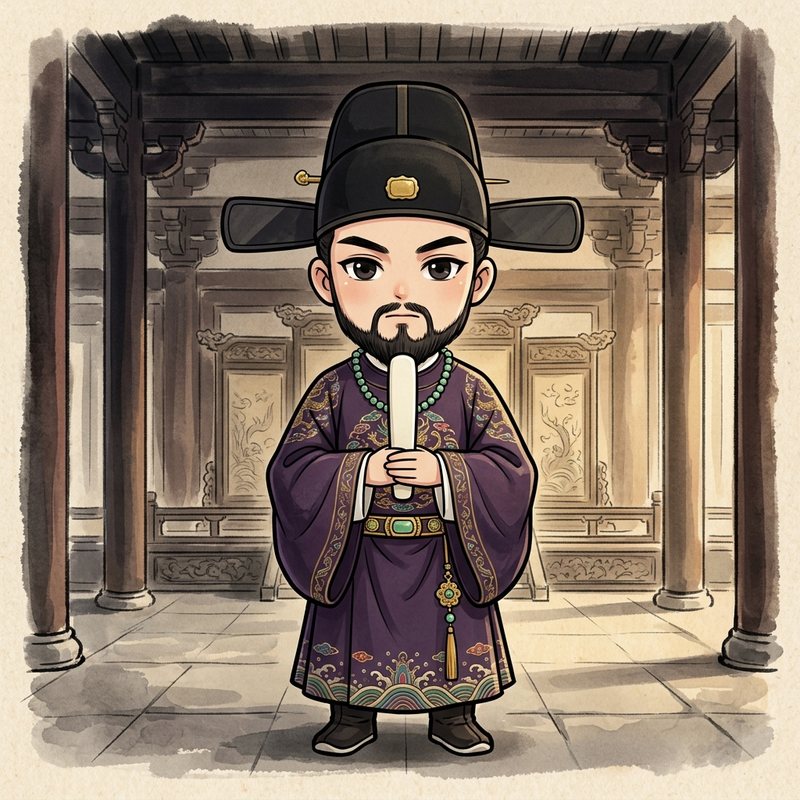
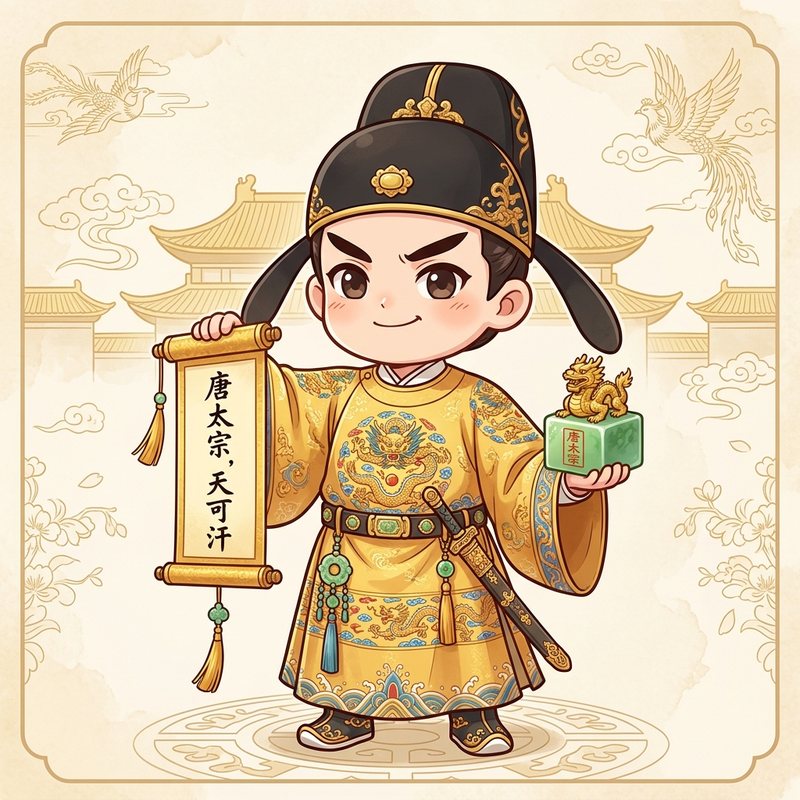
The Fearless Chancellor & 'Human Mirror' of Tang: chief remonstrator who advised Emperor Taizong over 200 times and helped forge the golden Zhenguan era.
Stops10
Traversed~2,583km
Audio Tour~12min
“博览群书,贯通经史,志存经世。”
Voraciously reading across imperial archives and mastering classical histories, his heart remained anchored on statecraft and universal welfare.
The Emperor's Human MirrorTang Dynasty(580—643)字玄成 · 世称郑文贞公Audio Journey · 10 Stops
The Fearless Chancellor & 'Human Mirror' of Tang who helped forge the golden Zhenguan era.
The Emperor's Human Mirror· A fearless 'loyal opposition' who speaks truth to powerThe Wise Ruler & Upright Minister· The ideal of a wise sovereign and a fearless counselorThe Historian of Dynastic Cycles· A historian who reads the past to guide the present
Unfolding the Historical Landscape…
印
Daily Wisdom & Resilience Oracle
The Resilient Optimist
“竹杖芒鞋轻胜马,谁怕?一蓑烟雨任平生。”
Holding a bamboo cane and wearing straw sandals, I stride faster than a horse. Who is afraid? A straw cloak in the mist and rain — I live my life with equanimity.
💡 In the 3rd year of exile in Huangzhou, caught in a sudden downpour, Su Shi embraced the storm with supreme resilience.
— Su Shi (Dongpo)(The Renaissance Foodie & Optimist)
Historical Footprints & Narration Archive
10 Stations
1
Xiaquyang, Julu
580 CE · Age 0
Modern Jinzhou, Hebei
Born into poverty amid dynastic collapse, orphaned young, yet voraciously learned and ambitious to serve the world.
“博览群书,贯通经史,志存经世。”
Bólǎn qúnshū, guàntōng jīngshǐ, zhì cún jīngshì.
Voraciously reading across imperial archives and mastering classical histories, his heart remained anchored on statecraft and universal welfare.
Station Narration Script
In a humble room in Julu, young Wei Zheng studied by lamplight. Orphaned and poor, he devoured classics and histories, forging an unyielding moral character and a grand ambition to save the world amid a collapsing age.
Departure Transition Script
When the Sui Dynasty collapsed into civil war, Wei Zheng became a Daoist recluse to escape the chaos and study the tides of the age.
2
Wuyang Commandery
611 CE · Age 31
Modern Daming County, Hebei
Took refuge as a Daoist hermit, then managed secretarial affairs for Vice-Governor Yuan Baozang, first gaining fame.
“潜居修道,胸藏救世经纶。”
Qiánjū xiūdào, xiōng cáng jiùshì jīnglún.
Dwelling in quiet seclusion to cultivate the Dao, while treasuring within his heart grand statecraft to rescue civilization.
Station Narration Script
Amid the Sui collapse, Wei Zheng became a Daoist hermit, studying statecraft and the art of governance. When Vice-Governor Yuan Baozang revolted, he recruited Wei to manage secretarial affairs; Wei's elegant, incisive documents brought him early fame across the north.
Departure Transition Script
In 617, Wei Zheng joined the formidable Wagang Rebel Army with Yuan Baozang, entering the struggle for the realm.
3
Luokou Granary
617 CE · Age 37
Modern Gongyi, Henan
Joined the Wagang Army as literary advisor, presenting ten grand strategies to Li Mi.
“识天下大势,献十策以图安定。”
Shí tiānxià dàshì, xiàn shí cè yǐ tú āndìng.
Discerning the grand tides of the empire, presenting ten master strategies to forge enduring peace.
Station Narration Script
Beneath the great granaries of Luokou, Wei Zheng joined the Wagang Army and was appointed literary advisor by Li Mi. He presented ten visionary strategies to seize Guanzhong and pacify the realm. Though Li Mi failed to adopt them, Wei's strategic genius impressed the entire army.
Departure Transition Script
When Li Mi was defeated and surrendered to Tang, Wei Zheng entered Chang'an with him, beginning his service to the new dynasty.
4
Chang'an
618 CE · Age 38
Imperial capital of Tang, modern Xi'an, Shaanxi
Surrendered to Tang in Chang'an, then volunteered to ride alone to pacify the eastern plains.
“人生感意气,功名谁复论。”
Rénshēng gǎn yìqì, gōngmíng shuí fù lùn.
In this fleeting mortal life, a noble soul is moved only by true honor and conviction; who would stoop to haggle over worldly glory?
Station Narration Script
After Li Mi's surrender, Wei Zheng entered Chang'an. Overlooked at first, he boldly volunteered to ride alone east to pacify the Shandong region, composing the stirring poem 'Expressing My Feelings' on the journey: 'In this fleeting life, a noble soul is moved only by true honor; who would haggle over worldly glory?'
Departure Transition Script
While pacifying Liyang, Wei Zheng was captured in a surprise assault by the northern warlord Dou Jiande.
5
Liyang & Mingzhou
619 CE · Age 39
Modern Xun County, Henan
Captured by Dou Jiande, faced peril with calm dignity, appointed imperial diarist.
“身陷危局而志不移,秉笔秉正而守天理。”
Shēn xiàn wēijú ér zhì bù yí, bǐngbǐ bǐngzhèng ér shǒu tiānlǐ.
Caught in perilous captivity yet unswerving in moral purpose; wielding the historian's brush with uncompromising righteousness.
Station Narration Script
When Liyang fell, Wei Zheng was captured by the warlord Dou Jiande, who admired his integrity and appointed him imperial diarist. Facing danger with calm dignity, Wei recorded events with strict truthfulness, preserving his Confucian integrity amid the chaos.
Departure Transition Script
After Dou Jiande's defeat, Wei Zheng returned to Chang'an and was recruited by Crown Prince Li Jiancheng as his senior advisor.
6
Chang'an
621 CE · Age 41
Imperial capital of Tang, modern Xi'an, Shaanxi
Served as senior advisor to Crown Prince Li Jiancheng, offering loyal counsel to secure his position.
“事君以忠,竭智尽节。”
Shì jūn yǐ zhōng, jié zhì jìn jié.
Serving one's lord with unflinching loyalty; dedicating every ounce of wisdom and moral integrity to righteous counsel.
Station Narration Script
Back in Chang'an, Wei Zheng served Crown Prince Li Jiancheng as senior advisor in the East Palace. He offered loyal counsel to secure the prince's position, serving with absolute integrity amid the intensifying rivalry that would culminate in the Xuanwu Gate Incident.
Departure Transition Script
In 626, the Xuanwu Gate Incident erupted, and Li Shimin summoned Wei Zheng for a fateful interrogation.
7
Chang'an
626 CE · Age 46
Imperial capital of Tang, modern Xi'an, Shaanxi
After the Xuanwu Gate Incident, answered Taizong with fearless candor)Skip, was promoted and admonished the emperor over 200 times.
“兼听则明,偏信则暗。”
Jiān tīng zé míng, piān xìn zé àn.
Heed all sides and you shall be enlightened; listen only to one side and you shall remain trapped in darkness.
Station Narration Script
After the Xuanwu Gate Incident, Li Shimin summoned Wei Zheng and demanded, 'Why did you alienate us brothers?' Wei replied with calm defiance, 'Had the late prince followed my counsel, he would never have suffered today's catastrophe!' Stunned by his integrity, Taizong promoted him to Imperial Remonstrator, inaugurating the golden age of 'wise ruler, upright minister.' Wei admonished the emperor over 200 times, championing 'heed all sides' and 'water carries the boat.'
Departure Transition Script
In 632, Wei Zheng was elevated to Grand Chancellor (Shizhong) and enfeoffed as Duke of Zheng.
8
Luoyang
632 CE · Age 52
Eastern capital of the Tang Empire, modern Luoyang, Henan
As Grand Chancellor, submitted the 'Petition on Ten Failings' to check Emperor Taizong's growing complacency.
“善始者实繁,克终者盖寡。”
Shàn shǐ zhě shí fán, kè zhōng zhě gài guǎ.
Those who make a virtuous beginning are indeed many, but those who can see it through to a glorious finish are truly few.
Station Narration Script
Beneath the palaces of Luoyang, Wei Zheng rose to Grand Chancellor and Duke of Zheng, directing the compilation of the Book of Sui and Qunshu Zhiyao. In 637, as Taizong grew complacent and contemplated lavish sacrifices, Wei submitted his blistering 'Petition on Ten Failings,' enumerating ten ways the emperor was abandoning his early virtue. Deeply shaken, Taizong transcribed the petition onto his bedchamber screens and abandoned the plan.
Departure Transition Script
In his twilight years, Wei Zheng repeatedly sought to retire; Taizong refused, granting him the titles of Tejin and Grand Preceptor to the Crown Prince.
9
Chang'an
637 CE · Age 57
Imperial capital of Tang, modern Xi'an, Shaanxi
Though at the pinnacle of power, lived austerely; Taizong halted palace construction to build him a hall.
To make a tree grow tall, one must secure its roots; to make a river flow far, one must dredge its source; to ensure a nation's peace, one must amass virtue and moral justice.
Station Narration Script
In his humble dwelling in Chang'an, the aging Wei Zheng lived in austerity despite his supreme rank. His house lacked even a reception hall, so Emperor Taizong halted palace construction to build him one. Even on his sickbed, Wei continued to remonstrate; whenever major decisions arose, Taizong sought his bedside counsel—a model of the loyal minister.
Departure Transition Script
In 643, Wei Zheng passed away in Chang'an; Taizong canceled court for five days, lamenting the loss of his mirror.
10
Chang'an
643 CE · Age 63
Imperial capital of Tang, modern Xi'an, Shaanxi
Passed away in Chang'an; Taizong mourned five days, uttering the immortal 'Three Mirrors' eulogy, buried at Zhaoling.
“以铜为镜,可以正衣冠;以古为镜,可以知兴替;以人为镜,可以明得失。”
Yǐ tóng wéi jìng, kě yǐ zhèng yī guān; yǐ gǔ wéi jìng, kě yǐ zhī xīng tì; yǐ rén wéi jìng, kě yǐ míng dé shī.
Using copper as a mirror, one can straighten one's clothes; using history as a mirror, one can understand the rise and fall of dynasties; using a person as a mirror, one can discern right from wrong.
Station Narration Script
In the first month of 643, Wei Zheng passed away in Chang'an at sixty-three. Grief-stricken, Taizong canceled court for five days, granted posthumous honors, and buried him at Zhaoling. Ascending the court balcony, the emperor delivered his immortal eulogy: 'Using copper as a mirror, one straightens one's clothes; using history, one understands the rise and fall of dynasties; using a person, one discerns right from wrong. In Wei Zheng's death, I have lost my mirror!' Wei was enshrined in the Lingyan Pavilion, fourth among the twenty-four meritorious officials—the eternal 'Human Mirror' of Chinese governance.
Departure Transition Script
Wei Zheng's life of fearless remonstrance and people-centered governance became the eternal model of 'wise ruler, upright minister'; his 'Human Mirror' spirit shines forever.
Key Historical Inquiries & Context
· 核心史实公案与速览
Wei Zheng (580-643), styled Xuancheng, was a Tang Dynasty chancellor, historian, and the fourth of the twenty-four meritorious officials of the Lingyan Pavilion, celebrated as the 'Human Mirror' of governance. After a poor, learned youth and turbulent days among the Sui-era rebels, he won Emperor Taizong's trust through fearless candor after the Xuanwu Gate Incident. As Imperial Remonstrator and Grand Chancellor, he admonished the emperor over 200 times, championing 'heed all sides' and 'water carries the boat,' and helped forge the golden Zhenguan era. He directed the Book of Sui and edited Qunshu Zhiyao. His death in 643 moved Taizong to lament the loss of his 'mirror.'
Wei Zheng (580-643), styled Xuancheng, was a Tang Dynasty chancellor, historian, and the fourth of the twenty-four meritorious officials of the Lingyan Pavilion, celebrated as the 'Human Mirror' of governance. After a poor, learned youth and turbulent days among the Sui-era rebels, he won Emperor Taizong's trust through fearless candor after the Xuanwu Gate Incident. As Imperial Remonstrator and Grand Chancellor, he admonished the emperor over 200 times, championing 'heed all sides' and 'water carries the boat,' and helped forge the golden Zhenguan era. He directed the Book of Sui and edited Qunshu Zhiyao. His death in 643 moved Taizong to lament the loss of his 'mirror.'
QWhat was Wei Zheng's primary cultural and historical legacy?
Wei Zheng is celebrated across world history as a pioneer of The Emperor's Human Mirror, The Wise Ruler & Upright Minister, The Historian of Dynastic Cycles, leaving enduring philosophical insights, literature, and art.
QWhere does Wei Zheng's historical life journey map lead?
This interactive GIS map retraces 10 chronological stops across Tang Dynasty China, originating from Xiaquyang, Julu and spanning through Chang'an.
The Complete Life Journey & Biography of Wei Zheng (Tang Chancellor) (魏征)
Chronological travel & exile routes mapped to modern Chinese cities across Tang Dynasty China — featuring bilingual scholar audio, classical poetry recitations, and historical cross-paths.
Xiaquyang, Julu (巨鹿郡下曲阳)
Age 0
Modern-day analog: Modern Jinzhou, Hebei
Born into poverty amid dynastic collapse, orphaned young, yet voraciously learned and ambitious to serve the world.
In a humble room in Julu, young Wei Zheng studied by lamplight. Orphaned and poor, he devoured classics and histories, forging an unyielding moral character and a grand ambition to save the world amid a collapsing age.
When the Sui Dynasty collapsed into civil war, Wei Zheng became a Daoist recluse to escape the chaos and study the tides of the age.
“Voraciously reading across imperial archives and mastering classical histories, his heart remained anchored on statecraft and universal welfare.”
Took refuge as a Daoist hermit, then managed secretarial affairs for Vice-Governor Yuan Baozang, first gaining fame.
Amid the Sui collapse, Wei Zheng became a Daoist hermit, studying statecraft and the art of governance. When Vice-Governor Yuan Baozang revolted, he recruited Wei to manage secretarial affairs; Wei's elegant, incisive documents brought him early fame across the north.
In 617, Wei Zheng joined the formidable Wagang Rebel Army with Yuan Baozang, entering the struggle for the realm.
“Dwelling in quiet seclusion to cultivate the Dao, while treasuring within his heart grand statecraft to rescue civilization.”
Joined the Wagang Army as literary advisor, presenting ten grand strategies to Li Mi.
Beneath the great granaries of Luokou, Wei Zheng joined the Wagang Army and was appointed literary advisor by Li Mi. He presented ten visionary strategies to seize Guanzhong and pacify the realm. Though Li Mi failed to adopt them, Wei's strategic genius impressed the entire army.
When Li Mi was defeated and surrendered to Tang, Wei Zheng entered Chang'an with him, beginning his service to the new dynasty.
“Discerning the grand tides of the empire, presenting ten master strategies to forge enduring peace.”
识天下大势,献十策以图安定。 (Shí tiānxià dàshì, xiàn shí cè yǐ tú āndìng.)
Chang'an (长安)
Age 38
Modern-day analog: Imperial capital of Tang, modern Xi'an, Shaanxi
Surrendered to Tang in Chang'an, then volunteered to ride alone to pacify the eastern plains.
After Li Mi's surrender, Wei Zheng entered Chang'an. Overlooked at first, he boldly volunteered to ride alone east to pacify the Shandong region, composing the stirring poem 'Expressing My Feelings' on the journey: 'In this fleeting life, a noble soul is moved only by true honor; who would haggle over worldly glory?'
While pacifying Liyang, Wei Zheng was captured in a surprise assault by the northern warlord Dou Jiande.
“In this fleeting mortal life, a noble soul is moved only by true honor and conviction; who would stoop to haggle over worldly glory?”
Captured by Dou Jiande, faced peril with calm dignity, appointed imperial diarist.
When Liyang fell, Wei Zheng was captured by the warlord Dou Jiande, who admired his integrity and appointed him imperial diarist. Facing danger with calm dignity, Wei recorded events with strict truthfulness, preserving his Confucian integrity amid the chaos.
After Dou Jiande's defeat, Wei Zheng returned to Chang'an and was recruited by Crown Prince Li Jiancheng as his senior advisor.
“Caught in perilous captivity yet unswerving in moral purpose; wielding the historian's brush with uncompromising righteousness.”
身陷危局而志不移,秉笔秉正而守天理。 (Shēn xiàn wēijú ér zhì bù yí, bǐngbǐ bǐngzhèng ér shǒu tiānlǐ.)
Chang'an (长安)
Age 41
Modern-day analog: Imperial capital of Tang, modern Xi'an, Shaanxi
Served as senior advisor to Crown Prince Li Jiancheng, offering loyal counsel to secure his position.
Back in Chang'an, Wei Zheng served Crown Prince Li Jiancheng as senior advisor in the East Palace. He offered loyal counsel to secure the prince's position, serving with absolute integrity amid the intensifying rivalry that would culminate in the Xuanwu Gate Incident.
In 626, the Xuanwu Gate Incident erupted, and Li Shimin summoned Wei Zheng for a fateful interrogation.
“Serving one's lord with unflinching loyalty; dedicating every ounce of wisdom and moral integrity to righteous counsel.”
事君以忠,竭智尽节。 (Shì jūn yǐ zhōng, jié zhì jìn jié.)
Chang'an (长安)
Age 46
Modern-day analog: Imperial capital of Tang, modern Xi'an, Shaanxi
After the Xuanwu Gate Incident, answered Taizong with fearless candor)Skip, was promoted and admonished the emperor over 200 times.
After the Xuanwu Gate Incident, Li Shimin summoned Wei Zheng and demanded, 'Why did you alienate us brothers?' Wei replied with calm defiance, 'Had the late prince followed my counsel, he would never have suffered today's catastrophe!' Stunned by his integrity, Taizong promoted him to Imperial Remonstrator, inaugurating the golden age of 'wise ruler, upright minister.' Wei admonished the emperor over 200 times, championing 'heed all sides' and 'water carries the boat.'
In 632, Wei Zheng was elevated to Grand Chancellor (Shizhong) and enfeoffed as Duke of Zheng.
“Heed all sides and you shall be enlightened; listen only to one side and you shall remain trapped in darkness.”
兼听则明,偏信则暗。 (Jiān tīng zé míng, piān xìn zé àn.)
Luoyang (洛阳)
Age 52
Modern-day analog: Eastern capital of the Tang Empire, modern Luoyang, Henan
As Grand Chancellor, submitted the 'Petition on Ten Failings' to check Emperor Taizong's growing complacency.
Beneath the palaces of Luoyang, Wei Zheng rose to Grand Chancellor and Duke of Zheng, directing the compilation of the Book of Sui and Qunshu Zhiyao. In 637, as Taizong grew complacent and contemplated lavish sacrifices, Wei submitted his blistering 'Petition on Ten Failings,' enumerating ten ways the emperor was abandoning his early virtue. Deeply shaken, Taizong transcribed the petition onto his bedchamber screens and abandoned the plan.
In his twilight years, Wei Zheng repeatedly sought to retire; Taizong refused, granting him the titles of Tejin and Grand Preceptor to the Crown Prince.
“Those who make a virtuous beginning are indeed many, but those who can see it through to a glorious finish are truly few.”
Modern-day analog: Imperial capital of Tang, modern Xi'an, Shaanxi
Though at the pinnacle of power, lived austerely; Taizong halted palace construction to build him a hall.
In his humble dwelling in Chang'an, the aging Wei Zheng lived in austerity despite his supreme rank. His house lacked even a reception hall, so Emperor Taizong halted palace construction to build him one. Even on his sickbed, Wei continued to remonstrate; whenever major decisions arose, Taizong sought his bedside counsel—a model of the loyal minister.
In 643, Wei Zheng passed away in Chang'an; Taizong canceled court for five days, lamenting the loss of his mirror.
“To make a tree grow tall, one must secure its roots; to make a river flow far, one must dredge its source; to ensure a nation's peace, one must amass virtue and moral justice.”
Modern-day analog: Imperial capital of Tang, modern Xi'an, Shaanxi
Passed away in Chang'an; Taizong mourned five days, uttering the immortal 'Three Mirrors' eulogy, buried at Zhaoling.
In the first month of 643, Wei Zheng passed away in Chang'an at sixty-three. Grief-stricken, Taizong canceled court for five days, granted posthumous honors, and buried him at Zhaoling. Ascending the court balcony, the emperor delivered his immortal eulogy: 'Using copper as a mirror, one straightens one's clothes; using history, one understands the rise and fall of dynasties; using a person, one discerns right from wrong. In Wei Zheng's death, I have lost my mirror!' Wei was enshrined in the Lingyan Pavilion, fourth among the twenty-four meritorious officials—the eternal 'Human Mirror' of Chinese governance.
Wei Zheng's life of fearless remonstrance and people-centered governance became the eternal model of 'wise ruler, upright minister'; his 'Human Mirror' spirit shines forever.
“Using copper as a mirror, one can straighten one's clothes; using history as a mirror, one can understand the rise and fall of dynasties; using a person as a mirror, one can discern right from wrong.”
以铜为镜,可以正衣冠;以古为镜,可以知兴替;以人为镜,可以明得失。 (Yǐ tóng wéi jìng, kě yǐ zhèng yī guān; yǐ gǔ wéi jìng, kě yǐ zhī xīng tì; yǐ rén wéi jìng, kě yǐ míng dé shī.)