Who Was Wei Zheng? The Fearless Mirror to Emperor Taizong
Leader of imperial remonstrance, chief architect of the Book of Sui, and the immortal 'Human Mirror' who dared to challenge Emperor Taizong over 200 times
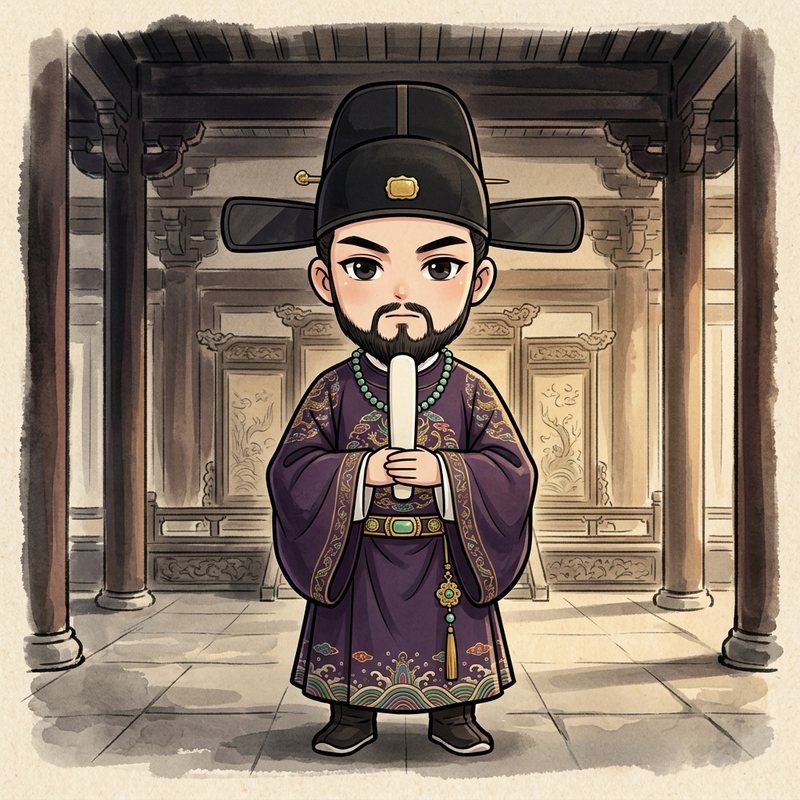
Wei Zheng (魏征 · Wèi Zhēng)
字玄成 · 世称郑文贞公
The Fearless Chancellor & 'Human Mirror' of Tang: chief remonstrator who advised Emperor Taizong over 200 times and helped forge the golden Zhenguan era.
唐初一代名相,凌烟阁二十四功臣第四,'千古人镜';以直谏敢言辅佐太宗开创贞观之治,提出'兼听则明''君舟民水'的千古为政理念。
- The Emperor's Human Mirror: Revered by Emperor Taizong as his most indispensable asset—a living mirror who exposed imperial blind spots and prevented fatal hubris.
- Fearless Remonstrator: Advised and challenged Emperor Taizong over 200 times, standing firm even when the furious monarch threatened execution.
- Architect of Golden Governance: Formulated foundational political maxims, including 'heed all sides and you are enlightened' (兼听则明) and 'water can carry a boat, but it can also overturn it' (君舟民水).
- Historian and Scholar-Statesman: Directed the monumental compilation of the official Book of Sui (隋书) and edited the statecraft compendium Qunshu Zhiyao (群书治要).
Phase 1: The Impoverished Scholar, Daoist Hermit & Rebel Strategist (580–618)
Wei Zheng was born in 580 CE into an impoverished family in Xiaquyang of Julu Commandery (modern Jinzhou, Hebei Province) during the political transition from the Northern Zhou to the Sui Dynasty. Orphaned in early childhood, young Wei lived in dire material poverty. Yet, refusing to be constrained by humble circumstance, he demonstrated an insatiable appetite for learning, voraciously reading through imperial histories and classical philosophical canons while nurturing grand ambitions of universal statecraft.
北周末年大象二年(580年),魏征出生于巨鹿郡下曲阳(今河北晋州)的贫苦农家。他早年父母早逝、孤苦伶仃,家境极为清贫。然而魏征穷且益坚,嗜书如命,博览经史百家,不事世俗产业,早早立下了兼济天下、辅佐盛世的远大抱负。
Between roughly 611 and 617 CE, as the tyrannical rule of Emperor Yang pushed the Sui Empire into widespread peasant uprisings, Wei Zheng entered a Daoist hermitage in Wuyang Commandery (modern Daming County, Hebei Province) to escape warfare. In the quiet sanctuary of the mountain temple, he deepened his understanding of classical statecraft and Daoist political flexibility. When Wuyang Vice-Governor Yuan Baozang revolted against the Sui, he invited Wei Zheng to manage secretarial and military dispatches. Wei's incisive, elegant documents quickly gained widespread acclaim across northern China.
约公元611至617年间,隋炀帝暴虐无道、天下大乱。魏征为避兵乱出家为道士,于道观中潜心研读黄老之术与治世经纶。后武阳郡丞元宝藏举兵响应义军,深慕其经世之才,辟其为主管机要的记室参军。魏征起草的文檄典章辞理精严、洞见大势,声名初显于河北。
In 617 CE, Wei Zheng accompanied Yuan Baozang in joining the formidable Wagang Rebel Army under Li Mi. Stationed at the strategic Luokou Granary (modern Gongyi, Henan Province), Li Mi recognized Wei's intellectual caliber and appointed him Assistant for Literature (Wenxue Canjun) to oversee secretarial strategy. Recognizing the fluid balance of power across the Central Plains, Wei Zheng drafted ten visionary strategic proposals for pacifying the realm, demonstrating supreme strategic foresight.
大业十三年(617年),魏征随元宝藏归附声势浩大的瓦岗起义军。瓦岗首领李密久闻其才名,拜其为文学参军,执掌文书机要。在天下第一大粮仓洛口重地,魏征敏锐洞察天下争雄格局,向李密进呈定鼎天下的‘十策’,显露出卓越非凡的战略大格局。
人生感意气,功名谁复论。
Rén shēng gǎn yì qì, gōng míng shuí fù lùn.
In this fleeting life, a noble soul is moved only by true honor and conviction; who would stoop to haggle over worldly titles and glory?
Context · From Wei Zheng's martial ballad 'Expressing My Feelings' (述怀), composed during his early military service and highlighting his lifelong elevation of moral conviction over superficial wealth.
Phase 2: Diplomatic Peril, Captivity & Service to Crown Prince Li Jiancheng (618–626)
Following Li Mi's military collapse in 618 CE, Wei Zheng journeyed west to the newly proclaimed Tang capital of Chang'an (modern Xi'an, Shaanxi Province) to surrender to Emperor Gaozu. Initially relegated to low bureaucratic obscurity, Wei Zheng refused passive resignation. He boldly petitioned the throne to serve as an imperial envoy east of the Hangu Pass. Traveling with a single carriage to Liyang (modern Xun County, Henan Province), he successfully pacified rival warlords through persuasive diplomatic statecraft.
武德元年(618年),瓦岗军败,魏征随李密降唐入长安。初归大唐之际未受重用,魏征毫不沉沦,毅然上书自请单车东出安抚山东,赴黎阳招抚各路割据豪杰,彰显出大智大勇的大臣风度,写下千古名篇《述怀》。
Between 619 and 621 CE, disaster struck when the northern warlord Dou Jiande launched a surprise assault on Liyang, capturing Wei Zheng. Deeply admiring Wei's intellectual stature and unbending dignity, Dou Jiande treated him with immense honor, appointing him Imperial Diarist (Qiju Sheren). Even as a captive, Wei Zheng maintained absolute professional impartiality, recording court events with strict historical truthfulness and demonstrating the incorruptible spine of a Confucian historian.
武德二年至四年(619–621年),河北枭雄窦建德突袭攻陷黎阳,魏征不幸被俘。窦建德深慕其高尚品格与博学宏才,拜其为起居舍人。身处敌营险境,魏征泰然自若,恪尽史官天职,秉笔直书、恪守大义,在乱世纷争中坚守了傲岸不屈的士人风骨。
After Dou Jiande was defeated by the Tang, Wei Zheng returned to Chang'an in 621 CE. Crown Prince Li Jiancheng, recognizing his strategic acumen, appointed him Senior Advisor to the Heir Apparent (Taizi Xima) in the East Palace. Wei Zheng served his patron with complete professional integrity, advising the Crown Prince on domestic governance and urging decisive political preparation to counterbalance Prince Li Shimin's soaring military reputation.
武德四年(621年)窦建德败亡后,魏征重返京师归唐。隐太子李建成慕其高才,特招募为东宫太子洗马,视为不可多得的核心辅臣与心腹智囊。魏征恪尽臣职、竭智尽诚,多次劝谏太子早立功勋以巩固储位,恪守了‘事君以忠’的臣子操守。
Phase 3: The Xuanwu Gate Defiance & Rise as Chief Imperial Remonstrator (626–632)
On July 2, 626 CE, Li Shimin staged the bloody Xuanwu Gate Incident, killing Crown Prince Li Jiancheng and seizing supreme power. Li Shimin immediately summoned Wei Zheng, fiercely interrogating him: 'Why did you sow discord between me and my elder brother?' Facing imminent execution, Wei Zheng replied with calm defiance: 'Had the late Crown Prince followed my counsel, he would never have suffered today's catastrophe.' Stunned by such incorruptible courage, Li Shimin realized that an advisor who refused to flatter even in the shadow of death was the greatest treasure an empire could possess.
武德九年(626年)六月,李世民发动玄武门之变诛杀李建成。事后李世民厉声当面诘问魏征:‘尔何为离间我兄弟?’面对雷霆天威与生死抉择,魏征毫无惧色坦然作答:‘先太子若早听从魏征之言,必无今日之祸!’李世民被其坦荡忠直与无双风骨所深深震撼,不仅尽释前嫌,反而破格擢升其为谏议大夫。
Instead of execution, Emperor Taizong promoted Wei Zheng to Imperial Remonstrator (Jian'yi Daifu) and later Vice Director of the Left in the Department of State Affairs. This unexpected partnership inaugurated one of history's most fertile political eras—the Zhenguan Reign (贞观之治). Over the next decade, Wei Zheng submitted more than two hundred remonstrations, fearlessly checking the emperor's temper, challenging extravagant building projects, and insisting on government transparency.
由此开启了大唐历史上最辉煌的‘主明臣直’政治黄金时代。在此后十余年间,魏征历任谏议大夫、尚书左丞,直言面折进谏达两百余次。他直斥皇帝的骄横浮躁、叫停劳民伤财的宫殿营造,以铮铮铁骨筑牢了大唐贞观之治的制度基石。
兼听则明,偏信则暗。
Jiān tīng zé míng, piān xìn zé àn.
Heed all sides and you shall be enlightened; listen only to one side and you shall remain trapped in darkness.
Context · Wei Zheng's foundational counsel to Emperor Taizong, establishing the principle that an emperor must consult diverse and dissenting viewpoints to avoid disastrous errors.
Court lore abounds with the tension of their relationship. On one occasion, Emperor Taizong was joyfully playing with a prized hunting falcon perched upon his arm. Catching sight of Wei Zheng approaching, the emperor hurriedly hid the bird inside his royal robes. Guessing what had happened, Wei Zheng deliberately extended his report on statecraft, speaking at great length until the falcon suffocated in the emperor's chest—subtly ensuring that imperial distraction would never take precedence over imperial duty.
朝堂之上留下了许多生动轶事:一次太宗正在殿上臂架心爱鹞鹰戏玩,见魏征前来进行奏事,慌忙将鹰藏于怀中。魏征心知肚明,故意长篇大论奏请军国大事,延宕良久,直至鹞鹰在太宗怀中闷死。魏征以此含蓄进谏,警示君王切不可玩物丧志、荒废政事。
水能载舟,亦能覆舟。
Shuǐ néng zài zhōu, yì néng fù zhōu.
Water can carry a boat, and water can also capsize it.
Context · Invoking ancient philosophy to warn Emperor Taizong that the goodwill of the common people ultimately determines the life or death of an imperial dynasty.
Phase 4: Grand Chancellor, The Petition on Ten Failings & The Book of Sui (632–637)
In 632 CE, Wei Zheng was elevated to Grand Chancellor (Shizhong, head of the Chancellery) and enfeoffed as Duke of Zheng (Zheng Guogong). In addition to running imperial governance, he directed the monumental compilation of the official Book of Sui (隋书), analyzing why the mighty Sui dynasty had collapsed within two generations. He also edited the statecraft compendium Qunshu Zhiyao (Essentials for Bringing about Order from Assembled Texts), gathering classical political wisdom to serve as a perpetual handbook for Emperor Taizong.
贞观六年(632年),魏征升任门下省长官侍中(宰相),进爵郑国公,达到仕途巅峰。他主持修撰完成二十四史中的《隋书》,深刻总结隋朝由盛转衰的制度根源;同时主编大型政论类书《群书治要》,辑录先秦至魏晋经史百家治国精要,作为皇帝执政修身的必读经典。
By 637 CE, the Tang Empire enjoyed unprecedented peace and prosperity. Flattered by his courtiers, Emperor Taizong visited the eastern capital of Luoyang (modern Henan Province) and contemplated performing the lavish Fengshan Sacrifices on Mount Tai. Recognizing creeping complacency and royal self-indulgence, Chancellor Wei Zheng submitted his celebrated 'Petition on Ten Failings' (十渐不克终疏). He enumerated ten specific aspects where the emperor was failing to preserve his original humility, moderation, and frugality.
贞观十一年(637年),唐朝国力鼎盛、四海臣服。太宗巡幸东都洛阳,在百官阿谀下渐起骄奢自满之心,欲大举举行封禅泰山大典。魏征于洛阳行在毅然呈递石破天惊的《十渐不克终疏》,直言指出太宗在节俭、纳谏、求贤等十个方面未能善始善终,振聋发聩。
善始者实繁,克终者盖寡。
Shàn shǐ zhě shí fán, kè zhōng zhě gài guǎ.
Those who make a virtuous beginning are indeed many, but those who can see it through to a glorious finish are truly few.
Context · From Wei Zheng's famous 'Petition on Ten Failings' (十渐不克终疏) delivered at Luoyang, challenging Emperor Taizong to sustain his early discipline and humility.
Taizong was deeply shaken by the memorial. Rather than punishing his chancellor, he transcribed the entire petition onto the folding screens of his imperial bedchamber so he could review it day and night, promptly canceling the expensive Mount Tai expedition. Wei Zheng's willingness to risk everything saved the Zhenguan administration from sliding into the hollow vanity that had destroyed previous dynasties.
太宗阅毕深感震撼与愧疚,不仅没有怪罪魏征,反而亲笔将整篇奏疏抄录于寝殿屏风之上朝夕自省,断然取消了封禅泰山的靡费之举。魏征在帝国极盛之时的当头棒喝,使大唐免于重蹈历代封建王朝早衰覆亡的覆辙。
Phase 5: Senior Preceptor, Modest Sanctuary & The Lost Mirror (637–643)
In his twilight years between 637 and 643 CE, plagued by deteriorating health, Wei Zheng repeatedly submitted petitions to resign. Emperor Taizong refused to part with his wisdom, granting him the elite honorary title of Senior Official of the Imperial Presence (Tejin) and later appointing him Grand Preceptor to the Crown Prince. Whenever major imperial decisions arose, Taizong either summoned Wei Zheng to his bedchamber or visited the elderly statesman's residence in person.
贞观十一年至十七年间(637–643年),晚年魏征因病多次上表请求辞官致仕。太宗深情慰留不准,拜特进,仍知门下省事,后加拜太子太师。每有军国大政,太宗必令驰召或亲赴其宅卧榻问策,君臣相知如故。
Despite occupying the pinnacle of imperial nobility, Wei Zheng's personal life remained austere. His family dwelling in Chang'an was so dilapidated that it lacked even a proper reception hall for guests. Deeply moved by this ascetic integrity, Emperor Taizong ordered the Ministry of Works to halt construction on his own imperial palace and transport the fine timber directly to Wei Zheng's home to build him a dignified hall.
魏征虽位极人臣、名满天下,却一生清贫廉洁自守。其在长安崇仁坊的宅第简陋破旧,甚至连一座接待客人的正堂都没有。太宗得知后大为感佩,下令工部立即停建翠微宫宫殿,将上好木料运至魏府,为其营造了一座典雅正堂。
In February 643 CE (the seventeenth year of Zhenguan), Wei Zheng passed away in Chang'an at the age of sixty-three. Grief-stricken, Emperor Taizong canceled royal court sessions for five days, wept openly before his civil officials, and granted Wei Zheng posthumous honors as Sikong and Governor of Xiangzhou, granting him burial alongside imperial royalty at Mount Zhaoling. Ascending the court balcony, Emperor Taizong delivered his immortal eulogy celebrating Wei Zheng as the supreme mirror of humanity.
贞观十七年(643年)正月,魏征于长安病逝,享年六十三岁。太宗闻讯痛哭失声,为之罢朝五日,亲临吊唁,追赠司空、相州都督,赐谥号‘文贞’,陪葬昭陵并御笔亲题碑文。太宗登朝面对百官悲叹,发出了震烁古今的‘三镜’之叹,确立其‘千古人镜’之不朽地位。
以铜为镜,可以正衣冠;以古为镜,可以知兴替;以人为镜,可以明得失。
Yǐ tóng wéi jìng, kě yǐ zhèng yī guān; yǐ gǔ wéi jìng, kě yǐ zhī xīng tì; yǐ rén wéi jìng, kě yǐ míng dé shī.
Using copper as a mirror, one can straighten one's clothes; using history as a mirror, one can understand the rise and fall of empires; using a person as a mirror, one can discern what is right and wrong.
Context · Emperor Taizong's immortal eulogy mourning the death of Wei Zheng in 643 CE, celebrating the chancellor as China's eternal moral mirror.
| Perspective 视角 | Wei Zheng (The Imperial Remonstrator) | Sir Thomas More (The King's Conscience) |
|---|---|---|
| Core Political Role | Grand Chancellor (Shizhong) under Tang Emperor Taizong; chief remonstrator who advised the throne over 200 times. | Lord High Chancellor of England under King Henry VIII; chief royal councillor and humanist statesman. |
| Speaking Truth to Power | Submitted fearless petitions like the 'Ten Failings', relentlessly rebuking imperial vanity, extravagance, and military overreach. | Refused to compromise conscience over the King's Great Matter, declaring himself 'the King's good servant, but God's first.' |
| Literary and Historical Legacy | Chief compiler of the official Book of Sui and editor of the statecraft encyclopedia Qunshu Zhiyao. | Authored Utopia, establishing modern political satire, and wrote the canonical History of King Richard III. |
| Outcome with Sovereign | Emperor Taizong curbed his wrath, hailing Wei Zheng as his indispensable 'Human Mirror' and forging the Zhenguan Golden Age. | King Henry VIII viewed More's refusal as treason, sentencing the former chancellor to beheading at the Tower of London. |
Trace Wei Zheng's Political Trail on the Interactive Topographic Map
Follow his historical trajectory across 10 imperial milestones—from his Daoist hermitage in Wuyang and the storm of the Xuanwu Gate to his supreme chancellorship in Luoyang and his tomb at Zhaoling.
Launch Interactive Journey MapFrequently Asked Questions (FAQ)
Who was Wei Zheng in the Tang Dynasty?
Wei Zheng (580–643 CE) was a legendary Tang Dynasty statesman, historian, and Grand Chancellor under Emperor Taizong. Renowned as China's greatest imperial remonstrator, he famously advised and criticized Emperor Taizong over two hundred times, laying the ideological and moral foundations of the golden Zhenguan reign.
Why did Emperor Taizong call Wei Zheng his 'Human Mirror'?
Upon Wei Zheng's death in 643 CE, Emperor Taizong proclaimed that while bronze mirrors tidy clothing and historical records reveal dynastic cycles, an honest human critic reveals personal flaws. Taizong lamented that with Wei Zheng's passing, he had lost his finest mirror for discerning right from wrong.
Why didn't Emperor Taizong execute Wei Zheng after the Xuanwu Gate Incident?
Before the coup, Wei Zheng had served Crown Prince Li Jiancheng and urged him to eliminate Li Shimin. When captured, Wei Zheng boldly stated that the prince fell because he ignored his advice. Emperor Taizong admired his fearless candor and unwavering integrity, immediately appointing him imperial censor.
What is Wei Zheng's famous warning about 'Water and the Boat'?
Quoting ancient philosophy, Wei Zheng cautioned Emperor Taizong that 'water can carry a boat, but it can also overturn it' (水能载舟,亦能覆舟). He used this metaphor to emphasize that rulers only stay in power through public trust; mistreating the populace invites revolution and dynastic collapse.
What was the 'Petition on Ten Failings' (十渐不克终疏)?
In 637 CE at Luoyang, as Emperor Taizong grew increasingly boastful and contemplated lavish imperial sacrifices, Chancellor Wei Zheng submitted the 'Petition on Ten Failings.' It boldly outlined ten specific areas where the emperor was abandoning his early frugality and humility, forcing Taizong to abandon imperial posturing.
What historical books and statecraft records did Wei Zheng compile?
Beyond court remonstrance, Wei Zheng was a premier scholar who directed the compilation of the official Book of Sui (隋书), chronicling the rise and collapse of the preceding dynasty. He also edited Qunshu Zhiyao (群书治要), an essential anthology of classic political wisdom compiled for Emperor Taizong.
Walk with Wei Zheng Across China
随魏征漫步华夏河山 · 亲历命运逆境与精神涅槃