Who Was Wang Wei? The 'Poet Buddha' of Tang Dynasty China
Master of Zen landscape verse, founding father of ink-wash painting, and the serene voice of Wangchuan Valley
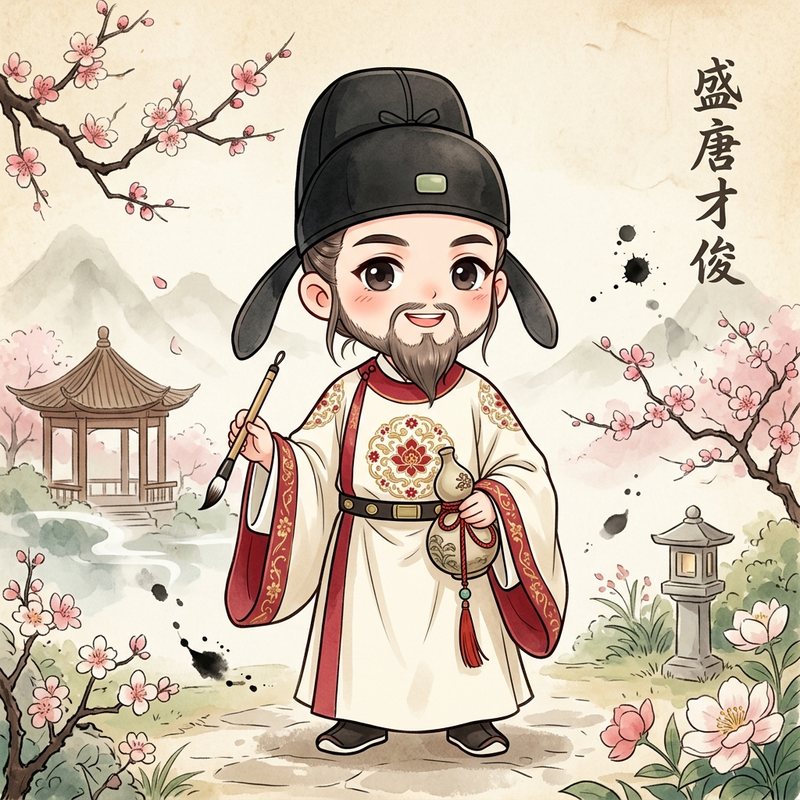
Wang Wei (王维 · Wáng Wéi)
字摩诘 · 世称王右丞/诗佛
The Poet Buddha of Tang Dynasty: founding father of ink-wash landscape painting and master of Zen verse who turned mountain silence into immortal art.
盛唐‘诗佛’,山水田园诗派宗师与南宗文人画开山鼻祖;以五言律绝绘就诗中有画、画中有诗的空灵禅境。
- The Poet Buddha: Revered alongside Li Bai and Du Fu, he fused Chan (Zen) Buddhist enlightenment with landscape verse to pioneer an aesthetic of luminous stillness and spiritual detachment.
- Painting in Poetry: Celebrated by Su Shi as the master where 'poetry contains painting and painting contains poetry,' he is revered as the father of Southern School ink-wash painting.
- Master of the Wangchuan Sanctuary: In his Lantian villa estate, he collaborated with friend Pei Di to produce the canonical twenty-poem Wangchuan Collection, including masterpieces like 'Deer Enclosure' and 'Bamboo Pavilion.'
- Resilience Through Trauma: Survived demotion, frontier exile, and captive humiliation during the An Lushan Rebellion by anchoring his soul in nature's effortless flow and profound ethical integrity.
Phase 1: The Child Prodigy & The Lute of Chang'an (701–721)
Wang Wei was born in 701 CE in Puzhou (modern Yongji, Shanxi Province) into the illustrious Hedong Wang clan. His mother, Lady Cui, was a devoted disciple of Northern Chan Buddhist master Dahui for over thirty years. She gave him the given name Wei (维) and courtesy name Mojie (摩诘)—combining into Vimalakirti (Weimojie), the legendary Buddhist enlightened householder renowned for living pure and detached amidst secular society. Gifted with extraordinary musicality and literary insight, Wang Wei was already writing exquisite rhymed prose and mastering the five-stringed pipa lute in early childhood.
武则天长安元年(701年),王维生于蒲州(今山西运城永济)。其家族为河东名门王氏,母亲崔氏师从大慧禅师三十余载,笃信禅宗。母亲为他取名‘维’、字‘摩诘’,合为大乘居士‘维摩诘’之名。王维幼年聪颖过人,九岁即工辞赋草隶,妙解音律,在儒雅家风与佛法熏陶中奠定了通透灵澈的心灵底色。
At the tender age of seventeen, while studying in the imperial capital, he composed 'Remembering My Brothers in Shandong on the Double Ninth Festival.' The poem's opening line instantly became China's eternal anthem of homesickness. In 721 CE, at age twenty-one, Wang Wei arrived in Chang'an. Legend relates that he performed his stirring lute composition 'The Feather Robe' (Yu Lun Pao) at aristocratic salons, captivating Prince Qi and Princess Yuzhen. Passing the Jinshi examination with the highest honors, he was appointed Director of the Imperial Music Bureau (Taile Cheng).
开元五年(717年),年仅十七岁的王维游学于外,写下千古名篇《九月九日忆山东兄弟》,一声‘独在异乡为异客,每逢佳节倍思亲’唱尽游子羁旅深情。开元九年(721年),二十一岁的王维名动两京,以精湛琵琶乐曲《郁轮袍》倾动王侯,进士及第释褐授太乐丞,主管皇家宫廷礼乐,意气风发,初入仕途。
独在异乡为异客,每逢佳节倍思亲。
Dú zài yì xiāng wéi yì kè, měi féng jiā jié bèi sī qīn.
All alone in a strange land as a lonely guest, at every festive holiday my longing for kin doubles.
Context · Composed at seventeen when young Wang Wei left his family in Shanxi to study in the capital, now memorized across Chinese diaspora communities worldwide.
Phase 2: Demotion to Jizhou & Hermitage by the Qi River (721–729)
Wang Wei's courtly brilliance was cut short almost immediately. Within months of taking office, actors in the Imperial Music Bureau illegally performed the 'Yellow Lion Dance'—an entertainment strictly reserved for the reigning emperor. As the titular director, Wang Wei was held accountable and banished to provincial Jizhou (modern Jining, Shandong Province) to manage military grain granaries. It was a staggering plunge from imperial luxury to dusty administrative obscurity.
少年得志的荣光转瞬即逝。就任太乐丞仅数月,太乐署伶人私舞皇家特许专用的‘黄狮子舞’,王维受牵连遭贬为济州司仓参军,远赴山东管理粮秣。从声色璀璨的京华跌落至偏远州郡,王维体味到了人生的无常与官场的莫测。
Yet Wang Wei refused bitterness. Serving conscientiously in Jizhou until 726 CE, he used his leisure hours to study the agrarian life of northern peasants. After completing his tenure, he resigned and retired to a quiet hermitage along the Qi River in Henan. Tending vegetable gardens and reading Buddhist sutras in an empty hut, he cultivated a gentle, uncomplaining detachment that would define his mature personality.
面对贬谪,王维未曾怨天尤人。在济州任职数年间,他恪尽职守并体察民生。开元十四年(726年)任满辞官后,他来到河南淇水之畔幽居躬耕,泛舟垂钓,深研佛道经卷。这段质朴的山野岁月,奠定了他一生倾心田园风物的隐逸情怀。
微官易得罪,谪去济川阴。
Wēi guān yì dé zuì, zhé qù Jì chuān yīn.
A minor official easily incurs blame, cast away south into the shadows of the Ji River.
Context · From 'Banishment to Jizhou', capturing Wang Wei's quiet resilience and psychological adaptation following his sudden first political setback.
Phase 3: Court Counselor & Envoy to the Desert Frontier (734–740)
In 734 CE, the revered, incorruptible scholar-statesman Zhang Jiuling was appointed Tang Chancellor. Recognizing Wang Wei's sterling moral integrity and literary brilliance, Zhang summoned him back to Chang'an as Right Reminder (You Shiyi), an influential imperial court counselor. Wang Wei eagerly embraced this opportunity to reform governance, submitting memorials urging ethical leadership and righteous administration.
开元二十二年(734年),一代贤相张九龄执政。张九龄深知王维清直廉介,破格拔擢其为右拾遗。重返朝堂的王维感念知遇之恩,积极献言进策,渴望在明君贤相辅弼之下实现天下大同的政治理想。
However, political intrigue soon forced Chancellor Zhang from power. In 737 CE, Emperor Xuanzong dispatched Wang Wei on a long diplomatic and military inspection mission to the remote Hexi Corridor in modern Gansu Province. Crossing endless sand dunes as an imperial censor, Wang Wei stood awestruck by the boundless horizon of the Gobi desert. Transforming frontier isolation into timeless majesty, he composed 'Mission to the Frontier'—celebrated for thousands of years as the supreme geometric landscape poem in world literature.
好景不长,开元末年奸相李林甫弄权,张九龄被贬荆州。开元二十五年(737年),唐玄宗派王维以监察御史身份出使河西边塞慰问将士。策马驰骋于万里黄沙之间,苍茫辽阔的大漠震撼了王维的心灵,他在塞上创作出《使至塞上》等雄浑篇章,以‘大漠孤烟直,长河落日圆’写就天地间最壮美的视觉绝唱。
大漠孤烟直,长河落日圆。
Dà mò gū yān zhí, cháng hé luò rì yuán.
In the boundless desert a lone smoke rises straight; along the endless river the setting sun hangs round.
Context · From 'Mission to the Frontier', acclaimed by Chinese art critics as the ultimate synthesis of minimalist geometry, atmospheric light, and majestic scale.
Phase 4: Serenity at Zhongnan & The Eden of Wangchuan Villa (741–755)
Returning to Chang'an in 741 CE, Wang Wei realized that the court had descended into factional toxicity. Rather than resigning completely, he pioneered a uniquely balanced lifestyle: 'half-official, half-hermit' (Ban Guan Ban Yin). Serving routine court shifts at dawn, he would ride south by afternoon into the Zhongnan Mountains, hiking along mountain torrents until trails disappeared and watching clouds rise with quiet joy.
开元二十九年(741年)自边塞回京后,朝政日益昏昧。王维既未完全抛弃世务,亦不陷身泥潭,而是开创了独特的‘半官半隐’生存方式。他在终南山营建隐庐,退朝后纵马归山,在清溪白云之间寻得了与天地相融的从容安详。
Around 744 CE, Wang Wei purchased an overgrown country estate at Wangchuan in Lantian County, originally built by early Tang poet Song Zhiwen. Nestled within forested ravines and mist-shrouded peaks, Wangchuan became his personal earthly nirvana. Together with his intimate companion, the poet Pei Di, Wang Wei drifted across lakes in flat-bottomed skiffs, strummed zithers inside bamboo groves, and created the twenty-poem 'Wangchuan Collection' (辋川集) alongside a legendary horizontal scroll painting depicting its winding trails.
天宝三载(744年)后,王维购下蓝田南麓的宋之问辋川别墅,精心营造成人间仙境。这里重峦叠嶂、竹林清溪,王维与知交裴迪漫步其间,泛舟弹琴,啸咏答和,创作了名垂千古的《辋川集》二十首及《辋川图》画卷。水墨落纸,五言成诗,将东方古典美学的静谧空灵推向了无上之境。
行到水穷处,坐看云起时。
Xíng dào shuǐ qióng chù, zuò kàn yún qǐ shí.
I stroll to where the water ends, and sit to watch the rising clouds.
Context · From 'My Retreat at Zhongnan', representing Wang Wei's signature mental resilience: when outward circumstances reach a dead end, inner awareness discovers boundless freedom.
空山不见人,但闻人语响。返景入深林,复照青苔上。
Kōng shān bú jiàn rén, dàn wén rén yǔ xiǎng. Fǎn jǐng rù shēn lín, fù zhào qīng tái shàng.
Empty mountain, no one seen, yet the echo of voices drifts on the air. Returning sunlight enters the deep grove, shining once more upon green moss.
Context · The seminal twenty-character masterpiece 'Deer Enclosure' (鹿柴) from the Wangchuan Collection, capturing the Zen paradox of presence within emptiness.
Phase 5: The Catastrophe of An Lushan & Final Transcendence (756–761)
In the winter of 755 CE, the catastrophic An Lushan Rebellion erupted, ripping the Tang Empire apart. Rebel forces swept into Chang'an in 756 CE. Failing to escape with the emperor's fleeing entourage, Wang Wei swallowed medicinal drugs to induce dysentery and feigned muteness. Unfooled by his disguise, the rebels captured him and dragged him east to Luoyang, locking him inside the Bodhi Monastery.
天宝十四载(755年),天崩地裂的‘安史之乱’爆发。次年叛军攻陷长安,王维逃避不及遭俘。他服药下痢装哑称疾,但仍被叛军识破押往洛阳,拘禁于菩提寺中,被迫授受伪职。昔日繁华帝都瞬间沦为血泪地狱。
While imprisoned, Wang Wei learned that An Lushan was hosting a debauched victory banquet by the palace's Ningbi Pond, forcing captured imperial musicians to play while slaughtering loyalists. Grief-stricken, Wang Wei wrote a secret anti-war quatrain on the wall. His loyal friend Pei Di risked death to visit him and smuggled the verses out to loyalist camps. Following the imperial recapture of the capitals in 757 CE, hundreds of captive officials were executed. Yet Emperor Suzong read Wang Wei's 'Ningbi Pond' poem and received a desperate petition from Wang Wei's younger brother, Wang Jin (a decorated war commander), who offered to surrender all his military titles to redeem his brother. Wang Wei was pardoned and restored to high office.
幽禁之中,王维惊闻安禄山于凝碧池逼迫宫廷乐官演奏,乐工泣下沾襟,忠臣惨遭杀戮。王维悲痛难抑,潜写《凝碧池》诗以明忠义。好友裴迪冒死探视将此诗传出。两京光复后,朝廷严惩附逆官吏,唐肃宗见此绝笔深为嘉许,加之其弟王缙(平叛功臣)跪求削己官爵以赎兄罪,王维终得昭雪宽宥。
In his final years, Wang Wei rose to Vice Prime Minister (Shangshu Youcheng), earning the historical moniker Master Youcheng. Despite his immense civil standing, he treated power like morning mist, eating vegetarian meals and meditating daily in plain linen robes. In 761 CE, sensing his time had arrived, he serenely penned farewell letters to his brother Wang Jin and closest companions, laid down his calligraphy brush, and passed away in tranquil meditation at age sixty-one.
历经生死大劫后的王维官复原职,累迁至尚书右丞,世称‘王右丞’。身居宰相之位,他视富贵如过眼云烟,长斋绣佛,身着白衣。上元二年(761年),王维端坐长安寓所,从容作书与亲朋挚友别,随后投笔瞑目而逝,享年六十一岁,完成一代文宗的人生圆满。
万户伤心生野烟,百官何日再朝天。秋槐叶落空宫里,凝碧池头奏管弦。
Wàn hù shāng xīn shēng yě yān, bǎi guān hé rì zài cháo tiān. Qiū huái yè luò kōng gōng lǐ, Níng bì chí tóu zòu guǎn xián.
From myriad households sorrow rises like wild smoke; when will the hundred officials attend the Son of Heaven again? In empty courtyards autumn locust leaves cascade, while pipes and strings play on beside Ningbi Pond.
Context · Written while imprisoned in Bodhi Monastery during the An Lushan Rebellion, this covert loyalist lament spared Wang Wei from execution upon the imperial restoration.
| Perspective 视角 | Wang Wei (The Poet Buddha) | Claude Monet (The Impressionist Master) |
|---|---|---|
| Artistic Medium | Pioneered the integration of poetry and ink-wash painting; celebrated for 'painting in poetry and poetry in painting.' | Pioneered French Impressionist oil painting, using broken brushstrokes to capture the immediate sensory impression of nature. |
| Treatment of Nature & Light | Employed Chan (Zen) emptiness to reveal nature as a selfless, luminous continuum beyond human ego and attachment. | Rendered natural light and atmospheric shifts across time on water lilies, haystacks, and cathedrals with optical brilliance. |
| Sanctuary Creation | Constructed the Wangchuan Villa in Lantian Valley, turning bamboo groves and mountain streams into an eternal spiritual haven. | Cultivated his Japanese-inspired water garden at Giverny, creating a living studio that yielded his greatest late canvases. |
| Historical Legacy | Revered as the patron master of the Southern School of Chinese literati painting and the supreme poet of serenity. | Universally acknowledged as the quintessential founding father of modern Western art and Impressionist painting. |
Trace Wang Wei's Footsteps on the Interactive Topographic Map
Follow his actual historical trail across 9 imperial stations—from childhood in Puzhou and early glory in Chang'an to the wild sands of Liangzhou and his mountain haven at Wangchuan.
Launch Interactive Journey MapFrequently Asked Questions (FAQ)
Why is Wang Wei widely celebrated as the 'Poet Buddha' (Shi Fo)?
In Chinese literary tradition, Li Bai is called the 'Poet Celestial' for Daoist transcendence, and Du Fu the 'Poet Sage' for Confucian compassion. Wang Wei is revered as the 'Poet Buddha' (Shi Fo) because his life and poetry were deeply imbued with Chan (Zen) Buddhist philosophy, finding enlightenment in luminous natural silence.
What does Su Shi's compliment 'painting in his poetry and poetry in his painting' mean?
Song Dynasty master Su Shi famously observed: 'Taste Mojie's poetry, there is painting in his poem; observe Mojie's painting, there is poetry in his painting.' Wang Wei visualizes scenery with delicate painterly composition, light, and color, while his ink-wash landscapes carry the emotional depth and tranquility of great lyrical verse.
What is the historical significance of the Wangchuan Collection (Wangchuan Ji)?
The Wangchuan Collection is a cycle of twenty short five-character quatrains composed by Wang Wei and his friend Pei Di at Wangchuan Villa. The poems describe specific rustic sites like Deer Enclosure and Bamboo Pavilion, defining the pinnacle of Chinese landscape poetry and inspiring centuries of East Asian landscape art.
How did Wang Wei survive the deadly An Lushan Rebellion?
Captured by rebels in 756 CE, Wang Wei feigned illness but was forced into a puppet court post. In prison, he penned the loyalist lament 'Ningbi Pond.' When imperial forces recaptured Chang'an, this poem proved his unbroken loyalty, while his brother Wang Jin offered his military rank to secure his pardon.
How did Wang Wei's lifestyle balance imperial court service and spiritual retreat?
Wang Wei pioneered the ideal of being 'half-official, half-hermit' (Ban Guan Ban Yin). Instead of choosing between public duty and complete renunciation, he fulfilled his administrative duties at court during workdays and retreated to his mountain villas on weekends, demonstrating that genuine spiritual peace is cultivated within daily life.
What is the core philosophical meaning behind the famous poem 'Deer Enclosure' (Lu Zhai)?
In just twenty characters, 'Deer Enclosure' captures a quiet mountain where human presence is reduced to distant echoes, before late afternoon sunlight illuminates patches of green moss. It manifests the Buddhist doctrine of emptiness (Sunyata), revealing how the natural world continues its effortless, luminous existence untouched by human vanity.
Walk with Wang Wei Across China
随王维漫步华夏河山 · 亲历命运逆境与精神涅槃