Who Was Wu Zetian? China's Only Female Emperor
Who Was Wu Zetian? China's Only Female Emperor
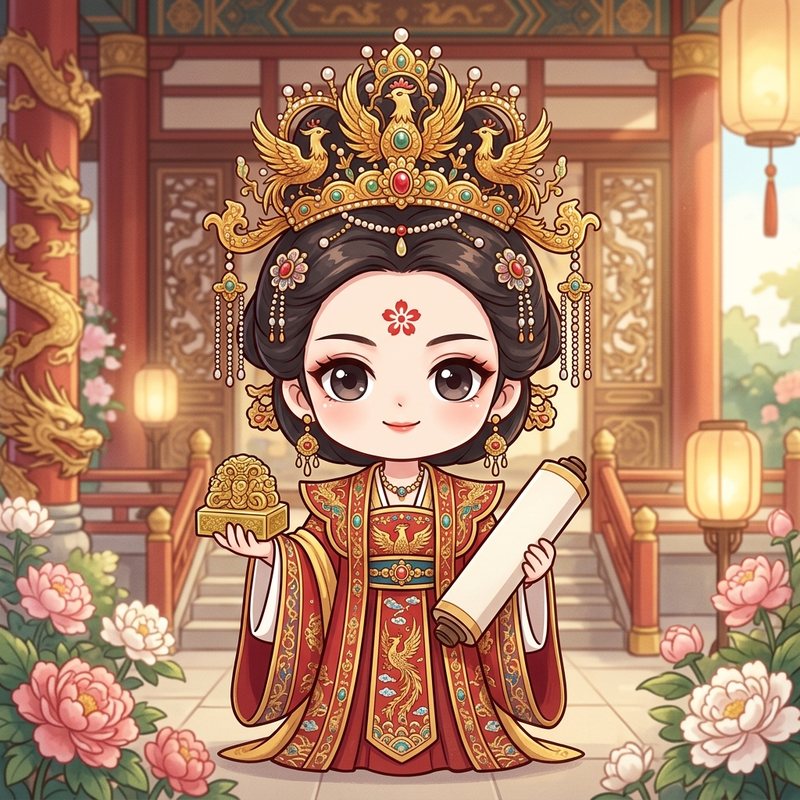
Wu Zetian (武则天 · Wǔ Zétiān)
则天顺圣皇后 · 武媚娘
From Imperial Concubine to Supreme Sovereign: The Iron Empress of the Golden Tang.
前无古人,后无来者:从感业寺尼僧到君临天下的大周圣神皇帝。
- Only female huangdi: ruled as emperor of her Zhou dynasty (690–705), not merely as regent.
- Path to power: Tang consort → empress → dowager dominance → personal sovereignty.
- Governance signature: expanded exam/recruitment channels and harsh political policing.
- Legacy split: later Confucian histories often moralize against her; modern views reassess statecraft.
Rise Inside the Tang Palace
Wu entered palace service under Emperor Taizong, later returned under Gaozong, and became empress. After Gaozong's recurrent illness, she increasingly handled petitions and appointments. This was not a fairy-tale leap; it was decades of factional combat, ritual legitimacy battles, and administrative apprenticeship at the empire's center.
武氏历太宗、高宗两朝,终立为后。高宗苦风疾,武后渐理奏裁。这不是童话式蹿升,而是数十年的后宫政治、礼法斗争与中枢行政历练。
Declaring Zhou: Why the Title Matters
In 690 she founded Zhou and assumed the emperorship. The distinction matters for searchers: many cultures have powerful queens or regents; Wu Zetian claimed the male-coded sovereign title and calendar of an emperor. That rupture explains both her fascination and the intensity of later denunciations.
天授元年(690)改唐为周、自立为帝。关键在于:她不只是摄政太后,而是使用皇帝名号与纪年。这一突破解释了她的传奇性,也解释后世史笔的严厉。
Statecraft and the Reputation Machine
Wu's government strengthened central authority, used secret reporting systems against aristocratic networks, and widened recruitment beyond entrenched clans. Critics emphasize cruel purges; supporters emphasize capable ministers and institutional experimentation. A balanced reading admits both: effective state building can coexist with brutal politics.
武周强化皇权、打击门阀盘根,拓开仕途;亦以酷吏与告密威慑政敌。公允写法需并陈:国家能力建设与政治残酷可以同时存在。
| Perspective 视角 | Hostile Traditional Portrait | Statecraft Reassessment |
|---|---|---|
| Gender | Female rule as cosmic disorder | Exceptional sovereign navigating Confucian legitimacy traps |
| Violence | Unique monstrous cruelty | Harsh tools common to Tang succession struggles—scaled up |
| Talent | Favoritism and manipulation | Broader recruitment weakening aristocratic monopoly |
Trace Empress Wu's Political Geography
Explore Wu Zetian's stations across Tang political centers on our interactive map with bilingual narration.
Open Wu Zetian MapFrequently Asked Questions
Who was Wu Zetian?
She was China's only female emperor—rising from Tang consort politics to founding the Zhou dynasty and ruling in her own name from 690 to 705.
How did Wu Zetian become emperor?
Starting as a palace concubine to Emperor Taizong, she re-entered court under Emperor Gaozong, became empress consort, governed from behind the curtain during his illness, served as regent over her sons, and proclaimed her own Zhou dynasty in 690 CE.
What was Wu Zetian's cause of death?
Wu Zetian died of natural causes and old age at 81 in Chang'an's Shangyang Palace in December 705 CE, several months after abdicating during the Coup of Shenlong.
Was Wu Zetian evil?
Moral labels usually come from later Confucian narratives. She used severe political violence against aristocratic rivals while opening imperial civil exams to common talent; evaluate actions, not cartoon villainy.
How do you pronounce Wu Zetian?
Roughly 'Woo Dzuh-tyen.' Her personal name is often given as Wu Zhao.
Walk with Wu Zetian Across China
随武则天漫步华夏河山 · 亲历命运逆境与精神涅槃