Who Was Zhu Yuanzhang? Beggar-Monk to Ming Emperor
Who Was Zhu Yuanzhang? Beggar-Monk to Ming Dynasty Emperor
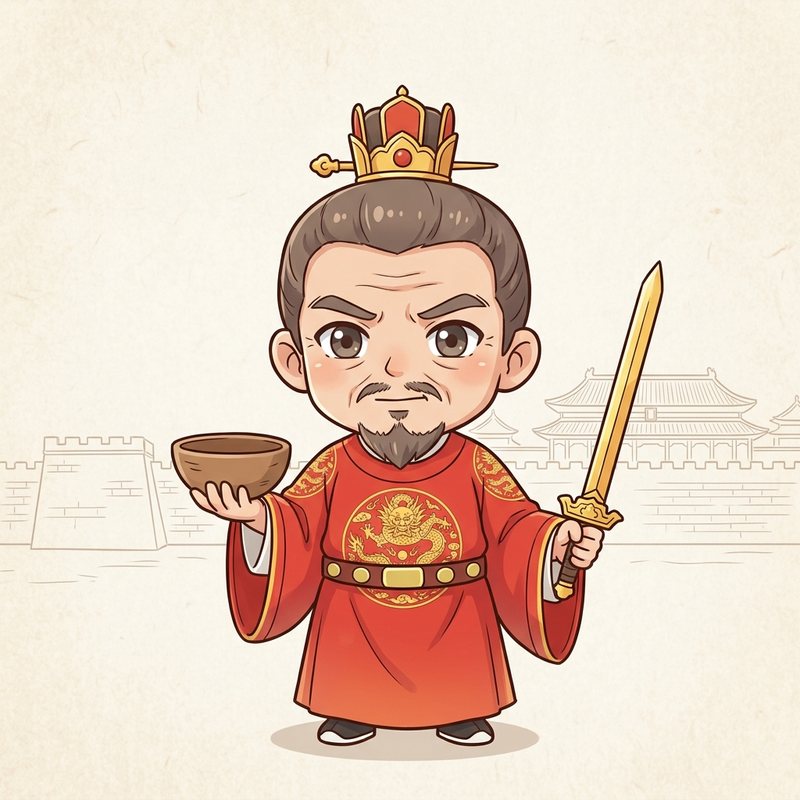
Zhu Yuanzhang (朱元璋 · Zhū Yuánzhāng)
洪武大帝 · 字国瑞
From a destitute monk and beggar to the supreme founding emperor of China.
开局一个碗,扫平天下乱;驱逐胡虏,恢复中华。
- Zhu Yuanzhang founded the Ming Dynasty after rising from orphaned poverty and monastic wandering.
- As Hongwu Emperor he prioritized agricultural recovery and harsh central control.
- His reign mixed state rebuilding with purges—capacity and terror arrived together.
- Later Ming glory (including maritime projection) rests on this brutal founding consolidation.
Collapse, Rebellion, and a Monk's Network
Fourteenth-century disasters—famine, flood, epidemic, and Yuan fiscal failure—pushed millions into rebellion. Zhu joined Red Turban forces, learned command the hard way, and converted personal loyalty networks into a disciplined army that could take cities and keep them.
元末灾荒与财政崩溃催生大起义。朱元璋投身红巾,在战争中学会组织与守城,把私人义气转化为可占领州县的军队。
Founding Ming: Restore and Dominate
After proclaiming Ming and pushing Yuan remnants north, Hongwu faced a classic founder problem: how to prevent new warlords from repeating the chaos. His answer was hyper-centralization, surveillance of officials, and moral propaganda about frugality—paired with violent campaigns against suspected betrayal.
建国后他的课题是防止新军阀再现。答案是极端集权、整肃官吏、倡导节俭,并对『不忠』嫌疑施以重典。
| Perspective 视角 | Builder | Autocrat |
|---|---|---|
| Economy | Push households back to farming and registration | Punish corruption with exemplary terror |
| Politics | Reclaim 'Chinese' imperial ritual order after Yuan | Abolish threats to the throne, including meritorious generals |
| Memory | From beggar to emperor as inspiration myth | Hongwu severity as warning about absolute power |
Follow the Ming Founding Path
Explore Zhu Yuanzhang's stations—from destitution to dynastic capital—on our interactive map.
Open Zhu Yuanzhang MapFrequently Asked Questions
Who was Zhu Yuanzhang?
Zhu Yuanzhang (1328–1398) was the Hongwu Emperor, founder of China's Ming Dynasty. English older books often spell him Chu Yuan-chang. He rose from famine orphan and monk to rebel commander, then emperor.
Who founded the Ming dynasty?
Zhu Yuanzhang. After driving Yuan forces from the central plains he proclaimed Ming in 1368 and ruled as the Hongwu Emperor. Later Ming voyages (Zheng He) rest on this founding consolidation.
Was Zhu Yuanzhang really a monk?
In youth he spent time in a monastery amid famine and unrest before joining rebel armies—an origin that became central to his legend.
How do you pronounce Zhu Yuanzhang?
Roughly 'Joo Yooen-jahng.' Wade-Giles writes Chu Yuan-chang. Search typos like 'zhu yanzhang' still refer to the same Ming founder. His era name is Hongwu.
How did a beggar monk become the Ming dynasty emperor?
Orphaned by famine and plague at 16, Zhu Yuanzhang survived as a wandering Buddhist beggar monk. In 1352 he joined the Red Turban rebellion against Mongol Yuan rule. Rising through military merit and discipline, he captured Nanjing and founded the Ming Dynasty in 1368.
Walk with Zhu Yuanzhang Across China
随朱元璋漫步华夏河山 · 亲历命运逆境与精神涅槃