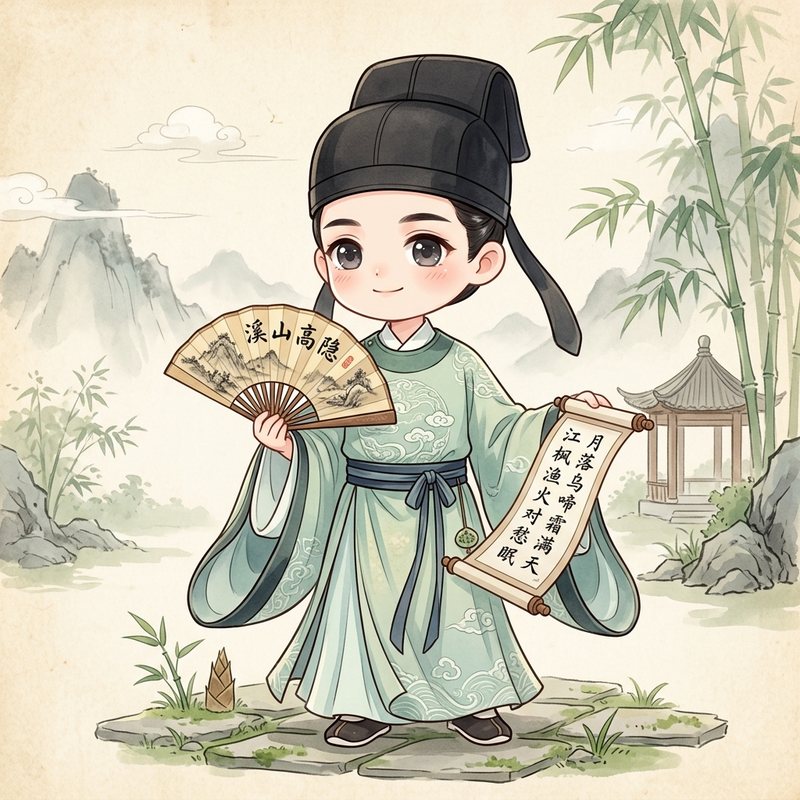
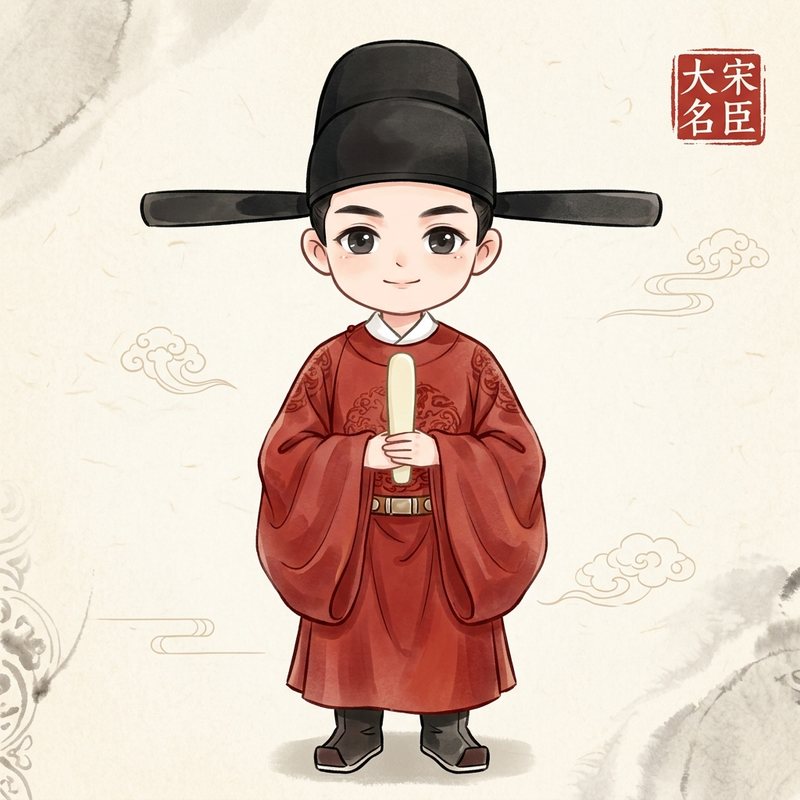
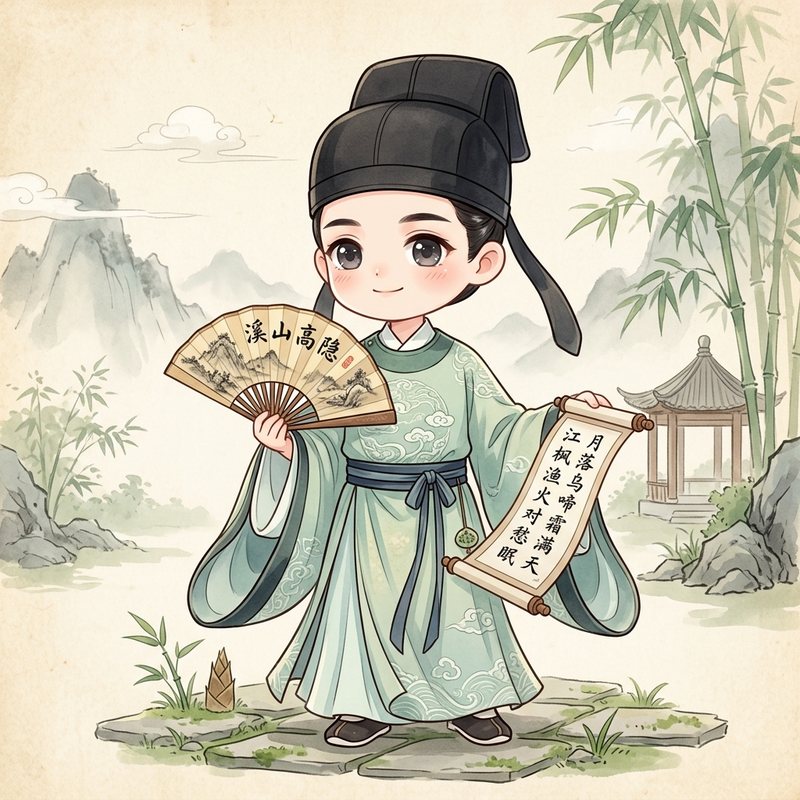
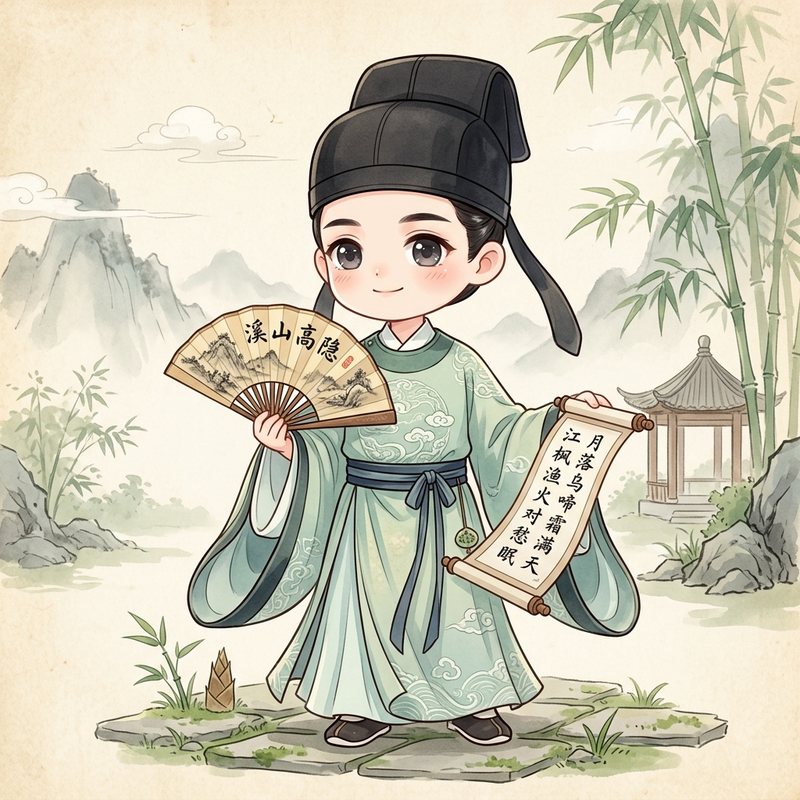
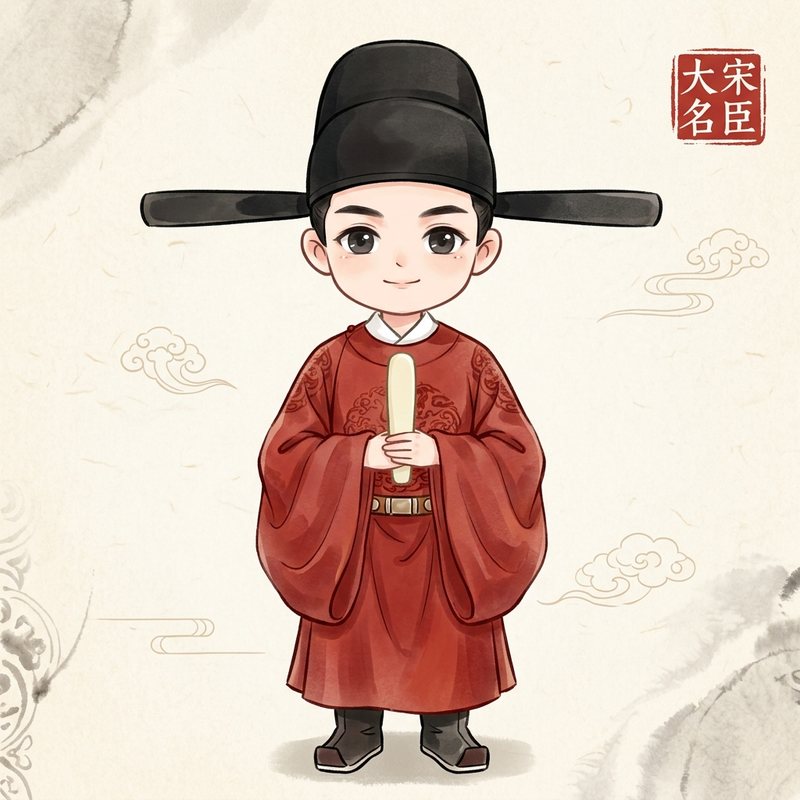
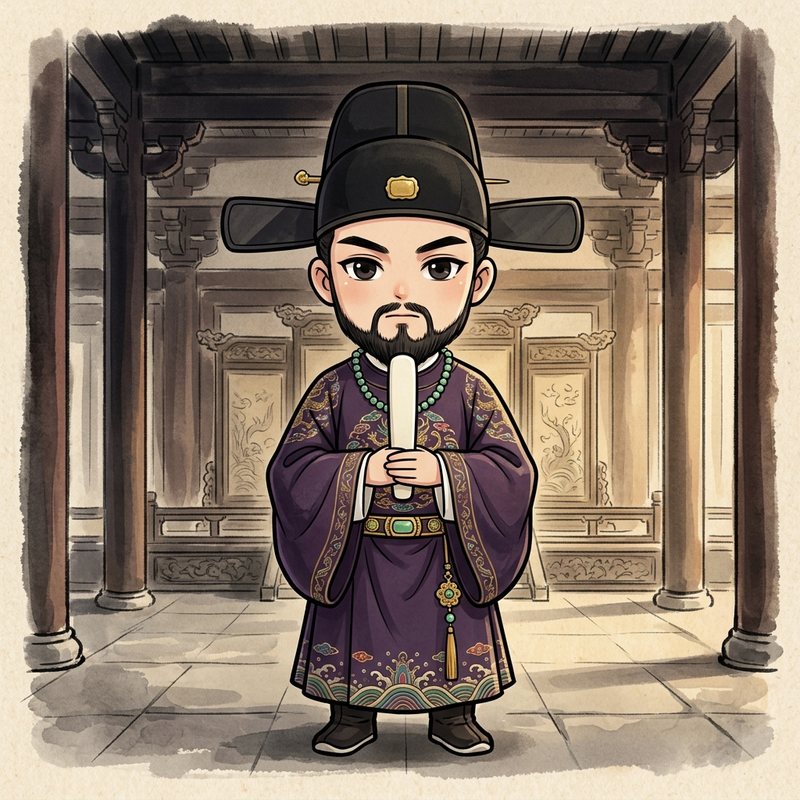
The Renaissance Foodie & OptimistNorthern Song Dynasty (1037-1101)字子瞻 · 号东坡居士Audio Journey · 17 Stops
Exiled across the empire, he turned every hardship into poetry, cuisine, and unconquerable joy.
Eastern Renaissance Polymath· Leonardo da VinciThe Master of Stoic Resilience· Marcus Aurelius & Seneca
Unfolding the Historical Landscape…
印
Daily Wisdom & Resilience Oracle
The Resilient Optimist
“竹杖芒鞋轻胜马,谁怕?一蓑烟雨任平生。”
Holding a bamboo cane and wearing straw sandals, I stride faster than a horse. Who is afraid? A straw cloak in the mist and rain — I live my life with equanimity.
💡 In the 3rd year of exile in Huangzhou, caught in a sudden downpour, Su Shi embraced the storm with supreme resilience.
— Su Shi (Dongpo)(The Renaissance Foodie & Optimist)
Historical Footprints & Narration Archive
17 Stations
1
Meishan, Sichuan
1037 CE · Age 19
Foothills of Mt. Emei, Sichuan (Panda & Culinary Heartland)
A Prodigy Born in the Gentle Foothills of Mount Emei
“门前万竿竹,堂上四库书。”
Mén qián wàn gān zhú, táng shàng sì kù shū.
Ten thousand green bamboos by the gate; four treasure vaults of books in the study hall.
Station Narration Script
In 1037, Su Shi was born in Meishan, Sichuan, beneath Mount Emei. In a scholar household, his mother taught him moral courage while his father nurtured his statecraft. Here, young Su Shi formed the resilient soul that would illuminate Chinese civilization.
Departure Transition Script
In 1056, young Su Shi bid farewell to his Sichuan homeland. Riding on horseback with his father and brother, they traversed the treacherous Qinling Mountain paths along the ancient Golden Ox Road, trekking over a thousand miles to the imperial capital of Kaifeng.
2
Kaifeng (Imperial Exam Triumph), Henan
1057 CE · Age 21
Imperial Capital Kaifeng (The 11th-century New York with 1M+ citizens)
Stunning the Imperial Capital at Age 21
“出人头地”
Chū rén tóu dì
To stand head and shoulders above all peers.
Station Narration Script
In 1057, at age twenty-one, Su Shi stunned the capital with his brilliant imperial exam essay. Chief examiner Ouyang Xiu declared that future generations would belong to Su Shi. Almost overnight, he became the brightest rising star of the Song Dynasty.
Departure Transition Script
At the pinnacle of their fame in Kaifeng, tragic news struck: their mother, Lady Cheng, had passed away in Meishan. Stricken with grief, the three Sus declined official posts and rushed west across the mountains to observe three years of filial mourning.
3
Meishan (Filial Mourning Period), Sichuan
1057 CE · Age 21
Foothills of Mt. Emei, Sichuan (Panda & Culinary Heartland)
Three Years of Mourning: The Moral Legacy of Mother Cheng
When my father was away, my mother took upon herself the noble family burden, raising us with rigorous virtue and moral courage.
Station Narration Script
Returning to Meishan, Su Shi observed twenty-seven months of filial mourning for his mother. In quiet seclusion, he read history and reflected on virtue. He held dear his mother's teaching that moral integrity surpasses life itself, establishing the unbending ethical pillar of his lifetime.
Departure Transition Script
In late 1059, the mourning concluded. Su Shi and his family bid farewell to their ancestral home forever. Boarding a wooden vessel down the Min River into the Yangtze, they embarked on an epic water voyage through the Three Gorges.
4
Three Gorges, Yangtze River
1059 CE · Age 23
Dramatic Yangtze River Gorges from Qutang Gorge to Yiling, Hubei/Chongqing
The Epic Yangtze River Voyage: Birth of 'The Southbound Collection'
The craggy peaks recede as the raging waters calm; the river widens vastly with rolling, surging waves.
Station Narration Script
Navigating the roaring Yangtze through Qutang, Wu, and Xiling Gorges, Su Shi and his brother marveled at nature's sublime majesty, composing over a hundred verses collected as 'The Southbound Collection'. The monumental canyon landscape forged his boundless, magnificent poetic style.
Departure Transition Script
Emerging from the Gorges at Jiangling, the Sus disembarked and rode north across the Central Plains back to the imperial capital Kaifeng.
5
Kaifeng (Imperial Decree Exam), Henan
1061 CE · Age 25
Prosperous Northern Song capital, modern Kaifeng, Henan
Triumph in the Supreme Imperial Decree Exam
“天下之患,莫大于不知其然而然。”
Tiānxià zhī huàn, mò dàyú bùzhī qí rán ér rán.
The greatest peril under heaven is when people follow the status quo without understanding why.
Station Narration Script
At the Kaifeng imperial court, Emperor Renzong held the elite Imperial Decree Exam. Su Shi's twenty-five brilliant statecraft essays placed him in the supreme third class—achieved by only four scholars in Song history. Emperor Renzong rejoiced: 'Today I have gained two future prime ministers for my descendants!'
Departure Transition Script
Appointed assistant magistrate of Fengxiang, Su Shi parted from his father and brother in Kaifeng, riding west through snowy mountain passes. At Mianchi, he penned the immortal verse on fleeting footprints in the snow as he rode toward Fengxiang.
6
Fengxiang, Shaanxi
1061 CE · Age 25
Historic Tang/Song administrative bastion in western Shaanxi, modern Baoji
First Government Post & The Fleeting Nature of Life
“人生到处知何似,应似飞鸿踏雪泥。”
Rénshēng dàochù zhī hésì, yīng sì fēihóng tà xuěnī.
To what should we compare our fleeting life? To a wild swan touching down upon the snowy mud, leaving a few casual tracks before flying on.
Station Narration Script
In Fengxiang, Su Shi governed with deep empathy for the local farmers. He constructed East Lake and prayed for rain during a severe drought. When relief rains arrived, he penned the joyful prose 'Pavilion of Joyful Rain' to celebrate with his people.
Departure Transition Script
As political radicalism gripped the imperial court, Su Shi spoke truth to power against policy extremes. To distance himself from factional storms, he requested a transfer to Hangzhou in southern China.
7
Hangzhou (First Term), Zhejiang
1071 CE · Age 35
Hangzhou West Lake (China's poetic paradise and romantic freshwater lake)
Falling in Love with West Lake in Rain and Sunshine
If West Lake were compared to Lady Xishi, light or rich makeup would always grace her peerless beauty.
Station Narration Script
In 1071, Su Shi arrived in Hangzhou. Charmed by West Lake's shifting mists, he composed the immortal verse: 'The shimmer of water delights under the sun; the misty mountains enchant in the rain.' He governed with grace and immortalized the city in verse.
Departure Transition Script
After three peaceful years, Su Shi was appointed governor of Mizhou in northern Shandong. Leaving Hangzhou's scenic gardens behind, he headed north into a drought-stricken frontier.
8
Mizhou, Shandong
1074 CE · Age 38
Near modern Qingdao (Shandong breezy coastal frontier)
The Mid-Autumn Moon and a Brother's Longing
“但愿人长久,千里共婵娟。”
Dàn yuàn rén chángjiǔ, qiānlǐ gòng chánjuān.
May we all be blessed with longevity, though miles apart, we share the beauty of the graceful moon.
Station Narration Script
In Mizhou, Su Shi fought locust plagues and founded shelters for abandoned infants. On the Mid-Autumn Night of 1076, gazing at the luminous moon, he wrote China's most celebrated moon poem: 'May we all be blessed with longevity, though miles apart, sharing the moon's beauty.'
Departure Transition Script
In 1077, Su Shi was reassigned to govern Xuzhou. He journeyed south to the Huai River basin, unaware that an unprecedented Yellow River flood was racing toward the city walls.
9
Xuzhou, Jiangsu
1077 CE · Age 41
Martial crossroads of four provinces, modern Xuzhou, Jiangsu
The Hero Mayor Who Defeated the Yellow River Flood
The bright moon like frost, a fine breeze like water—boundless clear scenery.
Station Narration Script
When the Yellow River burst its banks, floodwaters besieged Xuzhou for over seventy days. Su Shi lived atop the city walls alongside soldiers and citizens, successfully fortifying dykes against collapse and saving tens of thousands of lives.
Departure Transition Script
Following his triumphs in Xuzhou, Su Shi was transferred to Huzhou. But shortly after submitting his customary accession letter, a lethal political catastrophe known as the Crow Terrace Poetry Trial struck.
10
Huzhou & Imperial Prison, Kaifeng
1079 CE · Age 42
Imperial Capital Dungeon (China's earliest trial of poetic satire)
Arrested for Poetry: About 130 Days in Death Row
“与君世世为兄弟,更结来生未了因。”
Yǔ jūn shìshì wéi xiōngdì, gèng jié láishēng wèiliǎo yīn.
May we remain brothers through every lifetime, renewing this unfinished bond in ages to come.
Station Narration Script
In 1079, political adversaries seized on Su Shi's satirical poems and arrested him in Huzhou. Imprisoned for 130 days on death row at the imperial censorate, he faced torture in the darkest crisis of his life.
Departure Transition Script
Pardoned from the death penalty after widespread appeals, Su Shi was stripped of titles and banished to Huangzhou as a disgraced, penniless exile forbidden from official duties.
11
Huangzhou, Hubei (Dongpo Rebirth)
1080 CE · Age 44
Near modern Wuhan on the Yangtze River (Birthplace of Dongpo Pork)
From Imperial Death Row to Farming and Inventing Dongpo Pork
Straw sandals and a bamboo cane beat any horse; who cares? In a woven cloak of mist and rain, I let life unfold at its own pace.
Station Narration Script
In Huangzhou, Su Shi took up farming on the Eastern Slope, styling himself 'Dongpo'. He invented Dongpo Pork and composed his timeless masterpiece 'Ode to the Red Cliff'. Through adversity, he achieved ultimate philosophical and artistic transcendence.
Departure Transition Script
In 1084 the court transferred Su Shi toward a Ruzhou posting. He left the Eastern Slope, sailed the Yangtze, and first turned aside to Mount Lu before seeking a foothold near Changzhou.
12
Mount Lu & Changzhou Transit
1084 CE · Age 47
Prosperous water town of Jiangnan, modern Changzhou, Jiangsu
Seeing Mount Lu's True Face — and Begging for a Plot of Land
I cannot recognize the true face of Mount Lu, simply because I am standing inside the mountain.
Station Narration Script
En route he climbed Mount Lu and inscribed: 'I cannot see Mount Lu's true face, for I am inside the mountain.' After reconciling with Wang Anshi near Jinling, ruinous costs and a child's death drove him to beg for farmland in Changzhou — a midlife plea, distinct from his final death there in 1101.
Departure Transition Script
In 1085, after Emperor Shenzong's death, the Empress Dowager recalled Su Shi from his Jiangnan sojourn to Kaifeng, where rapid promotion to Hanlin Academician awaited.
13
Kaifeng (Grand Academician), Henan
1085 CE · Age 49
Imperial capital of Northern Song, modern Kaifeng, Henan
When laws build on what came before, affairs succeed easily; when change is gradual, the people are not alarmed.
Station Narration Script
Back in Kaifeng, Su Shi rose to Hanlin Academician within seventeen months. When conservatives demanded total repeal of the New Policies, he argued that laws succeed when they build on what came before and that gradual change spares the people alarm — and was attacked by both factions for his independence.
Departure Transition Script
In 1089, Su Shi returned to govern Hangzhou. Fifteen years after his first term, he was welcomed back by enthusiastic citizens to restore the severely silted West Lake.
14
Hangzhou (Second Term - Su Causeway)
1089 CE · Age 53
Hangzhou West Lake (Where he dredged the lake & built Su Causeway)
Dredging West Lake and Building the Immortal Su Causeway
Returning, I get drunk once more in West Lake rain—fifteen years without seeing those leaping pearl-drops.
Station Narration Script
Serving as Hangzhou governor, Su Shi mobilized 200,000 workers to dredge West Lake. Using dredged silt he built the iconic Su Causeway, easing floods and droughts while leaving an eternal hydraulic and cultural monument.
Departure Transition Script
With the Emperor coming of age, political retaliation erupted again. At age 58, Su Shi was stripped of honours and exiled south across the perilous Five Ridges to Huizhou in Guangdong.
15
Huizhou, Guangdong (Lingnan Exile)
1094 CE · Age 58
Subtropical Guangdong frontier (Near modern Shenzhen / Guangzhou)
Banished Beyond the Mountains: 'Eating 300 Lychees a Day!'
Eating three hundred sweet lychees a day, I would gladly remain a native of Lingnan forever.
Station Narration Script
In subtropical Huizhou, Su Shi famously relished local lychees: 'Eat three hundred lychees a day, and I wouldn't mind being a Lingnan native forever.' He funded bridges and irrigation wheels, blessing locals with gentle kindness.
Departure Transition Script
Infuriated by his buoyant spirit, court rivals banished the roughly 60-year-old further into the untamed wilderness of Hainan Island. Expecting to die there, Su Shi prepared his own coffin and crossed the sea.
16
Danzhou, Hainan Island (The Edge of the World)
1097 CE · Age 61
Tropical Hainan Island (The outer edge of the ancient world)
Banished to an Island: Cultural Pioneer & Grilled Oysters
Though I faced nine deaths in the southern wilderness, I harbor zero regrets—this wondrous journey stands supreme in my whole lifetime.
Station Narration Script
In Hainan Danzhou, lacking medicine and books, Su Shi founded an academy and taught the local populace. He produced Hainan Island's very first imperial graduate, bringing intellectual light to the edge of the sea.
Departure Transition Script
In 1100, a general imperial amnesty granted Su Shi permission to return north. Weathered but spiritually immortal, the 65-year-old sage set sail back to the mainland toward Changzhou.
17
Changzhou, Jiangsu (The Peaceful Sunset)
1101 CE · Age 64
Prosperous water town of Jiangnan, modern Changzhou, Jiangsu
If you ask for my life's greatest achievements: Huangzhou, Huizhou, and Danzhou.
Station Narration Script
In 1101, Su Shi passed away peacefully in Changzhou at age 64. Reflecting on his tumultuous life, he famously summarized: 'Ask my life accomplishments: Huangzhou, Huizhou, and Danzhou.' His wisdom and optimism endure forever across civilizations.
Key Historical Inquiries & Context
· 核心史实公案与速览
Su Shi (1037–1101), or Su Dongpo, was Song China's most beloved poet-official. In 1079 the Crow Terrace Poetry Case nearly executed him for metaphors. He was then exiled to Huangzhou, Huizhou, and Hainan, and turned each demotion into food, verse, and the name Dongpo. Use the map for the route; the essays cover the trial and the Huangzhou years.
The Crow Terrace Poetry Case (1079) charged him with slandering the court in verse. After 103 days on death row, he was stripped of rank and sent to Huangzhou in 1080, then later to Huizhou and Hainan.
QWhat is the Crow Terrace Poetry Case?
A 1079 literary inquisition in the Song censorate (Yushitai, nicknamed Crow Terrace). Prosecutors reread Su Shi's poems as coded attacks. It is the most famous poetry trial in Chinese history.
QWhere were Su Shi's three places of exile?
Huangzhou (modern Huanggang, Hubei), Huizhou (Guangdong), and Danzhou on Hainan Island. He later named those three as his life's real work. They are stations on this map.
The Complete Life Journey & Biography of Su Shi (Su Dongpo) (苏轼 (东坡))
Chronological travel & exile routes mapped to modern Chinese cities across Northern Song Dynasty (1037-1101) China — featuring bilingual scholar audio, classical poetry recitations, and historical cross-paths.
A Prodigy Born in the Gentle Foothills of Mount Emei
In 1037, Su Shi was born in Meishan, Sichuan, beneath Mount Emei. In a scholar household, his mother taught him moral courage while his father nurtured his statecraft. Here, young Su Shi formed the resilient soul that would illuminate Chinese civilization.
In 1056, young Su Shi bid farewell to his Sichuan homeland. Riding on horseback with his father and brother, they traversed the treacherous Qinling Mountain paths along the ancient Golden Ox Road, trekking over a thousand miles to the imperial capital of Kaifeng.
“Ten thousand green bamboos by the gate; four treasure vaults of books in the study hall.”
Modern-day analog: Imperial Capital Kaifeng (The 11th-century New York with 1M+ citizens)
Stunning the Imperial Capital at Age 21
In 1057, at age twenty-one, Su Shi stunned the capital with his brilliant imperial exam essay. Chief examiner Ouyang Xiu declared that future generations would belong to Su Shi. Almost overnight, he became the brightest rising star of the Song Dynasty.
At the pinnacle of their fame in Kaifeng, tragic news struck: their mother, Lady Cheng, had passed away in Meishan. Stricken with grief, the three Sus declined official posts and rushed west across the mountains to observe three years of filial mourning.
Three Years of Mourning: The Moral Legacy of Mother Cheng
Returning to Meishan, Su Shi observed twenty-seven months of filial mourning for his mother. In quiet seclusion, he read history and reflected on virtue. He held dear his mother's teaching that moral integrity surpasses life itself, establishing the unbending ethical pillar of his lifetime.
In late 1059, the mourning concluded. Su Shi and his family bid farewell to their ancestral home forever. Boarding a wooden vessel down the Min River into the Yangtze, they embarked on an epic water voyage through the Three Gorges.
“When my father was away, my mother took upon herself the noble family burden, raising us with rigorous virtue and moral courage.”
Modern-day analog: Dramatic Yangtze River Gorges from Qutang Gorge to Yiling, Hubei/Chongqing
The Epic Yangtze River Voyage: Birth of 'The Southbound Collection'
Navigating the roaring Yangtze through Qutang, Wu, and Xiling Gorges, Su Shi and his brother marveled at nature's sublime majesty, composing over a hundred verses collected as 'The Southbound Collection'. The monumental canyon landscape forged his boundless, magnificent poetic style.
Emerging from the Gorges at Jiangling, the Sus disembarked and rode north across the Central Plains back to the imperial capital Kaifeng.
“The craggy peaks recede as the raging waters calm; the river widens vastly with rolling, surging waves.”
Modern-day analog: Prosperous Northern Song capital, modern Kaifeng, Henan
Triumph in the Supreme Imperial Decree Exam
At the Kaifeng imperial court, Emperor Renzong held the elite Imperial Decree Exam. Su Shi's twenty-five brilliant statecraft essays placed him in the supreme third class—achieved by only four scholars in Song history. Emperor Renzong rejoiced: 'Today I have gained two future prime ministers for my descendants!'
Appointed assistant magistrate of Fengxiang, Su Shi parted from his father and brother in Kaifeng, riding west through snowy mountain passes. At Mianchi, he penned the immortal verse on fleeting footprints in the snow as he rode toward Fengxiang.
“The greatest peril under heaven is when people follow the status quo without understanding why.”
Modern-day analog: Historic Tang/Song administrative bastion in western Shaanxi, modern Baoji
First Government Post & The Fleeting Nature of Life
In Fengxiang, Su Shi governed with deep empathy for the local farmers. He constructed East Lake and prayed for rain during a severe drought. When relief rains arrived, he penned the joyful prose 'Pavilion of Joyful Rain' to celebrate with his people.
As political radicalism gripped the imperial court, Su Shi spoke truth to power against policy extremes. To distance himself from factional storms, he requested a transfer to Hangzhou in southern China.
“To what should we compare our fleeting life? To a wild swan touching down upon the snowy mud, leaving a few casual tracks before flying on.”
人生到处知何似,应似飞鸿踏雪泥。 (Rénshēng dàochù zhī hésì, yīng sì fēihóng tà xuěnī.)
Hangzhou (First Term), Zhejiang (浙江杭州 (一任通判))
Age 35
Modern-day analog: Hangzhou West Lake (China's poetic paradise and romantic freshwater lake)
Falling in Love with West Lake in Rain and Sunshine
In 1071, Su Shi arrived in Hangzhou. Charmed by West Lake's shifting mists, he composed the immortal verse: 'The shimmer of water delights under the sun; the misty mountains enchant in the rain.' He governed with grace and immortalized the city in verse.
After three peaceful years, Su Shi was appointed governor of Mizhou in northern Shandong. Leaving Hangzhou's scenic gardens behind, he headed north into a drought-stricken frontier.
“If West Lake were compared to Lady Xishi, light or rich makeup would always grace her peerless beauty.”
Modern-day analog: Near modern Qingdao (Shandong breezy coastal frontier)
The Mid-Autumn Moon and a Brother's Longing
In Mizhou, Su Shi fought locust plagues and founded shelters for abandoned infants. On the Mid-Autumn Night of 1076, gazing at the luminous moon, he wrote China's most celebrated moon poem: 'May we all be blessed with longevity, though miles apart, sharing the moon's beauty.'
In 1077, Su Shi was reassigned to govern Xuzhou. He journeyed south to the Huai River basin, unaware that an unprecedented Yellow River flood was racing toward the city walls.
“May we all be blessed with longevity, though miles apart, we share the beauty of the graceful moon.”
Modern-day analog: Martial crossroads of four provinces, modern Xuzhou, Jiangsu
The Hero Mayor Who Defeated the Yellow River Flood
When the Yellow River burst its banks, floodwaters besieged Xuzhou for over seventy days. Su Shi lived atop the city walls alongside soldiers and citizens, successfully fortifying dykes against collapse and saving tens of thousands of lives.
Following his triumphs in Xuzhou, Su Shi was transferred to Huzhou. But shortly after submitting his customary accession letter, a lethal political catastrophe known as the Crow Terrace Poetry Trial struck.
“The bright moon like frost, a fine breeze like water—boundless clear scenery.”
Modern-day analog: Imperial Capital Dungeon (China's earliest trial of poetic satire)
Arrested for Poetry: About 130 Days in Death Row
In 1079, political adversaries seized on Su Shi's satirical poems and arrested him in Huzhou. Imprisoned for 130 days on death row at the imperial censorate, he faced torture in the darkest crisis of his life.
Pardoned from the death penalty after widespread appeals, Su Shi was stripped of titles and banished to Huangzhou as a disgraced, penniless exile forbidden from official duties.
“May we remain brothers through every lifetime, renewing this unfinished bond in ages to come.”
Modern-day analog: Near modern Wuhan on the Yangtze River (Birthplace of Dongpo Pork)
From Imperial Death Row to Farming and Inventing Dongpo Pork
In Huangzhou, Su Shi took up farming on the Eastern Slope, styling himself 'Dongpo'. He invented Dongpo Pork and composed his timeless masterpiece 'Ode to the Red Cliff'. Through adversity, he achieved ultimate philosophical and artistic transcendence.
In 1084 the court transferred Su Shi toward a Ruzhou posting. He left the Eastern Slope, sailed the Yangtze, and first turned aside to Mount Lu before seeking a foothold near Changzhou.
“Straw sandals and a bamboo cane beat any horse; who cares? In a woven cloak of mist and rain, I let life unfold at its own pace.”
Modern-day analog: Prosperous water town of Jiangnan, modern Changzhou, Jiangsu
Seeing Mount Lu's True Face — and Begging for a Plot of Land
En route he climbed Mount Lu and inscribed: 'I cannot see Mount Lu's true face, for I am inside the mountain.' After reconciling with Wang Anshi near Jinling, ruinous costs and a child's death drove him to beg for farmland in Changzhou — a midlife plea, distinct from his final death there in 1101.
In 1085, after Emperor Shenzong's death, the Empress Dowager recalled Su Shi from his Jiangnan sojourn to Kaifeng, where rapid promotion to Hanlin Academician awaited.
“I cannot recognize the true face of Mount Lu, simply because I am standing inside the mountain.”
Modern-day analog: Imperial capital of Northern Song, modern Kaifeng, Henan
Summoned Back to the Top of the Imperial Court
Back in Kaifeng, Su Shi rose to Hanlin Academician within seventeen months. When conservatives demanded total repeal of the New Policies, he argued that laws succeed when they build on what came before and that gradual change spares the people alarm — and was attacked by both factions for his independence.
In 1089, Su Shi returned to govern Hangzhou. Fifteen years after his first term, he was welcomed back by enthusiastic citizens to restore the severely silted West Lake.
“When laws build on what came before, affairs succeed easily; when change is gradual, the people are not alarmed.”
Hangzhou (Second Term - Su Causeway) (浙江杭州 (修筑苏堤))
Age 53
Modern-day analog: Hangzhou West Lake (Where he dredged the lake & built Su Causeway)
Dredging West Lake and Building the Immortal Su Causeway
Serving as Hangzhou governor, Su Shi mobilized 200,000 workers to dredge West Lake. Using dredged silt he built the iconic Su Causeway, easing floods and droughts while leaving an eternal hydraulic and cultural monument.
With the Emperor coming of age, political retaliation erupted again. At age 58, Su Shi was stripped of honours and exiled south across the perilous Five Ridges to Huizhou in Guangdong.
“Returning, I get drunk once more in West Lake rain—fifteen years without seeing those leaping pearl-drops.”
Modern-day analog: Subtropical Guangdong frontier (Near modern Shenzhen / Guangzhou)
Banished Beyond the Mountains: 'Eating 300 Lychees a Day!'
In subtropical Huizhou, Su Shi famously relished local lychees: 'Eat three hundred lychees a day, and I wouldn't mind being a Lingnan native forever.' He funded bridges and irrigation wheels, blessing locals with gentle kindness.
Infuriated by his buoyant spirit, court rivals banished the roughly 60-year-old further into the untamed wilderness of Hainan Island. Expecting to die there, Su Shi prepared his own coffin and crossed the sea.
“Eating three hundred sweet lychees a day, I would gladly remain a native of Lingnan forever.”
Danzhou, Hainan Island (The Edge of the World) (海南儋州 (天涯海角/烤生蚝))
Age 61
Modern-day analog: Tropical Hainan Island (The outer edge of the ancient world)
Banished to an Island: Cultural Pioneer & Grilled Oysters
In Hainan Danzhou, lacking medicine and books, Su Shi founded an academy and taught the local populace. He produced Hainan Island's very first imperial graduate, bringing intellectual light to the edge of the sea.
In 1100, a general imperial amnesty granted Su Shi permission to return north. Weathered but spiritually immortal, the 65-year-old sage set sail back to the mainland toward Changzhou.
“Though I faced nine deaths in the southern wilderness, I harbor zero regrets—this wondrous journey stands supreme in my whole lifetime.”
In 1101, Su Shi passed away peacefully in Changzhou at age 64. Reflecting on his tumultuous life, he famously summarized: 'Ask my life accomplishments: Huangzhou, Huizhou, and Danzhou.' His wisdom and optimism endure forever across civilizations.
“If you ask for my life's greatest achievements: Huangzhou, Huizhou, and Danzhou.”