10 Secrets in Qingming Scroll: China's Urban Mona Lisa
An empty fire watchtower, an unguarded city gate, private grain ships—decode the ten most revealing details Zhang Zeduan hid inside the world's most famous Chinese scroll.
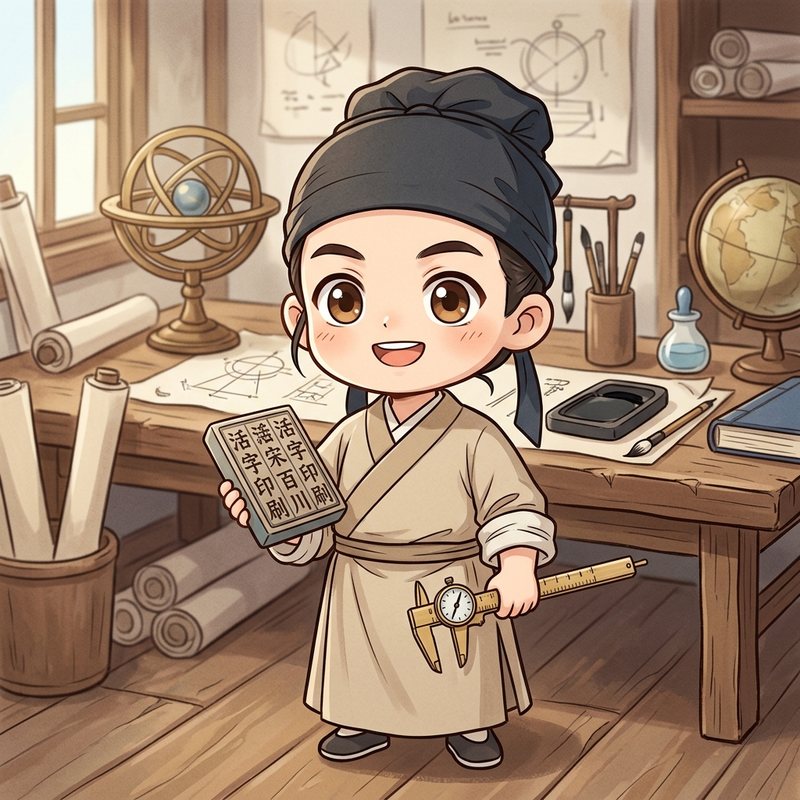
Zhang Zeduan (张择端 · Zhāng Zéduān)
字正道 · 琅琊东武人
The Bruegel of Imperial China: master of architectural realism whose five-meter scroll captured the living heartbeat of Song Dynasty Kaifeng.
北宋风俗画圣与界画大宗师;以五米长卷《清明上河图》定格汴京繁华市井与众生百态,成为华夏视觉艺术不朽丰碑。
- The Numbers: On the 528.7 × 24.8 cm Song-original silk scroll in Beijing's Palace Museum, scholars have counted roughly 814 human figures, 28 boats, more than 60 animals, over 30 buildings, 20 carts, and 8 sedan chairs—counts vary between scholars, with figure estimates ranging from about 550 to 814.
- The Most Cinematic Moment: Beneath the timber Rainbow Bridge, a large boat lowers its mast amid shouting crew, thrown ropes, and onlookers leaning over the railings—the dramatic centerpiece of the scroll.
- A Warning in Disguise: Palace Museum scholar Yu Hui reads the scroll as a 'veiled remonstrance' (quanjian)—the empty fire watchtower, the unguarded city gate, and private grain ships quietly document urban crisis in the years before the fall of the Northern Song in 1127.
- One Original, Many Copies: Beijing's Palace Museum holds Zhang Zeduan's Song original; the Ming 'Qiu Ying version' is in the Liaoning Provincial Museum, and the 1736 Qing court version is in Taipei's National Palace Museum.
A Five-Meter Metropolis: Why It's Called China's Mona Lisa
Along the River During the Qingming Festival (Qingming Shanghe Tu) is a handscroll painted in ink and light colors on silk, measuring 528.7 centimeters long and just 24.8 centimeters tall—about 17 feet of city compressed into a band of silk narrower than a sheet of letter paper. Unlike a Western painting hung on a wall and taken in at a single glance, a Chinese handscroll is unrolled from right to left, section by section, so the viewer 'travels' through the painting like a walker moving through the real city. Zhang Zeduan exploited this tradition with genius, deploying what art historians call scattered perspective—multiple shifting viewpoints instead of a single fixed vanishing point—so that the picture keeps unfolding like a slow cinematic tracking shot.
《清明上河图》是一幅绢本设色手卷,长528.7厘米、高仅24.8厘米——约十七英尺的城市被压缩进一条比信纸还窄的绢带。与挂在墙上一眼览尽的西方绘画不同,中国手卷自右向左逐段展开,观者如同步行者一般'走进'画中城市。张择端将这一传统运用到极致,采用艺术史家所称的'散点透视'——以多个移动视点取代单一灭点——令画面如电影长镜头般徐徐展开。
The census of the scroll is staggering. Scholars have counted approximately 814 human figures—each caught in a specific trade, errand, or conversation—alongside some 28 boats, more than 60 horses, donkeys, and other animals, over 30 buildings, around 20 carts, and 8 sedan chairs. Exact tallies differ from researcher to researcher (figure counts range from about 550 to 814 depending on how partially hidden bodies are counted), but no other pre-modern painting anywhere in the world offers such a dense, encyclopedic cross-section of urban life.
画卷中的人口普查令人惊叹。学者们清点出约814位人物——每一位都处于具体的劳作、差事或交谈之中——另有约28艘船、60余匹骡马牲畜、30余栋房屋楼宇、约20辆车与8顶轿子。不同研究者清点的确切数字略有出入(因对被遮挡身体的统计口径不同,人物数从约550到814不等),但世界绘画史上再无第二件前现代作品,能提供如此密集而百科全书式的城市生活横断面。
It is this unique stature that earned the scroll its Western nickname 'China's Mona Lisa'—a painting of such canonical fame that it defines an entire civilization's art in the popular imagination. And like the Mona Lisa's enigmatic smile, the Qingming scroll conceals puzzles of its own. Read it once, and you see a festival of commerce. Read it again with a detective's eye, and you find ten details that have fueled one of the liveliest debates in Chinese art history.
正是这种独一无二的地位,使该画赢得了西方'中国蒙娜丽莎'的绰号——一如《蒙娜丽莎》之于欧洲,它以一画之力代表整个文明的艺术想象。而正如蒙娜丽莎神秘的微笑,《清明上河图》也藏着自己的谜题。粗读一遍,你看到商业的狂欢;带着侦探之眼重读,你会发现十个足以点燃中国艺术史最激烈论战的细节。
The Ten Hidden Secrets at a Glance
Here are the ten details we will examine—each invisible at first glance, each loaded with meaning:
- 1. The Rainbow Bridge crisis: a big boat fighting to lower its mast in the nick of time.1. 虹桥险情:一艘大船惊险降桅,千钧一发。
- 2. A camel caravan leaving the city gate—foreign merchants inside the Chinese capital.2. 骆驼商队走出城门——中原都城里的胡商。
- 3. The fire watchtower (wanghuo lou) with nobody on duty.3. 望火楼空无一人,消防瞭望形同虚设。
- 4. A city gate with no soldiers, where tax clerks—not guards—hold the position.4. 城门无兵把守,把守城门的是税吏。
- 5. Private grain ships unloading while officials idle near a 'jie' shop sign.5. 私家粮船卸货,官员在'解'字招牌下悠闲。
- 6. Stalls and signs encroaching on the street—urban order losing ground.6. 商铺摊位侵街,城市管理节节失守。
- 7. Lazy officials lounging at the courier relay station.7. 递铺驿站官员慵懒倦怠。
- 8. No firefighting equipment anywhere in the scroll.8. 全卷不见任何消防器材。
- 9. A civil official and a military officer refusing to yield in a narrow lane.9. 窄巷之中文武官员争道不让。
- 10. A grand tavern's festive gate towering over beggars and porters.10. 豪华酒楼欢门之下,乞丐与苦力并存。
Secret 1: The Rainbow Bridge Crisis, the Most Cinematic Moment in Chinese Painting
About a third of the way into the scroll, traffic on the Bian River reaches its climax. The famous Rainbow Bridge (Hongqiao) is a marvel of Song engineering: a timber arch spanning the water without a single supporting pier—a 'flying bridge' whose interlocking logs form a gentle arc high enough for loaded barges to pass beneath. Directly below it, a large boat is in trouble. Its mast has not been lowered in time, and as the current carries it toward the bridge, the crew scrambles in a frenzy—some cranking the mast down, others throwing ropes to the dock, polers fighting the water. On the bridge, dozens of pedestrians stop to gawk and shout directions, leaning dangerously over the railings; passengers on nearby boats turn to watch. It is a freeze-frame of pure suspense, eight centuries before the movies.
画卷展开约三分之一处,汴河水运迎来全卷高潮。著名的虹桥是宋代工程学的奇迹:全木结构拱桥,跨水而不设桥柱——'飞桥'的咬合木构拱起高弧,恰容满载漕船从桥下通过。桥下正下方,一艘大船陷入险境:桅杆降晚了,水流又将船身推向桥洞,船工们一片慌乱——有人奋力摇盘降桅,有人向岸边抛缆,撑篙者死死抵住水势。桥上数十行人驻足围观,探身栏杆高声指点;邻近船只的乘客也纷纷侧目。这是一帧纯粹悬念的定格,比电影早了八百年。
Art historians see more than a traffic accident here. For the Palace Museum scholar Yu Hui, the scene is a deliberate dramatization of a system straining at its seams—skills, order, and luck barely rescuing a near-disaster. Cao Xingyuan, author of In the Same Boat (Tongzhou Gongji), reads the very same scene in the opposite way: as a celebration of strangers cooperating to save a vessel, the perfect emblem of a society that 'shares one boat.' One scene, two verdicts—that tension runs through everything that follows.
艺术史家在此看到的远不止一场交通事故。故宫博物院研究员余辉认为,这一幕是对一个濒临崩裂体系的刻意戏剧化——技艺、秩序与运气勉强挽回了一场灾难;而《同舟共济》作者曹星原对同一场景的解读恰恰相反:陌生人合力救船,正是'同舟共济'式社会协作的完美象征。同一场景,两种判词——这种张力贯穿此后的每一个细节。
Secrets 2–4: Camels, an Empty Watchtower, and an Open City Gate
At the city gate near the scroll's second half, a train of Bactrian camels files out of the walled city, their drivers commonly identified as non-Han 'Hu' merchants from the western trade routes. Their presence is easy to overlook and easy to explain away, but it quietly signals that Kaifeng was not a sealed Chinese world: it was a terminus of trans-Eurasian commerce, a city where Central Asian caravans did business alongside Yangtze rice merchants. Prosperity, the scroll reminds us, flowed through open doors.
在画卷后半段的城门处,一支双峰驼队正鱼贯走出城墙,赶驼人通常被辨认为来自西域商路的'胡人'商队。他们的存在容易被忽略,也容易被一笔带过,但它悄然表明汴京并非封闭的华夏世界:它是对接欧亚商路的枢纽,中亚驼队与江南米商在此同场贸易。画卷提醒我们:繁荣,经由敞开的门户流入。
Then look up—literally. Inside the city stands a fire watchtower (wanghuo lou), the raised lookout post from which trained crews once scanned the capital for smoke. In Zhang Zeduan's painting, the tower is unmanned. No watchman, no signal apparatus. Worse, the barracks complex beside it, which should have housed the fire brigade, has been converted into a teahouse with tables and lounging customers. Kaifeng was a city of wooden buildings where major fires were a recurring catastrophe; a defenseless watchtower in the middle of it is, for scholars like Yu Hui, damning evidence of military and civic preparedness in decay.
再抬头看——真的抬头。城内立着一座望火楼,即消防瞭望塔,本应有专职人员昼夜俯瞰全城火情。而在张择端的画中,楼上空无一人:无哨兵,无瞭望信号装置。更糟的是,楼旁本应驻扎消防兵力的营房,已被改作茶馆,摆开桌凳坐满闲客。汴京是一座木构之城,大火是反复降临的灾难;画面中央这座无人值守的望火楼,在余辉等学者看来,正是军备与市政防线废弛的铁证。
The city gate itself delivers the third blow. This is the capital of the Northern Song empire, yet not a single soldier guards the gate; the wall-walk above is empty, and no weapons or defenses appear anywhere. The only officials in the scene are tax clerks inside the gate, busily collecting commercial levies from incoming merchants. The message, whether intended or not, is hard to miss: the state's attention had shifted from protecting the city to taxing it. Within three years of the scroll's completion, enemy armies would walk through gates like this one.
城门本身给出第三记重锤。这里是北宋帝国的都城,城门口却不见一兵一卒:城墙上空空荡荡,全无兵器与防御工事。画面中唯一的'把关人',是门内的税吏,正忙着向进城商人征收商税。这层含义——无论有意无意——不难体会:帝国的注意力已从守卫城市转向盘剥城市。画卷完成后的三年内,敌军的铁骑就将穿过这样的城门。
Secrets 5–6: Private Grain Ships and the Vanishing Street
Near the end of the scroll, in front of a shop sign bearing the single character 'jie' (解)—likely a pawnshop or money-lending house—a group of officials sits idle, enjoying the leisure of the well-fed. Behind them, along the bank, privately operated grain barges are hard at work unloading rice. Song Kaifeng, a metropolis of around a million mouths, depended on state-managed grain transport up the Bian Canal; the official granary system was the empire's lifeline. For Yu Hui, the sight of the state's role quietly ceded to private merchants—while officialdom relaxes—is visual evidence that the official storage and supply system was failing. Cao Xingyuan counters that private logistics simply shows a thriving commercial economy. The viewer must judge.
画卷末段,一块单书'解'字的招牌下——可能是当铺或钱庄——几位官员正闲坐消磨,一派养尊处优的从容。他们身后的河岸上,私营粮船正在起劲地卸米。百万人口的汴京依赖汴河漕运与官仓储粮体系,那是帝国的生命线。在余辉看来,国家职能悄然让渡给私商、官吏却在一旁逍遥,正是官方仓储供应体系失灵的图像证据。曹星原则反驳:民营物流恰恰说明商业经济的繁荣。孰是孰非,观者自断。
The streets themselves tell the same story of eroding order. Song documents complain repeatedly about qinjie—'encroaching on the streets'—as shops pushed stalls, awnings, and signboards into the public carriageway. Zhang Zeduan paints exactly that: lanes choked with displays, umbrellas, and wooden signs, pedestrians threading between tables, carts barely squeezing through. Imperial edicts against the practice had been issued for decades and had failed. Urban management, the scroll shows without editorializing, was losing its street—one stall at a time.
街道本身也在讲述秩序消磨的故事。宋代文书反复抱怨'侵街'——商铺将摊位、凉棚、招牌挤进公共车道。张择端画的正是这一幕:巷道被陈列、遮阳伞与木招牌塞满,行人在桌案间穿行,货车勉强挤过。朝廷为此颁发的禁令持续数十年,却归于无效。画卷不加评论地展示:城市管理正在失守它的街道——一次一个摊位。
Secrets 7–9: Lazy Couriers, Missing Fire Gear, and a Standoff in a Narrow Lane
Three smaller details complete the indictment of officialdom. First, at a government courier relay station (dipu), the officials responsible for urgent documents lounge in the courtyard—one sprawled half-asleep on the ground—while the station's function, the rapid transmission of state correspondence, appears entirely forgotten. The machinery of governance, the image suggests, runs on inertia.
三处更小的细节完成了对官僚体系的'起诉'。其一,在官办递铺(驿站)里,本应速递紧急公文的官员们在院中慵懒闲坐——一位干脆半躺在地打盹——而驿站的本职,即公文的快速传递,似乎被彻底遗忘。画面暗示:国家机器仅靠惯性空转。
Second, and remarkably, nowhere in all 5.28 meters does a single piece of firefighting equipment appear—no water buckets, no ladders, no hook wagons, no brigade sheds. Song-era Kaifeng had an institutionalized firefighting corps with watchtowers and dedicated units; a meticulously realistic painting of the capital that omits them entirely is, in Yu Hui's reading, a pointed omission.
其二,更耐人寻味的是:长达5.28米的画卷中,竟找不到一件消防器材——没有水桶,没有云梯,没有钩索车,没有消防队的值房。宋代汴京设有制度化消防体系,有望火楼与专职潜火队;一幅以极度写实著称的都城画卷将其完全略去,在余辉的解读中,正是一种尖锐的'选择性失明'。
Third, in one narrow lane, the retinues of a civil official and a military officer meet head-on—and neither side will give way. Bearers gesticulate, servants argue, the two masters' sedans lock in a miniature standoff. Court politics in a single vignette: the civil and military arms of the Song state, famous for their institutional rivalry, unable to share even a street.
其三,在一条窄巷中,一位文官与一位武将的仪仗迎面相遇——双方各不相让。仆从挥臂争执,两顶轿子僵持成一场微缩的对峙。一幅小像写尽朝堂政治:以文武相争著称的宋代官僚体系,连一条街道都不肯共享。
Secret 10: Banquets Above, Beggars Below
The scroll's final secret is social rather than administrative. Near the urban core rises the Sun Family Grand Tavern (Sun Yang Zheng Dian), a licensed 'grand establishment' crowned by a spectacular huanmen—a ceremonial gateway built of intertwined flowers, pine boughs, colored streamers, and lanterns advertising the finest wine. Inside, multi-story dining, private rooms, and refined service await the rich.
画卷的最后一个秘密关乎社会而非行政。靠近市区核心处矗立着孙羊正店——一家持有官方酒引的'正店',门前高耸着华丽的欢门:用花枝、松枝、彩绸与彩灯扎成的庆典门楼,昭示着上等美酒。楼内多层雅座与精细侍应,专候富贵宾客。
Yet in the very same blocks, Zhang paints beggars holding out bowls, porters bent double under crushing loads, and boatmen sweating through their labors. The two Kaifengs coexist within inches of silk. Some scholars read this juxtaposition as simple realism; others as a moral audit—the glittering surface and the human cost kept deliberately in one frame. Either way, it is one of the earliest and greatest portraits of economic inequality in world art.
然而就在同一街区,张择端画出了端碗行乞的乞丐、被重担压弯脊背的苦力、汗流浃背的船工。两个汴京在寸许绢素上并存。有学者视这种并置为纯粹的写实,也有学者视之为道德审计——繁华表象与人的代价被刻意锁进同一画框。无论何种解读,这都是世界艺术史上最早也最伟大的贫富分化图卷之一。
One Painting, Two Stories: Splendor and Warning Side by Side
| Perspective 视角 | The Glittering Surface | The Hidden Crisis Beneath |
|---|---|---|
| City Gate | Monumental architecture announcing imperial power and openness to trade | No soldiers, no defenses—only tax clerks collecting commercial levies |
| Fire Safety | A sophisticated watchtower system inherited from Kaifeng's golden age | Watchtower unmanned, barracks converted to a teahouse, zero fire equipment in the entire scroll |
| Grain Supply | Barges lining the Bian River, the capital fed by a great canal network | State transport ceded to private merchants while officials lounge near a 'jie' pawnshop sign |
| Commerce | Camel caravans, licensed grand taverns, and dazzling shop signs of every trade | Stalls and signboards encroaching on the streets—urban order yielding stall by stall |
| Officialdom | The visible pageantry of sedans, retinues, and yamen institutions | Couriers dozing at the relay station; civil and military officials gridlocked in a lane |
| Social Life | The Sun Family Grand Tavern's festive gate and lantern-lit banqueting | Beggars and porters laboring in the same blocks—a painted audit of inequality |
Prosperity or Elegy? The Scholarly Verdict
Who is right about the Qingming scroll—the celebrators or the alarmists? The most influential 'crisis' reading belongs to Yu Hui of the Palace Museum, who argues that the work is a quanjian, a 'veiled remonstrance': painted around 1124 for Emperor Huizong, it packages a detailed audit of urban mismanagement—empty defenses, broken logistics, idle officials—as a seemingly flattering cityscape, hoping the art-loving emperor would look closely enough to see the warning. Three years later, the 1127 Jingkang catastrophe destroyed the Northern Song and captured Huizong himself.
关于《清明上河图》,究竟是颂歌还是警世?最具影响力的'危机'解读来自故宫博物院余辉。他认为此画是一封'曲谏':约1124年为宋徽宗而作,将一份详尽的城市治理诊断书——武备空虚、物流失序、官吏怠政——包装成看似歌功颂德的城市全景,寄望这位艺术皇帝能看得足够仔细,读出其中的警讯。三年之后,1127年靖康之难爆发,北宋覆灭,徽宗本人沦为阶下囚。
The strongest counter-argument comes from Cao Xingyuan, whose book In the Same Boat (Tongzhou Gongji) rejects the 'crisis painting' thesis. In her reading, the scroll is neither documentary Kaifeng nor covert criticism, but a commissioned work celebrating social harmony—the boat rescued at the Rainbow Bridge as the emblem of a society whose classes and trades, like the crew on that vessel, pull together in one boat. Scholars remain divided; what is certain is that Zhang Zeduan packed more verifiable urban detail into silk than any painter before or since, which is precisely why the debate can be argued detail by detail at all.
最有力的反驳来自曹星原。她的著作《同舟共济》拒绝'危机画'之说:在她看来,此卷既非汴京纪实,也非影射批评,而是一件礼赞社会和谐的定制之作——虹桥下获救的大船,正是各阶层、各行业同舟共济的象征。学界至今聚讼不已;可以确定的是,张择端在绢素上塞入的可考证城市细节,空前而绝后——这也正是这场论战得以逐个细节展开的原因。
The scroll's early history is almost as debated as its meaning. According to the colophon written in 1186 by the Jin Dynasty scholar Zhang Zhu—the only near-contemporary biographical record of Zhang Zeduan, all 85 characters of it—Emperor Huizong had inscribed the scroll's title in his slender-gold calligraphy and affixed his small double-dragon seal. That inscription is lost today; the title slip now at the head of the scroll bears a signature-style inscription 'Zhang Zeduan, Qingming Shanghe Tu' generally attributed to the Jin court in imitation of Huizong's hand. Huizong is also believed to have later passed the painting out of the palace to the consort Xiang family—a detail supporters of the remonstrance theory find suggestive: a warning, once read, politely gotten rid of. All of this must be stated with care, for the evidence is colophon-deep, not ironclad.
画卷早期流传史的争议几乎不亚于其含义。据金代学者张著1186年题跋——这是关于张择端生平唯一的近乎同时代的文字记录,全文仅85字——宋徽宗曾以瘦金体题写画名并钤双龙小印。该题字今已不存;现卷首'张择端清明上河图'签题一般认为是金内府仿徽宗笔意的题签。学界另认为,徽宗后来将此画转赠外戚向氏——'曲谏说'支持者对此浮想联翩:一封被读完的谏书,被体面地请出了宫门。以上均须审慎表述:证据止于题跋层面,并非铁案。
One caution for readers who meet the scroll through books: the famous memoir Dreaming of Prosperity in the Eastern Capital (Dongjing Meng Hua Lu), written by Meng Yuanlao after 1127 as an exile's loving reconstruction of the lost capital, is a separate source. It is routinely cited alongside the painting, and the two do illuminate each other—but Meng's nostalgic memories are not a caption to Zhang's brush. The scroll must first be read as a painting, on its own carefully hedged terms.
给通过书籍认识此画的读者一句提醒:名著《东京梦华录》——孟元老在1127年后于南方写下的、对沦陷故都的深情追忆——是另一独立文献。它常与《清明上河图》并引,二者确可互相照亮,但孟元老的记忆并非张择端画笔的图注。画卷必须首先作为画来读,以其自身审慎的画语为据。
From War Booty to National Treasure: The Real Scroll's Incredible Journey
A word of orientation before the adventure: many 'Qingming scrolls' exist, and you should know which one you are looking at. The original is the Northern Song silk handscroll by Zhang Zeduan, held by the Palace Museum in Beijing—the one discussed in this article. The Ming Dynasty version attributed to the master Qiu Ying, with its brighter palette and Suzhou scenery, belongs to the Liaoning Provincial Museum. The elaborate Qing court version, painted in 1736 by five court painters, resides in Taipei's National Palace Museum. Countless further copies circulate worldwide; only the Beijing scroll carries Zhang Zhu's 1186 colophon and the wear of nine centuries.
在进入传奇之前,先做一个辨析:世上'清明上河图'众多,务必认清你看的是哪一卷。原作即本文讨论的北宋张择端绢本长卷,现藏北京故宫博物院。明代仇英本设色更鲜亮、场景改绘苏州风物,藏辽宁省博物馆;清雍正乾隆之际1736年由五位宫廷画师合作的清院本,藏台北故宫博物院。此外摹本流布全球不计其数;唯有北京故宫本带着张著1186年题跋与九百年的岁月包浆。
Then comes the survival story. When Jurchen armies sacked Kaifeng in 1127, the scroll was looted and drifted north, surfacing in private hands near modern Beijing, where Zhang Zhu saw and documented it in 1186. Over the following centuries it passed through Yuan, Ming, and Qing collectors—according to Palace Museum research, entering imperial collections five separate times and leaving four. In 1922 the deposed emperor Puyi had it smuggled out of the Forbidden City, and it followed his court into Japanese-occupied Manchuria. In 1945 it was seized when Puyi attempted to flee by plane at Shenyang airport; five years later, in 1950, the scholar Yang Renkai identified the genuine Song original among neglected crates at a Shenyang museum warehouse. In 1953 it entered the Palace Museum in Beijing, where it rests today—shown only rarely, each exhibition a national event.
然后是流传的传奇。1127年金兵攻陷汴京,画卷被劫掠北流,在今北京附近现身于私人藏家之手,1186年被张著目击并著录。此后数百年间,它辗转元明清历代藏家——据故宫博物院研究,先后五次进入皇家收藏,又四次流出宫门。1922年,逊帝溥仪将其偷运出紫禁城,画随其小朝廷流落日占伪满。1945年,溥仪在沈阳机场欲乘机出逃时被截获,此画一并收缴;1950年,学者杨仁恺在沈阳一座博物馆库房积压的旧箱中鉴定出北宋真迹。1953年,它入藏北京故宫博物院至今——每次展出皆为罕事,每一场展览都是全国盛事。
Key milestones in the scroll's 900-year journey:
- c. 1124 — Painted by Zhang Zeduan and presented to Emperor Huizong; enters the Xuanhe imperial collection.
- 1127 — The Jingkang catastrophe: Kaifeng falls, the scroll is looted and drifts north.
- 1186 — Jin scholar Zhang Zhu sees it near Yanshan (modern Beijing) and writes the 85-character colophon that preserves Zhang Zeduan's name.
- Yuan–Ming–Qing — Passes through collectors and palaces; by Palace Museum reckoning, five times in, four times out.
- 1922 — Smuggled out of the Forbidden City by the deposed emperor Puyi.
- 1945 — Seized at Shenyang airport as Puyi attempts to flee to Japan.
- 1950 — Yang Renkai identifies the genuine Song original in Shenyang.
- 1953 — Enters the Palace Museum, Beijing, its permanent home today.
Stand at the Moment the Scroll Was Presented
Travel to the Xuanhe court of 1124 and see where Zhang Zeduan unrolled his masterpiece before Emperor Huizong—the moment when 'China's Mona Lisa' entered history.
Open the Qingming Scroll Station on the MapFrequently Asked Questions (People Also Ask)
How many people are in the Qingming scroll?
Scholars have counted approximately 814 human figures in Along the River During the Qingming Festival, along with about 28 boats, more than 60 animals, over 30 buildings, 20 carts, and 8 sedan chairs. Exact tallies vary between researchers—estimates range from roughly 550 to 814 people—because partially hidden figures are counted differently.
Why is Along the River During the Qingming Festival called China's Mona Lisa?
The nickname reflects the scroll's towering cultural status: like the Mona Lisa in the West, the Qingming scroll is the single most famous painting in Chinese culture, instantly recognizable, endlessly studied, and surrounded by mysteries—from the meaning of its title to the hidden details that may encode a political warning. It is a popular epithet rather than a scholarly one, but no Chinese painting rivals its celebrity.
Where is the original Qingming scroll kept today?
Zhang Zeduan's Song Dynasty original is held by the Palace Museum in Beijing. The Ming Dynasty 'Qiu Ying version' is in the Liaoning Provincial Museum, and the 1736 Qing court version is in the National Palace Museum in Taipei. Because the silk is fragile, the Beijing original is displayed only for limited periods, each exhibition drawing enormous crowds.
What do the hidden details in the Qingming scroll mean?
Palace Museum scholar Yu Hui argues that details like the empty fire watchtower, the unguarded city gate, private grain ships, and officials lounging at the courier station form a 'veiled remonstrance'—a coded warning to Emperor Huizong that the capital's administration was decaying. Other scholars, notably Cao Xingyuan, read the same details as signs of a thriving commercial society. The debate is unresolved, which is part of the scroll's fascination.
Does 'Qingming' in the title refer to the Qingming Festival?
Possibly, but scholars disagree. Leading interpretations include: the Qingming Festival in early spring (matching the seasonality of the scenery); a reference to the Qingming Fang ward through which the Bian River flowed; and a political reading in which qingming ('bright and peaceful') praises good governance. The meaning of shanghe ('going up to the river') is similarly debated—whether it means visiting the riverside or traveling upstream. Honest scholarship presents all views.
Did Emperor Huizong really inscribe the scroll?
According to Zhang Zhu's 1186 colophon—the only near-contemporary record—Emperor Huizong inscribed the title in his slender-gold calligraphy and affixed his double-dragon seal, but that inscription no longer survives. The title slip at the head of the scroll today bears a signature generally attributed to the Jin court imitating Huizong's hand. The attribution to Zhang Zeduan therefore rests on Zhang Zhu's 85-character testimony rather than on a surviving Song inscription.
Walk with Zhang Zeduan Across China
随张择端漫步华夏河山 · 亲历命运逆境与精神涅槃